-
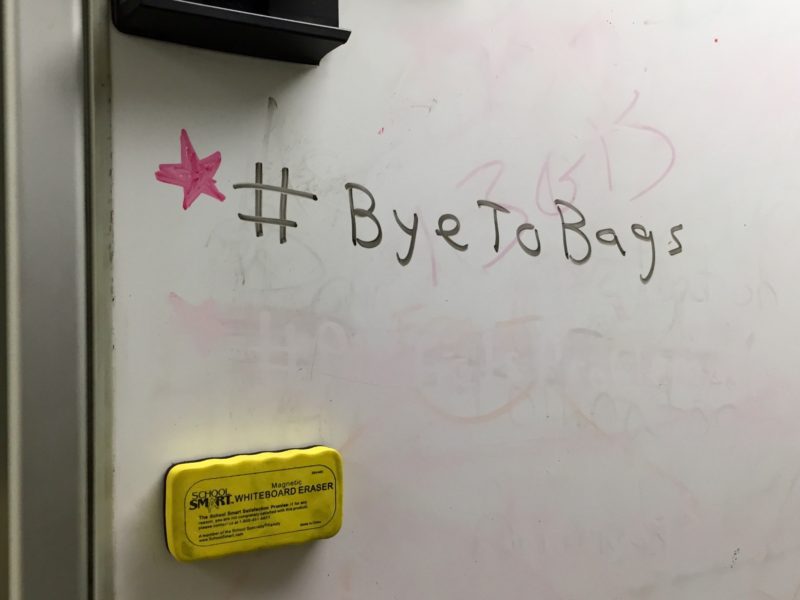
ISG+ New Project: Zoo ALIVE Teen Volunteers at the Saint Louis Zoo say #ByetoBags … and ask that you do too!
This guest post is submitted by Kirinne Slaughter at the Saint Louis Zoo, and is the first in a 3-part series on their Innovative Solutions Grants+ project. Building on the Better Bag Challenge Zoo ALIVE teen volunteer For more than a decade, the Zoo ALIVE (Active Leaders In Volunteer Education) Teen Volunteers at the Saint Louis Zoo have been educating zoo visitors, zoo campers and the St. Louis community about animals, their habitats and conservation. Now, for the first time, thanks to the support from The Ocean Project’s Innovative Solutions Grant+, these teen volunteers will aim not only to inform, but also to inspire others-onsite and online-to take action on one of the biggest issues facing the environment today: plastic pollution, particularly from single-use plastic bags. To begin, the teens looked to the results of the “Better Bag Challenge.” This challenge was inspiration for what our teens wanted to create, and what was learned provided a strong base for our campaign. The main lessons from the Better Bag Challenge that our teens will apply going forward are: Use a Simple Message: Choose reusable bags to avoid single-use plastic bags. Be Solution-Oriented: Position visitors as part of the solution. In order to instill in our guests the confidence that they can make a difference, the campaign will be framed so that guests feel they can make a difference and be part of the plastic pollution solution. Make a Direct Connection to Sea Life: The most effective messaging connected the action directly to the benefits for an animal. While others referenced sea turtles, our inland zoo is home to California Sea Lions and Harbor Seals, which we think will serve as the perfect ambassadors. Walk the Talk: Another approach to effective messaging connected the action to what the zoo itself is doing, so our campaign will aim to reduce the use of plastic bags in our gift shops. Teen volunteers will be open about this effort, and share its progress with zoo guests. Ask for a Pledge: Our on-grounds visitors also will be given a reusable bag upon completion of a pledge, but instead of asking visitors also to take a follow up survey, which can have relatively low response rates, we thought we’d try a twist! Going Online with #ByetoBags #ByetoBags Our twist? The teens plan to test if they can use social media to amplify the effects of the “Better Bag Challenge.” The teens will measure the extent to which people share their commitment through social media, as well as how many others join in making the pledge back on our own web site. The teens will do so in two main ways: On-Grounds Amplification: How successfully can we amplify the reach and impact of our on-grounds pledge participants using social media? After taking our pledge to use reusable bags, and receiving a reusable bag, zoo visitors will receive an email asking them to use #byetobags on selected social media channels as a way to share the message with their friends and family, encouraging them to join in and take the pledge too. This idea is in keeping with what has been found in research by The Ocean Project: not only do most people want to be green, but they also want to be seen as “green.” We then will measure success by monitoring how the use of #byetobags spreads and how many people sign up at our online pledge page. As an additional measure to our on-grounds tactic, we will be monitoring plastic bag use at our Saint Louis Zoo gift shops, expecting it to go down! Direct Social Media Push: The teens also were wondering if they could skip the on-grounds offer of a bag and still have success by going directly to social media. By having a pledge page that is online and promoted through social media sites, and that once again asks people to use reusable bags and to share their commitment with friends and family by posting with #byetobags, we plan to assess how many people they reach and how many of those signed the pledge. Our teens are eager to launch their campaign and take it to social media. The key next step for the teens will be deciding on the specific social media tools and tactics that they want to test (e.g. share #byetobags post on Facebook vs. share #byetobags video on Instagram) and then talking with the zoo marketing team about how those efforts can best be tracked. Our teens are already planning to share the methods and success of this campaign in presentations at their area high schools. And, we’re just getting started! Keep a look out for our update!
Continue reading -

ISG+ New Project: Connecting Ocean Conservation and Community Engagement at the National Aquarium
This guest post, by Gabrielle Roffe and Curtis Bennett of the National Aquarium’s Conservation Department is the first in a 3-part series on their Innovative Solutions Grants+ project. This project will be addressing the issue of marine debris by implementing a new approach to community engagement, with a specific focus on building our connection with the Hispanic communities near Masonville Cove in the Chesapeake Bay. Part of our mission At the National Aquarium, we view connecting with students and community members as a core function of our mission to inspire conservation of the world’s aquatic treasures. Our Masonville Cove Community Engagement and Environmental Stewardship Project is just one of the many ways we are trying to accomplish this. Masonville Cove is an Urban Wildlife Refuge in south Baltimore that is managed in partnership with the Maryland Port Administration, the US Fish and Wildlife Service and Living Classrooms Foundation. It is a 125-acre natural area, and an important green space for the surrounding communities of Brooklyn and Curtis Bay. Masonville Cove debris cleanup We began this project a few years ago by working with community stakeholders, including residents, local environmental non-profit organizations and even city officials, to identify and address environmental issues. We hosted community meetings that ultimately resulted in the publication of a Small Watershed Action Plan (SWAP). Not only does this document identify environmental issues of importance to the community, it also provides suggestions for how and where to address those issues. For example, it recommends an effort focused on a common concern about the litter and debris that all too often ends up in the ocean. Reaching a new community While we had been doing good work with the communities of Brooklyn and Curtis Bay, we also knew that we weren’t adequately reaching the Hispanic populations within those communities. According to the 2011 Neighborhood Health Profile (Baltimore City Health Department, December 2011), the Hispanic population accounts for 9.8% of the total residents of the area. This percentage is higher than that (4.2%) of Baltimore City overall. Estimates from the U.S. Census Bureau indicate that nearly 40 percent of Hispanic residents of our target communities either speak no English at all or “not very well.” Additionally, this community includes individuals from or with ancestry from Mexico, Cuba, Puerto Rico and other countries. So not only will we need to translate materials into Spanish, but translate projects culturally as well. So under this grant we are specifically focusing building connections with the local Hispanic communities and addressing the problem of litter and debris. In order to accomplish this, we are going to try a more focused and innovative approach to community engagement, as outlined by the following goals: Engage members of the Hispanic populations in the removal of debris throughout the Brooklyn and Curtis Bay communities. We will begin by meeting with community groups, such as Hispanic congregations and local schools with English as a Second Language (ESL) programs. ~We will gather feedback to understand how the issue of litter and debris is important to the community, and work together to ensure that our efforts are collaborative. ~We plan to host debris cleanups that directly address the litter/debris problem, noting the number of community groups/members participating and the amount of trash collected. Cultivate community champions in order to ensure ongoing engagement. ~We will work with community members to develop workshop(s) on topics of mutual interest - such as on the concept of a watershed or gardening for wildlife - fun and interactive ways to build community conservation leaders and engage more residents. Masonville Cove debris cleanup ~Over the course of our program, we also will identify an individual from these communities and recognize them as a community champion, a “Shore Hero," as part of our Living Seashore exhibit at the National Aquarium, as a way to draw even more attention to our collective efforts and deepen the community’s connection to the Aquarium. The next steps to reach our goals are to continue building relationships and developing programs to meet the needs of the community. By forming and ultimately maintaining these relationships within this community, we believe we can provide a “win” for the residents, the aquarium and the ocean too! --Guest post by Gabrielle Roffe and Curtis Bennett of National Aquarium
Continue reading -

Pre-order your reusable bags for World Oceans Day 2016!
Better Bag Challenge Opportunity Act now to receive reusable bags for World Oceans Day 2016! We have a special opportunity for our partners but limited time to take advantage of it! After successfully piloting the Better Bag Challenge at several partner aquariums and zoos last year (see results here) we’re providing partners with a special offer to engage your visitors in a meaningful way, and increase your brand recognition as a leader for ocean conservation. We are working 1 Bag at a Time to provide quality reusable bags with World Oceans Day graphics and messaging (see image at left) and you can drop in your logo on the opposite side at no extra cost! These bags were piloted for World Oceans Day 2015 and were very well reviewed by the public! To have bags shipped to you in May, we must receive your order by February 19th. Minimum order is 1,000 bags (with lower pricing starting at 3,000 bags) Cost is $1.25 per bag. (Additional shipping charges are nominal.) To order your bags, contact Abby Tripler, the new World Oceans Day Coordinator, no later than February 15th for your order form! Need help organizing your Better Bag Challenge? Visit the Better Bag Challenge Organizer's Guide for event ideas, downloads, graphics and more! If you have further questions contact Jen Spring, the new Network Coordinator for The Ocean Project, and whom will be working closely with our aquarium and zoo partners. Thank you for promoting ways to prevent ocean plastic pollution! Together we can help make our ocean healthier. Also, let us know how you are planning to celebrate for WOD 2016!
Continue reading -

ISG+ Final Report: Survey Says… ZooTeens at Riverbanks Zoo and Garden spur visitors to action!
This guest post by Director of Education, Elizabeth Clemens, and Coordinator of ZooTeens and Scout Programs, Syndi Castelluccio, of Riverbanks Zoo and Garden is their final in a 3-part series on their Innovative Solutions Grants+ project, which investigates how engaging with teens and receiving incentives can impact zoo guest behavior. Sailing Along... The Riverbanks Zoo and Garden’s ZooTeen volunteers have been busy over the last year taking direct action and engaging our visitors in efforts to keep trash out of our ocean. You’ve been waiting for the results, and the results are in. Survey Says… We began our journey under our Innovative Solutions Grant just over a year ago wanting to accomplish two main things: Try a different approach to engaging our ZooTeens, one that emphasizes learning by doing Get our teens to take the lead in an “ask task,” encouraging others to join them in taking action As we reported in our last post, the teens responded really well to our new approach to engaging them, and they were eager to lead an experiment in how to engage others. Working with the teens, we decided to compare and contrast the experiences of two sets of individuals, and see which group would be more willing to join us in taking action. A “Control Group,” which we also called our “outside the zoo experience group” as they interacted with our teens at a location other than the zoo, where they were asked to take a reusable bag, use it, and complete a survey. The engagement time for this group averaged about one minute, and was spent almost entirely on the solution step of using the bag. An “Experimental Group” of zoo guests who while onsite engaged much more deeply on the issue with the ZooTeens, learning about the problem of marine debris, typically at an “information station,” before receiving the bag and agreeing to use it and take the follow-up survey. Engagement time for this group averaged about 5 minutes, with much more information about the problem and about the same amount of information about the solution. We all, staff and teens alike, predicted that the “Experimental Group” that engaged onsite with the teens for a longer period of time and received more information about the problem would be more likely to take the next step and respond to the survey. We also believed that this same group would be more likely to report in the survey that they were using the bag and taking additional action. The teens made several comments throughout about their experience approaching both groups of individuals. Some teens reported that it was easier to get others to engage with them at the zoo, where they had the benefit of the information stations, props, biofacts, and activities. Yet other teens surprised us by saying that the location didn’t seem to matter. One of our teens, admittedly a real go-getter, reported that no matter the situation she could get individuals to sign up by just asking. So, in sum, the teens told us that with a prop, and especially the bags to give away, it was almost as easy for them to engage others offsite as onsite. A few weeks after distributing the bags, we began circulating the survey. We received a great response, with more than 30% of those we contacted completing the survey. This was significantly higher than the Better Bag Challenge around World Oceans Day 2015, where, in that effort, which was based on our same concept, only 7% of those contacted actually followed up and completed the survey. That now posed a new and unexpected question for us: Was it simply the energy and enthusiasm of teens being the voice of conservation that made participants reply at a higher rate? Things got even more interesting when we began to compare and contrast our control group with our experimental group, as our results didn’t hold true to our original prediction! We found that not only did both groups respond at about the same rate to the survey request, but also in about the same way in terms of their responses to the survey questions. Having the zoo experience and receiving the extra information about the problem didn’t seem to make much of a difference at all when it came to individuals following up and taking action! Taking the results with a proverbial grain of salt, as these were self-selecting samples taking the survey, we found that members of our control and experimental groups expressed: About the same level of concern for the future of the ocean (Control: 76% agreement / Experimental: 78% agreement) About the same sense that zoos and aquariums are a good source for accurate information about the ways to protect and conserve wildlife (Control: 88% agreement / Experimental: 86% agreement) About the same level of support for zoos and aquariums suggesting ways for them to help solve problems facing the ocean and its animals (Control: 88% agreement / Experimental: 91% agreement) About the same level of agreement between the two groups that by joining zoos and aquariums in taking action the public can play an important role in addressing the problems facing our ocean and its animals (Control: 84% agreement / Experimental: 87% agreement) Moreover, both groups reported using their bags at almost the same exact rate on our five point scale! (Control: 3.2 / Experimental: 3.4) We also received comments from both groups that were very positive in tone, and also hit on many of the same themes: “I’ve been visiting the zoo for 32+ years. I am thankful to see the zoo taking a more active role in reusable items.” "Thoroughly enjoyed our visit as well as the information provided about "Plastic Free Me" Campaign." “Thank you for checking with me. I got the bag at Kids Day in Lexington. I use if for many reasons and very often. It’s a great bag.” “I have heard great things about Riverbanks Zoo and Garden. A visit is high on my list of places to go.” “I really appreciate the awareness information given, it has made my family more aware.” Next we looked at our overall results in rough comparison to the national public opinion research by The Ocean Project, and saw some suggestion that our teens engaging people with a solution-oriented action step appeared to increase not just public concern about the ocean, but also -- and even more promising -- our public’s sense that zoos and aquariums are good sources of accurate information about ways to conserve the ocean, and their feeling that by joining zoos and aquariums in taking action, they can play an important role in addressing the problems facing the ocean. Not enough to say for sure, but certainly indications are that by asking people to join us as part of the solution we are heading in the right direction! We have learned a lot from our efforts under this grant, and in conclusion I would highlight the following “lessons learned” for our colleagues in the zoo and aquarium community: Create a teen program that is a fully immersive “learning by doing” experience as that can inspire participants to take that experience beyond the zoo and become true “Stewards of Our Seas” Having inspired teens makes for a more engaging and meaningful experience and their enthusiasm may just rub off on your guests Keep messaging to the point, as sometimes our guests and others don’t need all the details - they want to do what’s best and we just need to encourage and ask. One final note... We cannot express enough the gratitude we have for being given the opportunity to test hypotheses under the Innovative Solutions Grant+ program. This experience has inspired us to keep testing our assumptions when it comes to developing best practices for public engagement at our institution.
Continue reading -
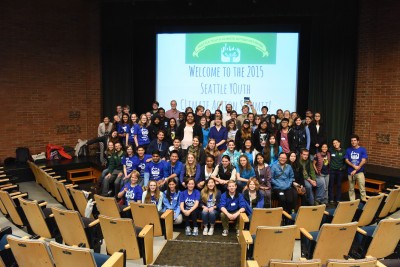
ISG+ Final Report: Seattle Youth CAN works to combat climate change
This guest post by Eli Weiss of Woodland Park Zoo is the third in a 3-part series on their Innovative Solutions Grants+ project, exploring how teens in the Seattle area can empower each other and their peers for action on climate change. What we have to celebrate As we wrap up our first year with reflection and planning sessions for both youth and staff stakeholders I feel grateful for all that everyone has contributed to making the pilot year for Seattle Youth CAN such a success in 2015. I am also excited we willl have even more to look forward to in 2016, thanks to a second year of funding from the Innovative Solutions Grants + Program! With the partnership and support from youth programs staff and teens from Woodland Park Zoo, Pacific Science Center and Seattle Aquarium it has been quite a year! We have also appreciated the support from a range of community collaborators including local non-profits, agencies and universities who have contributed to our first year. As planned, it was full year of programming with monthly opportunities for Seattle area teens to increase their climate literacy, take action and become leaders in this exciting new initiative. By the numbers, in 2015 we had: A committee of 11 teen leaders planned and launched a transportation focused climate action challenge that engaged 50+ teens during August and saved over 12,000 pounds of CO2 12 climate literacy and action events hosted at the three institutions which provided unique opportunities for more than 150 teen participants! 85 teens attended Seattle Youth Climate Action Summit held at Woodland Park Zoo 20+ local climate leaders contributed as guest speakers, presenters and project advisors 3 teen representatives traveled to the WILD Center in upstate New York to present and participate at the Adirondack Youth Climate Summit Over the past few months we are especially proud of… The Transportation Challenge The first teen led action campaign was a pilot designed by a cross institution leadership committee. The challenge focused on encouraging other teens to reduce their CO2 emissions by choosing to use public transit, carpool, bike or walk. During the month of August, there were 52 active participants who logged their commutes on an online platform hosted by King County Metro. In a post survey we found that just under half of these participants reported an increase in their use of the recommended transportation options as a result of the challenge. After the challenge, King County Metro staff discussed the agencies sustainability efforts with the teens and also led a workshop in which they brainstormed possible social media messages to make a stronger connection between public transit and reducing CO2 as well as encouraging more teens to ride the bus. There are already plans to revise and continue this messaging campaign as part of our efforts in 2016. The first annual Seattle Youth Climate Action Summit On October 10th, 2015 the Woodland Park Zoo and Seattle Youth CAN hosted the first annual Youth Climate Action Summit attended by 100+ teen and community participants from the Seattle area. The event was organized by a committee of 14 teen leaders from the three institutions along with the support of staff from Woodland Park Zoo. The summit included presentations and activities led by teen leaders, a climate careers panel, group action projects and plenary workshop sessions led by local climate leaders and scientists focused on climate science, innovation and ways to take action. This was the first Seattle Youth CAN event in which teens from outside of the founding three partner youth programs were invited to participate. The Summit was the culminating event of year one for Seattle Youth CAN and the also a shift toward a more inclusive model that we plan to expand next year, a model that will provide the opportunity for all interested youth in the Seattle area to get involved and take action! Our amazing Youth Climate Ambassadors Our youth ambassadors had many adventures and successes this year, including: • Three Seattle Youth CAN leaders traveled to the Adirondack Youth Climate Summit in upstate New York to share their experiences and learn from peers. • Niko, a teen volunteer spoke alongside county executives and climate policy leaders at the signing of the Strategic King County (WA) Climate Action Plan. • This past month NOAA’s climate.gov site featured our project as one of their case studies of national youth climate initiatives and our video was featured at the US Center during COP21 in Paris. What we have learned in 2015 1. Developing an authentic youth network takes time. A clear plan and willing partners is always a good start, but we found that for teens to start identifying with Seattle Youth CAN took ongoing communication and repeat participation in events. Teens live such busy lives and we don’t want Seattle Youth CAN to be just one more thing for them to do, rather a place that youth can get involved, meet new people, and take on authentic leadership in something that is of interest to them. We had great success with youth organized events and campaigns and are looking to increase the youth ownership of the project in 2016. 2. When communicating with teens in-person meetings still matter. We have found that some teens prefer Facebook while others will only respond to email, and with so many options for connecting these days, there is no one way to get in touch. Our Facebook group has been a great way to share updates, photos, events and ideas, and although it was used by youth leaders, the majority of the posts were made by staff. We now have a twitter handle https://twitter.com/seattleyouthcan which is followed by some supporters, but has not been a clear way to engage teens. We actually found that by far the most successful strategy for building community and creating connections has been in person events and meetings – that was where most of the magic happened. 3. Institutional support helps. Bringing together three of the most prominent informal science institutions in the city has allowed for us to leverage the expertise, resources and connections of our founding partner organizations. All three institutions have shown past commitment to climate change education and this partnership has allowed us to come together on an area of shared relevance. In addition, the community looks to zoos, aquariums and science museums for answers and through this project we have been able to help teens find their voice as climate change leaders and change makers and this action resonates with the millions of visitors that attend our institutions each year. Where we are headed I think that we are on to something with Seattle Youth CAN and are excited to develop new strategies that will allow broader participation and reach. We plan to do this through creating an opportunity for new partner programs to join the network and by opening up monthly events to teens that are not already affiliated with our partner programs, as well as by revising and expanding our teen led action campaigns. We also plan to strengthen and package our unique model so that we can share it with other regional and national groups that are looking to support youth in climate leadership initiatives. It is exciting to see the growing interest in our local initiative and I hope that through our efforts we can help the national youth climate action movement grow. --Guest post by Eli Weiss of Woodland Park Zoo
Continue reading -
ISG+ Update: Will Philadelphia Zoo guests save energy to save “Nemo”?
This guest post by Wei Ying Wong of Philadelphia Zoo is the second in a 3-part series on Philadelphia Zoo’s Innovative Solutions Grants+ project. They’re exploring a new way of evaluating long-term conservation behavior change, specifically home energy use, in visitors to the zoo’s KidZooU exhibit. Hi! Welcome to our coral reef exhibit. Are there animals you recognize in here? Can you find Nemo? Clownfish like Nemo and many other species of fish depend on a very special type of habitat called coral reefs. In recent months, visitors to Philadelphia Zoo’s KidZooU (KZU) have been greeted with an opportunity take action to “Save Energy to Save Nemo” when they approach our coral reef exhibit. As discussed in our previous blog, we are capitalizing on a prime opportunity to communicate about ocean acidification at our coral reef tank. While our ultimate goal remains one of testing how well we use onsite conservation messaging to affect offsite behavioral change, we’ve found that getting those permissions and systems in place is a challenge. So to date we’ve focused on fine-tuning our messaging while asking visitors to pledge to reduce their home energy consumption. Early in the new year, our hope is to go one step further with our local visitors, asking not only for a pledge, but for permission to track their home energy usage! Asking for a pledge Our intended audience has been mixed age groups based on the research finding that children can be key influencers on household decision-making, and, fortunately, mixed age precisely describes most of the visitor groups to KZU. When visitor groups approach the coral reef tank, a zoo interpreter engages them in a conversation about the reef and other organisms in exhibit using strategic framing techniques that help visitors understand climate change and ocean acidification by overcoming traditional barriers and cuing people to think productively about solutions (see National Network of Ocean and Climate Change Interpreters for more details). On concluding the interpretation, we ask visitors to take a pledge to reduce their household energy consumption (“Save Energy to Save Nemo”), with children “signing” the pledge on behalf of their families by inking their fingerprint on a clownfish cut-out. Initial Findings To date, we have monitored our engagements with more than 600 people (in a total of 198 groups, with group sizes that varied from 1 to 12 people). Here are our preliminary findings: KZU visitors are open to a conservation message, provided there is no language barrier Almost three-quarters (73%) of the total number of groups stayed for at least a portion of the narrative. If they stayed through the first section, they were highly likely to stay on for the entirety of the message. While all visitors appeared to be generally happy when our interpreters approached them, we were not able to engage with about 5% of our visitors on account of the language barrier. Moving forward, we would like to include interpretation in other languages, especially as The Ocean Project’s market research indicates that households where English is a second language are likely to be very interested. KZU visitors are willing to take action on this issue Among the groups that stayed engaged with our interpreter till the final ask (“Pledge to Save Energy to Save Nemo”), 92% of the groups had someone take pledge to make a difference for the animals and their habitat. Overall, that represents almost half (42%) of the total number of people engaged. Engaging the child is critical to engaging the group Graph 1: Showing the percentage of people who left the interpretative station for the respective reasons As noted above, we noticed that if a group stayed through the full message, they had a high likelihood of pledging to take action (twice as likely as if they left early) With that in mind, we looked at why some groups were leaving early and found, as can be seen in the graph, that the biggest factor was whether the child stayed engaged. In most cases, especially when the child was young, adults allowed the child to determine their course. So when they child was no longer interested, the group left. Leaving the ask to the end might not be the best way to go While we continue to look for ways to keep the attention of the children, we’re also going to try moving the ask to the beginning. By doing so, we anticipate a significant increase in the number of groups who will make the pledge. Graph 2: Showing the percentage of people who leave the interpretive stations at various points of the narrative Inking a fingerprint works well for children, but not for adults The act of pledging by inking a fingerprint on a clownfish cut-out is, of course, an activity targeted at children. And as such, it has worked well. We even saw many of the adults who stayed through the interpretation bringing their children back to ‘fingerprint’ a pledge. But the number of adults willing to do so was quite low. Plus, of course, moving ahead we are likely to need more formal permission that a fingerprint would provide! Referencing Nemo was not helpful We had hypothesized that the hyper-personalized linkage between action and an identifiable animal character would increase the likelihood of engagement. We were wrong. Instead, the inclusion of “Nemo” created confusion as some of the younger children have not watched the movie, or the visitors’ attention is less interested in the clownfish than other things in the exhibit. So moving ahead, we have our interpreters paying attention to the organism that is capturing the attention of the visitors and then using that as a springboard into the script. Meeting the visitors where they are at is promising to be a much more successful approach. Next Steps We are now in the stages of finalizing the logistical and legal details for tracking the efficacy of our onsite messaging in changing offsite behavior. While that aspect of the project has taken a longer time than expected, the conversations it has generated both internally and with an ever-expanding number of partners is exciting. Moreover, we have learned all of the above lessons about how best to shape our messaging.
Continue reading -
Visitor engagement opportunity: COP21 and being part of the solution
With extensive news coverage of climate change talks underway at COP21 in Paris, and two-thirds of Americans wanting the US to take action, now is an especially good time to engage visitors at zoos, aquariums, and other trusted visitor-serving organizations. But what is the best way? Our research indicates that visitors probably don't want aquariums and zoos to attempt to explain the ins and outs of climate models or the climate negotiations. But they likely would be open to an aquarium or zoo citing examples of the impacts of climate change on specific animals, and then offering some hope by making, as the recent report from EcoAmerica put it, a “quick pivot” to solutions that emphasize “the power of we” - what we, together as a society, can do to help. As our friends at NNOCCI remind us, a critical concern right now is restarting the conversation about change. And with it in the news, now is an especially good time! Photo credit: John Englart
Continue reading -

Zoos and aquariums: Highlighting your mission is good for business
More evidence from our friends at IMPACTS that doing well by your mission helps you do well at the gate. As those who know me may have heard me say one too many times already, but here it is once more: visitors expect, trust and appreciate when aquariums, zoos, museums and other visitor serving organizations are active in advancing their missions. For environmental issues, we've found this is especially true when organizations provide their visitors with specific ways to be part of the solutions to the problems facing our planet. Let visitors know how they can join with you to help protect specific animals and particular places, and ideally give them something to do then and there. Here’s Colleen’s video overview of their findings. For more on how to do so, and the lessons we’ve learned with our partners, check out our other blog posts such as the lessons learned from the first year of our Innovative Solutions Grants Plus Program or our initial round of the Better Bag Challenge. Why not take those lessons and give the Better Bag Challenge a go next Word Oceans Day? Now you can do so with even more confidence that visitors will thank you for it!
Continue reading -

10 ways your zoo or aquarium can reduce plastic use
There is growing public awareness about the troubling accumulation of plastics in the environment, particularly in the oceans. Luckily, we are in a unique position to turn the tides on plastic use and disposal. Association of Zoos and Aquariums accredited institutions are trusted conservation organizations with millions of visitors annually. We can lead by example through the way we operate our businesses, and as The Ocean Project has reported, our institutional actions can help inspire our visitors, staff, and volunteers to make greener choices too. Reducing disposable plastics is critical for the health of our ecosystems and ourselves. And we know that our institutions want to take action, but where to begin? The AZA Green Scientific Advisory Group (GSAG) is here to help, supporting AZA institutions to make greener business operation choices and offering information on latest sustainability research and trends. The AZA Green Guide was created to help AZA institutions create their sustainability roadmaps, while allowing enough flexibility for individual institutions to identify their operational priorities. And in that spirit, here is a top ten list created by the GSAG, steps to help your operations be less reliant on disposable plastic products. Conduct a purchasing inventory, AND implement 'greener' purchasing practices (e.g. screen products for recyclability, promote bulk purchasing with minimal packaging, and avoid disposable items as much as possible). Purchase for the Planet. With durable plastic items, consider a switch from purchasing new plastic products to products made from recycled plastic. This action helps create a competitive market for products made from recycled materials. Old is New Again. Conduct a waste/recycling audit, AND implement a waste reduction and recycling improvement plan. Be Lean and Green! In food sales, reduce or eliminate single-use plastic bags, beverage bottles, straws, utensils, plates Don’t know where to start? Consider implementing a policy of providing these items only upon request, or stock your break rooms with reusable dishes, mugs and silverware. Bag It! Water station at Detroit Zoo Consider compostable service-ware, and you can largely replace plastic items with paper, cardboard, and bio-based items which can break down in a commercial scale composting facility or in a biodigester. Close the loop by composting the material to keep it out of the landfill. A Toast to Compost! If disposable plastics can’t be avoided, make sure they are recyclable plastics with plenty of bins throughout the campus to make recycling easy. Plastics Numbers 1 and 2 are the easiest to recycle. Styrofoam is very difficult to recycle, so eliminating that material is best. It’s a Numbers Game. In operations, avoid soaps, cleaners and other products with microbeads! Some cosmetics and cleaning products contain tiny pieces of plastic, which are also known as microbeads. These bits of plastic are too small to be captured by water treatment plants and they end up in our waterways where they can be ingested by animals and they accumulate in the oceans. Banish the Bead. Throughout the campus, install water fountains and bottle filling stations- this can help visitors make the better choice to utilize reusable bottles instead of buying bottled water. Provide Free Refills! Gift Shop Ops - Look at the items stocked in your shops and identify ways that plastic gift items can be swapped out with alternative options. Last but not least, work with your education and marketing teams to implement a program or competition to encourage your visitors, as well as staff and volunteers, to follow your lead. The lessons from the Better Bag Challenge offer some good insights here! Be a Muse for Reuse! -- Guest post from Wanda Evans at Saint Louis Zoo and Jennifer Hale at Denver Zoo Banner image credit to Saint Louis Zoo
Continue reading

