-
ISG+ New Project: Climate change action? Seattle youth CAN!
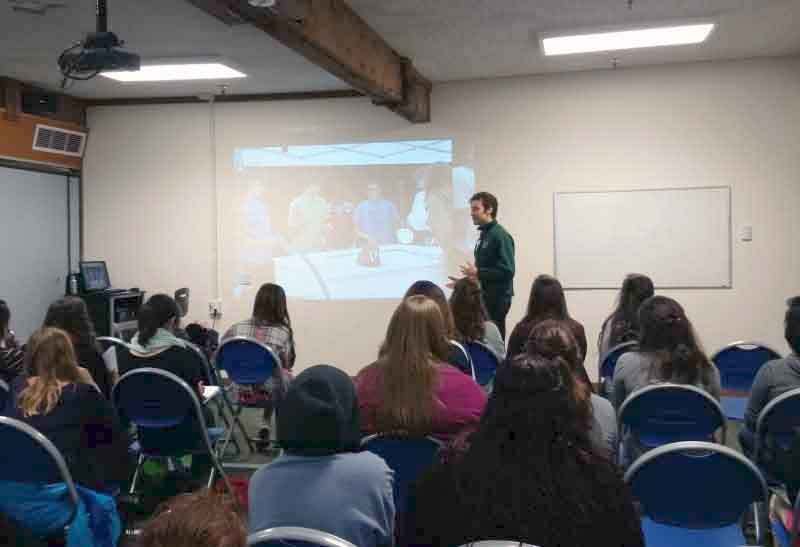
This guest post by Eli Weiss of Woodland Park Zoo is the first in a 3-part series on their Innovative Solutions Grants+ project, exploring how teens in the Seattle area can empower each other and their peers for action on climate change. The Path Forward At the Woodland Park Zoo, we have been working for the past several years to engage our teen volunteers and interns on the issue of climate change. These efforts have ranged from trainings on climate science and interpretation to involvement in our pilot of a variety of on-grounds climate focused activities and games, and have resulted in a group of teens that share a common interest in climate change. What we are still working on is getting our youth to the next stage of engagement, inspiring others to follow their example in taking action. This challenge is at the core of our current project, the Seattle Youth Climate Action Network (Seattle Youth CAN!), a project that we will be undertaking in partnership with the Seattle Aquarium and the Pacific Science Center thanks to support from The Ocean Project's Innovative Solutions Grants+ Program . Over the past couple months I have been meeting with climate leaders in Seattle and have been received with resounding enthusiasm for both supporting Seattle Youth CAN and for exploring new opportunities for our teen participants to engage other youth in community climate action efforts which may align with the city's recently adopted Climate Action Plan. This feedback on the model we have set in motion is encouraging and I am optimistic that when our teens feel connected to local climate efforts and leaders that they will be more engaged in the issues and feel more compelled to want to do something about it. Seattle Youth CAN! ACTION is the key to change, and through forming Seattle Youth CAN we will train and support youth leaders to deepen their understanding of climate science, feel confident in engaging others in dialogue about climate change, and develop and launch successful climate action campaigns. Over the past year with the latest IPCC report, UN Climate Summits, and the Peoples Climate March, the story has become even clearer. We need to take collective action and the change needs to be BIG and BOLD. Global and local leaders seem to agree that the days of just focusing on personal actions are behind us and this is why we believe our teens need to be engaged in supporting broader efforts and innovative solutions for change. We have designed Seattle Youth CAN with this in mind. Our aim is to train and support teen leaders to develop local campaigns which will engage their peers in measurable climate action. We believe that through creating dialogue and connection to existing community scale efforts and leaders we will help our teens to find their role in the growing movement to take clear action to reduce carbon emissions. What makes our model unique? A local network. We are bring together teens who have already expressed an interest in climate change and conservation through their involvement in teen programs at three leading informal science institutions in Seattle; Woodland Park Zoo, Seattle Aquarium and Pacific Science Center. Teens will have many touch points throughout the year including collective training, events, opportunities to take action, and a culminating summit at the end of year one. A focus on youth action. Our initial audience for this project are the teen leaders in our existing programs, and then, in turn, their peers in the community. Teens supported by community. Throughout the year teens will be working with local climate action leaders to learn, develop and launch campaigns and connect to city wide efforts. Ultimately our campaign will be designed and carried out by youth leaders in our network, but they will be supported by staff at each institution and our climate action partners in the community. With this project we are looking to explore if and how connecting youth to existing local climate action efforts enables them to create their own successful campaign and increases their ability to successfully engage their peers in action. In launching Seattle Youth CAN, we are hopeful that we will identify key elements needed to support a youth action network that brings teens and community stake holders together. We believe that if we are successful, this model will become a valuable example for other communities that are looking to engage youth in climate action. Recently, I was asked to lead a workshop on climate action at the Seattle Aquarium for their Youth Ocean Conservation Summit. I asked Xander Barber, of my teen climate leaders, to co-present with me. For us this was a great chance for us to share our Seattle Youth CAN model with a group of youth from around the Puget Sound. Based on the number for attendees that approached Xander and I after our session with interest in the network, I am hopeful that there will be broad support for the network. 2015 will be an exciting year as Seattle Youth CAN develops. We are encouraged by the enthusiasm of our teens that have helped us to build the vision for this project as well as our community partners and look forward to sharing our success with you in the months ahead! -- Eli Weiss, Youth Programs Supervisor at Woodland Park Zoo
Continue reading -
Partners for ocean conservation
Thank you to all our partner organizations for your…
Continue reading -
Seas the Day in November – Rethink Your Habits
We won't have a society if we destroy the environment. - Margaret Mead Our personal consumer choices have ecological, social, and spiritual consequences. It is time to re-examine some of our deeply held notions that underlie our lifestyles. - David Suzuki Last month we talked about reducing our use of electricity. That is just one of the four R's: Reduce, Reuse, Recycle, and Rethink. In our current society there is a large impulse to buy new things and toss the old. Buying the newest iphone may seem like a good reason to throw away the old one, but why not hold onto it for a while longer? Our trash can end up polluting the land and aquatic ecosystems including the ocean! It's best to rethink every purchase, reuse what we have, reduce what we buy, and recycle as much as we can. In this way we can rescue the ocean. by Carlos Peñalba, flickr user carlospenalbaphotography Reduce plastic. Plastic plays an unfortunately large role in our lives. Many of the things we buy come packaged in plastic and then stores give us plastic bags to bring these items home in. This is a problem since plastic items, such as plastic bags can make their way into the ocean. When this happens ocean creatures such as sea turtles eat them by accident. Quick tip: When you are out shopping, bring your own reusable bags. Cloth bags are not only better for the environment, but they are sturdier and less likely to rip open. Reuse for crafts. Instead of disposing of your stuff, how about finding other uses for the things you have? Old shoe boxes can easily be used for storage. Have something extra lying around? Why not use it for a family craft project? Many things can be transformed into something useful given time and creativity. Quick tip: Have something you don't need but someone else may? Try going on freecycle.org and find someone who wants it. (Or find something you may need, for free!) by Mary Anne Enriquez, flickr user urbanwoodsswalker Recycle smart. If you can't find a use for something, it may be time to recycle it. Recycling can be difficult though, so it's helpful to have a guide. There are quite a few guides out there that will tell you what you can and can't recycle. If you want to know about recycling electronics, the EPA has a handy guide for that. Rethink purchases. Sometimes we just want something and it's hard to ask ourselves, do I really need that? Take the time to really think about your purchases. Buying less, in bulk, and things with less packaging can really help reduce the waste that ends up in landfills. Cover Photo by by flickr user crash-candy The Seas the Day initiative encourages and empowers people to take ocean conservation personally. Each month, we feature a new conservation theme with ways to help so come back regularly for more ocean-helping ideas and tips! Created mainly to support our partner ZAMs (Zoos, Aquariums, and Museums and other visitor-serving organizations involved in our growing network) in motivating conservation action, Seas the Day is for you to tailor for your own purposes. Please use any or all of the content verbatim and re-post on your own blog, social media channels, website, newsletter, etc. We have a large database of action tips and related content for you to use so let us know what’s most helpful and what other action-able types of information and resources we can provide to enhance your conservation efforts.
Continue reading -
Partners and friends: join us and make a difference for the ocean
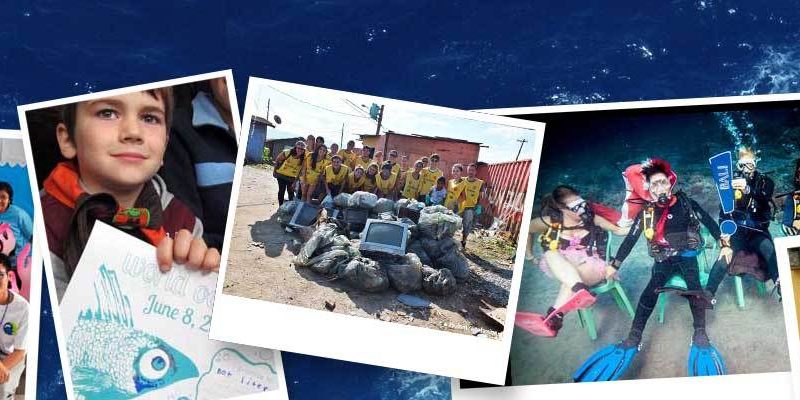
The Ocean Project’s partner network of around 2,000 organizations has grown from a handful of founding North American aquariums into the world’s most extensive network for advancing ocean education and action. For 16 years we’ve worked to help our partners become as effective as possible at communicating about and for conservation. One of the most exciting ways we help our partners celebrate is through coordinating World Oceans Day – held every June 8th. Last year, 700 events were held in 70 different countries and, in addition to the tens of thousands of people who attended World Oceans Day events in their communities, millions of people learned about the celebration on social media. World Oceans Day 2015 can be an even better celebration for the ocean, which is why we’re asking all partner organizations of The Ocean Project to commit to celebrating World Oceans Day this year. What does celebrating mean? World Oceans Day can be celebrated in a number of ways, some big, some small. Not all organizations have the resources to organize an event every year and if you can't, you can still celebrate in so many ways! Here are just a few ideas: Mention World Oceans Day in your email newsletter and social media posts Organize fundraising, membership drives, or send out a press release on World Oceans Day Announce something new for World Oceans Day If you sign up to celebrate, we’ll provide you with guidelines, free content and language to use, images, and more that will make it easier than ever to include World Oceans Day as part of your activities. Help us reach 70% 70% of the Earth is ocean, so most of us should celebrate it! We're seeking commitment from 70% of all The Ocean Project partners to celebrating World Oceans Day 2015. By doing so in advance, we can work with you more closely and provide better services to you in the weeks and months ahead. Also, you'll be the first to know about news and resources. Sign up now We want to stay in touch and make this celebration great! Fill out this form to commit to celebrating on or around June 8th, 2015. You’ll get periodic resources and news for you to use for World Oceans Day.
Continue reading -
Round 2: Innovative Solutions Grants+ winners announced!
Thank you to our partner organizations for your involvement in advancing aquatic and ocean awareness and conservation! For over 16 years, The Ocean Project has been supporting our partner zoos, aquariums, and museums (ZAMs) and other organizations do more for conservation action with visitors, both onsite and online, by providing strategic resources and tools to more effectively educate and communicate with your visitors for conservation outcomes. Most recently we developed an Innovative Solutions Grants+ Program to help engage visitors with solutions to ocean and climate issues. Thanks to funding from the National Oceanic and Atmospheric Administration (NOAA), we award grants to innovation leaders (currently $100,000/year for a few zoos and aquariums) that also come with pro bono strategic communications coaching throughout the grant period and technical expertise to catalyze peer-to-peer sharing and learning. The lessons learned benefit the aquarium and zoo community as a whole. Thank you to all who applied for a grant from the Innovative Solutions Grants+ Program. For this second round of support, we had very strong proposals from zoos and aquariums around the country, and our Advisory Panel had a challenging time selecting the winners. We are pleased to announce the following grant recipients: Philadelphia Zoo: Awarded $30,000 to measure the connection between onsite messaging and offsite behavioral change. To quantify the impact of the Zoo's mission-related conservation-education messaging on visitors, and to link Zoo visitors with ocean issues, they will develop a pilot project that will message ocean acidification (OA) at their Coral Reef Tank exhibit in their new KidZooU: The Hamilton Family Children's Zoo & Faris Family Education Center. The Zoo will leverage their partnership with PECO – the energy supplier for the Greater Philadelphia region – and Opower, to measure and compare the energy consumption behavior of Zoo visitors who have been exposed to OA messaging and asked to "save energy to save wildlife" with that of non-Zoo visitors, as well as visitors who have not received Zoo interpretation about OA. Riverbanks Zoo and Garden: Awarded $12,000 to create a year-long immersive program for its ZooTeens. The program, dubbed Teen S.O.S. (Stewards of Our Seas), will feature three main elements: 1.)Teen Action; 2.) Community Action; and 3.) TeenMD (marine debris), the first in a series of S.O.S. action kits. Teens will create innovative art from waterway cleanups and engage in peer-to-peer teaching as they weave the topic of marine debris into interactive programming for guests of all ages and inspire action through a teen-developed "Plastic Pledge - Take Back the Bag" campaign. The Florida Aquarium: Awarded $28,400 to work with the entire school community of a local Title 1 elementary school where many children are not getting a lot of hands-on science programming and where approximately 50% of the student population report English as a second language. This project will strive to increase participation of students' families in climate change-related activities and will include development of curricula and related materials in Spanish, that will be shared broadly. Woodland Park Zoo: Awarded $28,000 to engage their community in climate change, sustainability and conservation action by leveraging the collective energy and enthusiasm of their youth participants. Teens will develop their own carbon reduction action campaign that they will participate in and encourage participation in from their peers. Their project will focus on three primary areas: 1) Training: Develop and implement a comprehensive training/workshop for teens on climate science, interpretive practices, and strategies in developing social marketing/action campaigns and projects; 2) Action: Create the Seattle Youth Climate Action Network made up of teens from WPZ, Seattle Aquarium and the Pacific Science Center. Teen leaders from each will develop and implement their own action campaigns/projects; and 3) Communication: Support teen participants through engaging in a collaborative process that enriches teen experiences within each institution while providing opportunities for them to come together to learn and share throughout the year. Congratulations to the winners and The Ocean Project looks forward to working with all our partners in 2015 and beyond, to help communicate strategically for conservation action outcomes and impact. We will be releasing another RFP at some point in 2015 so watch the blog and our website for further information. Image via Shutterstock.
Continue reading -
Seas the Day in September – Amplify Your Impact
“How wonderful it is that nobody need wait a single moment before starting to improve the world.” - Anne Frank “If one is lucky, a solitary fantasy can totally transform one million realities.” - Maya Angelou “Anyone can hold the helm when the sea is calm.” - Publilius Syrus Last month we talked about conserving water. It's easy to do on a personal level, but what if you want to spread the news? Getting more people involved with helping the oceans is a great thing! Change may happen slowly, and take some work, but you can help by raising you voice and raising awareness. This is the time to make a change, and you can get others to help by speaking out for the fish. Picture by Will Keightley The pen is mighty. Though you may not be able to beat a sword with a pen in combat, in most other endeavors the pen is the more useful tool. Through writing you can express your view and turn the tides on the thoughts of others. You can write to your local newspaper, magazine, or college publication about environmental issues that are important to you. Don't forget to write about the positive things you see as well! If there is an organization or person who you believe is making a difference, write them a thank you letter. Positive reinforcement will let them see that people are appreciating what they are doing. And hopefully, what they are doing will catch on! Use the virtual world to change reality. The internet is an ocean of information that you spend a lot of time surfing. Why not spend some time on the internet making your words heard? There is no larger audience to talk to. You can easily learn new things, spread knowledge, and start a conversation on the internet. These conversations between people with similar interests can spark group conservation action. Scientists can even use sites like twitter to share their new ideas. Picture by Kim Piper Werker Quick Tip: Why not start an ocean blog on a site like blogger or tumblr? You can share what you love and get other people to care as well. There are many reasons to start a blog. Make Policy Blue. Calling, writing, or visiting your representative can make a world of a difference for the ocean. They are the ones who craft your nation's interactions with the ocean. You can influence policy in other ways as well. How about starting or signing an online petition? Cover Photo by Kim Seng, flickr user captainkimo The Seas the Day initiative encourages and empowers people to take ocean conservation personally. Each month, we feature a new conservation theme with ways to help so come back regularly for more ocean-helping ideas and tips! Created mainly to support our partner ZAMs (Zoos, Aquariums, and Museums and other visitor-serving organizations involved in our growing network) in motivating conservation action, Seas the Day is for you to tailor for your own purposes. Please use any or all of the content verbatim and re-post on your own blog, social media channels, website, newsletter, etc. We have a large database of action tips and related content for you to use so let us know what’s most helpful and what other action-able types of information and resources we can provide to enhance your conservation efforts.
Continue reading -
Communications medley: activating communities
In this week’s round up: How not to overwhelm…
Continue reading -
Communications medley: putting a human face on climate change
In this week’s round up: How to deliver a relevant message on climate change by framing it as a human problem. If you’re a science communicator or educator at an informal science center (such as a zoo, aquarium, or museum) trying to understand the perspectives of your audience and find ways to promote conservation action – this is the round up for you! Every week we break down the most interesting recent news and best resources to help you frame the issues as effectively as possible. Some of these resources will be practical communications and framing tips, and others are great starting points for brainstorming future strategies. Jump to… Talk about people Keep it tangible A key challenge climate change communicators face is striking an emotional connection with their audience. People like to see an immediate response to their actions, but global warming is a problem with impacts AND solutions that seem far-off in time and diffuse. The nature of global warming makes it seem impersonal and intimidating to tackle. As such, one of the most essential aspects of effective climate change communication is to put a human face on it. Talk about people Photo by NASA Goddard Space Flight Center, flickr user NASA Goddard Photo and Video Words that beat ‘global warming’ and ‘climate change’ — a guide – Ever wonder if it is more effective to use the term “global warming” or “climate change?” This article suggests that we should use neither, but rather should stick to plain, simple language that everyone can understand and connect to. Focus on words that impact everyday life such as “pollution,” “health,” “creating jobs,” and “extreme weather.” No, climate change won’t kill the planet. But it’ll kill plenty of people. – It is important to keep in mind that climate change is not inherently an Earth problem, but rather it’s a people problem. Regardless of how intense the effects of climate change get, the Earth will continue to spin. Further, as the fossil record shows us, given a few million years, the Earth will repopulate with cool and amazing life forms that we never could have imagined. With this in mind, as global warming leads to more extreme weather events, food issues, and other conflicts, we must realize that combating climate change is largely a battle to protect human life as we know it. It is the great challenge of our generation. Keep it tangible Warming Threatens Roads, Ports and Planes, Report Says – One of the reasons people struggle to connect with climate change is the lack of tangible outcomes. This article provides concrete examples of how global warming will impact life as we know it, specifically focusing on the transportation sector. Photo by Michelle Haymoz, flickr user swissyogini The White House’s Clever Way to Sell Americans on Climate Change – President Obama discusses curbing carbon emissions as a means to protect the health of the elderly and the youth. According to a study from Yale University’s Project on Climate Change Communication, framing climate change communication centered on health threats, specifically those affecting youth, is a powerful strategy to put a human face on global warming.
Continue reading

