-
Aquariums invite guests to meet sharks for fun and conservation
We're well into Shark Week 2014, and there's a huge need to represent TRUE shark facts on social media and our outreach. Last year, there were almost 3 million tweets about sharks during this event! You can see Upwell’s great coverage of how things went in 2013. All of this attention means it’s a great time to talk to people about sharks – and especially to demonstrate that sharks are more complex than the bloodthirsty monsters that get people in a frenzy. Let's take Shark Week to the next level, and turn it into a time to educate about and advocate for sharks. There’s nowhere better to talk with people about sharks than at an aquarium, a rare opportunity to get up close and personal with a shark… without the fear. Here are what some of our partners are already doing for sharks. Aquariums bringing sharks and people together Would you hug a shark? Nicky, senior aquarist at The Aquarium of the Pacific would! That’s because she and Fern the shark have developed a special relationship full of trust. Fern allows herself to be put into a state of paralysis called “tonic immobility.” This puts Fern in a vulnerable position, so it took a lot of training and relationship-building to reach this point. As husbandry volunteer Hugh writes: “In reality, our relationship with sharks is what we make of it.” Montery Bay Aquarium positions the “fearsome” great white sharks as ocean ambassadors along with other sharks and rays. Their Project White Shark helps guests look past the Great White’s scary reputation. Their research includes collecting juvenile great whites and studying them before safely releasing them back to the wild. Knowing more about these sharks can help us do an even better job of protecting them. Picture by flickr user noodlefish Whale sharks are some of the most intriguing fish in the ocean – huge and intimidating, yet gentle and docile. Despite their charm, there’s still much we don’t know about whale sharks. Georgia Aquarium, which houses several whale sharks, also studies them in the wild to discover new information - such as how the sharks find food in the open ocean. Their research has even contributed to the creation of a whale shark reserve. The Wildlife Conservation Society studies the movement of whale sharks and their relationship to the tourism industry. Both organizations understand that the more we know more about these spotted giants, the better we can protect them. The National Aquarium also works with sharks in the wild – and they’re inviting you to help out! Anyone age 10 and up can help the aquarium tag sharks on their annual trip. It’s a great opportunity to experience sharks in the wild, and help scientists gather vital information to protect them. Join in the sharky fun You can celebrate shark conversation at your own organization. Why not follow one of these partners' example and throw an event for Shark Week? For next year - how about staging fun events such as a Shark Week scavenger hunt (Texas State Aquarium), or having shark themed apparel for people to wear (The Florida Aquarium)? You can even let visitors interact directly with shark items such as shark egg cases (Cabrillo Marine Aquarium). It's great for young children to have positive associations with sharks and to be able to physically interact with the world around them. Picture by Willy Volk, flick user volk There are many conservation activities you can plan as well. Having speakers talk about sharks and shark conservation is a great idea. Invite anyone from a wildlife artist to a SCUBA team engage your audience about sharks (Oregon Coast Aquarium). You can even stage a sleepover where guests can learn about sharks in a less crowded setting (Newport Aquarium). Are you doing anything to help out sharks? Tell us in the comments! Cover Photo by flickr user Albert Kok
Continue reading -
Severe Weather Alert for This Week:
The Internet Will be Flooded with Virtual Sharks Shark Week…
Continue reading -
Seas the Day in July – Eating for a Better World
"After a good dinner one can forgive anybody, even one's own relations." -Oscar Wilde "If more of us valued food and cheer and song above hoarded gold, it would be a merrier world." -J.R.R. Tolkin “Seas” the days of July by thinking about what you eat. Your well-traveled food comes from all over the world, and is grown with many different techniques, often in ways that aren't sustainable. The decisions you make about what goes on your plate affect much more than just your dinner table. Your choices can help craft a healthy future. Find out where your fish is from. Seafood can be a very safe and healthy dish for you, but you have to check out where it comes from. Certain forms of seafood are high in toxins and mercury, while others aren't fished sustainably. Some scientists worry that if our current rate of fishing continues, the world's fisheries can collapse. We can help through the decisions we make at home. Curious what fish are ocean-friendly? You can download the seafood watch app right onto your phone. This app will help you find seafood that's good for you, and the sea! By Natalie Maynor, flickr user NatalieMaynor Minimize meat. If you're a meat eater, think about participating in Meatless Mondays. This may not only improve your health but it also has great environmental benefits. The meat industry generates a large carbon footprint which contributes to climate change. You can help prevent this by minimizing meat consumption. Chow down close to home. You don't want your food to be more well-traveled than you are. On average, our food has traveled 1,500 miles to reach us and consumes a lot of energy to make it that far. The great amounts of fossil fuels used in this trip harms our oceans. In comparison, local food doesn't have to go on a long journey to reach our plates. Local food has tons of benefits. It helps the local economy and preserves the farms near your home. Since it's fresher and hasn't had to travel far, it usually tastes better than the alternatives. This food also has more nutrients and is generally healthier for you. Farmers' Markets are a good place to pick up delicious food directly from farmers. To find a location, you can search using the USDA's directory. Feed yourself. Growing food can be a fun (and tasty!) alternative to picking it up at a store. Why not celebrate this Fourth of July by staging your own food mini-revolution? If you have a garden, why not grow some tomatoes? By: Marju Randmer, flickr user isutekitaja Or if you want to grow something indoors, herbs like basil and oregano will do well if they are put in a window with lots of sun. You can even use some of your home-grown food to make your Fourth of July meal even tastier! Cover Photo by Ian Sheddan, flickr user imsvsims The Seas the Day initiative encourages and empowers people to take ocean conservation personally. Each month, we feature a new conservation theme with ways to help so come back regularly for more ocean-helping ideas and tips! Created mainly to support our partner ZAMs (Zoos, Aquariums, and Museums and other visitor-serving organizations involved in our growing network) in motivating conservation action, Seas the Day is for you to tailor for your own purposes. Please use any or all of the content verbatim and re-post on your own blog, social media channels, website, newsletter, etc. We have a large database of action tips and related content for you to use so let us know what’s most helpful and what other action-able types of information and resources we can provide to enhance your conservation efforts.
Continue reading -
Communications medley: costs of climate change and the power of storytelling
In this week’s round up: Talking to businesses about the economic impacts of climate change, and the importance of being a good story teller. If you’re a science communicator or educator at an informal science center (such as a zoo, aquarium, or museum) trying to understand the perspectives of your audience and find ways to promote conservation action – this is the round up for you! Every week we break down the most interesting recent news and best resources to help you frame the issues as effectively as possible. Some of these resources will be practical communications and framing tips, and others are great starting points for brainstorming future strategies. Jump to… Dollars and Sense What's the story? Dollars and Sense Risking it all: Report highlights how climate change threatens US business - Could climate change actually affect worker output? Extreme heat expected to reduce labor productivity, while sea level rise poses additional threats to East Coast businesses. Plastic Tide 'Causing $13 Billion in Damage', UN Says - Ocean plastic and marine debris take a hit on our wallets. According to the UN, It is estimated that the dumping of plastic waste into world oceans causes $13 billion worth of damage annually to marine life, fisheries, and tourism industries. Putting a Price Tag on Nature’s Defenses - Think building levees is expensive? Coastal marshes and wetlands - and not levees - are our number one defense against storms, soil erosion, and other natural disasters. The value of these ecosystem services is estimated to be well into the trillions, making them an irreplaceable commodity. What’s the story? Telling a good story is key to conveying the reality of climate disruption to our audiences. How Storytelling Can Make Climate Change Real - Check out this article and short video, which demonstrate an effective technique on communicating climate change issues with everyday folks. It’s all about telling a story with conviction, and putting a human face on the science. Messages Made to Stick: Six Principles to Make Your Messages Memorable - Follow these tips for making your message stick! This article outlines the six simple steps to ensure that your voice is heard, and your message is clear, when engaging in any type of meaningful dialogue. Bringing Heart and Spirit into the Climate Movement - This article highlights the interdisciplinary nature of working towards environmental solutions.
Continue reading -
Environmental communications lessons: always relevant
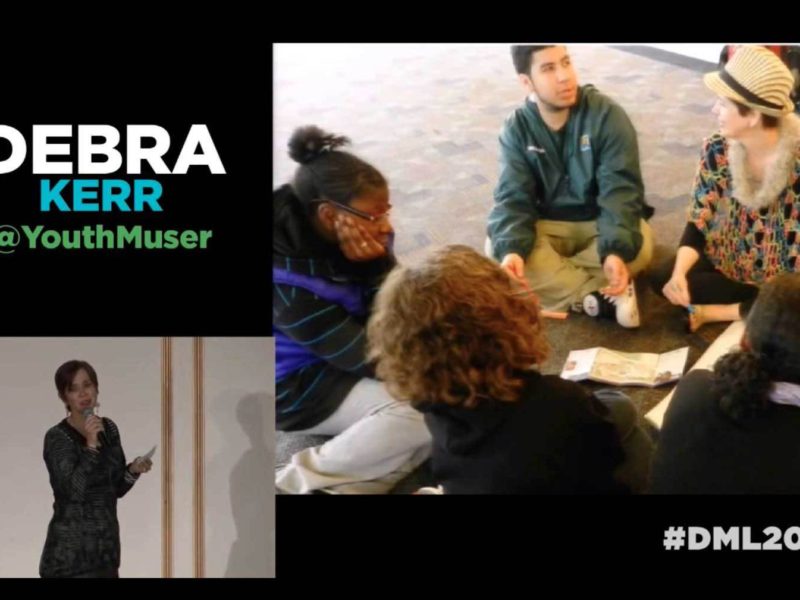
This is a guest post by Deb Kerr who has worked with The Ocean Project as consultant on youth engagement. Most of my talks lately have begun with a “Family Feud”-style question with an environmental twist. Relying on excellent research from The Ocean Project (TOP), I pose this question to the audience: “Americans said, ‘I live a green-friendly lifestyle.’ Then, when asked how they are supporting that lifestyle, what did they say?” The audience is always way savvier than the average American answer, and they get a kick out of the reveal of the top five answers, allowing me to grab listeners with some early laughs. Recently, I prepared an Ignite-style talk—my first—for the Digital Media and Learning Conference. With its focus on reimagining educational practice, DML is attended by academics, technologists, educators, funders and big thinkers. I wanted to do a really great job on this high-pressure presentation in front of the entire assembly (Ignite-style means 20 slides in five minutes—yikes!), and I wanted to stick to material I know well. But would the lessons learned from my environmental colleagues translate to this more broadly- and student-focused audience? I asked my opener, in a packed ballroom. They called out the typical guesses: “recycle,” “turn out the lights,” “Take public transportation.” I revealed three of the five real answers: replace lightbulbs, use organic products and drive a hybrid. Noises of surprise. Then I reveal the sad truth, which is also the laugh getter. “How are they supporting their green lifestyle? They said, ‘I don’t know’ and ‘nothing.’” To make this relevant for DML, I then explained why this audience should care. Americans see themselves as good guys, but they don’t know what to do. We DML folks—and our partners, youth—have an opportunity to recommend appropriate action. Let’s try recommending positive personal action in non-environmental realms as well. I used my favorite TOP data points and drew my own associations for the audience. Teens are seen as change agents: Easy. This audience is all about teens. The public trusts the museum sector and wants recommendations for action: About 10 percent of the audience raised hands when I asked who was from museums. Americans are America-centric: Keep your message local, focused on places, people or animals your audience cares about. Knowledge does not lead to action; knowledge and action are disconnected: Make action happen first. And, from work done back in my Shedd days: Focus on the congregation, not the choir (which already buys into your message), nor the non-believer (which may never buy into your message). Among the digital savvy, Twitter, of course, is a popular tool. When I sat down, I was thrilled to see the scrolling tweet screens carrying tweets repeating my main messages, especially “Knowledge isn’t connected to action. Make action happen first.” Whew! I made a connection to my audience. To top it off, Amy Storrow, the speaker after me, did a fun, improvisation exercise, trying to get everyone in the audience to work together to choose the same pantomime. It didn’t quite work the first time, and, in fine improv-style, she called out, “We have some non-believers in the audience!”
Continue reading -

World Oceans Day Updates
Click here to download the World Oceans Day 2014 Press Release. On June 8th 2014, people in communities around the globe will celebrate this year's World Oceans Day with the theme of “Together we have the power to protect the ocean.” Hundreds of events are planned to help people get involved in solutions for a healthy ocean and society - by supporting clean energy choices, trash-free coasts and beaches, sustainable seafood, and more. "In addition to events in dozens of countries, we invite everyone to take ocean conservation personally by making a commitment and then sharing a selfie for the sea," said World Oceans Day coordinator, Alyssa Isakower. “We can each do something to help protect our ocean!" Take action A small action on your part multiplied by thousands around the world can contribute to a significant collective impact. Here are our top three: - Help reduce marine debris by eliminating junk mail - Obtain a renewable energy credit to help combat ocean acidification - Spread the word about sustainable seafood Selfie for the sea Show the world that you are part of the growing movement of people taking personal action for our ocean, take a selfie showing how you’re helping the ocean or make a promise, and post with #WorldOceansDay! Learn more: http://WorldOceansDay.org/promise. Hundreds of events planned Get out and celebrate! The number of events keeps increases increasing, with celebrations around the world, at aquariums, zoos, museums, youth groups, businesses, schools, even online. Just a few of the events planned worldwide: Magnetic Island, Australia: The Base Backpackers celebration on beautiful Nelly Bay beach features a cleanup, marine talks, beach games, stalls, a beach BBQ, short films, and music. Miami, FL: The Miami Underwater Festival is a two-day celebration held at Patricia and Phillip Frost Museum of Science and Knight Plaza in downtown Miami. Events include fun family workshops, community art project, sailing activities, scavenger hunts, pop-up live science with marine-themed performances, interactive demos, “life-size” games, and a giant inflatable shark. Seattle, Washington: Join Seattle Aquarium’s youth-led World Oceans Day weekend and learn how you can be an Ocean Hero. Hands-on activities and special talks will highlight what guests can do to be ocean heroes on an individual, community and civic level, from helping protect our corals from ocean acidification to reducing the use of plastics in our lives. Durban, South Africa: Paddle out for sharks – divers, surfers, scientists, anglers, and others will celebrate by ‘Paddling Out’ to highlight the plight of sharks. Hundreds celebrated last year, and this year will include sister events throughout South Africa, Australia, and Mozambique. Liverpool, UK: This student-run weekend of fun and games is hosted by University of Liverpool and The Liverpool World Museum. There’s going to be a whole host of activities and arts and crafts for children and adults: face paints, mermaid puppet shows, and representatives from several marine charities and organizations to educate on marine conservation issues. Hong Kong: Ocean Park has several fun events focused specifically on preventing ocean trash. Visitors can make a pledge to protect the ocean, attend upcycling workshops and art exhibition jointly with local green groups, enjoy a “local fishermen fun day” for local fishermen and their families, and help out at a beach cleanup. Fujisawa-city, Japan: World Oceans Day Japan will celebrate again this year with a big festival, aerial art on the beach, sand art workshops, and beach and underwater cleanups. Other notable activities The First Annual World Oceans Day Photo Contest is accepting submissions now. Winners will have their photos displayed at the United Nations in New York City http://worldoceansday.org/photocontest Aquariums, zoos, and museums around the world are reaching out to kids to inspire them with ocean fun through Dr. Seuss and Octonauts themed celebrations Wear the message and help support World Oceans Day by purchasing an ocean-friendly tee shirt Stay tuned for a World Oceans Day exclusive song brought to you by the activist emcee, AWKWORD, and internationally renowned hip-hop producer, C-Lance! ### The Ocean Project inspires action to protect our ocean. We advance ocean and climate conservation in partnership with our growing global network of 2,000 aquariums, zoos, science museums, and other organizations. Since 2002, The Ocean Project has coordinated World Oceans Day. More can be found at: www.6d7.420.myftpupload.com. The Ocean Project is a fiscally sponsored project of The Ocean Foundation.
Continue reading -
Zoos and aquariums: Preparing for renewed interest in climate issues
Today, President Obama is expected to use his executive…
Continue reading -

Positive Attitudes but Limited Knowledge Lead Discovery Place to Offer an Ocean Literacy Teacher Workshop
This is a guest post by Gail…
Continue reading -
RFP coming in June for innovative ideas from aquariums and zoos!
With thanks to National Oceanic and Atmospheric Administration…
Continue reading -
Seas the Day in May – Green Gardening
“All at last returns to the sea- to Oceanus, the ocean river, like the ever-flowing streams of time, the beginning and the end.” – Rachel Carson Create an ocean-friendly lawn and garden. Last month (https://theoceanproject.org/2014/04/seas-the-day-april-clean-green/), we discussed ways to help clean your home the ocean-friendly way. This month you can help the ocean by creating a truly green garden. Make your lawn and garden seahorse-friendly. Remember, your local river most likely leads, eventually, to the ocean! Chemicals used on lawns and gardens can harm pets and are also poisonous to children, as well as downstream ocean creatures. Take some time to educate yourself about the practices and benefits of green gardening. As a green garden novice, take time this month to learn the basics. Rains can wash off what's on your yard, so join the growing movement to rid ourselves of toxic lawn pesticides and other chemicals. If you allow your grass and other plants to grow deep roots and keep grass clippings on the lawn, you can reduce the amount of fertilizer you use. Find non-toxic options for controlling lawn and garden pests. Take the initiative this month to go aqua-green in your own yard and protect our blue backyard – the ocean! Plant wisely. What you choose to plant can be an act of ocean conservation, wildlife protection, and energy savings. You can save energy with energy efficient landscaping such as coniferous (evergreen) trees on the north side and deciduous (leafy) trees on the south side of your home to block winter winds and summer sun. Many people are using low maintenance native plants that are adapted to the local environment and don’t need much watering or special attention, saving you time and money. And remember to share what you are learning with your friends, others in your community and beyond. The more people who find out how simple it can be to make a difference for our ocean, the bigger that positive difference will become! Turn your food to feed. Start a compost pile in your backyard with your kitchen scraps, or buy a small bin with composting worms that generate high-quality fertilizer indoors. Compost is a great addition to your plants' soil and a natural alternative to fertilizers. Producing less garbage and eliminating chemical fertilizers help maintain ocean health by keeping trash and toxics out of our waterways that feed into the seas. Check this for some more composting tips! The Seas the Day initiative encourages and empowers people to take ocean conservation personally. Each month, we feature a new conservation theme with ways to help so come back regularly for more ocean-helping ideas and tips! Created mainly to support our partner ZAMs (Zoos, Aquariums, and Museums and other visitor-serving organizations involved in our growing network) in motivating conservation action, Seas the Day is for you to tailor for your own purposes. Please use any or all of the content verbatim and re-post on your own blog, social media channels, website, newsletter, etc. We have a large database of action tips and related content for you to use so let us know what’s most helpful and what other action-able types of information and resources we can provide to enhance your conservation efforts.
Continue reading
