-
Taking the dive II – Conservation ‘asks’ as a collaborative learning process
This is a cross-post from the World Oceans Day blog; part II in our series of posts about World Oceans Day events at zoos, aquariums, museums, and other visitor-serving organizations. Thanks to Lindzy Bivings of California Academy of Sciences for her insight and time editing this post. One of our partners provides a great example of a daring – but informed – charge into making "asks." California Academy of Sciences' Institute on Conservation Education & Sustainability (ICES) program, led by Lindzy Bivings, has taken an exciting approach to experimenting with developing and deploying conservation asks. ICES recently completed a 12-week pilot of their professional learning program, which is exploratory and collaborative. Educators at the facility focused on learning what they could from the literature on best practices in the field, then worked together to develop conservation education goals, and entered a rapid prototyping process where they quickly evaluated and altered on-the-ground tactics in response to interactions with guests. By working together, and being undeterred by the lack of a concrete framework, the participants made some great discoveries about what contributes to an effective ask. Lessons Learned Here are some tips shared by Lindzy Bivings which may assist you in making your own asks: 1. Do separate formative assessments to get a sense of visitors’ current knowledge and engagement. This will help identify what the visitors already know about an issue, and what they perceive as barriers and benefits to an action. 2. One-on-one or small group asks work best. A one-size-fits-all approach often doesn’t work, so have a few ways for people to quickly take action few asks up your sleeves so you can customize the solution as much as possible. 3.) Focus special events and asks on specific populations. Lindzy says: “For example, if we’re working with residents from San Francisco, we very rarely talk about plastic bag issues, because we have a plastic bag ban in the city. Likewise, if its folks from our Bayview District, we don’t spend too much time on how to use the city’s composting system because the housing projects in that area don’t get composting bins.” 4.) Allow visitors to participate in developing the ask, and making the commitment that’s right for their level of engagement/ability. When visitors partially persuade themselves, they are more likely to follow through. The ICES program was fairly large, about 20 educators participated in their pilot program, but the lessons they’ve learned are also applicable on a smaller scale. By treating making asks as an experimental learning process, institutions can begin a low-investment exploration into making high-impact asks in the future. 5.) Use cardboard and duct tape. Don’t be a perfectionist at first. There’s nothing more disappointing than spending hours upon hours on something only to discover that it doesn’t work. Exhibit developers know this, and so should educators. For help, check out Office Supply Ninja. Further reading: Be sure to check out The Ocean Project’s series on asking visitors to act for conservation by Douglas Meyer, and feel free to contact us for more information.
Continue reading -
Taking the dive – conservation asks at World Oceans Day events
This is the first in our series of posts…
Continue reading -
Weekly Round Up: human motivation, environmental action
In the round up this week: more evidence that…
Continue reading -
Weekly Round Up: watching words on climate
In this week's round up: watch your words, the kids are alright, and smart design saves trees (happy Arbor day!). If you’re a science communicator or educator at an informal science center (such as a zoo, aquarium, or museum) trying to encourage conservation action – this is the round up for you! Every Friday we break down the week’s most interesting news and best resources to help you frame the issues as effectively as possible. Watching our words on climate Is ‘global warming’ the right term to use? This has been a particularly tricky issue, and there's no firm answer as of yet. 'Global warming' doesn't quite jive with humans' daily experiences ("Another blizzard... some global warming am I right?!") but the popular 'climate change' doesn't capture the urgency of the situation. I'm partial to 'climate disruption' though it's hard to get away from the habit and current popularity of 'climate change.' This great article from the Yale Forum on Climate Change & the Media has a useful overview of the many terms. A morally healthy frame A new article on the moral dimensions of climate disruption from Climate Access, and one addressing public health from Talking Climate are representative of recent trends in climate framing. Neither of these angles are particularly new, but both are extremely promising and definitely gaining attention from communicators. An aside to our partners at informal science education centers, such as zoos or aquariums: do you ever communicate with your visitors about environmental issues and human health? Or does that seem like too much of a departure from wildlife conservation? Other thoughts Face of Climate Change: A napkin dispenser? Can the design of a napkin dispenser change human behavior? Would we be asking this question if the answer was no?! I love the idea that smart design can save a lot of trouble before it even starts - like increasing energy efficiency, this is one of those low-hanging fruit situations I think we'd be crazy not to take advantage of. Also - happy Arbor Day! The kids are alright The Ocean Project's research, along with others', has found that Millenials and youth in general are an extremely important audience to connect with on environmental issues. But, every once in a while, a new article or trend piece will come out bemoaning teens these days and how much worse they are than boomers. Lloyd Alter of Treehugger counters a recent such piece; the short version: boomers recycle more, but Millennials live smaller, and don't drive.
Continue reading -
Weeky Round Up: speaking to people’s values has worth
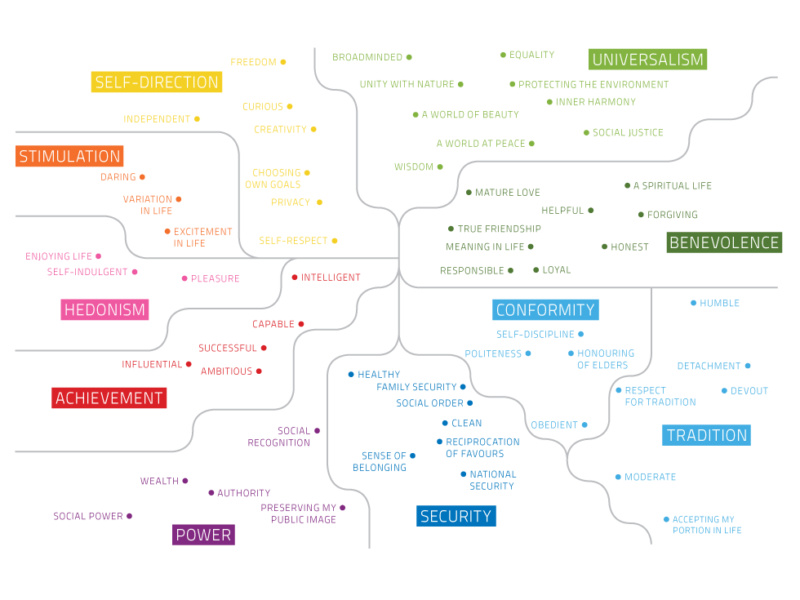
If you’re a science communicator or educator at an informal science center (such as a zoo, aquarium, or museum) trying to encourage conservation action – this is the round up for you! Every Friday we break down the week’s most interesting news and best resources to help you frame the issues as effectively as possible. Values are valuble for reaching people Values help campaigns reach new audiences We may think that we make our decisions based on rational thinking, but that is obviously not always true. If that were the case then information-based behavior change campaigns would be wildly successful and, yeah, they super aren't. One promising way to connect with people for change is a values-based approach. The aforementioned article gives a quick overview of some of the work Greenpeace is doing based on Cultural Dynamics Strategy and Marketing in the United Kingdom - targeting audiences based on their identified underlying values. Common Cause: the Case for Working with Values and Frames For a simple - and visually beautiful - intro to these ideas, check out WWF's Common Cause. Sparked by their 2010 report, this website lays things out in an online Handbook, collects some reports, and occasionally blogs on the issues. Just how many climate skeptics are there? Just how many climate skeptics are there? There are a lot of climate opinion polls, and the answers may change depending on how the questions are asked, and what the weather's like. So - just how many people actually believe there is no climate disruption happening? The short answer is: probably 10% or less depending. However, one study found that the "skeptic" group, when asked their estimate of how many people doubted climate science, guessed about 50%. So why the discrepancy? The article is well worth a read though it doesn't necessarily come to strong conclusions. 75% of U.K. kids worried about climate change This poll is especially poignant considering last month's draft of new UK curriculum guidelines which removes all discussion of climate change for students under 14 years.
Continue reading -
Seas the Day in April – Clean your home the ocean-friendly way!
The Seas the Day initiative encourages and empowers people to take ocean conservation personally. Each month, the Seas the Day initiative features a new conservation theme with ways to help so come back regularly for more ocean-helping ideas and tips! Created mainly to support our partner ZAMs (Zoos, Aquariums, and Museums and other visitor-serving organizations involved in our growing network) motivate conservation action, Seas the Day is for you to tailor for your own purposes. Please use any or all of the content verbatim and re-post on your own blog, social media channels, website, newsletter, etc. We have a large database of action tips and related content for you to use so let us know what's most helpful and what other action-able types of information and resources we can provide to enhance your conservation efforts. Seas the Day in April Clean your home the ocean-friendly way Last month, we discussed ways you can help our ocean by becoming a conscious commuter and we hope you're having success in making that important shift. This month marks the three-year anniversary of the explosion of BP's Deepwater Horizon oil rig in the Gulf of Mexico, providing fresh impetus to follow through and help our ocean in additional ways. Create a safer, less hazardous, home. Say "Yes!" to a healthier home and a living ocean. Make the switch to effective non-toxic and green alternatives. If you buy commercial cleaning products, avoid those labeled dangerous or poisonous, as they likely contain ingredients that can be deadly for all sorts of life. If you have any household hazardous waste, such as paint, yard chemicals, and pesticides, please dispose of them safely, ideally at proper recycling centers. (If your town doesn't have a community hazardous waste collection or recycling program, encourage your elected officials to start one!) Quick tip: Invest in greener, rechargeable batteries. They cost more up front, but will save you money over time, and help our ocean planet. Make your home clean and green. April's a great spring cleaning month, especially if you try using a few new helpers, such as baking soda, vinegar, and lemon juice. Many typical household cleaners contain corrosive and toxic chemicals. Rinsing them down your drain doesn't mean they go away – chemicals often end up in nearby water systems or eventually the ocean, where they can harm critters that call water their home. Find do-it-yourself recipes online and you can have a clean home while protecting the health of your family and our ocean. Quick tip: Try washing windows using old newspaper with warm water and a little bit of vinegar. It works well and it’s recyclable! Please let us know how you’re taking ocean conservation personally so we can share with others.
Continue reading -
Weekly Round Up: tis the season for energy polls
If you’re a science communicator or educator at an…
Continue reading -
Youth, Digital Literacy, and Social Activism
With social networking platforms covering the bases of personal expression, current events, pop culture, professional news and trends, and photos (Facebook, Twitter, Pinterest, LinkedIn, Instagram, Foursquare, etc), there is no question that social media has become a necessary tool for organizations’ online communication. What makes this communication technology different from other mediums of info dissemination is the fact that adults recognize youth as experts. With this phenomenon, professionals have identified a potential link between youth digital literacy and social activism. Commerce and culture expert Patricia Martin asserts that mobilizing Millennials is one of six important cultural trends driven by technology. This not surprising, considering the finding that the majority of youth use digital and mobile technology according to the Pew Research Center. Underlying this cultural trend is the continuing importance of the families providing support to cultivate and maintain lifelong learning among youth. Instead of restricting learning to traditional classrooms, we need to reach youth in the settings and environments in which they are already engaging, namely online. In order to determine how youth are using their digital literacy, we must consider the ways in which youth communication has been shaped by these technologies. To be certain, classroom teachers believe digital media has had multifaceted effects on youth. While teachers perceive entertainment media to have some negative effects on attention and focus, they also recognize significant positive effects on youth academic and social development. The digital environment has changed teens’ research behavior for the better—teens use the Internet to get their questions answered and they recognize the importance of learning how to distinguish credible resources. Additionally, the Internet provides a wealth of resources for youth to teach themselves about things they’re interested in, including learning how to play an instrument or how to use new creative software. New Research on Reaching Youth Here is some recent research from 2012-2013 that suggest a potential for youth to use their digital literacy for social good in addition to personal expression: Here is an optimistic future in “connected learning,” where young adults use digital media to combine their interests, academics, and peer culture in productive ways in a networked society. One example includes young writing enthusiasts maintaining an online blog without the pressure of school grades but still benefiting from the support of an interactive online community. Research has shown again that when compelled by what they learn in school, children’s passions for the environment become an important influence in educating parents, too. Children are not unusual participants in environmental advocacy—they can even help lead large clean energy projects, as demonstrated in Kenyan and British schools. Youth of diverse ethnic and racial backgrounds care about issues that affect their lives and are willing to take action to impact these issues--41% of youth are already engaged in participatory politics. The YPP offers tools for organizations to help realize youth’s potential influence, as they value control over their political identities. Some organizations have started to identify ways to connect with youth and have used these insights to mobilize this generation. One cultural institution offers free seats to those who tweet their thoughts during a performance as a creative way to engage younger audiences. Additionally, scholars recognize the need to support youth activism in civic life by building off their existing engagement. This report summarizes the current knowledge of youth service activism in the digital age and offers promising directions for future research, policy, and practice. The above examples are only a few from the past year that show organizations engaging youth’s technological fluency. Undoubtedly, this is a critical point to engage those Millennials whose professional future faces a tough economy. Although not all social media fosters social activism, researchers, educators and policy makers can figure out how to take advantage of those online communities that do increase civic engagement. The value of youth organizing has been proven and it is possible for participatory action research to enhance the link between youth digital literacy and social activism. Future Engagement A discussion of best practices has already begun -- how does your organization tap the potential of youth digital literacy and social activism?
Continue reading