-
Shaping a conservation “ask”
For World Oceans Day this year, we’re encouraging all participating organizations to create celebrations that go beyond raising awareness to inspiring action under the theme, “Together we have the power to protect the ocean!” We want to make real change for the ocean, so we need to ask people to do something to keep the ocean healthy. To our zoo, aquarium, and museum partners: our own extensive public opinion research tells us that the public not only expects and trusts, but also appreciates suggestions from aquariums, zoos and museums for ways they can help the ocean and its animals. Plus – institutions that highlight their mission could benefit financially! The Action Guides we've posted focus on marine debris, clean energy, and sustainable seafood. But what do you do if those actions don't fit into your celebration? This post by Douglas Meyer lays out four key steps for designing an inspiring "ask." Click here to download this guide as a PDF Organizational decisions Pick a problem Among the various problems facing our ocean and its animals, which one would you like to address with reference to World Oceans Day? Establish a connection Is there a specific species or a particular place that is relevant to your organization and your visitors, and can be used as an example? Decide on a solution step What are the various ways you could ask visitors to help? Which of these are a good "fit" for you and your visitors? Some considerations based on research and experience: Are you suggesting something that is both meaningful and measurable? Is this above and beyond what most visitors already are doing, but not too much of a stretch? Is there a logical "next step on the ladder" for those who already have done, or are doing what you are suggesting? Will visitors trust and appreciate this suggestion coming from you? Can visitors start, if not complete the action while on site? Is there another organization with which you could partner? Hint: Your success may lie in referring visitors to an existing program rather than in trying to create your own! Which of these are easy for visitors to share with others? Set a goal In one sentence, what do you hope to accomplish? Is this goal "SMART" (Specific, measurable, attainable, relevant and time-bound)? Audience considerations Determine the decision makers Is there a specific subset of visitors who will be your decision makers? Reminder from the research that teens and young adults often have not only the highest interest in ocean issues, but the highest belief in their own ability to make a difference. Understand their current position Do you need to frame, fortify or reframe the issue as part of your ask? Is your ask one step beyond what your audience is already doing on this issue, but not too much of a stretch? Can you connect your ask to a clear benefit for a specific species or particular place? Can you provide them with an initial, if not the final step to take during their visit, whether on site or online? Based on your answers to the above, do you think this ask has a high likelihood of success? If yes, proceed. If not, pick another! Shape your message to your audience What core concerns or beliefs can you tap to increase their willingness to act? What barriers to action might you need to overcome? Can you start with the solution, and position your audience within it? Tactics Explore the possibilities What are the best ways to deliver this ask to this visitor audience? Consider the realities Which of those are possible within the limits of time and budget? Advice from our partners: Keep it simple! It is often better to focus your team on one tactic for World Oceans Day, and do it well, than to try to coordinate three or four different approaches. Remember, imitation is the sincerest form of flattery! Is there an approach that you've seen work elsewhere? Measures of success Beyond outputs to outcomes and impact! How might you measure the number of visitors taking action, and, ideally, the collective impact of those actions? In light of how public opinion research tells us that visitors expect, trust and appreciate advice on how they can help conserve the ocean and its animals, how might you track this?
Continue reading -
Seas The Day April – Clean Green
The Seas the Day initiative encourages and empowers people…
Continue reading -
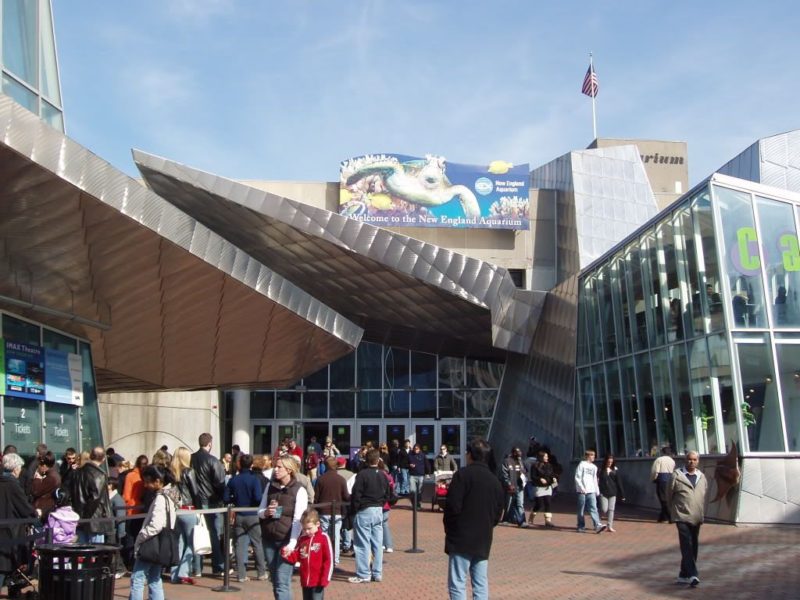
ISG+ New Project: NEAq ClimaTEENS creating a city-wide dialog for youth in Boston
This guest post by Heather Deschenes of New England Aquarium is the first in a 3-part series on their Innovative Solutions Grants+ project, which investigates how teen ambassadors can make a difference for their city's green future. With support from The Ocean Project’s Innovative Solutions Grants and Program, ClimaTEENS is a gathering of 15-18 year-olds that care about the ocean and who want to contribute to a healthy future. Teens in the program arrived with varied levels of knowledge about climate change, but are united by a desire to learn more about it as an issue of concern and are committed to learning ways to engage public audiences, particularly their peers. With guidance and support from aquarium staff and an introduction to strategic communication theory, participants will develop an in-person presentation to share at three youth oriented conferences annually, create blog posts for the Aquariums website and a video to share through social media. Their messages will be shaped with four themes in mind : Our lives are connected to the ocean Climate change is affecting the ocean Communities are already working to mitigate disruptive impacts of climate change. Youth voices matter Presentations, blog posts and videos will all encourage listeners or readers to join a citywide effort to reduce carbon emissions called Greenovate Boston. Greenovate Boston is a community-driven movement to get all Bostonians involved in reducing the city’s greenhouse gas emissions 25% by 2020 and 80% by 2050, as outlined in the City’s Climate Action Plan. By laying out the necessary steps to reduce the causes of and to prepare for climate change, the Climate Action Plan gives Greenovate Boston a framework for building a greener, healthier, and more prosperous city. The youth voice in the Greenovate effort is growing and we aim to support that growth. In addition, the Greenovate website will allow for ClimaTEENS audiences to: Pledge to take part in carbon emissions reducing activities Invite others to join them in those activities Provide feedback and ideas for future activities and initiatives Greenovate Boston also leverages a growing ambassador program that enables trained Greenovate Ambassadors to host public in-person meet ups where dialog is about climate change and how we can address it. ClimaTEENS will host a meet up for youth before August 2014. We anticipate being able to measure impacts of ClimaTEENS efforts from direct website hits based on our message because the Greenovate website is enabled with a number of built in evaluative properties. For example, in-person audiences of ClimaTEENS presentations will be asked to visit the website and leave a comment referencing the presentation and mentioning an activity the presentation inspired them to participate in. Blog readers and those who watch ClimaTEENS’ video will be asked to reference ClimaTEENS using hash tags as they interact with the Greenovate website. We’re enthusiastic about facilitating connections between youth and the ocean and hope to inspire them to contribute in meaningful ways to a growing community of ocean stewards. ClimaTEENS are helping to support and extend the New England Aquarium mission. -- Heather Deschenes, Manager of Youth Development Programs at New England Aquarium
Continue reading -
Communications medley: A car-free future and the impacts of extreme weather on climate opinion
In this week’s round up: How millennials are thinking about transportation, Americans' view environment more important than growth and the impacts of recent weather events on public perception of climate change. If you’re a science communicator or educator at an informal science center (such as a zoo, aquarium, or museum) trying to understand the perspectives of your audience and find ways to promote conservation action – this is the round up for you! Every week we break down the most interesting recent news and best resources to help you frame the issues as effectively as possible. Some of these resources will be practical communications and framing tips, and others are great starting points for brainstorming future strategies. Jump to… Millennials go car-free American's pick environment over climate change Extreme weather impacts climate change perceptions Millennials go car-free Millennials Don't Care About Owning Cars, and Car Manufacturers Can't Figure Out Why - From 2007 to 2011, car purchases by ages 18-34 fell by 30%! This article by Darren Ross describes how millennials are choosing not to own cars and why car manufacturers can't figure it out. What we can learn from millennials who opt out of driving - Are young people becoming more aware of the high costs of driving? This article takes a closer look at why millennials are opting out of driving and the lessons that we can learn. American's choose environment American's Again Pick Environment Over Economic Growth - A recent Gallup poll has demonstrated the largest partisan gap over priority ever recorded! The Gallup poll shows that American's choose the environment over economic growth by a healthy margin, particularly among ages 18-29. The impact of extreme weather Natural Disaster's Play a Significant Role in American's Climate Opinions - According to a 2014 Gibbs & Soell Sense & Sustainability® Study, 60% of American's attribute climate change to human actions. Can Extreme Weather Build Support for Climate Solutions - In the wake of extreme weather conditions, climate communicators strive to find ways to communicate the importance of recognizing the impacts of climate change. This article provides six key talking points for climate communicators on how to engage your audience effectively.
Continue reading -
Communications medley: Looking at numbers and what it takes
In this week’s round up: Public perspectives on climate change and thoughts on what stimulates social change, If you’re a science communicator or educator at an informal science center (such as a zoo, aquarium, or museum) trying to understand the perspectives of your audience and find ways to promote conservation action – this is the round up for you! Every week we break down the most interesting recent news and best resources to help you frame the issues as effectively as possible. Some of these resources will be practical communications and framing tips, and others are great starting points for brainstorming future strategies. Jump to… The stats What motivates change The stats 80% of Europeans Agree Tackling Climate Change Boosts Economic Growth – according to a new Eurobarometer opinion poll 4 out of 5 European Union citizens believe that mitigating climate change and increasing energy efficiency can boost the economy and employment. A Steady 57% in U.S. Blame Humans for Global Warming – according to a fresh Gallup poll which tracks American’s views on climate change, more Americans believe the increase in Earth’s temperature over the recent decades is a result of human pollution, not natural causes. Americans Most Likely to Say Global Warming Is Exaggerated – although most American’s believe that global warming is happening, they also believe that the news is responsible for over exaggerating the impacts that climate change is having on the Earth Emerging Economies Lead Climate Action, Globe Study Finds – A Globe International study investigating which countries lead in fighting climate change shows that emerging economies are at the front of the pack for establishing ambitious policies. What motivates change? How Ultra-Conservative Utah Became An Unlikely Bastion Of Environmental Activism – One might not expect the citizens of Utah to be the most environmentally active population in the United States. However, growing recognition for the need to protect the environment has been sparked by the unpleasant impact of air pollution, which causes immediate short term effects for Utah residents. What Moves Americans to Support Social Change? – A recently released report by ecoAmerica dives into in investigation of what moves American’s to support social change by looking at recent successful social movements. The report identifies four synergistic stages that were fundamental for each campaign.
Continue reading -
Seas the Day March – Green Transportation Choices
The Seas the Day initiative encourages and empowers people…
Continue reading -
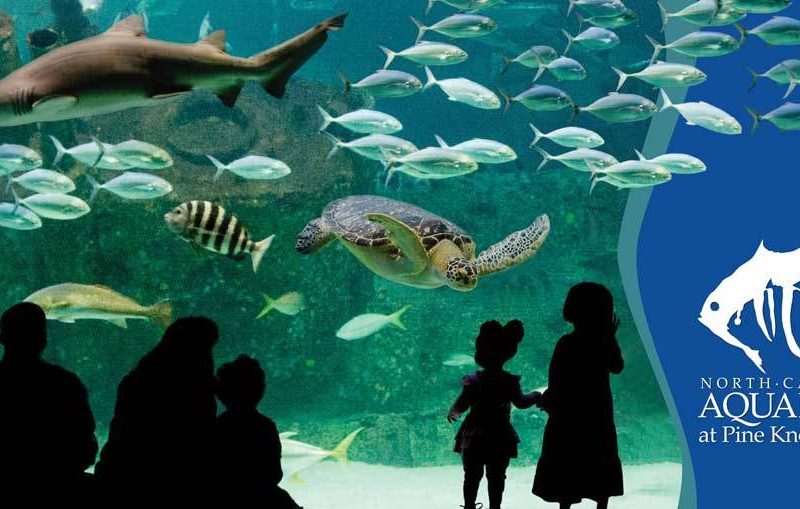
ISG+ New Project: NC Aquariums prepare a green power(ful) experiment
This guest post by Windy Arey-Kent of NC Aquarium at Pine Knoll Shores is the first in a 3-part series on their Innovative Solutions Grants+ project, aimed at testing different approaches to engaging guests for conservation action at aquariums. The North Carolina Aquariums are excited to be working with The Ocean Project on their Innovative Solutions Grant projects in 2014. There are four NC Aquarium sites that are each participating; the Aquarium at Fort Fisher, Aquarium at Pine Knoll Shores, Aquarium at Roanoke Island and Jennette’s Pier at Nags Head. Each of the sites, working in cooperation with Greenlight Energy, will be focusing our efforts to promote and market clean energy in the form of Renewable Energy Certificates (RECs) to our visitors during the peak visitation months of May – September, 2014. The three Aquarium facilities will be testing separate interpretive messages and approaches to see which approach is most effective in motivating our visitors to engage in a specific conservation ‘ask’, and to take personal action by purchasing REC’s for their homes. In turn, each site will receive a 1:1 match from Greenlight; for each REC purchased at a site, that facility will receive a REC to move each of us towards a goal of 100% green power. The pier site, offering a very different facility and path for visitors, will offer this opportunity for visitors through a stand-alone kiosk. There will be similarities at each site in our content, our ‘ask’, and the types of information given to visitors regarding the program and green power, in general. The approach at each site however, is the variable that we will be testing. At Fort Fisher, educators will be utilizing the NNOCCI model (National Network for Ocean and Climate Change Interpretation) of interpretation where emphasis is placed on framing and engaging audiences in a positive way to overcome barriers and think productively about solutions to climate change and ocean acidification. At Roanoke Island, a single conservation educator will be versed in promoting REC’s to visitors one-on-one, and will be able to engage in in-depth conversations about green power, REC’s, and the environmental consequences to living in a carbon-reliant society. A third model at Pine Knoll Shores, will take a community-based social marketing approach that utilizes the principles of conservation psychology to stress the benefits of purchasing REC’s for the Aquarium and its’ animals. The pier site, a LEED (Leadership in Energy and Environmental Design) certified facility with wind turbines and green power showcased on-site, will offer a kiosk where visitors are inspired to action, not through interpretation, but as a result of their visit to the site itself. To evaluate the effectiveness of each approach and method, we will utilize technology provided by Greenlight Energy that offers visitors an on-site ‘dashboard’ for sign-ups through tablets, cell phones or laptops. In addition, there will be a “text to” option for visitors onsite to gain more information on the program or directly sign up to purchase REC’s for their own homes. We will test each approach by measuring: the numbers of inquiries for additional information (texts sent or hits to each individual ‘landing page) how many visitors purchase REC’s visitor satisfaction in the program, using ipad surveys and visitor intercepts at each site. We will then compare the three approaches at the Aquariums to the kiosk at the pier, which relies on the visual inspiration and behavior modeling to inspire action. Progress and results will be disseminated widely amongst our colleagues in the aquarium, zoo and museum communities, both by way of this blog and using sites such as climate interpreter, as well as, we hope, at the AZA annual meeting. Send along a note if you want to know more. We welcome your feedback! - Windy Arey-Kent, Education Curator at North Carolina Aquarium at Pine Knoll Shores
Continue reading -
Seas the Day February – Get connected!
The Seas the Day initiative encourages and empowers people…
Continue reading -
Poll: Red or blue, regulate CO2
Results from a national survey conducted in late 2013, and made public yesterday by the Yale Project on Climate Change Communication and the George Mason Center for Climate Change research, show strong support for action among Americans of every political orientation. A whopping 83% of Americans say "the U.S. should make an effort to reduce global warming, even if it has economic costs." In a sign of hope for generating the political will to do what needs to be done to ensure a healthier climate and ocean, and a sustainable society for the future, majorities of both Democrats and Republicans support national action on climate and energy policies. Majorities of Americans in red, blue, and purple states support: providing tax rebates on the purchase of energy efficient vehicles or solar panels; funding more research into renewable energy sources; regulating CO2 as a pollutant; and eliminating all subsidies for the fossil fuel industry. From ClimateProgress: "In general, Americans want less fossil fuels and more low-carbon energy — with many willing to pay more for those benefits: 67% want to regulate carbon dioxide as a pollutant 59% want to cut fossil fuel subsidies entirely — while 60 percent think cutting renewable subsidies is a bad idea 56% would pay an extra $100 a year if it meant their electric utility was required to produce more than 20 percent electricity from renewables 72% want more research funding for renewable energy" For the complete study, "Public Support for Climate and Energy Policies in November 2013," please link here. Also, stay tuned as we will soon be releasing action guides, specifically to help our partner network effectively engage their visitors and the public in helping with solutions to climate change and ocean acidification through green power opportunities around World Oceans Day.
Continue reading -
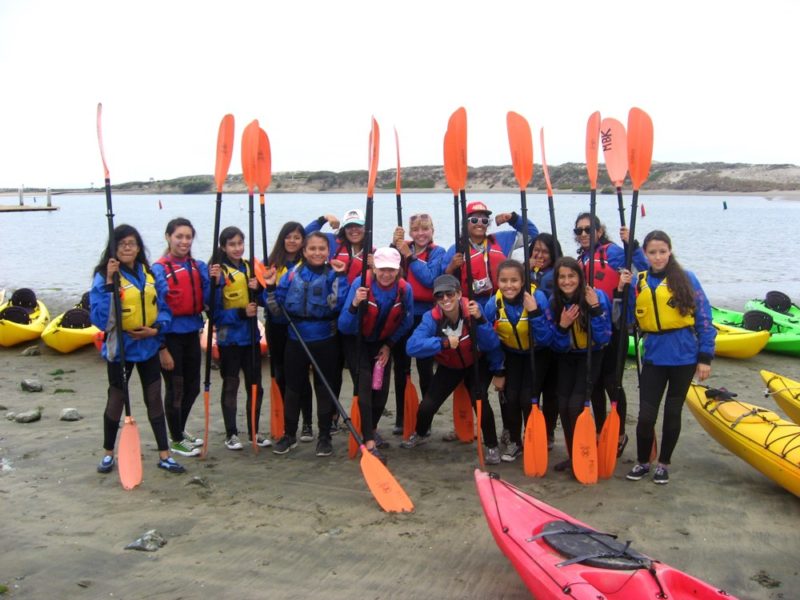
Young women are Monterey Bay Aquarium’s “Ocean Guardians”
In part 3 of our blog series on past Small Grants projects at zoos and aquariums, Dolores Toledo of Monterey Bay Aquarium shares what they've learned about helping young women from diverse backgrounds become confident, science-capable, and personally active in conservation. Background Monterey Bay Aquarium’s Young Women in Science (YWS) program began in 1999. Each summer we offer three, week-long, bilingual YWS camps. The camps provide young women entering grades 7-8 with extracurricular, hands-on science experiences and introduce them to women in the science field. The goal is to provide these girls with opportunities that foster their curiosity and sense of wonder, as well as bolster their self-image of being science-capable. Young women who live in Monterey, Santa Cruz, and San Benito counties are eligible to apply. YWS was created to motivate more girls to pursue science careers and feel science savvy. Today, studies show that while more females are making their way in the science fields, minority women are still falling short. Over the years YWS has strengthened our recruitment of low income and Hispanic young women who typically do not visit the Aquarium or pursue careers in science. Now more than ever, we ensure the program is conducted bilingually in English and Spanish to reach the underrepresented local Hispanic audience. Every summer more than 70 middle school girls participate in the two first-year camps “Otter Mystery.” Through their experiences, participants identify and connect the factors that influence the health of the threatened Southern sea otter population. The girls have the opportunity to observe sea otters while kayaking in Elkhorn Slough, use telemetry to track wild sea otters, go sand crab monitoring and surface scuba diving, among other activities. Making conservation personal In addition, 40 girls have the opportunity to return for a second year of camp-- “Ocean Guardians.” In this camp, participants are challenged to rethink their ideas about single-use plastic and learn about threats plastic can cause to marine species and to the local community. At the end of the week students create a Public Service Announcement to encourage others to become Ocean Guardians. This year, we are increasing the science content by including activities on bioaccumulation and plastic toxicity and including a conservation action, where students will rally the community to sign a pledge to SAY NO to disposable plastics. The Monterey Bay Aquarium’s Young Women in Science program engages middle school girls in real, hands-on science in a friendly, supportive context. Female role models support their learning about the science process. Girls interact with science professionals, learn about the kinds of activities that scientists do, and the preparation they need in order to become a scientist. The ultimate vision is to give them positive science experiences that will keep them interested in science throughout their high school years. Goals of the program At the same time, we know not all girls will be attracted to science careers. We hope that they will feel self-empowered to pursue higher degrees and feel capable of making life and consumer decisions that may involve understanding science information. Our overall goals: Empower low income and Hispanic young women participants to engage in science. Help students feel inspired, confident, ocean literate and ready to act on behalf of the ocean. Increase their awareness of conservation and their personal role in conservation. Introduce participants to community partners and opportunities that support their involvement in science. Understand how events in nature can be explained by science. Throughout the camps, the young women discuss what they know about conservation practices and how they put those practices. Most are familiar with recycling and reusing, but this year, we are introducing them to the idea of refusing. The goal is that participants will continue practicing these actions at home, school and in their community after the program ends. In addition, all curriculum is woven with conservation themes of habitat conservation and ecosystem interconnectedness. The program is staffed by science educators from the Monterey Bay Aquarium. Women scientists from various fields share their work and mentor young women during the weeks. Middle school science teachers also participate as staff, serving to foster the student-teacher that relationship. Recently, some of our YWS alumni have been hired as paid Program Assistants for Young Women in Science. These college students are excellent and inspirational role models for our girls and for us. -- Dolores Toledo, Bilingual Education Specialist at Monterey Bay Aquarium
Continue reading


