-
Aquarium of the Bay: reframing climate change for action
In part 2 of our blog series on past Small Grants projects at zoos and aquariums, Quinn White of Aquarium of the Bay shares what they've learned about making climate change personal, and asking visitors to take action. Background and summary of project Aquarium of the Bay strives to improve the future of San Francisco Bay and its watershed by engaging a new generation of stewards and advancing real solutions for a healthier habitat. We reach a broad audience of residents as well as visitors from all over the world. Our goal was to help these guests commit to addressing climate change on a personal level. Updates on project Thanks to support from The Ocean Project, the Aquarium successfully trained our staff to frame climate change in a way that helps guests understand climate change and its impact on their own lives. Previous experiences frame how people see the world, so two people can look at a prop or an animal and understand it in two completely different ways. By connecting guests’ personal experiences to the topic at hand, we can expand their frame of reference to help them understand the problem of climate change—and its solutions. In addition to our improved messaging, we added an environmental action dimension to visitors’ experiences. Our Climate Change Action cards reinforce messages about taking local action, so Aquarium visitors understand specific ways they can personally make a difference in their own backyard. These tools have been combined to update all five of our climate change-focused daily visitor presentations. Our animal ambassadors and their associated call to action have successfully turned a moment of inspiration into an opportunity for visitors to make lifelong changes that lessen their environmental impact. We took our message online as well—you can find our climate action cards on our website. The online component was inspired by The Ocean Project’s recent research on the importance of online education. Our website now shares these printable cards as well as stories that highlight what our staff is doing to reduce their own carbon footprints. Lessons Learned The responses we’ve received regarding the updated visitor presentations from staff and guests have been very positive. Staff report that it is easier to talk to guests with a more hopeful message and it is easier to have a conversation when connecting to their universal values. The stay time for guests has also increased; in the past, guests would listen for a few minutes and then leave; now they stick around for the entire presentation. Guests are also more engaged and asking more questions, and the presentations have turned into productive conversations, sparking curiosity and inspiring further action. After learning about framing and universal messaging, one staff member said “Frankly, I’m blown away.” He mentioned that he had heard about universal framing but had never realized its effectiveness until the training. Staff have noticed that children especially are more excited when they participate in the visitor presentations. For example, in our ocean acidification presentation, children are excited to learn more about ocean chemistry and why it’s important to keep the ocean’s water healthy. Also, in our solar and wind power presentations where we focus on innovation for alternative energy, visitors leave inspired and children want to learn more so that when they grow up they can help innovate other forms of energy. In regards to putting their training into practice, staff often responded by simply saying, “It really works!” The training also resonated with staff by identifying ways to front load key messages. In other words, putting the conservation message at the beginning of the presentation grabs the audience’s attention and helps them be more invested in the issue. - Quinn White, Development Manager and Grant Writer at Aquarium of the Bay
Continue reading -
Communications medley: climate story-time
In this week’s round up: climate story-time in America,…
Continue reading -
Communications medley: Baby it’s cold outside
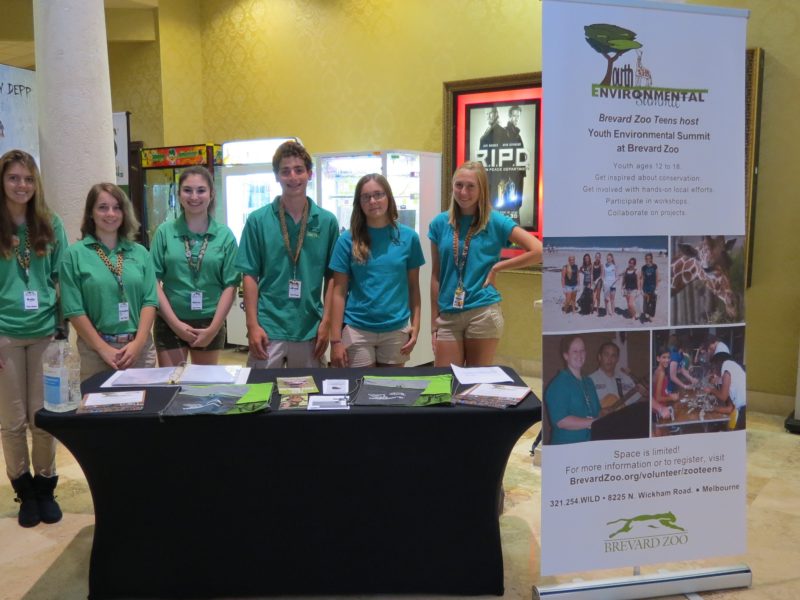
In this week's round up: audience insights from new polls, behavior change thoughts, weather's impact on climate belief, and why your taste for seafood makes whales cry. Welcome to the first round up of the year! I've tried to keep things short since there's a lot of good stuff to cover. If you’re a science communicator or educator at an informal science center (such as a zoo, aquarium, or museum) trying to encourage conservation action – this is the round up for you! Every week we break down the most interesting recent news and best resources to help you frame the issues as effectively as possible. Some of these resources will be practical communications and framing tips, and others are great starting points for brainstorming future strategies. Jump to... Audience insights Behavior change Weather and climate Other thoughts Audience insights Americans: Sure, climate change is happening. So what? A few new polls (USA Today, Yale Project on Climate Change Communication) have come out recently with similar results. Around 2/3 of Americans believe that the Earth is warming, but only around 1/3 think it will affect them. However - 65% think it will harm future generations of people and wildlife. Latino Voters Oppose Coal Exports A new poll supports what we already know - Latina/o voters are greener than other Americans. This poll found 64% of Latinos say coal exports to China should be decreased. Behavior change From Behavior Change to Transforming Everyday Practices: The Latest in Behavioral Science This is an interesting article that takes a mile-high view of how we can best encourage sustainable behavior change. Baby it's cold outside... so how about that global warming? Belief in climate change often changes with the seasons, but why? A new study may have the answer - humans tend to use the information most readily accessible. That's why people are less likely to believe in climate change when it's cold out, and more likely to believe on a very hot day. Sadly, the solution to this issue isn't readily accessible. Here's another take, with notes on how UK residents view this issue. Other thoughts Insights from Brevard Zoo’s youth-led environmental summit Check out this great guest post on the TOP blog from our partners at Brevard Zoo. They leveraged a small grant from our program and held an environmental summit for-teens, by-teens. Check out the post for some great tips both on how to plan a summit as an adult, and how to promote it as a teen. Whales, Dolphins Are Collateral Damage In Our Taste For Seafood It's a tough fact to face, but show some mammal solidarity! Our taste for seafood negatively impacts these charismatic megafauna and it's time to face facts. "Biologists have estimated that 650,000 are killed or injured each year. Of that, 300,000 are dolphins and related cetaceans, and 350,000 more are seals and sea lions." These facts could be a great jumping off point to share sea life-friendly seafood tips with the public. A Dose Of Nature Helps City Dwellers Fight Their Need For Instant Gratification In today's edition of "stuff I totally knew already but had no proof..." getting outside is good for your brain! More than that, you don't even have to get your body outside. There's evidence that even looking at a photo of nature can be good for the brain. This info could be handy for organizations such as zoos, aquariums, museums, nature centers, etc. You may not know why you think what you think Last but not least is a great article on motivated reasoning, framed from a political perspective. It discusses how political affiliation - or "tribe" - can seriously impact the way we form opinions about neutral information. Certainly worth a read.
Continue reading -
Insights from Brevard Zoo’s youth-led environmental summit
In part 1 of our blog series…
Continue reading -
Talking to Teens about Talking to Angry “Birds”
Deb Kerr on why teens who want environmental action don't need to preach to the choir nor the critics. Relief. That’s the first reaction I get from teenagers when I start explaining the choir, congregation and non-believer model—relief to be off the hook and no longer under pressure to persuade and convert someone who is clearly not ready to be an advocate for the environment. Back in 2009, when I was at Shedd Aquarium, we asked Slover Linett Audience Research to take a look at how our outreach team was doing when they approached members of the public to ask them to take action for the Great Lakes. One result of that work is a great lesson I take with me whenever I talk to teens, teachers, educators and interpreters. In every group of people, you will encounter three kinds of persons. The choir. These are folks who reflect your value system. They are already on board, passionate about the planet and taking action in their lives. The congregation. These people are interested in what you have to say. They may not know much about the issue, and they are ready to be persuaded. And this is the largest segment of those we will encounter! Here is the opportunity we message carriers have to bring someone on board and make a choir member. The non-believer. This person has some other issue that is blocking his or her receptivity to your message. Changing this person’s mind will take huge amounts of effort and ability, and will probably be unsuccessful anyway. Here is the key: Focus on the congregation. When you encounter a non-believer, politely disengage yourself from the conversation as quickly as possible and move on to influence a congregation member! Just two weeks ago when I spoke with Reid Park Zoo and Arizona Sonora Desert Museum teens, one of the Museum teens described an unpleasant encounter with a visitor, who was clearly a non-believer. The Museum teen—in fact, all the teens in the room—were relieved to know they don’t have to convert the non-believers. They can make more progress by influencing a congregation member. At a recent Coastal America Student Summit, a teen from Texas asked me, What do I do with this guy in my class, who is always arguing with me about climate change? I answered, “Tell him to please be quiet while you talk to others in your class who ARE interested in what you have to say.” A big smile spread across her face.
Continue reading -
The Ocean Project Innovative Solutions grant winners announced!
With thanks to National Oceanic and Atmospheric Administration (NOAA) over the last several years, The Ocean Project has been helping our partner zoos, aquariums, and museums (ZAMs) advance conservation action. Most recently, NOAA Education has funded the first year of a three-year project that will allow The Ocean Project to invest in supporting innovators in the community (the grant this year stipulated that Innovative Solutions grants only be given to AZA-accredited aquariums; our hope in the future is that this grants program will become open to our other institutional partners - e.g. zoos and museums). The plan is for this Grants+ Program to build on what we learned from our small grants program over the last few years and provide our partners with the resources and strategic communications services to do more for ocean and climate conservation and will empower them to succeed in their role as trusted messengers for conservation solutions. We’re referring to this program as the Grants+ Program because it involves much more than just financial resources. With each grant, The Ocean Project provides financial resources for our partner aquariums to develop innovative local and regional ocean conservation solutions and stewardship initiatives, specifically targeting youth and minorities. We plan to maximize the benefit of each grant by including strategic communications capacity building opportunities for the awardees, including strategic and technical resources and expertise to more effectively engage their visitors. We will also work with each grantee to help accelerate peer-to-peer learning and widely share resulting new strategies and successes with the wider community, especially our growing partner network of 2,000 ZAMs and other conservation and education organizations in all 50 states and worldwide. Additionally, we’re also seeking to leverage this funding to expand the program and happy to work on joint fundraising opportunities with interested partners, including awardees to expand on their innovative projects and/or runner-ups for awards. Thank you to all who applied for a grant from The Ocean Project’s Innovative Solutions Grants+ Program. For this first round of the Innovative Solutions Grants+ Program, we had a very competitive pool of applicants from the aquarium community. Our Advisory Panel had a challenging time deciding on the award winners. We are pleased to announce the following grant recipients: New England Aquarium: Awarded $17,500 for "New England Aquarium ClimaTEENS Community-wide Solutions." The ClimaTEENS project will help 40 teens provide climate change workshops and presentations for peers focusing on community-wide solutions. The teens will complete in-depth training and develop materials with help from staff experts in climate science and interpretation. North Carolina Aquarium Society: Awarded $16,000 for "Promoting Renewable Energy Certificates at the NC Aquariums." Their three aquariums and an educational pier facility will develop, deliver, and evaluate new and effective conservation messages that will encourage their visitors to take immediate conservation action by purchasing renewable energy credits (RECs) for their homes. In turn, for each REC purchased by a visitor, the respective site will receive a REC matched by Greenlight Energy. Each site will take an individual approach to messaging and delivery so that they can evaluate the methods and messages that are most effective based on how many visitors sign up at each location. Oregon Coast Aquarium: Awarded $20,000 for “Empowering Youth to Inspire Social Change: An Ocean Acidification Social Marketing Campaign.” Their youth volunteers will create and implement a pilot social marketing campaign targeting youth. The campaign will raise awareness in communities being impacted by ocean acidification; identify and then ask youth to adopt a new behavior to minimize ocean acidification; and provide incentives to encourage and measure the adoption of the identified behavior. The Ocean Project looks forward to working with all our partners in 2014 and beyond, to help our partner ZAMs communicate strategically for conservation action, outcomes, and impact. Also, we will be releasing another RFP at some point in 2014 so watch the blog and our website for further information.
Continue reading -

Communications medley: Solar boom, car crash
In this week's round up: finding common ground on our values, a crash in Americans commuting by car, DON'T buy buy buy - for the children, and more. If you’re a science communicator or educator at an informal science center (such as a zoo, aquarium, or museum) trying to encourage conservation action – this is the round up for you! Every week we break down the most interesting recent news and best resources to help you frame the issues as effectively as possible. Some of these resources will be practical communications and framing tips, and others are great starting points for brainstorming future strategies. Jump to... Thoughts on communication By the numbers Thoughts on communication It's what we all are striving to figure out - how can we communicate with other people in a way that leaves an impression? Here are some thoughts that may help: Climate communication: know thy audience, know thyself It's critical to keep your target audience in mind when communicating - but it's also important to know your own strengths and weaknesses as a messenger. Douglas Meyer shares some thoughts in this mini-blog. Finding the Common Ground This interesting post by Lightbox Collaborative isn't specifically about environmental issues, but it's definitely applicable. You may know that there are six fundamental morals most humans identify with (fairness, respect for authority, etc.) but did you know that political ideologies give these values very different weight? However - that doesn't mean you can't talk about issues traditionally seen as "liberal" using "conservative" values. This post gives some tips. Is Every Day Black Friday? How Climate Inaction And Hypermaterialism Betray Our Children It's a confrontational headline but it makes a common sense point - if you care about the future of our children, buying them junk for the holidays is self-defeating. 1/4 of America's energy use goes to creating products. Pair that with the fact that, in general, we value positive experiences over nice material possessions. By the numbers Stats, polls, all the new developments by the numbers. The US has 43 nuclear power plants’ worth of solar energy in the pipeline A lot of this is still in the planning stages, but there is a bright future for US solar power. Lame pun certainly intended! I like this article for talking with people who are still unconvinced that solar power is an up-and-coming energy source in America. Car commuters declining in 99 out of America's 100 largest cities There is a small but significant shift happening in the way America's city dwellers are getting around, and it doesn't seem to be due to the economy. This is a great stat to use when talking to people about biking and using the subway to travel - it's green and lots of people are doing it.
Continue reading -
Climate communication: know thy audience, know thyself
Our friends over at EcoAmerica have published an insightful overview, “Communicating on Climate: 13 Steps and Guiding Principles,” that pairs nicely with the recent research by the Climate Literacy Zoo Education Network (CliZEN), as well as the ongoing research we’ve been doing here at The Ocean Project. "Communicating on Climate" offers a set of quick tips for audience engagement, offering a good review and food for thought for those of us who've been working on this issue for a while, or a good starting point for colleagues who may be not have been as focused on these concerns but are now getting involved. To what is covered in this report, we’d add that not only to do we need to know our audiences, but we need to know ourselves. In other words, we need to ask not only, "Where are our audiences on this issue?" but, "Where do our institutions have credibility?" and, "What works best in the context of a zoo or aquarium visit?" So as to be sure we are playing to our strengths and avoiding our weaknesses. On this last note, our research here at The Ocean Project suggests that aquariums and zoos, for example, are likely to do best when the discussing the problem in relation to its impact on the animals, and offering solutions that are centered in the sort of personal action steps that help people feel good about themselves, and their visit. For more on that, see our general advice on what the research says about "shaping a good ask" for visitors. Hoping this helps, and, as always, we welcome your feedback!
Continue reading -

Support World Oceans Day for a healthy ocean
We're excited to announce our end-of-year crowdfunding campaign to support World Oceans Day! Our goal is make World Oceans Day bigger and better - in 2014 and beyond. Whether you're able to contribute $1 or $1,000, every donation will help us increase the reach and impact of this annual day of celebration. Join us in our mission to create a healthy, thriving ocean that continues to connect people everywhere – from every country, culture, and creed across the planet. World Oceans Day is a community-driven grassroots effort June 8th is World Oceans Day - when thousands of people around the world celebrate and take action to create a healthier ocean for everyone. Last year's World Oceans Day again was an inspiring experience. People around the world came together and took action for the ocean’s healthy future in a big way, with over 600 events in 70 different countries, held by aquariums, zoos, schools, businesses, local governments, moms, surfers, and so many more. These are people are reaching out in their own communities to do something to help protect the ocean and what it does for each one of us. How will my contribution help? Even though many of us don’t see the ocean daily, the ocean affects us and we affect the ocean. Our actions help protect it and the animals that call the ocean home. World Oceans Day is an opportunity to create widespread action and discussion about what we each can DO to keep it healthy. Your personal contribution will help support our community of event organizers, and build World Oceans Day into a bigger global rallying point for celebration and action; it will be an even better day to unify organizations and capture people's imaginations around the world to create important changes, locally, nationally and internationally. By supporting us with a gift for the ocean, we'll be able to: Greatly improve the World Oceans Day online engagement platforms Provide free educational materials and tools to event organizers Work tirelessly to promote this event and empower our partners to be the best ocean ambassadors to their communities And much more. With your help, we can collectively grow this event into a real force for change. Thank you!
Continue reading


