-
Seas the Day in July – Eating for a Better World
The Seas the Day initiative encourages and empowers people…
Continue reading -
Weekly Round Up: the facts don’t lie – but our brains do
In the round up this week: our brains twist…
Continue reading -
Happy belated birthday the father of the nature documentary
This is a guest post by Stephen…
Continue reading -
Weekly Round Up: Climate? Si se puede!
In the round up this week: diverse perspectives on environmental justice, zoos and aquariums making change, and new research. I've tried to keep descriptions brief this round up because there's so much good stuff! If you’re a science communicator or educator at an informal science center (such as a zoo, aquarium, or museum) trying to encourage conservation action – this is the round up for you! Every week we break down the most interesting recent news and best resources to help you frame the issues as effectively as possible. Americans: green, or greenbacks? A new study from the Yale Project on Climate Change Communication entitled Americans' Actions to Limit Global Warming (April 2013) has been released to much discussion. It takes a look at green consumer and civic behaviors and attitudes. Notably, half of Americans "occasionally" consider environmental impacts when making a purchase, and many plan to buy energy efficient appliances. Almost four out of ten (38%) of Americans said they would be willing to join a political campaign to advocate for climate change action! Chris Mooney, for Mother Jones, rains on the parade a little with a deeper dig into the data. Since 2008, fewer Americans believe their individual actions to save energy will reduce global warming, and there's been no real increase in their advocacy actions. Still - the potential is there if we can tap it! A diversity of opinions The environmental movement in America has traditionally been, unfortunately, rather homogenous (white and upper class), but the people most negatively affected by environmental degradation aren't. Here are some interesting articles about and from people fighting for a healthy environment and healthy underserved communities. Coal Pollution and the Fight For Environmental Justice Jacqueline Patterson, the Environmental and Climate Justice Director for NAACP, talks about how coal pollution (and seriously, ALL pollution in general) disproportionately impacts communities of color, and the difficulties environmental justice groups have faced trying to work with big green NGOs. Re-Made in the Shade OnEarth looks at two intersecting issues - the rising risk of heat deaths in cities, and the higher risk of minority populations to live in high heat risk areas. It's another less-than-obvious but deadly consequence of racial divisions and subsequent mistreatment in urban areas. Climate? Si se puede! Research by The Ocean Project and many, many, MANY(!) others continue to highlight the power of Latino voters and communities for environmental action. Sightline wraps up the background info in this blog post about a recent letter from national Latino organizations to President Obama, making the moral argument for action on climate change. Zoos and aquariums making change As always, our first priority is our zoo and aquarium partners working hard to communicate with their visitors for conservation action. Applying research, inspiring recycling Our recent blog post from Douglas Meyer reports on the successes and challenges of two of our aquarium partners - Virginia Aquarium and Texas State Aquarium - to reduce littering from their visitors, inspired by our research and work with them. Global climate change as seen by zoo and aquarium visitors This report from our partners at the Chicago Zoological Society is a must-read for those interested in informal science education/communication. The Climate Literacy Zoo Education Network (CliZEN) conducted this national survey with fifteen United States zoos and aquariums and reports on attitudes and behaviors.
Continue reading -
Applying research, inspiring recycling
Two of our partners recently reported on efforts to improve on-site recycling by applying some of the lessons learned from the communications research. Their efforts, each sparked by strategy sessions with The Ocean Project, brought impressive results as well as ideas for improvements. The Virginia Aquarium and Marine Science Center In the summer of 2012, staff at the Virginia Aquarium & Marine Science Center conducted a three part pilot project to see if they could help raise awareness and inspire action around the issue of marine debris, as measured in large part by less trash on the ground and more recyclables in the bins of their campus. To begin, they established a baseline by - you guessed it - counting trash and surveying visitors with thanks to a great team of volunteers. Next, they installed new cigarette butt bins and recycling containers and again counted trash and conducted surveys. And, finally, they installed inspirational signs with a focus on trash impacts on animals, and completed a third round of surveys. Based on The Ocean Project's research, the staff went into the project expecting visitors already to have high awareness of the problem of marine debris as a threat to the ocean. Their surveys confirmed this to be true. They also expected that visitors would welcome the new signs with information about how proper trash disposal and improved recycling could help conserve the ocean, especially as connected to the fate of the animals. This too proved to be true (And, not to be overlooked, the positive response extended beyond visitors to staff and volunteers as well). But did it work in terms of reducing trash and improving recycling? Yes, though perhaps not as much as they would have hoped. There was a notable and steady improvement, especially in terms of reducing the number of cigarette butts to be found on the ground, yet the counting of individual trash items may have affected their ability to effectively measure the remainder of their results. "The communications research from The Ocean Project helped us shape our effort, and we certainly confirmed that our visitors welcome our suggestions as to how they can help us conserve the ocean. We also learned that these efforts don't have to be high cost to be high impact." - Mark Swingle, the aquarium's director of research and conservation Texas State Aquarium Also during the summer of 2012, staff at the Texas State Aquarium was trying a similar experiment. They too had become frustrated at the way in which some of their visitors tossed trash on the ground, and failed to put bottles in recycling bins. Staff applied the major lessons of The Ocean Project's communications research, and also took advantage of the story they could tell about Tiki, a sea turtle, who was rescued after ingesting a plastic bag and becoming entangled in fishing line. Their approach emphasized augmenting existing signage by having their interpreters convey three simple, research-based messages, then counting the number of bottles being recycled and surveying guests for their opinions. The messages were as follows: Animals can get sick by eating plastic or get tangled in it(Based on the research finding that problems are more likely to be of concern when connected to their impact on specific species, such as species of sea turtles) Thanks for helping protect the animals by throwing away your trash and recycling plastic(Based on the research finding that guests tend to see themselves as part of the solution, not part of the problem --- even if they are both!) The Aquarium helps animals through its rehab program (To help reinforce the standing of the aquarium, and, as such the trust in its recommendations) The results? Guests left fewer items overall and 40% fewer plastic bottles in the stands after the Dolphin Bay and Wild Flight shows - wow! Staff, however, was somewhat disappointed by the way, albeit not unexpected way, in which increased action seemed unconnected to improved awareness. While more guests did cite plastics as a problem for turtles in the exit surveys, it was unclear if overall awareness of the problem of marine debris increased. Even then, the staff reported feeling that the effort was worthwhile and much was learned, and, of course, that 40% is not to be tossed away! The Ocean Project will continue to share stories from partner experiments in this blog. Have one for us? Please send it along!
Continue reading -
Weekly Round-up: Youth are takin’ it to the tweets
In the round up this week: young people are…
Continue reading -
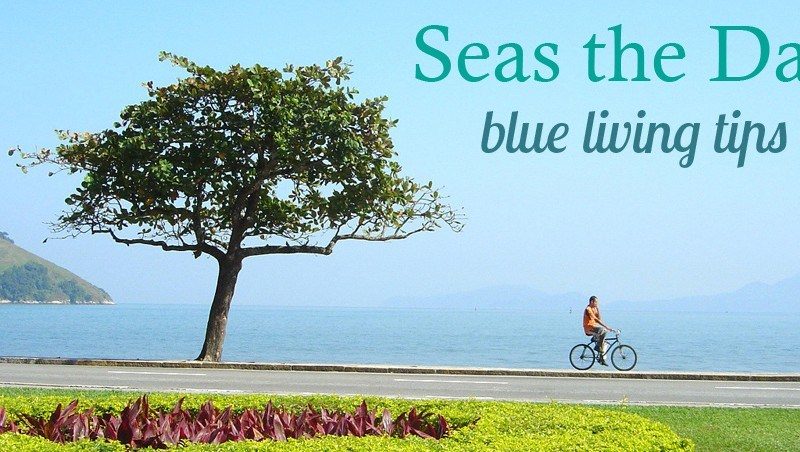
Seas the Day in May – Create an ocean-friendly lawn and garden
The Seas the Day initiative encourages and empowers people to take ocean conservation personally. Each month, the Seas the Day initiative features a new conservation theme with ways to help so come back regularly for more ocean-helping ideas and tips! Created mainly to support our partner ZAMs (Zoos, Aquariums, and Museums and other visitor-serving organizations involved in our growing network) motivate conservation action, Seas the Day is for you to tailor for your own purposes. Please use any or all of the content verbatim and re-post on your own blog, social media channels, website, newsletter, etc. We have a large database of action tips and related content for you to use so let us know what's most helpful and what other action-able types of information and resources we can provide to enhance your conservation efforts. Seas the Day in May Create an ocean-friendly lawn and garden Last month, we discussed ways to help clean your home the ocean-friendly way. This month you can help the ocean by creating a truly green garden. Make your lawn and garden seahorse-friendly. Remember, your local river most likely leads, eventually, to the ocean! Chemicals used on lawns and gardens can harm pets and are also poisonous to children, as well as downstream ocean creatures. Rains can wash off what's on your yard, so join the growing movement to rid ourselves of toxic lawn pesticides and other chemicals. If you allow your grass and other plants to grow deep roots and keep grass clippings on the lawn, you can reduce the amount of fertilizer you use. Find non-toxic options for controlling lawn and garden pests. Take the initiative this month to go aqua-green in your own yard and protect our blue backyard – the ocean! Plant wisely. What you choose to plant can be an act of ocean conservation, wildlife protection, and energy savings. You can save energy with energy efficient landscaping such as coniferous (evergreen) trees on the north side and deciduous (leafy) trees on the south side of your home to block winter winds and summer sun. Many people are using low maintenance native plants that are adapted to the local environment and don’t need much watering or special attention, saving you time and money. Remember to share what you are learning with your friends, others in your community and beyond. The more people who find out how simple it can be to make a difference for our ocean, the bigger that positive difference will become! It's almost World Oceans Day - try promising to green your backyard for our blue ocean.
Continue reading -

Weekly Round Up: play to the audience
In the round up this week: newest audience insights, why bliss is ignorance when it comes to climate change, teen flight, and more. Lots to cover today so summaries will be brief - but it's all highly recommended! If you’re a science communicator or educator at an informal science center (such as a zoo, aquarium, or museum) trying to encourage conservation action – this is the round up for you! Every Friday we break down the week’s most interesting news and best resources to help you frame the issues as effectively as possible. Audience Insights As you probably already know, tailoring your message to your audience is an essential part of effective communication. This was a good week for audience insights, with a few big studies and some thought provoking articles to check out. American Support for Climate & Energy Policies in April 2013 The first of two interesting reports from the Yale Project on Climate Change Communication - this survey has found "super majorities" of the American public support climate change action by the government. 87% (down 5 percentage points since Fall 2012) say the president and Congress should make developing clean energy a priority. Most Americans (70%, down 7 points since Fall 2012) say global warming should be a government priority. Global Warming's Six Indias The Yale Project on Climate Change Communication also released their new national study of the Indian public's stance on climate change. Much like their Global Warming's Six Americas studies, it segments the Indian public by their attitude towards climate change: the Informed, the Experienced, the Undecided, the Unconcerned, the Indifferent, and the Disengaged. Why Happy People Hide From Climate Change Ignorance is bliss; and vice versa apparently. New research suggests that people who have positive feelings about climate change (like 'hopefulness') are more likely to avoid seeking information about it. Interestingly, the researcher found that this avoidance behavior has a social norm dimension: people who thought their peers were avoiding info on climate change were more likely to do the same. This again underscores how important it is to share peoples' stories and publicize that many are taking action on these issues. Top 5 Things You Need To Know About Immigrants And The Environment A good round up of why, in America, environmental communicators would be crazy to ignore immigrant communities. This supports The Ocean Project's research which has found that American households where English is a second language are more likely to take environmental action, and support higher taxes for environmental reasons. Teens tire of Facebook, turn to Twitter If your organization does youth outreach (and our research shows it should) online, this is a good shift to be aware of. Most teens do use Facebook, but more are migrating to alternative social media sites - maybe because 7 in 10 are friends with their parents on the network. Drama and adults on Facebook could be to the reason teen Twitter use has risen to 24% (up from 16% in 2011). More thoughts Some more interesting articles and news to read: Inspiring appeals to emotional communication: Why conservation needs emotion Personal story: Colorado's state climatologist says the High Park Fire granted him the permission, courage to talk about climate change Climate change and public health: Heatwave deaths in New York city could rise by up to 22%, study shows
Continue reading -
A story in keeping with the power of story
More than 50 zoo, aquarium and museum professionals woke up early this morning, with many waiting in what may have been the world's slowest Starbucks line, in order to attend a session at the annual meeting of the American Alliance of Museums that centered on the application of The Ocean Project's message research at three partner institutions. The session, "Understanding Museum Audiences, Inspiring Public Engagement and Environmental Stewardship," was very much in keeping with the meeting's theme, "The Power of Story." After I provided a brief overview of the research, attentions turned to Mark Swingle of the Virginia Aquarium and Marine Science Center, Sandra Pitts of the Fresno Chaffee Zoo and Wei Ying Wong of the Philadelphia Zoo, who each offered an example of how their institutions have been incorporating some of the findings into their priorities and programs. Mark presented the positive results of a pilot project his aquarium implemented around the idea that visitors would welcome information about how they could help conserve the ocean, in this case by reducing litter and increasing recycling so as to help address the problem of marine debris. Sandra relayed an equally positive experience, though in her case it was related to the research finding about the importance of engaging youth, including, specifically, youth from ESL (English-as-a-second-language) households. And last but not least, Wei Ying picked up the latter topic to talk about current and future efforts to reach a more diverse audience at the Philadelphia Zoo, emphasizing that this was not only the right thing to do, but good for the institution too. A theme within the Q&A that followed was the importance of sharing successes and lessons learned, and I know Mark, Sandy, Wei Ying and I all hope that our session was a step in this direction, and I look forward to learning more from others as the conference continues. Copies of the presentations, as well as, we're told, a complete audio recording of the session, soon will be available at the meeting website. If you attended the session we'd love to hear what you thought.
Continue reading -
Weekly Round Up: Communicating in Wide shots and Close Ups
In the round up this week: looking at the big picture gives us an idea of the issues at hand - but it's the close up, the personal stories, that motivate us to take action. It's all well and good to share the cold hard facts but if your goal is to change behaviors: a story with no emotional heart has got no legs. Here I've gathered a few good examples, from the past week's news, of how taking a look at the micro can make the macro seem more urgent than big numbers alone. If you’re a science communicator or educator at an informal science center (such as a zoo, aquarium, or museum) trying to encourage conservation action – this is the round up for you! Every Friday we break down the week’s most interesting news and best resources to help you frame the issues as effectively as possible. Climate change and human displacement Big picture: Climate change 'will make hundreds of millions homeless' Scientists predict that rapid warming of the planet will massively disrupt weather patterns and spread deserts - "hundreds of millions of people" will be displaced from their homes due to crop failure and other stressors. Obviously this is a huge concern for both governments and social justice advocates. How will nations manage the influx of 'climate refugees' and make sure that they're treated humanely? How will health and feelings of social unrest be dealt with? Related: The Global Estimates report revealed 32.4 million people were forced to flee their homes in 2012 by disasters; 98% of these displacements were related to climate- and weather-related events. Close-up: America's first climate refugees The Guardian talks to residents of Newtok, Alaska, mostly Yup'ik Eskimos. They face a choice that more than 180 native communities in Alaska are facing... do they stay in their ancestral homes? Or do they flee due to the climate-related flooding and erosion and risk their lives? Sabrina Warner keeps having the same nightmare: a huge wave rearing up out of the water and crashing over her home, forcing her to swim for her life with her toddler son. "I dream about the water coming in," she said. It's an impactful story of real people being affected by climate change here, now. The cost of environmental disasters Big picture: Climate-related disasters cost American taxpayers $96 billion last year This figure comes from a new analysis by the National Resources Defense Council - it works out to a shocking $1,100 per taxpayer. The reason? Climate-related disasters like Superstorm Sandy, droughts, floods, and forest fires. What could we do with that $96 billion to prevent climate change rather than use it to clean up the mess after the fact? Close-up: Psychological scars run deep after BP oil spill Beyond the money it costs to clean up environmental disasters, the human pain and suffering is immense. Relief efforts tend to be one-size-fits-all, but the huge number of people involved and wide variety of needs, make this an ineffective strategy. In particular, the coastal communities of Louisiana suffered greatly from a disrupted environment - loss of livelihoods and lack of appropriate help after the oil spill led to residents' stress levels rising in the year following the spill. There are real, long term impacts on people's physical and emotional well being after these events. Related: New Study: The Economic Benefits of EPA Regulations Massively Outweigh The Costs. What more needs to be said? The study found regulations imposed as much as $45 billion in costs on the economy, but then drove as much as $640 billion in benefits. The Deepwater Horizon oil spill was much more of a "job killer" than the regulations that would have kept the rig safe to operate - or keep it out of the Gulf of Mexico altogether. How do you communicate with your audiences about the big picture and the close ups of environmental issues? When you talk about an issue - do you always include a real personal story as well, or do you keep it more general? Further than that, do you feel like you're overstepping your bounds if you go further than just presenting the facts?
Continue reading
