-

You Can Help Create a Strong Global Plastics Treaty
Our planet – our home – is overwhelmed with plastic pollution; it’s everywhere: from the highest mountains to the deepest ocean trenches, in our food, and in our bodies. Most…
Continue reading -
Calling Youth Worldwide to join the World Oceans Day Youth Advisory Council
Apply to join the World Oceans Day Youth Advisory Council! The World Oceans Day Youth Advisory Council (Council) was created in 2016 to help develop World Oceans…
Continue reading -
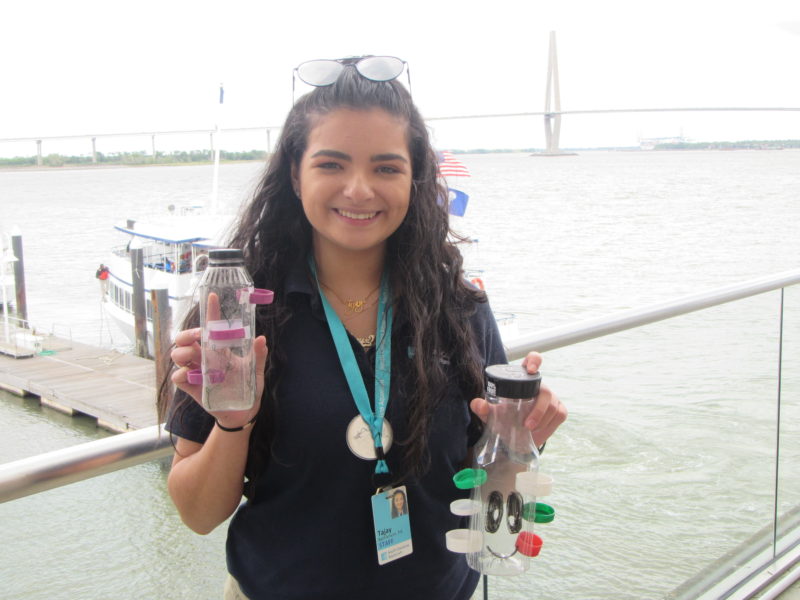
Youth at the South Carolina Aquarium prepare for World Oceans Day 2019
World Oceans Day is a day dedicated toward reminding individuals why our oceans are so important. We want to educate others on ways to help prevent pollution such…
Continue reading -
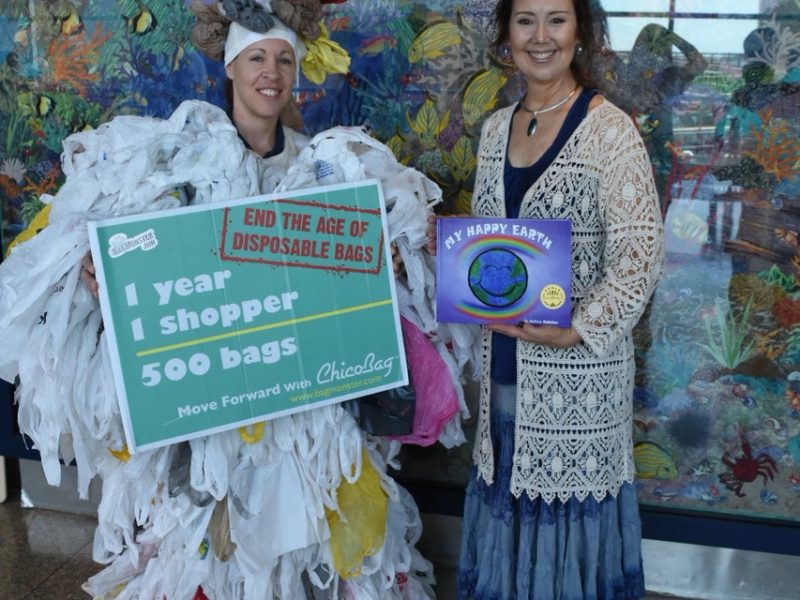
Pilot project shows that engaging visitors in conservation efforts can inspire commitments and enhance experience!
During the week surrounding World Oceans Day, 12 zoos, aquariums and museums (ZAMs) participated in a pilot project that had them asking their visitors about helping to address the…
Continue reading -
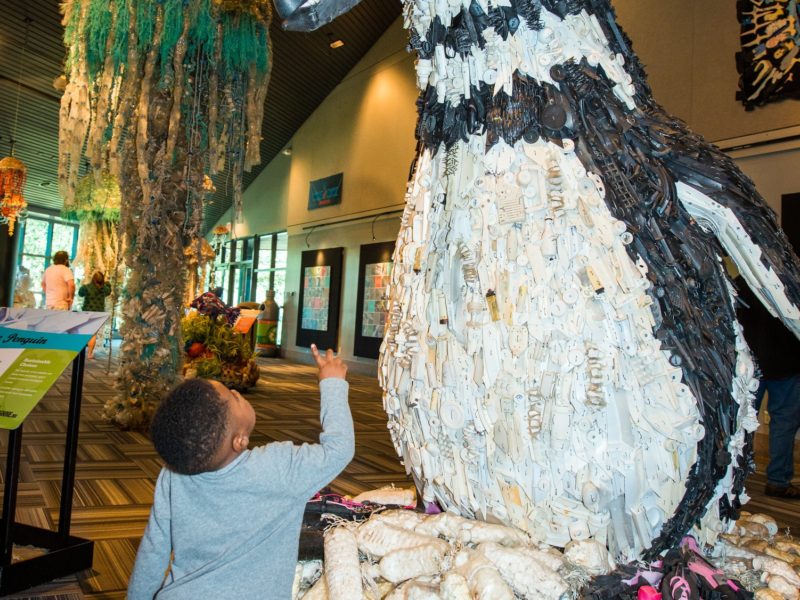
The Houston Zoo Explores Whether Artistic Displays Inspire Conservation Action!
This guest post is by Martha Parker, Conservation Impact Manager at The Houston Zoo. The Houston Zoo is committed to saving wildlife through partnerships and the support of global and local conservation projects, while connecting the Houston community to wildlife at the Zoo and inspiring them to action. To help fulfill our goal of saving wildlife, the Houston Zoo has been addressing the issue of plastic pollution. We went plastic bag free in July 2015, a decision that helped reinforce our commitment to reducing plastic pollution, a major threat for marine wildlife like sea turtles, which we work diligently to protect. The Houston Zoo receives wild sea turtles who require medical care and rehabilitation support from our partners at NOAA. Some of these turtles arrive at the Houston Zoo because they have ingested plastics or are entangled in marine debris. This makes the connection between the wildlife we work to protect and the threat of marine debris quite clear for us. The Approach To further our protection efforts of local sea turtles and help connect our community to the threat of marine debris and how they could take action, we welcomed Washed Ashore to the Zoo in January of 2016. Displayed at the Zoo’s Brown Education Center, Washed Ashore was the perfect visual representation of a global issue that hits home for Houstonians living so close to the Gulf of Mexico: plastic pollution. This awe-inspiring exhibit brings to life an overwhelming problem and puts it right in front of your eyes, connecting visitors with the animals affected by trash in our oceans. The Houston Zoo not only wanted to provide a fun experience for their guests, but also wanted to inspire action to save animals in the wild with a very specific ask of going single-use plastic bag free when shopping. After some brainstorming for a fun, interactive guest experience that incorporated data collection, Zoo staff decided the best way to get guests to take a pledge to use reusable bags was to have them add their fingerprint to another artistic display, an underwater-themed mural, designed and painted by famous Houston street artist, Gonzo247. Before participating, however, guests took a short survey and committed to going plastic bag free for three months. Between January and April 2016, colorful sea turtles, sharks, rays, shore birds, and fish were filled in as 1,482 guests took the pledge and showed their commitment by adding their thumbprint to the mural wall, in the animal they were helping to protect by going plastic bag free. This challenge is important to the Zoo’s mission of saving animals in the wild and inspiring behavior change by empowering Houstonians to make a difference. But how do we know if it worked? The Results With our evaluation methods, we aimed to answer the question; do visitors to the Washed Ashore exhibit at the Houston Zoo become inspired to use reusable bags more frequently than those zoo visitors who did not? We asked visitors from both a control group and an intervention group to take the challenge to go plastic bag free for 3 months to save wildlife like sea turtles. The control group was asked this question at the sea lion exhibit before Washed Ashore opened. The intervention group included those zoo visitors who visited the Washed Ashore exhibit. Three months from the time the visitor signed up to go plastic bag free, the Houston Zoo followed up with them by email to see how they did with the challenge. In total, we had 68 participants in our control group, with only 6% responding to the 3-month follow up. Our intervention group included 1,482 participants, and we had a notably better 16% response rate, with 230 of those responded to the 3-month follow up. While the better response rate was a good indication of a positive impact from the exhibit, we did not have enough participants in our control group to answer our original research question. We did gather valuable data that we can use to influence future exhibits and messaging. For example, we confirmed that in keeping with research by The Ocean Project and others, our guests are indeed motivated to make changes in their behaviors to protect animals, and their visit to the Zoo was an important aspect of taking action. Specific to using reusable bags, we know that our messaging should include ways to remember your bags, including tips on keeping them in your car. Finally, it was a great learning experience for the Zoo to evaluate (on a small scale), the impact of our work to save wildlife by empowering our community to take action. What enabled us to be successful in our effort to connect guests to the issue of marine debris and move them to action was the collaboration across numerous departments of the Zoo, and the strong tie between the exhibit and our efforts to save ocean animals like sea turtles, locally. This project has certainly influenced the way we think and plan for future exhibits and experiences. Our advice to others…... Start planning early. Get all relevant departments/people involved so that you choose the correct exhibit for your audience. Develop an institutional goal. No matter the exhibit content, you should have an institutional goal for that exhibit determined so that planning and evaluations can take that goal into consideration. Revisit the exhibit/process at regular intervals. Avoid implementing a project and then when finished, evaluating how it went. Bring all stakeholders together frequently to see how the project is going and make changes as you go. Align messaging/content with what is relevant for your institution, your audience, and the work you do. Communicate with other organizations who have experience with the content/exhibit-find out what worked for them, what didn’t. Track your success-even seeing what didn’t work is critical information to move forward in the future Additional Data Responses from both groups in 3-month follow-up included some positive indications that we were helping to increase bag use: 43.35% of respondents used their bags “almost every time they shopped” during the 3-month challenge, compared to 16.31% of respondents used their bags “every time they shopped” during the 3-month challenge, and only 2.58% of respondents “never” used their bags when they shopped during the 3-month challenge More than 60% of survey respondents put their likelihood of continuing to use reusable bags at “extremely likely” 198 respondents have encouraged family/friends to go plastic bag free as a result of their participation in the challenge, reaching an additional ~1,379 people. It was important for the Zoo to understand the motivations behind why our guests were successful in the reusable bag challenge. We found that motivations for continuing to use reusable bags during 3-month challenge included the following: Visiting the Zoo increased knowledge of how plastic bags are a problem for wildlife was cited by more than 52% of survey respondents. “That exhibit at the zoo really did change things for me. Not just about plastic bags. I have tried to buy less plastic in general - kids dishes and bowls (switched to bamboo), kids toys (wood, fabric, handmade), and I've tried to avoid buying food that comes with a lot of extra packaging. I loved that exhibit because it shocked me to see all of the toys and bottles and things that don't just disappear, thank you for teaching me that I'm contributing even if I think I'm not!” “I have used reusable bags for many years. Mostly at the grocery store. The positive thing in my life about the challenge was not taking bags at other stores such as clothing or craft stores. Taking the challenge actually made me take my reusable bag to the next level, which is to use them everywhere including on trips.” In order to make the Zoo’s messaging more effective in the future, we also asked respondents about barriers, which included remembering their bags. 80% of respondents remembered their reusable bags by keeping them in their car. In the future, we can utilize this information to remove barriers for guests when we ask them to switch to reusable bags. (E.g. “If I forgot my bags at home, I would ask for paper, which got reused. If I forgot my bags in the car, I would just ask them not to bag my groceries and then would cart them out and put them in the bags once I got to the car. It really helped me remember to take them out of the car when I had to do this!”) Additional feedback from Houston Zoo participants: ~Great program to encourage less plastic bag use, thank you! ~I have been using only recyclable bags, mostly fabric, for more than 5 years. I was happy to see the bag challenge at the zoo! I hope you have had an excellent response from others. ~I tell the store clerks about our pledge with the zoo and encourage family to think about using reusable bags. ~The bag challenge did not work for me. I chose to reduce my use of disposable plastic bottles instead. I now have a metal water bottle and have encouraged my children to use reusable water bottles also. ~Great program. The education by the zoo raises our awareness to the damage of plastic bags. Continued education and awareness remind us and help us change our ways permanently. Thank you for all of your hard work! ~This was not easy at first! A few times I forgot my bags in the car and had to take a full cart of groceries out to the car and load them in my reusable bags in the parking lot. Ha! But it was worth it, to know that I helped. Thank you for the challenge! ~This survey is a test reminder to get back on track with using reusable bags! ~Going shopping with reusable bags is fun and fashionable. I use them where ever I shop or visit! The zoo bags are the best. I have 3 of them so far. Please design more! ~I now also recycle all my paper and plastics. Thanks to my Houston zoo visit. Was very impressed with your plastic artwork. ~I have shared this incentive through Facebook by posting photos of the zoo's exhibit and the impact on not only sea turtles, but other sea creatures as well. When I use plastic bags, I always bring them back for recycling, and never throw them in the trash. The exhibit at Houston Zoo changed my behavior absolutely, I had no idea the impact of such a simple, daily use item on wildlife. Thank you! ~It was a great experience and if it had not been for that visit at the Zoo with my grandson, I would still be using plastic bags. Now I find that it is actually so much more efficient to use my own reusable bags, because more items fit into the bag, or maybe the store packers put more into one bag. Therefore, it is also more convenient to carry it into the house. Helping to save the environment is great. Keep up with such programs. Thanks. ~I often forgot my reusable bag but I would still carry out the items rather than asking for a plastic bag. When questioned or given that unsure look by my cashier, I often responded with "I'm plastic bag free, save a sea turtle". At least twice I was asked what I meant and was able to have a short but great conversation about the subject.
Continue reading -
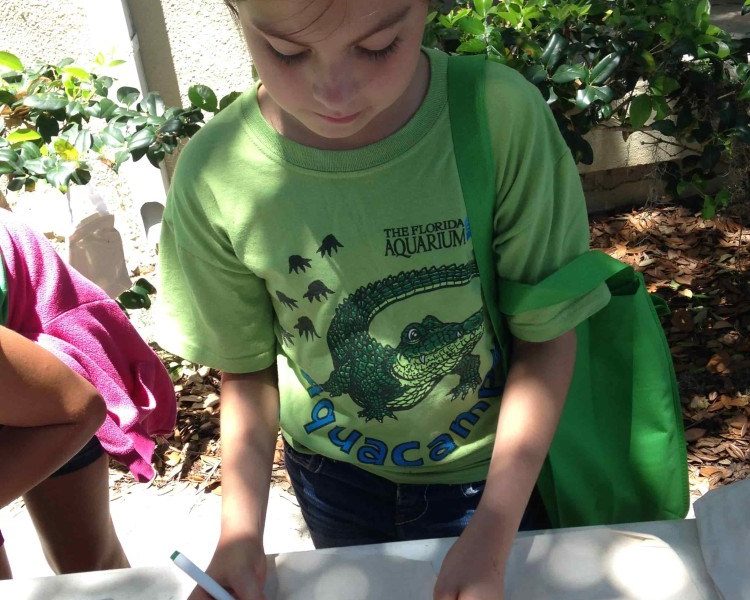
ISG+ Final Report: The Florida Aquarium’s Collaborative Approach to Community Engagement
This guest post, by VP of Education Debbi Stone at The Florida Aquarium, is the final in a 3-part series on their Innovative Solutions Grants+ project, supported by a grant from NOAA to The Ocean Project. The Aquarium’s project asks “Can we gain valuable insights about how to engage an underrepresented audience by working together to design the approach?” Click here to read the previous post in this series. The Background: With our Innovative Solutions Grant, we worked with the students and staff of DeSoto Elementary to investigate an important question: Can we gain valuable insights about how to engage an underrepresented audience by working together with members of that audience to design the approach? As a growing population in our county is Hispanic, we have been interested in initiatives to engage this demographic. DeSoto was, in numerous ways, a perfect partner: a Title 1 School attended primarily by children whose families cite Spanish as their first language, as well as over 90% of students qualifying for free or reduced lunch. Throughout the school year, we worked with each grade level to identify an ocean problem of particular concern to students and families, as well as a solution step that they and others in the community could take to help address that issue (in keeping with the finding from The Ocean Project’s research that aquarium audiences expect, trust and appreciate when we start with the solutions, and recommend ways they can help). As discussed in our last blog post, we discovered that the children’s interests and concerns were not altogether different from what we found elsewhere. They were interested in conserving the ocean and its animals and were especially concerned about issues similar to those that resonated with other audiences. Together, we chose to focus on reducing marine debris and specifically plastic bags. Feedback from the design phase: We intended our project to provide a new and innovative way to gain insight into this audience, as well as how we could design meaningful engagement opportunities. Working together with the school in the design phase proved to be both informative and rewarding for aquarium staff, and, it turns out, the teachers too. To help with our evaluation, the Lead Teacher from DeSoto Elementary obtained and consolidated feedback from all of the participating teachers about their experience with the project. Here is her summary: What worked especially well? “Letting the students zero in on the issues that they wanted to explore provided ownership and contributed to increased confidence and engagement.” “Wrapping this project into Earth Day, something the school participates in annually, was a great idea (as it) didn’t feel like ‘another add-on.’” “Having a budget for materials and supplies made a huge difference!” What might they do differently? “Spend more time on (developing) ‘the ask.’ This was a challenging concept for the students, and even for some of the teachers....connecting content to what they and others can do to effect positive change was a cognitive leap for them.” (A concern also raised by our staff, as noted in our earlier blog post.) “They wished we could do the Aquarium field trips earlier in the (process), but this is unfortunately due to (factors) outside the scope of this project” Would recommend the project to others? “There was not a single teacher who indicated that this was not a worthy project and, in fact, the desire is to be able to do this annually with ongoing funding.” “(The teachers appreciated) that the Aquarium was so delighted by the students’ ‘spin’ on the reusable bag (experiment)…in this project, students helped us potentially solve a problem. What an opportunity for young minds!” From design to testing! A key goal of this project was to focus on an issue that resonated with the students and to test an approach developed by the students. As noted earlier, the students from DeSoto and the staff from the Aquarium together had determined that an “ask” of using reusable instead of disposable bags was what we would explore further and test. While many organizations promote the use of reusable bags, the students added their own twist, hypothesizing that decorating one’s own bag might make the practice more fun, more personally relevant, and more likely to be implemented. And after the great feedback from the teachers, we were even more excited to try it over several days and as a stand-alone activity. We ordered plain cloth bags, stamps, ink, stencils, and a few other supplies for inspiration for a test run over nine days in December. We piloted the approach we developed together, and the response was overwhelming! Aquarium staff set up tables during peak times. When guests approached the table, they were asked to make a verbal commitment to using reusable bags instead of disposable bags, and, once made, we gave them the opportunity to design a reusable bag of their own. Over 28 hours of testing, more than 2,735 bags were designed by our visitors. In other words, this was nearly 100 bags per hour, impressive given that we were space-limited by a table as well as each bag taking between five and ten minutes or more to make. As a comparison, for a normal activity station, we typically average less than 40 participants per hour engaging with educators. In short, there was never a break at the table. As soon as a space opened, it was filled. This was undeniably popular! In fact, this activity was so popular that it was a challenge to do more than just keep up with the demand for the bags! Our initial plan was to investigate whether there was a difference in response if the messaging around our “ask” was connected back to its origin with the DeSoto students, rather a more traditional aquarium association (e.g., “Help sea turtles…”), and perhaps also look at differences in response among visitor groups. But in practice, the seats were refilling before we could even say, “You can make a difference by designing your own reusable bag…” and attention quickly turned to the art. We were able to gather some qualitative feedback while the “artists” were at work, but not as much, nor as systematically, as we had hoped. We asked about the reasons why people were participating, and visitors told us that they were excited about the prospect of using their bags and indicated they planned to do so, including a common theme about designing bags to keep in their cars for grocery store trips. And when asked how they would be making a difference, it did seem as if our intent was getting through to them, as a majority of guests cited the reduction of plastics, as well as helping to ensure bags don’t end up in landfills or in the ocean. Lessons learned Those who staffed the table have been begging to do it again. Of the eight staff and volunteers who rotated through the staffing of the table, all were very enthusiastic. As our Education Volunteer Coordinator put it, “You would think this was entirely for the guests, but No Staff Member to show enjoyed setting a goal for distributing so many in a given time…they had so much fun decorating with the children and adults alike…fun was had by all!” Yet because we weren’t able to gather enough guest feedback, there are lingering questions about whether it was truly effective in terms of advancing conservation action. For example, our team reported that it was difficult to ascertain the extent to which the activity went beyond being a “craft” or “holiday gift” (given that we were trying this in December). And two team members felt it was likely that when we asked about the “why,” there was an element of guests giving the answers they suspected we wanted to hear. Another team member reported that since we were giving something “for free,” visitors might feel obligated to go out of their way to “thank us” by appearing to be extremely “on board,” something that has been raised in the past when attempting to gather visitor feedback. And it was clear that if we do this again, as we hope to do (see below!), it will be helpful to do so at a less crowded time and with more staff capacity, not only to engage the visitors, but also to more systematically track their reasons and responses. Final takeaways As our grant period comes to a close, here is our advice to zoo and aquarium colleagues based on our experience: If you want to engage a new or underserved audience, start by reaching out to members of that audience for insights and ideas. If there is an issue or action of common interest between your audience and you, but you worry, as we did with reusable bags, that it is “old news,” consider a new approach. The children’s idea to allow guests to customize or otherwise make a reusable bag more “their own” proved to be a fun way to engage visitors, and, we hope, just the beginning of a deeper relationship with the school and the Hispanic community. When testing a new approach, control your variables! As noted above, we worry, for example, that we didn’t adequately account for the impact of the holiday season when we tested our idea. Be prepared for success. We didn’t expect the high demand at our stations and struggled to keep up, especially with our monitoring and evaluation plans. Find ways to follow-up with interested guests. We will continue to follow up with the students and school, but we may have missed an opportunity to continue the engagement with the guests who were so keen to create a bag. An anticipated epilogue Because this proved to be so popular with our guests, we’re going to present this activity again in June around World Oceans Day weekend using funds in our operating budget or with external funding for more bags and art supplies. For all of the reasons cited above, we are intrigued by the promise of our test period and want to continue to work with The Ocean Project to help answer our lingering questions about the impact on our guests. Given how the activity essentially “sold itself,” we will focus less on testing different ways to invite people to participate, and focus more on assessing the impact of having participated. To do this, we plan to use an exit survey with a set of questions covering their concern about the problem, their opinion of the Aquarium and their feelings about making a difference, then compare and contrast the responses of those who participated (i.e. those who made a promise and designed a bag) and those who did not (i.e. those who simply visited the Aquarium), while also looking to see if, as our experience with the students suggested, this activity goes over especially well with our Hispanic guests. Through this experience, we have learned an invaluable lesson about deliberately considering how to pilot new and innovative ways to approach goals. We may find ourselves, at times, falling back into “tried and true” methods for engaging our audiences, yet if we’re simply maintaining success or not growing, it may be time to consider a new spin on our efforts. In short, we still haven’t answered all of our questions…yet isn’t that part of the thrill of striving to make a difference in the world? So stay tuned! About the Author: Debbi is Vice President of Education at The Florida Aquarium and has been challenging herself and others to move beyond information… and onto action! She enjoys living in harmony with all things furry, scaly, feathery, and slimy, whether on land or under the water. She is always eager to work with The Ocean Project and its partners and considers collaborations key to making a positive difference in the world.
Continue reading


