-

Increasing the Impact of Young Leaders for Ocean & Climate Action
For more than 25 years, The Ocean Project has been committed to catalyzing individual and collective action for our ocean and climate. Moving forward, we are centering our efforts…
Continue reading -
ISG+ Final Report: Philadelphia Zoo visitors say an overwhelming yes to “Saving Energy to Save Wildlife!”
After almost a year of testing and active recruitment for our study, we’ve been learning a lot about how to engage visitors on the issue of Saving Energy to Save Wildlife! We have been humbled by our visitor's trust in us and wowed by their willingness to pledge to reduce their household energy use. Last year, with the generous grant from The Ocean Project, we set out to test whether onsite messaging can affect offsite behavioral change. Using NNOCCI (National Network of Ocean and Climate Change Interpretation) framing methods, we constructed a short activity that invites our visitor to learn about ocean acidification. The message and activity were constructed to engage intergenerational audiences – the children and their adult chaperones. As one interpreter engages with the child through play and pledging, the other interpreter speaks to the adult about ocean acidification and participating in our study to measure their household energy usage. If they are PECO customers, they sign a consent form allowing us to track their energy usage for a year. While circumstances outside of our control (e.g. finessing legal details, losing our contact person) have stretched out the project for longer than the original 12-months – and we are still waiting on final numbers – we are going to share some thoughts and onsite results if you should consider doing the same project at your institution. 1. High interest in opportunity to act As indicated in our last blog, our pledging (to reduce household energy consumption) rate was high, especially after we adapted our approach to foreground the “ask” and add a second staffer so one could engage the younger audience while the other recruited the adults (parents/guardians). While visitors are easily distracted by the charismatic animals that are all around us, those who remained were very likely to have someone in their group pledge their commitment to taking conservation action at home. Approximately 3 of every 4 groups who engaged with our staff were willing to pledge! Moreover, we found that visitors reacted very positively, and were pleased at the opportunity to participate. and few of them balked at the ask, which brings us to the next point… Our advice to other zoos and aquariums: If you’re worried about asking your visitors to take conservation action, don’t. As The Ocean Project and so many other studies have consistently provided clear evidence for, visitors DO NOT consider it a chore that you are asking them to take conservation action. 2. Zoo visitors are willing to back up their pledge In addition to pledging to take action, 54.3% of those who were asked to participate in the tracking study responded positively. This was a very pleasant surprise for us as we were not sure how willing zoo visitors would be to let us track their household energy usage. More than half of our visitors were willing to let us study the trend in their energy consumption. While there were some visitors who did ask our researchers for clarification, most of our visitors were ready and willing to participate. Figure 1: More than half of our intergenerational groups (consisting of at least one adult and a child) were willing to participate in the study Our advice to other zoos and aquariums: What has become clear for us as a result of this study (which is consistent with feedback we are receiving from other sources) is that our visitors want to do more. Oblige them. We were terrified that asking people for permission to track their household energy use would be too audacious, but the overall response has been positive. Trust that your visitors are ready to do even more than you suspect. 3. Biggest barrier to non-participation: different service providers Of the visitors who were interested in participating for the study, almost half (44.8%) were not eligible because they were not PECO customers. We collected a list of 17 service providers, but 4 primary providers – PSE&G, PPL, DelMarVa, and Atlantic City Electric – serviced almost three-quarters (74.4%) of our other interested (but not eligible) participants. We have always known that our visitors are diverse and come from the tri-state area, but now we know that they are also diverse in their electricity companies! This does suggest that a study such as this would work really well for an organization that has fewer providers in their market area. Figure 2: Almost as many people were interested in participating but were not eligible (not PECO consumers) Our advice to other zoos and aquariums: How many energy providers are there in your region? In the Philadelphia area, there were many providers by choice and by zipcode. To have a higher overall recruitment rate, you might want to consider setting up partnerships with the biggest providers in your region. If we had increased our partnership from 1 to 4, we could have doubled our number of participants. The greatest barrier to participation is not visitor interest but our lack of ability to support their interest. 4. Intensive project Throughout the six months, we engaged more than 1500 visitor groups to KidZooU’s coral reef tank. Of the 1327 groups with at least one adult that we spoke to, we had the opportunity to ask 641 (48.3%) of them if they were interested in participating project. Of those 641 groups, 348 (54.3%) said they were interested, and 293 (45.7%) were not interested. Our advice to other zoos and aquariums: This situation could be improved by addressing the number of providers you partner with, but there is no denying that this (at least in its current form) is a highly intensive project. But take the lessons that we have learnt and build on it instead of starting from scratch – such a preponderance of evidence already exists that our visitors want to take conservation action, we don’t need prove that repeatedly. If you should take on such a project, make sure to provide adequate support for your staff – it is a highly repetitive and tiring process for them. Have them out for short (1-2 hours) shifts; intersperse their sessions with other projects to provide variety; provide them with tasks that have more immediate positive feedback to keep their energy up. Conclusion Despite the intensive and tiring process, we are extremely glad we took on this project. We are glad that The Ocean Project’s Innovative Solutions Grants+ provided us with the opportunity to clearly demonstrate that our visitors are ready for bigger asks. Much bigger. As a result of this study, the Philadelphia Zoo is now examining the opportunities to expand this to other parts of our institution, focusing on scaling and learning how to deepen the impact. This framework and approach will be incorporated into our institutional operations. And now that we know our visitors are ready and willing to do what it takes to make a significant difference for wildlife, we are excited to embark on the next stage of the journey. Our take home message? Ask early and ask BIG. Don’t be shy.
Continue reading -
Advice from the Innovators: A summary of lessons learned in public engagement from year three of the Innovative Solutions Grants + Program (ISG+)
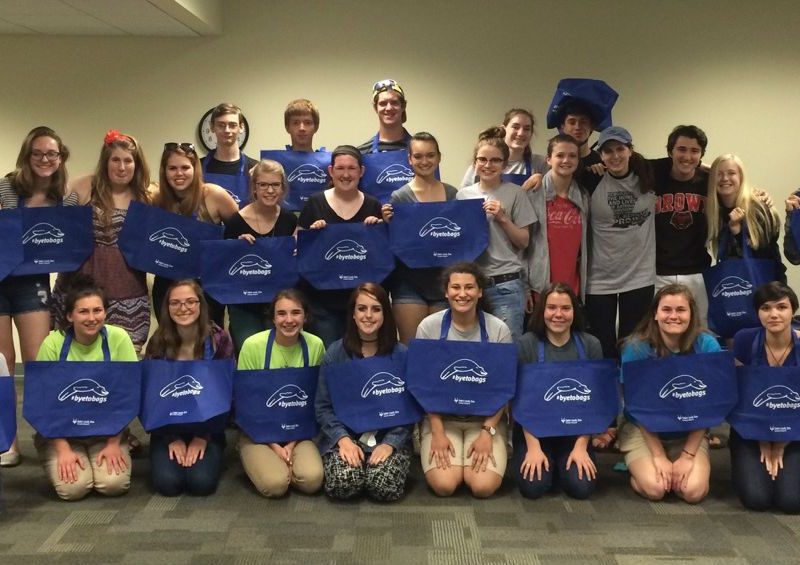
Our grantees from year three have completed their projects and submitted their final reports, which are filled with tips and lessons for other aquariums and zoos that share their interest in engaging visitors and advancing conservation. Many thanks to NOAA for making these grants possible. Per your request, we’ve compiled this summary of the top line takeaways. Links to their full reports with more detailed results, can be found below. Help your audiences turn inspiration into action! In other words, don’t just tell visitors what you are doing, invite them into the effort and document their support! Kirinne Slaughter, who led efforts under the grant to the Saint Louis Zoo, wrote in her final report, “our results confirmed The Ocean Project’s finding that (visitors) do indeed expect, trust, and appreciate the advice that you have to offer them on how they could become part of the plastic pollution solution…not only were our guests willing to sign a pledge (90% of those asked did so) but some were willing to share that pledge and stay invested on social media”. This finding was echoed by Wei Ying Wong of The Philadelphia Zoo, who reported that, “in addition to pledging to take action (to reduce their home energy use), 54% of those who were asked to participate in the tracking study (agreed to) let us track their household energy usage!” In a powerful presentation about her project at the AZA Annual Conference, Wei Ying could be heard wondering aloud if we are aiming too low with our conservation asks – these results certainly seem to suggest that! Seattle Youth CAN Empower youth to be conservation advocates. Instead of approaching youth as an audience for you to engage, ask youth to help you engage others, then hang on for the ride! Based on the experience of the Arizona-Sonora Desert Museum, Debbie Colodner strongly encouraged others to, “engage the power of young professionals or university students to help make the case,” which, in their case, was that, “millennial customers care about where their (seafood) comes from”. Kirinne at St. Louis Zoo also found this to be true, noting that, “one of the most exciting and successful parts of our campaigns was allowing the teens to experiment with the delivery of the #byetobags.” Notably, the team learned a lot not only about engaging visitors onsite, but, if you check out their final report also through social media, along with some bonus findings about the impact their onsite efforts had on guest behavior at their own gift shop. Eli Weiss of the Woodland Park Zoo shared similar advice, adding from his two years under the grant that “empowering youth leaders to develop public, and especially peer-to-peer, conservation engagement efforts is highly recommended and can lead to exciting new engagement strategies!” With one notable caveat, “that when teen leaders are developing public engagement efforts, their enthusiasm and ideas need focus to ensure successful implementation.” If you are interested in learning about youth engagement, look no further than the final report submitted by Eli and his partners at the Seattle Aquarium and Pacific Science Center. A group of TAYR congregation members during a community cleanup. Photo: National Aquarium Look beyond the impact you can have on individuals and consider community partnerships, especially when thinking of success at scale. Eli of Woodland Park noted that one of the primary lessons from their second year was to, “take the time to develop relationships with other organizations who have an overlapping interest in reaching youth and advancing conservation rather than doing it alone,” adding that, “zoos and aquariums can play a critical role in developing networks of youth conservation leaders, and in this electronic age don’t underestimate the power of in-person gatherings.” Debbie from the Desert Museum noted the incredibly positive response their project had from local restaurants, and advised others to, “work with interested chefs/owners to partner on strategies to build the local sustainable seafood (effort)”. If you’re interested in advancing sustainable seafood, or events that advance conservation, the full story of their efforts with local youth and local restaurants can be found here. Gabrielle Roffe and Curtis Bennett of the National Aquarium, who used a “pillar approach” to develop a truly inspirational partnership with their local community, advised, “take the time to familiarize yourself with the community, in both the physical and social sense (and) remember that building trusting community relationships is a two-way street. You have to get to know the community but you also have to give the community time to get to know you… from there focus on opportunities to create mutually beneficial goals in order to create a collaborative effort.” For anyone interested in community engagement, their final post is a must read! Our research tells us that when doing public engagement, start by giving your audience the solutions and then dive deeper into the details. So, audience, if you’re now inspired to go deeper, here are all of the links to their reports! Participants at Fini's Landing celebration of World Oceans Day Arizona-Sonora Desert Museum: Awarded $20,000 to engage university students in Tasting Sustainability, a community-based conservation initiative on the issue of seafood sustainability. Initial post Midterm post Final post TAYR Youth Group at a debris cleanup at Masonville CoveNational Aquarium: Awarded $25,000 for a project that engages the Hispanic community in a small Baltimore watershed on the issue of marine debris. Initial post Midterm post Final post Saint Louis Zoo: Awarded $15,000 to launch a project directed predominantly by teen volunteers on site and via social media with an emphasis on reducing the use of single-use plastic bags. Initial post Midterm post Final post Youth leaders on stage Woodland Park Zoo: Awarded a second year of funding, at $30,000 to expand their leadership role with Seattle Youth Climate Action Network (CAN), an evolution of Woodland Park Zoo, Seattle Aquarium and Pacific Science Center youth programs. Initial post (Transition between years) Midterm post Final post
Continue reading -
ISG+ Final Report: Seattle Youth Climate Action Network is Looking Back and Planning Ahead!
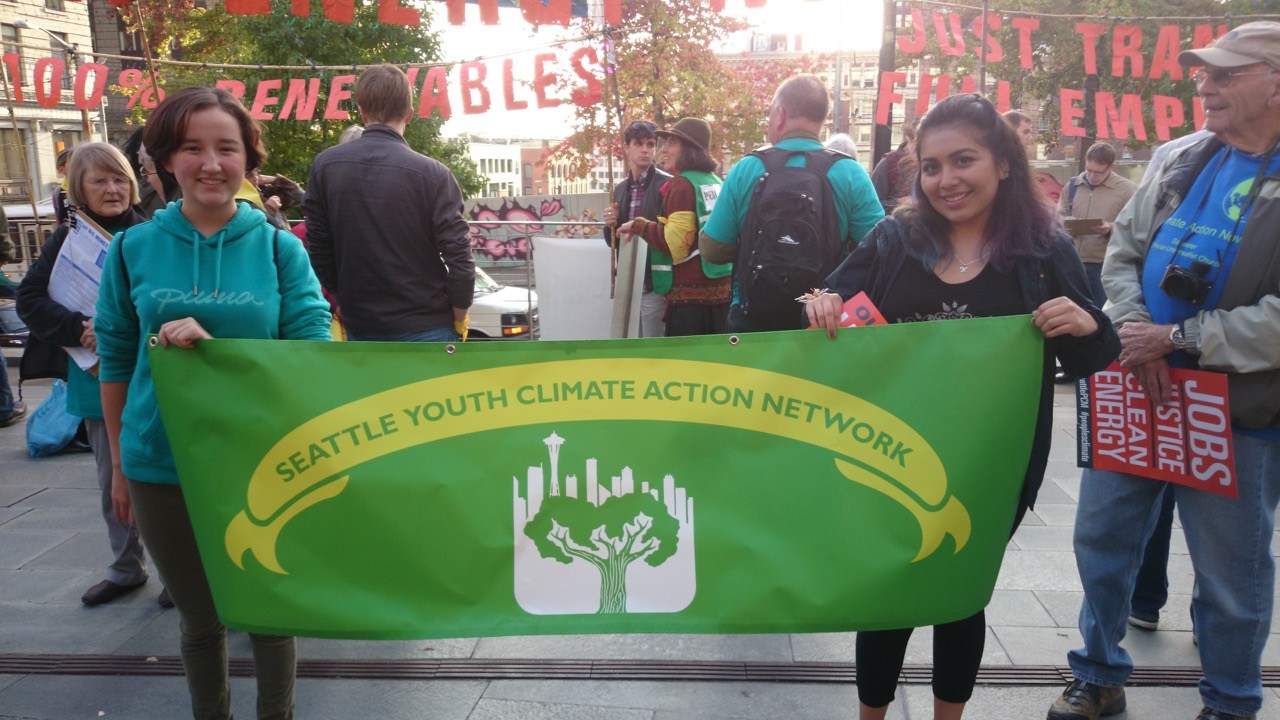
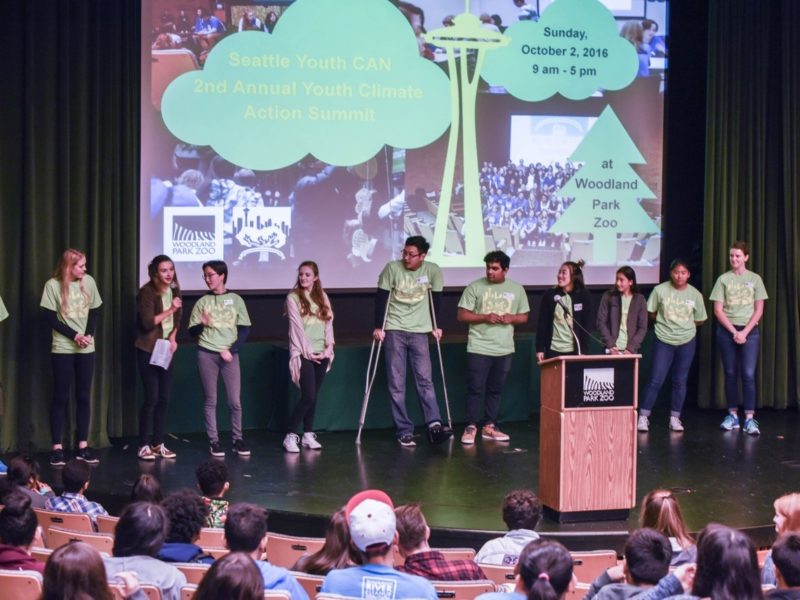
This guest post by Eli Weiss of Woodland Park Zoo is the last in a 3-part series on their Innovative Solutions Grants+ project, exploring how teens in the Seattle area can empower each other and their peers for action on climate change. When the idea of Seattle Youth Climate Action Network was hatched in the fall of 2014, inspired by conversations with teens in Woodland Park Zoo’s ZooCorps program, we were looking for a new approach to engage local youth in the zoo’s mission and connect the dots between “learn…care…act,” and decided to apply one of the major lessons from the research by The Ocean Project: youth already care and want to turn their concern into action! With two years of support from the Innovative Solutions Grants+ Program, hundreds of teens have participated in the project, and together we have developed and tested a pilot campaign while creating and refining an innovative local network approach that has great potential for continued local growth. In fact, our experiment has blossomed into something that our institutions and local community value as a new approach to regional youth climate engagement, and we believe could serve as a model for other regions across the country! As mentioned in our last post, our goals for this past year have been to: Expand the networks reach locally through outreach and more inclusive programing, and Build on our initial successes with the Summer Transportation Challenge and Youth Climate Action Summit. Let me reflect on our successes and lessons learned for each of these goals as we wrap up our work under this grant. Growing the Network Face of Climate Action We have seen great interest in Seattle Youth CAN, and under this grant cycle alone more than 400 teens have signed up to get network updates and over 200 youth have attended one or more events since January 2016. For us this has been a great sign that there is a growing interest in Seattle Youth CAN among local teens. While some have heard about the network from peers or through other direct outreach efforts with which we have experimented, including tabling at events and broader social media presence including facebook, instagram, and twitter (See also our last post), our most successful approach was to identify and work with other youth programs where we had overlapping interests. Echoing a finding from our ISG+ peers at the National Aquarium, we learned that these relationships take time, but they are well worth the effort. We have been working with a range of community groups and agencies, many of who are eager to deepen our partnership through this project. For some groups there was immediate interest, while others took time to find the right opportunity for collaboration. An example of the latter is the Duwamish Valley Youth Corps, an environmental youth development program in SW Seattle that we have been encouraging to join the network since our 2015 summit. This year, we had more than 20 of their youth attend our summit! Another relationship that we are excited about is with the University of Washington College of the Environment, a partnership that came about because our youth have expressed interest in increasing our focus on exploring climate related career pathways, so this past summer we co-hosted a college career panel at the UW that was attended by 50 teens and the College in turn also participated in our recent Summit. Our advice to other zoos and aquariums? Take the time to develop relationships with other organizations who have an overlapping interest in reaching youth and advancing conservation rather than doing it alone. An Ongoing Commitment to Youth Leadership The creation of a Youth Leadership Committee, made up of teen leads from the zoo, aquarium, and science center - has worked out especially well. The Committee helps to make significant decisions about the direction of the project and the focus of action campaigns and events this past year. We feel confident that Seattle Youth CAN’s current direction reflects the needs and interests of Seattle-area youth. Since our launch, we have looked to our youth leaders to make major decisions impacting the focus of the network including: types of projects, the design and focus of action campaigns, and how we communicate with teens in the network. In turning over decision making to our youth leaders, we have learned that there is a fine balance between supporting youth driven ideas and having the capacity to help them be successful in their plans as I’ll describe below. Our advice to others? Empowering youth leaders to develop public, and especially peer-to-peer, conservation engagement efforts is highly recommended and can lead to exciting new engagement strategies! Youth leaders Lessons from the Transportation Challenge 2.0 For the 2016 Summer Transportation Challenge, we let our youth leaders develop the plan, which included an ambitious, and, in hindsight, overly ambitious, eight-week campaign with weekly events and social media challenges aimed at engaging other teens in fun activities and events that helped increase personal action and carbon reducing transportation choices. It all seemed great when our youth leaders formed their plans in the spring, but by mid-summer we realized that many of them didn’t have as much time as we anticipated amidst busy summer obligations to fully support the challenge. This meant that our staff were tasked with carrying out much of what was set in motion by our youth leaders. We were expecting that an increase in the frequency of events and the length of the challenge as compared to last year would lead to many more teens getting involved. The challenge ended up with some bright spots but fell short of those expectations. The biggest bright spots were that the challenge had a positive impact on participants (See for example Masayuki’s blog post) and the environment, with more than 90 teens attending summer events and challenge participants logging 7,513 miles of not driven alone, which equals 3,214 pounds of CO2 saved. In addition, the continued transportation focus allowed us to expand on our partnership with a key partner, King County Metro Transit, and our teen leaders worked with the agency to develop messaging, including this video, to encourage youth to utilize public transit and make the connection between riding the bus and fighting climate change. As for what didn’t work, we learned that having events during the week made it hard for some teens to attend given other obligations. We were also surprised that the weekly social media contests did not lead to more participation, and how some teens in the network, even though they had developed the ideas, were not interested in posting challenge related things on their own social media channels. Lastly, we are rethinking the timing of the transportation challenge in our calendar of events, and our teen leaders are already talking about focusing on the school year, rather than the summer, in 2017, when student schedules are more predictable. And, of course, we learned that with limited time and resources, we realized the need to either limit plans or add staff to support the ambition and growth of our youth leadership and the action campaigns and events that they develop. Our advice to others? We learned that when teen leaders are developing public engagement efforts, their enthusiasm and ideas need focus to ensure successful implementation Summit Success On October 2, Woodland Park Zoo hosted the 2nd Annual Youth Climate Action Summit and brought together 100 Seattle-area teens interested in fighting climate change and more than 20 climate focused community leaders. This culminating full day event was organized and led by eleven youth leaders and Woodland Park Zoo staff. And learning one of our own lessons from the Transportation Challenge, we were sure to create clear and realistic expectations for youth leadership, which lead to an event that maintained a very youth driven feel, while having enough staff support to make it all come together and run smoothly. Youth leaders on stage Youth who participated in the dynamic day of learning and action attend 39 local schools and a range of youth programs, and for 70% of attendees it was their first Seattle Youth CAN event. Having such a diverse group of youth in attendance was a direct result of both peer to peer outreach and, in particular, our newly formed partnerships with other local environmentally focused youth programs including those already mentioned above as well as Seward Park Audubon Center and YMCA Earth Service Corps. Over the past year, we have seen Seattle Youth CAN expand from the original participants, teens already involved in programs at the zoo, aquarium, and science center, to a much broader group of youth leaders who were not already connected to one of these three institutions. This growth is exciting and through our ongoing refinement of the network we believe that the number of youth leaders participating will continue to increase in years to come. Another indicator of success for the summit and other events is that teens are having a good time and building community. Read, for example, Katherine’s recent blog post on how Seattle Youth CAN is creating a positive and fun space for teens to take climate action. An “Action Fair" was a new addition to summit this year worth mentioning, which crated a dynamic forum for youth participants and climate focused community groups to dialogue though activities at an outdoor tabling event. Participating groups included University of Washington, Earth Games, Carbon Washington, Sierra Club, Solar Washington, Plant for the Planet, Our Children’s Trust, and 350.org Seattle. For many of these groups it was the first opportunity to interact with teens from Seattle Youth CAN and we have already begun exploring how we can work more closely with some of them in 2017. Check out the full schedule for more details on workshops, presenters, and participating community groups. Our advice to others? Zoos and aquariums can play a critical role in developing networks of youth conservation leaders, and in this electronic age don’t underestimate the power of in-person gatherings Measuring our Impact We hoped that teens who participated in Seattle Youth CAN this past year would not only (1) Increase their understanding of the issue, but (2) increase participation in actions to fight climate change, and (3) that youth leaders would develop measurable leadership skills. Although our audience research team is still hard at work evaluating results from our 2016 programs, we have seen positive trends from an initial review of pre and post survey results and participant interviews to feel confident that Seattle Youth CAN is having a positive impact in these three areas. Stay tuned for a follow up report in late 2016. Making the mountain Group with mountain Next Steps In 2017, we are planning to form a Community Advisory Committee to ensure that we have broad support and diverse input from all of the community collaborators with whom we’ve connected over the past two years. To help with youth leadership, we are planning to add a paid youth climate fellowship opportunity, to build on the youth driven spirit of the project. Also, in an effort to help reach all youth in our region, we plan to conduct focus groups this winter with teens throughout the metropolitan area. We are grateful for the past two years of funding from The Ocean Project’s Innovative Solutions Grants+ program, as it has allowed us to pilot this new model for local youth climate networks. We have truly valued the ongoing support and coaching from The Ocean Project’s staff and have also appreciated connecting with other recipients of the ISG+ program. We are committed to the future evolution of this work and are excited to continue to share what we’ve learned with other institutions and communities across the countries who are interested in launching their own network or youth climate action project. If you would like to explore the idea of starting a youth climate action network in your region or are already working on a youth climate project and want to connect, please get in touch! Seattleyouthcan@zoo.org
Continue reading -
ISG+ Final Report: Tasting Success at the Arizona-Sonora Desert Museum
This guest post is submitted by Debbie Colodner, Director of Conservation Education and Science from the Arizona-Sonora Desert Museum, and is the last in a 3-part series on their Innovative Solutions Grants+ project where they partnered with Leading for Good to see if they can move the needle on sustainable seafood in Tucson, Arizona. With Tasting Sustainability, our effort under the Innovative Solutions Grants + Program, we wanted to go beyond Desert Museum business as usual. We understood that in order to make a difference for sustainable seafood in our desert city, we needed to go beyond efforts to raise awareness and get closer to the point of sale, particularly at restaurants. And we hypothesized that there could be a win-win in promoting sustainable seafood by reaching out to local restaurants and engaging millennial audiences. We were right! Moreover, this effort has built our confidence and capacity to go outside of our comfort zone and begin a social marketing initiative. Working with our partner in this effort, Lead Local and their Leading for Good program, our Museum staff and interns alike had opportunities to learn about how to research an audience’s interests (In this case, local restaurants’ needs, wants and constraints), as well as inexpensive and rapid methods to prototype engagement ideas. SINCE OUR LAST POST As described in our last blog post, the strategy we chose for further testing was to co-host events with local restaurants, and we were able to test three different types of events last Spring. The first was at a downtown restaurant, in concert with “Agave Week,” which is focused on agave-derived and other native and local food products. The event attracted a large, diverse crowd, and our project interns encouraged people to take a seafood watch guide, take a pledge (using a photoframe cutout) and post it to social media. Our major lesson learned was that without food/beverage samples to offer it was hard to get this audience’s attention, especially at an event with a different theme, and interns were able to distribute 30+ guides, and only 6 people took a pledge. Nonetheless, the interns enjoyed the chance to raise awareness and participate in this locally grown and growing festival, and felt like they made an impact (awareness) on the people with whom they spoke. The second event was at a more “suburban” beach-themed restaurant which is already a Seafood Watch partner. The restaurant owner acknowledged an “aha” moment when he realized that there is value in promoting that partnership to attract younger customers. He bought all new uniforms for his wait staff – t-shirts promoting sustainable seafood. The event drew more customers than usual for a Friday night in the slow season, making it a success for the restaurant. And at this event, staff from the Museum and Monterey Bay’s Seafood Watch program staffed an educational table with interactive displays outside of the restaurant. Everyone entering the restaurant saw the display materials, and most stopped to talk - in contrast to the Agave Fest, the sustainable seafood messaging was the focus in event advertising, and that helped engagement. But most of the diners were older adults, many from the Museum’s docent and volunteer corps, so still an ongoing challenge in reaching younger adults. Karin Stratton from Monterey Bay's Seafood Watch Program with participants at Fini's World Oceans Day Event, demonstrating Fini's new tee shirts for wait staff and for purchase. The third event was “World Oceans Night” at the Desert Museum. Based on the connections forged by our Interns, two new restaurants were able to attend and promote their sustainable choices, along with several non-restaurant community partners – a trend we hope to continue. Restaurant participants were pleased, indicating that with a crowd filled with many millennial-aged adults among the 900 people who attended, they would like to come again next year and that they would like to continue to partner on sustainable seafood issues, including moving toward becoming a Seafood Watch partner (for two of them). Anecdotally, we can say again that developing a seafood themed event was helpful, and with a push we did better in terms of attracting a millennial audience; however, next time we will look to have better systems in place to track engagement and the ages of those attending. Throughout this effort we’ve had great response from the local restaurants – nearly all we asked were interested in working with us on this issue, including in developing these events. And our experience suggested that the chefs were the key people with whom to work. However, our research with the restaurants and our experience at these events revealed that local awareness of sustainable seafood has not yet reached the threshold above which it would be valuable for the restaurants to tout their commitments. Somewhat ironic given that we started this project with the proposition that we needed to do more than awareness-raising! And, again, we now know that there are several restaurants in the Tucson area who see benefit in helping the Museum build this awareness, even if they are not ready to become full Seafood Watch partners. The other major goal of the project was to enhance the Museum’s engagement with younger adults (millennials), and to empower young adults to make positive change in their communities. At the start of the project, 3 of the 7 interns involved reported that they were unsure they could do anything to impact ocean health and fish populations. In the final survey, 100% of responding interns were sure they knew what they could do to make a difference! And while initial surveys revealed that most interns viewed the museum as a beautiful place to see desert wildlife, at the conclusion, one participant called the Desert Museum “a leader in conservation and collaboration to connect the community with the natural world.” We also learned that college students can be persuasive and engaging spokespeople for more sustainable seafood promotion at restaurants, and that projects like this help them develop skills for making positive change in their communities. OUR ADVICE TO OTHERS So in summary, here are some lessons for other zoos and aquariums that may want to advance sustainable seafood: Engage the power of young professionals or university students to help make the case that millennial customers care about where their food comes from Reach out to local restaurants, interview chefs and owners to gauge their awareness and interest Work with interested chefs/owners to partner on strategies to build the local sustainable seafood brand Recognize their interest and steps toward seafood sustainability, even if they may be short of full Seafood Watch partnership Encourage restaurants to promote their sustainable seafood choices more boldly, and explore opportunities for mutually beneficial events (noting that the public may not yet be aware!) Help create a network of local chefs/restaurant owners Next steps for Tasting Sustainability THIS IS NOT THE END! The Museum’s next steps in Tasting Sustainability are to further connect local Seafood Watch partners and potential partners with additional coordinated events at restaurants, and by making the network visible through the ASDM website and at our new Stingray Touch exhibit. And continue to focus on collaborating with the millennials! We will continue our efforts to put Tucson on the map as a fish friendly city and establish a model for other cities to follow.
Continue reading -

ISG+ Final Report: Connecting Ocean Conservation and Community Engagement at the National Aquarium
This guest post, by Gabrielle Roffe and Curtis Bennett of the National Aquarium’s Conservation Department is the last in a 3-part series on their Innovative Solutions Grants+ project. This project has addressed the issue of marine debris by implementing a new approach to community engagement, with a specific focus on building our connection with the Hispanic communities near Masonville Cove in the Chesapeake Bay. Summary This past year, as part of The Ocean Project’s Innovative Solutions Grant+ (ISG+) Program, the National Aquarium has been trying a new approach to engage the Hispanic community throughout the South Baltimore neighborhoods of Brooklyn and Curtis Bay near Masonville Cove, the Nation’s first Urban Wildlife Refuge. The National Aquarium recognizes the value of providing opportunities for a diversity of students and community members to participate in conservation efforts, and has prioritized urban conservation efforts. The goal of these community outreach efforts is to not only improve the health of the neighborhoods and the watershed but to strengthen the community’s connection to their local environment. While the National Aquarium’s earlier community engagement projects had been successful, we recognized that we were not doing as well with the Hispanic community, a growing demographic within our target neighborhoods. Thus, we developed this project focused specifically on creating new and innovative ways to engage Hispanic communities on an issue we knew from prior research was a common concern: marine debris. The goals of this project were twofold: 1) Engage members of the Hispanic community in the removal of debris 2) Cultivate community champions in order to ensure ongoing engagement In order to successfully meet these goals, we had to develop a new and innovative approach to outreach, one that focused on connecting with community pillars in order to build trusting relationships. Successes In order to build long-lasting relationships within the Hispanic community we realized the importance of going beyond just translating outreach materials and programs into Spanish. By building trusting relationships with established pillars of the Hispanic community as outlined in our last post, we were not only able to better understand the interests of the community and inspire a more committed engagement in the project, but work towards building their capacity for future programming and project opportunities. Our approach was to connect with community pillars including churches, schools and parent groups. Community pillars are the places or people, that community members already trust and are a source of comfort, guidance and leadership within the community. We realized that by successfully engaging community pillars, we would be able to build relationships with individual community members and ultimately reach more people as part of our programming. While we engaged a variety of groups as part of this project, our biggest success story was our relationship with the Hispanic congregation TAYR in Brooklyn. From the onset, TAYR showed this willingness to become involved in community stewardship projects and were eager to collaborate. Working together to develop shared goals and programming illustrated our commitment to one another mutually beneficial and partnership. We were reminded that successful community partnerships take time to develop and have to be built on the foundation of mutually beneficial goals and an environment of trust. Initially we started with a long list of community pillars that we hoped to engage. We developed relationships with a Hispanic parent group at a local elementary/middle school, ESL students at a local high school, as well as TAYR. After meeting with various groups, we decided that for this project, we would focus on the quality of the relationship with TAYR rather than quantity, thus building on this genuine commitment from TAYR and ensuring that we weren’t over-extending ourselves or our resources. It was clear from the beginning that the relationship with TAYR was going to be special. We set aside time on a regular basis for meetings with Pastor Martinez and his wife, Veronica, and quickly realized that there were mutual goals. We learned about the community service and environmental project interests of the congregation and in turn, we were able to share potential program and project opportunities, primarily focused on debris prevention. These conversations helped us to collectively develop programs and events that aligned with each other’s goals and had a positive impact on both the community and the environment. TAYR Youth Group at a debris cleanup at Masonville Cove The following is a list outlining our interactions with the TAYR congregation, including program planning, promotion and facilitation: Regular meetings with the Pastor and his wife to plan for programs Attending church services and Sunday school to promote upcoming events Watershed 101 workshop at Masonville Cove (3 participants) Community cleanup in Brooklyn (114 participants) Native Habitat Garden Installation at the Dream Center (51 participants) Pollinator planting Sunday school lesson (33 participants) Latino Conservation Week event at Masonville Cove, including a debris clean-up, fishing, nature walk, and animal encounter (43 participants) Field trip to Patuxent Research Refuge (31 participants) Masonville Cove Fall Debris Clean-Up (6 participants) Programming and event planning with TAYR was a collaborative process, as illustrated and outlined below for the Latino Conservation Week event at Masonville Cove. We pitched the idea of a local event in celebration of Latino Conservation Week to Pastor Martinez and Veronica and discussed what activities would be of interest to their congregation. For example, they mentioned their love of fishing and we made sure to incorporate a fishing station for children as part of the event. They even helped us to rename the event, “Conservando la Naturaleza.” This event reinforced messaging from prior Spring and Summer programming, including lessons about the watershed and how trash flows from the community into Masonville Cove, as well as lessons about the benefit of wildlife habitat in urban areas, drawing upon the experience of planting the pollinator garden in the community and importance of connecting those green spaces to Masonville Cove. This event tied all of the programming together, allowing the community to see firsthand the natural treasures they have been helping to protect. Families fishing at Masonville Cove at the "Conservando la Naturaleza" Event Lessons Learned Over the course of this project we learned how to truly address the needs of a community and meet them where they are, in their community. We started this project wondering how to overcome language and cultural barriers in order to effectively reach the Hispanic community where there was no prior relationship. Our solution was to try to build mutually beneficial partnerships with interested groups. We utilized a community pillar approach and ultimately decided to focus on relationship quality over quantity. By building a strong relationship with the TAYR congregation and having multiple opportunities to engage with them, we’ve developed a partnership that will continue to be fruitful moving forward. We entered this program thinking that by cultivating a community champion and recognizing them as a Shore Hero, that we would foster that deeper, long-term connection. However, we found that we did not need to focus as much on recognition and awards, that the key to building a trusting relationship was finding issues of commonality and concern, to engage people in a way that is relatable. Throughout the project there was this sense that the work and overall collective impact was the true reward, a sentiment that was regularly echoed by community members. This shared feeling really helped to foster our mutually beneficial relationship. This partnership between the National Aquarium and TAYR has been nothing short of incredible. Here is a message from TAYR, expressing what this partnership has meant to them: “Ha sido un privilegio el poder ayudar en la comunidad porque hemos visto muchas caras alegres y las personas agradecidas por mantener un ambiente limpio y saludable. Estamos agradecidos por ser parte de estos eventos y esperamos seguir ayudando en lo que sea necesario. ¡Muchas gracias!” “It has been a great privilege to have helped our community because we have seen many happy faces of people being thankful for keeping a clean and healthy environment. We {TAYR} are truly thankful to be a part of these events and hope to keep helping in any other community needs. Thank you!” Community Engagement Tips and Advice We realize that engaging a new community or audience can be time-consuming, challenging or intimidating, but there are several lessons we learned that we think can help put other aquariums and zoos in the best position to achieve success. Take the time to familiarize yourself with the community, in both the physical and social sense. Just by walking or driving through the neighborhoods, not only do you begin to develop this sense of place, but you gain a better understanding of community assets and resources. From a social perspective, getting to know the community will help you identify specific audiences and community pillars where you may have overlapping interests. As you start this process, make sure to go where people are: the churches, the schools, or even the local businesses like markets and restaurants and reach out to them in a real and authentic way and people are likely to respond positively. Remember that building trusting community relationships is a two-way street, you have to get to know the community but you also have to give the community time to get to know you. It’s important to set aside time to meet in person with representatives of these community pillars to discuss their needs and interests and outline your programmatic goals as well. And because of the time commitment involved, recognize that you may need initially to prioritize, as we did, quality over quantity. From there focus on opportunities to create mutually beneficial goals in order to create a collaborative effort. The importance of collaboration, in all phases of the programmatic process, from development to implementation, can’t be overstated. Once you’ve established partnerships with community pillars, additional opportunities can become available to build new connections with other community pillars. At the end of the day, we found that successful community engagement should focus on that human interaction, showing that you care and are available to listen and provide support. Planting native flowers with TAYR Sunday School Moving Forward For the National Aquarium, the success of this project to engage the Hispanic communities within Brooklyn and Curtis Bay can be attributed to going beyond just translating educational and outreach materials but translating our programmatic experiences to ensure that they were relatable. While this is the culmination of The Ocean Project’s ISG+ grant, this is truly just the beginning of the work that we will continue to do with Hispanic communities. Pastor Martinez is currently working with us to reach out to other Hispanic churches in the area, to vouch for our relationship so we can start building new ones and expanding our efforts. We also want to focus on capacity building throughout the community, to ensure that community groups have the ability and are ready to participate in future program and project efforts.
Continue reading -

ISG+ Final Report: Say #byetobags with the Saint Louis Zoo!
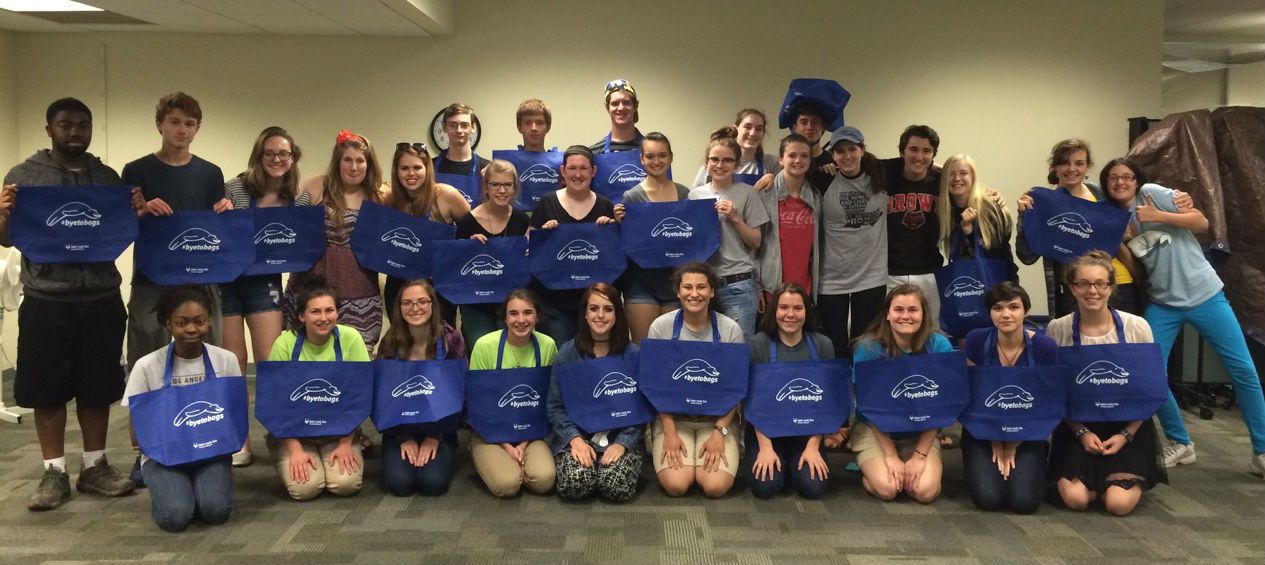
This guest post is submitted by Kirinne Slaughter at the Saint Louis Zoo, and is the last in a 3-part series on their Innovative Solutions Grants+ project. It is hard to believe that it has been almost a year since we began our partnership with The Ocean Project under the Innovative Solutions Grants+ Program. It has been an exciting and rewarding year for everyone involved in the project, especially our Zoo ALIVE teen volunteers as they have developed and implemented the #byetobags campaign. (See previous post). This campaign, based on the successes of the Better Bag Challenge, aimed to get Zoo visitors to make the change to reusable bags. For our innovative twist, we used social media in an attempt to amplify the effects of our on-grounds campaign. KEY FINDINGS As our data collection comes to a close with the end of our summer event season, we have concluded that social media can be an invaluable tool to increasing the effectiveness of an on-grounds campaign. Specifically, our results can be summarized into three key findings: Our on-grounds campaign confirmed the success of the public engagement model from the Better Bag Challenge. Since our first official event on April 23rd, 90% of guests that were asked during their visit to take the pledge did so, and most did so with enthusiasm! The teens approached guests who came near their activity table, connected the problem of plastics in our ocean to its impact on the animals using their own messaging (as I’ll explain later), and then asked guests to pledge to avoid disposable plastic bags in exchange for a reusable bag. And, again, a remarkable 90% of those who were asked filled out a pledge form and “signed” it by providing us with their email address. One guest even hugged each teen, thanking them for the work they were doing. As of the end of August, 1,373 visitors pledged to switch from plastic bags to reusable bags, and 1,669 #byetobags reusable bags have been given away! To “gut check” our impact, we also tracked the taking of small and medium plastic bags in our gift shops, where bags are available upon request, and found that use was down 9% since the beginning of the year, while the sale of reusable bags had increased by 65%! While our project can’t claim credit for all of this impact, it certainly was reassuring to see the trend moving in the right direction. Teens working Shark Week We also tried to generate pledges, and found a consistent (but comparatively low) return on investment. As a part of our project, we wanted to know if we could get people to take our pledge through social media, with no interaction on grounds and no bag in return. We embedded links to the pledge page into #byetobags social media accounts and posts we created on Facebook, Twitter, Tumblr and Instagram, as well as onto the Saint Louis Zoo website. While the social media platforms garnered a consistent number of pledges each week, we found that when comparing the number of pledges generated with the number of hours invested, our teens were much more effective - by our estimates more than twice as effective - in their on-grounds engagements. But, we concluded that our social media effort was still important, especially when thinking in broader terms of increasing our project’s overall reach. Of the platforms that we did use, the #byetobags Facebook page was our most successful in this regard - in spite of the teens’ initial doubts! - growing to nearly 300 likes and a reach of over 25,000 - it proved to be a great platform to engage with individuals, including but not limited to those who completed the pledge form. Meanwhile, Twitter was our second most successful platform, used primarily for interacting with other plastic pollution organizations, and making professional connections such as St. Louis City Recycling and Earth Share. So having a variety of social media accounts was useful for us, as each platform can be utilized in different ways including and beyond generating pledges. We learned that those who took the pledge were willing to share their commitment with friends and family, but did not utilize the mechanisms that we created and provided to them. We created a platform with our email service provider through which we emailed every person who took the pledge, giving them the option to then share the pledge out to their friends and family by using one of our preset share buttons that would link them either to Facebook, Twitter, or their email. While we were anticipating a snowball effect, we found that this method did not see the success in which we had hoped. Only a handful of visitors - less than 5 of the nearly 1,600 pledge takers - used the social sharing options we provided to them via email, with 42 total unique social shares. Surprisingly, though, some visitors were very willing to share the pledge utilizing a different method, one that we originally did not anticipate – they copied and pasted the link to our pledge page into their own posts and used #byetobags. Our teens found more than 10 examples where visitors did this, with one person even sharing out the pledge in a Google link format she created, generating another 8 pledges. It seems our guests are willing to share the message, but we need to rethink how we help them to do it! Who takes the #byetobags pledge? As a part of our pledge form, we gave guests the option to select their age group from a drop down menu, and to answer the question, “How often do you use reusable bags?” These questions give us some insight into who is most often taking our pledge on-grounds versus who is most often taking our pledge online. As shown in the charts, we found that on grounds the most common age group of pledge takers were 31-45 year olds, while online it was 12-18 years olds. This suggests that social media accounts can help us reach a distinct group of pledge takers, notably the youth that research tells us are so important to our missions, and who may be more likely to pledge to conservation action via the internet. Additionally, of the 1,521 total pledge takers who choose to answer the question, “How often do you use reusable bags?” 57% stated that they either “often” or “always” use reusable bags, which was notably higher than the 40% of the public reported by the grocery industry as the national average (Source: http://www.fmi.org/research-resources/u-s-grocery-shopper-trends/grocerytrends2014) So our pledge may have been more of a reinforcement and reminder to those who already use reusable bags, with encouragement to share with others. It will be an interesting challenge as we move forward to see how we can do better, on our own and with our guests, at reaching those who rarely or never use reusable bags. Our goal of course being that one-day, everyone will select, “always.” #byetobags continues at the Saint Louis Zoo program Thanks to funding from a Saint Louis Zoo family donor, the #byetobags campaign will be able to continue at the Saint Louis Zoo for another year! As mentioned in the previous blog post, this campaign is the first of its kind at the Saint Louis Zoo, and the opportunity to continue will allow for further fine tuning, paving the road for the Zoo to have many more in the future. We have a number of very targeted goals for the upcoming year, including: Implementing a bag policy in the gift shops that is more in line with our #byetobags messaging. We had some initial success as noted above, and will continue working with our retail team, as well as the Business and Strategic Operations Departments at the Zoo to come up with a bag policy that works for all. We are also looking forward to pushing our message further outside the Zoo into the St. Louis community. To launch this, the #byetobags campaign is going to be the feature article in our quarterly stlzoo magazine that goes out to all 50,215 of our membership households. Additionally, our Zoo ALIVE teen volunteers are anxious to continue to spread the message to their high schools and our Young Zoo Friends board, a group of young professionals who are Zoo members, are extremely interested in the campaign and are eager to take the message back to their home companies and organizations. Finally, the Saint Louis Zoo is excited to be hosting a Youth Ocean Conservation Summit on our campus on February 11, 2017. Youth Ocean Conservation Summit is a youth-oriented conference whose goal is to educate about how to turn a conservation idea into an action project. The event will feature notable speakers and workshops that will teach young people the skills they need to start a conservation project. We are excited to be hosting the first summit in the Midwest, and are eager to feature #byetobags as an example of a youth run campaign. We are eager to see where the second year of the #byetobags campaign takes us. All departments at the Zoo have been supportive of the project and the possibilities for expansion are truly endless! Teens with Dr. Jeffrey Bonner Advice to others As we reflect back on the creation of our campaign, it is an honor for us to be able to offer advice to other institutions hoping to create similar campaigns. Guests are excited to be asked to partake in a conservation action campaign. Our results confirmed The Ocean Project’s finding that they do indeed expect, trust, and appreciate the advice that you have to offer them on how they could become part of the plastic pollution solution. Not only were our guests willing to sign a pledge, but some were willing to share that pledge with friends and family, and stay invested in a conservation action campaign on social media – we just need to give them more flexibility to share more easily and on their own terms. Use multiple social media platforms, manage each separately, and play to their strengths. Managing each separately, as opposed to making one post for all, allows you to truly tailor the post to each platform’s strengths. Allow for teens to be creative and experimental in messaging. One of the most exciting and successful parts of our campaigns was allowing the teens to experiment with the delivery of the #byetobags message. The emphasis was on connecting the requested action to its importance for the animals, but the teens also were given the ability to deliver the #byetobags message in the way that was most comfortable for them, they were more excited, and more eager to get pledges. Finally, one thing that worked out well for us was that for this project we hired a part-time campaign coordinator, funded by the ISG+ grant. Having someone completely devoted to the #byetobags campaign made communication, facilitation and advocacy about the campaign seamless, and gave the Zoo ALIVE Teen’s a great resource for the project. It also allowed for the message to spread further and faster as the campaign was not limited by staff attention or availability. Overall, this year has been amazingly rewarding. As one Zoo ALIVE teen volunteer, Kiara Hardmon states, “I am really proud to have made an impact for the environment at such a young age.” As the project continues, we are eager to allow more Zoo ALIVE teens the opportunity to work on a project that allows them to feel proud of themselves, while positively influencing the environment around them! #byetobags spreading to Africa
Continue reading -

ISG+ Update: Tasting Sustainability at the Arizona-Sonora Desert Museum
This guest post is submitted by Debbie Colodner, Director of Conservation Education and Science from the Arizona-Sonora Desert Museum, and is the second in a 3-part series on their Innovative Solutions Grants+ project where they are partnered with Leading for Good to see if they can move the needle on sustainable seafood in Tucson, Arizona. As described previously, the Tasting Sustainability Project partners the Arizona-Sonora Desert Museum with the Leading for Good Internship Program in Tucson, Arizona to test strategies for engaging local restaurants on sustainable seafood issues, and encouraging changes in their sourcing. As a secondary goal, the Museum is testing strategies for engaging young adults (millennials) in its mission and programs. We are happy to report progress on both fronts. Identifying restaurants and understanding their interests Based on their interviews, the team divided restaurants into four types (upscale, tavern, family/cultural and hip/urban), finding that at least in this small sample the upscale and hip/urban tended to be more interested in the issue. They then developed and presented customized strategies for raising awareness and engaging customers, specifically young adult customers. The four strategies included in-restaurant signage (table tents, posters, menus), social media campaigns, training for wait staff, and co-hosting partner events with the Desert Museum. The team prototyped each of the strategies with “mini experiments” at four of the restaurants, learning lessons on the first three before deciding to go forward with the fourth. Signage - The feedback on the table tents/signage was that restaurant owners didn’t feel like it was their role to “educate” their customers on this issue, but rather respond to customer questions. Social media campaign – The group proposed having customers post pictures of themselves and their sustainable dishes and tagging the restaurant, but that was thought to take too much time to explain and compile into useful advertising for the restaurant. Training – The group also tried offering training for wait staff during a staff meeting, but time was very limited. The restaurant where this was prototyped, as well as one other continue to be interested in this as part of an ongoing partnership with ASDM, however. Events – The feedback was much more positive on the possibility of co-hosting events at restaurants and/or at the Museum, so the group determined that this would be the strategy they would like to test further, including social media and marketing for the events. Restaurants value the potential for increased exposure from this strategy. Next we will be testing two restaurant events and featuring sustainable seafood at World Ocean Night at the Museum (We’re compiling those results now!) Some promising results so far on our primary goal of engaging local restaurants on sustainable seafood issues: 8 of the 13 already have said they are interested in going forward and partnering in the Museum’s sustainable seafood efforts! One is already a Seafood Watch partner and 6 are interested in learning more about this possibility. Another has already explored this, but their parent company is not ready to pursue it. (The Museum is also exploring the interns’ recommendations to develop a local seafood sustainability partnership program that might be a steppingstone to a full partnership with Monterey Bay.) Two new restaurants have been recruited to offer sustainable seafood tastings at World Oceans Night, and will join two that have participated before. With respect to our secondary goal of young-adult engagement with the Museum, this project has been extremely successful with the interns themselves. The college interns showed positive change in measures of self-efficacy, became confident and competent educators around sustainable seafood issues, developed a much greater affinity for the Desert Museum, and were much more likely to recommend the Museum to their friends. What we’ve learned from this program also has helped us recruit many more “millennials” to our interpretive volunteer corps as well, with 30 of the 46 new stingray interpreters coming from this younger demographic. Our next steps: We will try to answer the following questions related to co-hosted Sustainable Seafood events: Do they increase the likelihood of action on sustainable seafood issues? Do they drive more customers to restaurants that serve sustainable seafood? Do they increase the Museum’s engagement with younger audiences? More soon! In the meantime, have a look at our power point presentation on our project: [pdf-embedder url="https://theoceanproject.org/wp-content/uploads/2016/07/ASDM-Tasting-Sustainability-Final-Presentation-May-2016-1.pdf"]
Continue reading -
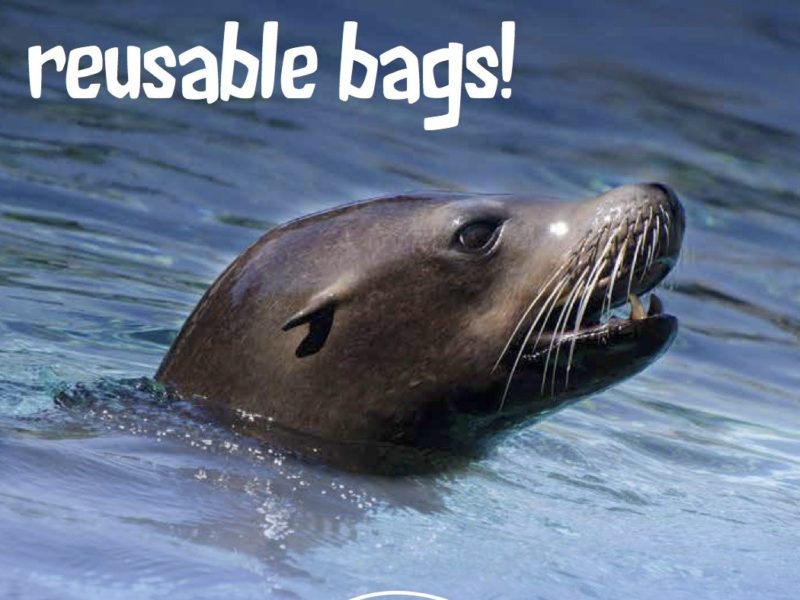
ISG+ Update: Zoo-Alive teen volunteers at the Saint Louis Zoo take the #byetobags pledge and spread the word!
This guest post is submitted by Kirinne Slaughter at the Saint Louis Zoo, and is the second in a 3-part series on their Innovative Solutions Grants+ project. Since our last post, our Zoo ALIVE (ZA) teen volunteers have been hard at work helping Zoo visitors say #byetobags! Successfully building on the lessons learned from the Better Bag Challenge, our teens have developed a campaign that asks visitors to be a part of the plastic pollution solution by switching to reusable bags to help sea lions. The teens designed a reusable bag giveaway, and a pledge that states: “I pledge to switch to reusable bags in order to keep our oceans clean for sea lions & all ocean animals!” Since our official launch on April 23rd, they have asked more than 1200 people to take this pledge. As the main question under our grant, we wanted to know how effective social media was at amplifying an on-grounds conservation ask and, at the same time, how effective it could be as a standalone medium of asking people to take conservation action. Specifically, our teens wanted to know: Could they get visitors who took our pledge on-grounds to become active on #byetobags social media, and share the #byetobags pledge with friends and family? How many people could they get to take the #byetobags pledge just through discovery on social media, without the on-grounds bag offer? If people do share the pledge with their friends and family, which method of sharing do they use most? How can we measure all this? These were a lot of questions, and it took a lot of hard work to figure out a way to track the data that we needed to answer these questions. But, with the help of the Zoo’s marketing department and advertising agency, we developed an innovative online pledge taking platform that not only adds a level of sophistication to our campaign, but is the first online campaign of its kind at the Saint Louis Zoo. To properly track data in order to answer these questions, two separate pledge pages were created: one for visitors to sign if they visit a #byetobags table on-grounds, and another for people who accessed the effort through our social media streams or through the Saint Louis Zoo website. The forms are identical in almost every way, save for the fact that the on-grounds form is a ghost page, accessible only to #byetobags staff when on-grounds. Both forms require visitors to give their name, email and zip code. It also gives them the option to give their age, and answer the question, “how often do you use reusable bags?” Have you taken the #byetobags pledge? Do so now, and then help spread the word! The online pledge form can be found here. After taking the pledge, everyone, no matter which pledge form they use, receives an email thanking them for taking the pledge, and asking them to spread the word to their friends and family. The teens came up with three share options to choose from: Facebook, Twitter, and email. No matter which method they choose, an automatic message is provided for them to spread the #byetobags message. For example, if you were to choose to share via Twitter, the following message will be automatically tweeted from your account: “Keep sea lions safe from plastic bags in the ocean! Join us and take the pledge!" The tweet contains a link back to the #byetobags online pledge page. Because these separate pledge pages generate two separate lists of people, we are able to track whether someone took the pledge on grounds, whether they found the pledge on our social media or on the Saint Louis Zoo website. Additionally, through analysis software provided through Google, Formstack and our email service provider, Sharpspring, we are able to track through which social media channel people access the pledge, and what share option people use most often when spreading the message to their friends and family. As we continue to collect data, there seems to be no limit to the number of questions we can answer with this sophisticated software. What have we found out so far? So far, since our launch on April 23rd, the Zoo ALIVE Teen volunteers have collected data that begins to shed light on their research questions: On grounds: A total of 732 on-grounds pledges have been taken! Meaning this many more reusable bags are being put to use! Additionally, across all events at which the teen volunteers were presenting #byetobags information, 90% of the people that the teens interacted with and asked to take the pledge, did so. While relatively few of these people have shared the pledge from the email that they received, our Facebook following and reach has been increasing steadily each week, with a total Facebook reach of 17,081 people! Online: We also have seen success on our online pledge, with an additional 168 pledges received with no on-grounds interactions at all, due only to presence on social media and the Saint Louis Zoo website. Since the first posting of the online pledge link on #byetobags social media on April 26th, we have averaged around three online pledges taken per day. These pledges come mostly from people responding to our posts on social media, however we do get pledge takers who stumble upon the pledge while simply navigating the Saint Louis Zoo’s website. Which share option has proved most successful so far? Facebook has been used three times as often as other share options for spreading the word about the #byetobags pledge. Anecdotally, however, our Twitter account has garnered lots of attention from other sustainability organizations, such as St. Louis County Recycling and Coast Plastics. I anticipate that our visibility and networking with these organizations will help us greatly as we continue to spread our message into the St. Louis community at large. As we continue to move forward with this campaign… Our teens are focusing on modifying our messaging to emphasize the importance of sharing the pledge with friends and family. Additionally, they will be increasing their engagement on social media in an effort to increase the number of pledges taken online, and the number of followers on our sites. Just this past week, we unveiled a #byetobags challenge that asks followers to post a photo/video with their reusable bag. With this challenge we hope to increase awareness and engagement with our campaign. As we continue to interact with visitors throughout the summer, we expect to see these numbers increase, with more and more people joining the pledge through social media, and spreading the word! The whole Zoo says #byetobags! In addition to the primary aspect of our grant, we have also been involved in many other important parts of Zoo culture. Our gift shops have been very involved with the project. They have incorporated signs into their shops encouraging people to choose reusable bags, and ask visitors, “Do you need a bag today?” upon checkout. Additionally, our #byetobags messaging has been integrated into our Sea Lion Show. Before each show, an audio clip recorded by the Zoo ALIVE teen volunteers plays that gives an overview of the #byetobags project. During the show, the trainers explain how important reusable bags are, and give away a #byetobags reusable bag. The sea lions themselves also take part and during the show they put their “lunch” into a prop #byetobags reusable bag. https://theoceanproject.org/wp-content/uploads/2016/07/OPR-Audio-Clip-2-Final-1.mp3 Finally, we are an integral activity at our weekly summer concert series, Jungle Boogie. We have formed strong connections with visitors who attend this event each week, and they have become advocates for our project as they encourage new visitors to stop by our table. An overwhelming majority of our guests have been nothing but positive when interacting with our #byetobags table. They seem grateful for the information, and excited about receiving our help in starting to work towards more sustainable behaviors. Our next steps include continuing to work with the various departments around the Zoo and the Saint Louis community to increase the spread of our message. We will be at an increasing number of events throughout the summer, and new ZA’s have been trained and will begin working with the #byetobags campaign. Additionally, as we continue to analyze different parts of our data, we will continue to answer our research questions as to how we can most successfully amplify an on-grounds ask using social media.
Continue reading -
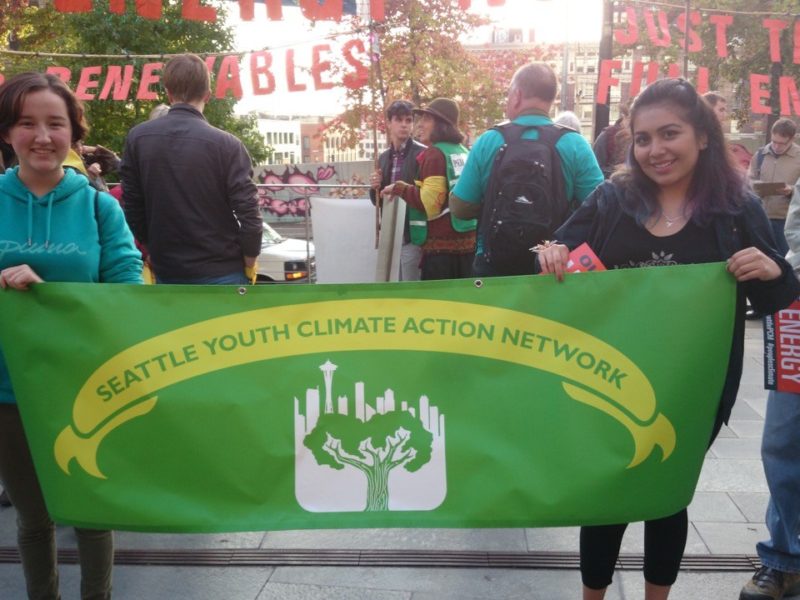
ISG+ Midterm Report: Woodland Park Zoo teens inspire peers to take a stand on climate change
This guest post by Eli Weiss of Woodland Park Zoo is the 2nd in a 3-part series on their Innovative Solutions Grants+ project, exploring how teens in the Seattle area can empower each other and their peers for action on climate change. In 2016 our focus for Seattle Youth Climate Action Network has been to build on the success of our pilot year and expand our engagement model to be inclusive and relevant for teens in the Seattle area. In year one we worked primarily with teens that were already committed through volunteer and internship programs at Woodland Park Zoo, Seattle Aquarium and Pacific Science Center. For the culminating Youth Climate Action Summit, we invited teens from other youth programs to participate and had a great response. As relayed in our last post, our primary goals for the project this year are to get more teens from across the city to join the network, and develop a more widespread and more engaging Summer Transportation Challenge. In keeping with our first goal, we have been looking to recruit teens that don’t already have a connection to Seattle Youth CAN. Noting our earlier finding that our in-person events have proven to be surprisingly successful as an engagement strategy, we have been focused on the following: Encouraging teens who are already involved to invite their peers to our events Asking other youth programs to join the network and attend and promote our events Tabling at local teen and climate change events that have been developed by others We have seen mixed results with this approach, and have continued to evolve our outreach strategy as we go. What did we do? Our teen leaders have presented at a range of youth action and climate events including; Gates Foundation’s Youth Action Summit, Museum of Flight’s NASA Climate Night, Seattle Art Museums Teen Night Out, and the Youth Ocean Conservation Summit at the Seattle Aquarium. What’s been working? One element that teens developed that has been effective for engagement at outreach events has been the “climate tree” activity which asks people to add one leaf that represents what they are doing to fight climate change and one for what they are concerned about. Since this was developed, over a hundred leaves have been added and thirty new teens have joined the network! What have been the lessons learned? Youth leaders have identified a range of barriers to participation in Seattle Youth CAN from the broader youth community including the challenge of getting reaching new teens through existing communication channels and the relevance of our events for youth who are not already passionate about climate change. We are working to address these potential barriers and continue to expand our community support and opportunities for youth and partner input on our outreach and engagement efforts. While expanding our network, we also took steps to strengthen its core. Specifically, we expanded youth leadership opportunities within the network, and in January launched the Youth Leadership Committee (YLC), a steering committee that is made up of teen representatives from each partner program. These teens meet monthly (and often more) to plan campaigns, explore new opportunities, and move broader project goals forward. In addition, each partner program has its own climate team with more youth members who in addition to the network-wide efforts are working on a on a range of institution specific projects - stay tuned! By creating new opportunities for teens to take on leadership roles, we are helping to strengthen the youth driven nature of the project and also the critical mass needed to move us forward. Then in keeping with our second goal, developing a more widespread and more engaging Transportation Challenge, the YLC is busy gearing up for another exciting summer of transportation related action. This year, teen leaders have modified the goals of the challenge: Increasing participation by expanding our network of partners and reaching more teens Engage participants in fun activities and events that help increase personal action and carbon reducing transportation choices The group is hard at work developing a new approach for engagement which they hope will be successful in getting many more youth involved in the action. The eight-week summer challenge will have weekly themes and prizes, and in-person events and contests to build excitement for getting involved and encouraging others to participate, as well as a strong social media focus through channels including Facebook, Twitter, and Instagram. We also have launched a new blog, www.seattleyouthcan.org which is a great place for our teens to share their stories and will be a hub for the upcoming challenge. Not to forget that earlier this year, seven of our teens worked with King County Metro Transit to develop a complementary youth-targeted campaign, which will hopefully launch county wide this summer. In addition, a local website design and social media firm, www.rorymartin.com, has offered up their support to help build a more dynamic marketing and social media strategy for the campaign and will be training a team of Seattle Youth CAN teens to lead this effort. All together, we are hoping to inspire hundreds of local youth to take action during the months of July and August. We are hopeful that with more targeting outreach and communication during the challenge and a more dynamic experience for participants, that we will successfully engage a much larger group this summer both within and beyond our core network. Stay tuned for updates on our summer of learning and climate action!
Continue reading