-
ISG+ update: Connecting Ocean Conservation and Community Engagement at the National Aquarium
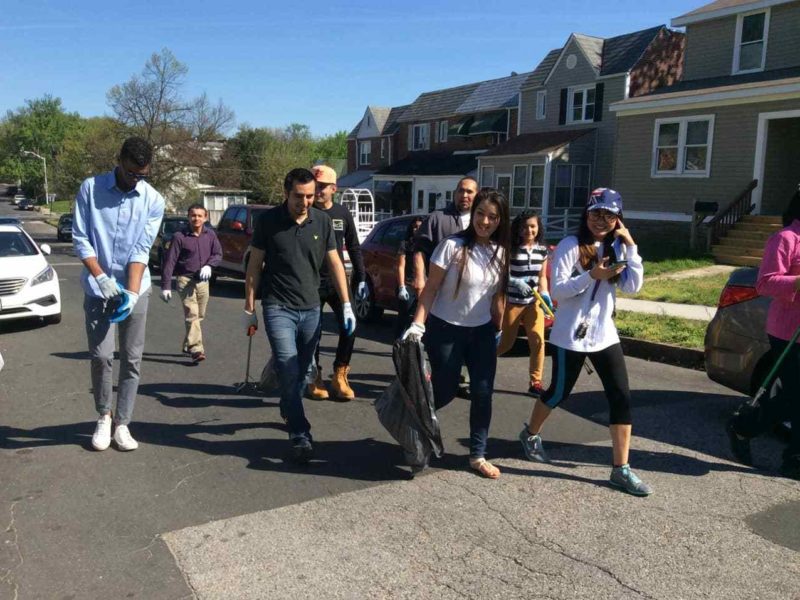
This guest post, by Gabrielle Roffe and Curtis Bennett of the National Aquarium’s Conservation Department is the second in a 3-part series on their Innovative Solutions Grants+ project. This project will be addressing the issue of marine debris by implementing a new approach to community engagement, with a specific focus on building our connection with the Hispanic communities near Masonville Cove in the Chesapeake Bay. Review of Project Goals Through this Community Engagement and Environmental Stewardship Project, the National Aquarium’s Conservation Department is focused on building connections with the local Hispanic communities within the larger Brooklyn and Curtis Bay communities and addressing the problem of litter and debris. The specific goals of the project, as described in our initial post, have been two-fold: Engage members of the local Hispanic populations in the removal of debris Cultivate community champions in order to ensure ongoing engagement Step-by-Step Process The first and most important step for us was to identify “pillar organizations” within the local Hispanic Community. In each and every community, there are existing organizations, congregations or schools who serve community members in a variety of ways. We felt it was important to reach out to and ultimately collaborate with these groups, rather than going at it alone, because they have the prior trusting relationships with the communities and, as a result, they can provide that connection and help to bridge the gap between our organization and the community itself.For our project, we have wanted to ensure that our programs are engaging people of different ages, backgrounds and interests. With that in mind, we specifically targeted three pillar organizations that also shared our interest in addressing the issue of litter and marine debris: The Templo de Alabanza Y Restauración (TAYR) Congregation Lakeland Elementary/Middle School Parent Group and ESL students at Ben Franklin High School at Masonville Cove. Over the course of our project so far we have been fostering relationships with each of these groups and in the following paragraphs we’ll outline our engagement with each group to date. TAYR TAYR is a Hispanic religious congregation that hosts weekly services at the Pathway Church of God, located within the Brooklyn community. We scheduled an initial meeting with the Pastor and his wife, during which we explained our organizational mission and they immediately connected to the importance of community work and protecting the natural environment. It was very relatable to them, because they told us that in the areas where they come from, in their countries, nature is abundant, and they recognize its value and thus appreciate the value of nature in their current communities and at Masonville Cove. TAYR congregation members painting storm drains outside their church Once we had the support of the congregation leaders, we then started to branch out to the congregation as a whole. We attended Sunday school and church services to talk about the various events at Masonville Cove and our community workshops, such as our Watershed 101 workshop, which we were offering in Spanish. The Pastor and his wife also suggested hosting a community cleanup after Church services. The planning of the event was a truly collaborative process, working with them to finalize the structure and flow of the event. Normally for debris clean-ups, our staff is responsible for leading groups of participants; however, for this community clean-up we adjusted the model to allow congregation members to be group leaders. We believed that empowering them to lead fellow congregants and community members would lead to a higher likelihood of sustainability of these efforts. So the Pastor and his wife recommended members of the congregation to be group leaders for this community clean up. A group of TAYR congregation members during a community cleanup Successes Met with the Pastor and his wife 4 times to discuss our collective programming goals. These meetings were a great way to share our collective ideas on what types of programs are of interest to the congregation and methods to best engage their congregants. Talked to 65 adults and 50 youth during two visits with the congregation to inform members about upcoming events. This method of event promotion is successful because you are being directly introduced by the Pastor, a respected leader, and you are then able to reach a larger audience. Engaged 80 adults and 34 youth during a community clean-up on April 24th. Participants also stenciled 5 storm drains during the event. The Pastor and his wife assigned their congregation leaders as our cleanup group leaders for this event. The congregation leaders then brought their cohorts to the cleanup which resulted in a wide attendance. Lessons Learned Hosted a Watershed 101 workshop at Masonville Cove with 3 attendees. The attendees were the Pastor and his two sons. We learned that we had the Pastor’s buy in for our work, but our message had not reached the congregation by simply talking to them about the event at church service. The Pastor felt disappointed that his congregants did not come to an event, however he did see that our work and associated projects are not only important but that they are fun and engaging. After this event, he took a bigger leadership role in order to ensure that his congregation was engaged. Students from the Youth Group were planning to come to our April 2nd Masonville Cove clean-up, however due to inclement weather, they were unable to attend. We learned that targeting a specific group within the congregation is a great way to get a focused attendance. The youth group and the congregation leadership group are tight cohorts who will come together when requested by the Pastor and his wife. Gaby Roffe (right, National Aquarium) and Nia Edwards (left, Hispanic Access Foundation), instruct TAYR congregation members for storm drain stenciling with stencils in English and Spanish. "Basura de nuestra calle contamina nuestra bahía" which means "Trash on our streets today pollutes the waters of our bay" Ben Franklin High School Over the years, we have built a very strong relationship with Ben Franklin High School (BFHS), as their students participate in many of our environmental education programs. Courtesy of this project, we have been able to engage them on a different level, focusing specifically on their community and collectively determining solutions to local environmental issues, specifically debris accumulation. BFHS has a growing Hispanic student population and English as a Second Language Program. Due to the language barrier, our past programs weren’t doing as good of a job as they could be to engage these students. Having staff on board now that are learning to and/or can speak Spanish fluently has been a huge step in the right direction. Now we can truly ensure that our programming is all-inclusive by translating programming into Spanish and making an effort to reach out to Hispanic students. We’ve coordinated various workshops with the Environmental Science teachers and worked with administrative staff to plan Benfest, a community event hosted by BFHS. Successes Engaged 39 students during 3 Watershed 101 workshops. Engaged 52 students during a classroom visit and schoolyard walk focused on stormwater runoff and designing possible solutions. Engaged approximately 800 people at Benfest, during which participants received and decorated 45 recycle bins, stenciled 3 storm drains and picked up trash around the schoolyard. Lessons Learned We targeted the Environmental Science classes which had already been engaged through our Watershed lessons. The teacher informed us that she had many ESL students in her classes and it would be helpful to lead groups in English and Spanish. All of the students were excited about this, both the Spanish speaking students, who were excited to have programming tailored to them, as well as the students who did not speak Spanish, who were excited to hear translations. Partnering with an existing community event is a successful way to engage a wider audience. We were able to pull new community members into our programming and engage larger numbers in hands on community stewardship activities. Lakeland Elementary/Middle School Parent Group Lakeland Elementary/Middle School has a Hispanic parent group that hosts monthly breakfasts. We have attended in order to hand out flyers, highlighting different events, both in the community and at Masonville Cove. Through this group we have connected the Hispanic community members to Masonville Cove and learned about their programming interests. Successes Attended one parent breakfast, during which we talked with 28 people about upcoming Masonville Cove and community events Lessons Learned The majority of the audience was unfamiliar with Masonville Cove and their programming. They did exhibit initial interest in programming, although it has been challenging to follow up with this group because we do not have their contact information and they only meet once a month. We may have to explore and implement different strategies in order to engage this group. Moving Forward In the past we did not use a direct approach to connect with Hispanic communities, so we cast a wider net throughout the community to advertise programs and events. This community pillar strategy is proving successful in allowing for a more direct and focused approach to identifying, selecting and engaging specific audiences and building trusting relationships with them for continued involvement. TAYR congregation members clean the streets of Brooklyn, Baltimore We have learned that in order to build trusting relationships with cohorts, it is important to communicate on a regular basis with the group leaders, who are trusted by community members. When the leaders vouch for your events, community members are more likely to attend. It is also important to attend community events that might not necessarily be related to your work, but helps build a relationship that is a two-way street. Based on the results to date, we will focus the majority of our efforts over the summer towards the TAYR congregation, continuing to involve them in community clean-up events, workshops and field trips to Masonville Cove with their Youth Group. As we progress we will be able to identify community champions from this congregation as well as identify opportunities to partner and engage with other community pillars.
Continue reading -
Thank you for celebrating World Oceans Day 2016!
Over the past two weeks, hundreds of events were held, thousands of individuals celebrated, and millions of people were engaged online for World Oceans Day. Aquariums and zoos, and other visitor-serving organizations once again played an integral role in the festivities, inspiring and activating thousands of visitors. Thank you so much for being a part of this global celebration of our oceans. This year’s theme was ‘Healthy Oceans, Healthy Planet’, and people all over the world were focusing on the prevention of plastic pollution. Organizations committed to using less plastic and organized beach cleanups to clean their local beaches and waterways. Many establishments continued to implement the Better Bag Challenge and various iterations of it, at their celebrations. Aquariums like Shedd Aquarium, Texas State Aquarium, Virginia Aquarium and many more joined Jack Johnson and took the Wave for Change challenge by sharing videos of themselves doing the wave. You’re encouraged to keep the Wave for Change growing at your organization throughout the summer! The online buzz about World Oceans Day this year was huge! #WorldOceansDay trended second on Twitter with over 146K tweets. Instagram posts about World Oceans Day reached over 290 million people, and over 65 million people were reached on Twitter. Numerous zoos and aquariums participated by tweeting inspiring messages and sharing incredible photos of marine life. Celebrities like Richard Branson, Ellie Goulding, Pharrell Williams, Adrian Grenier, Nelson Mandela and more shared photos and tweeted their support for our oceans. Notable organizations such as the United Nations, CNN, National Geographic, LIFE, the White House and more joined in spreading messages of ocean conservation. World Oceans Day teamed up with Youth Ocean Conservation Summit and The Big Blue and You to create Sea Youth Rise Up, which brought seven youth ocean conservation leaders to NYC and Washington DC. The youth spoke about pressing ocean issues and solutions in a live google hangout at the New York Aquarium. Click here to watch their broadcast. The youth then headed to Washington DC to meet with ocean leaders at the White House, including discussing protecting more special coastal and ocean areas (see www.BlueBackyard.org for more information on some leading sites for protection). World Oceans Day also introduced the World Oceans Day Youth Advisory Council. There are 11 members on the council all coming from different countries around the world. The new advisory council will help expand the reach and impact of World Oceans Day, on June 8th, and year round. World Oceans Day will continue to engage youth throughout the year! World Oceans Day wouldn’t have been so successful without your organization’s passion for ocean conservation. World Oceans Day happens once a year, but our ocean should be loved and respected throughout the year. Stay tuned for new campaigns and initiatives to celebrate our oceans all year long! Thank you for your support and participation!
Continue reading -
Happy World Oceans Day!
Feliz Día Mundial de los Océanos! ハッピー世界海洋デー سعيد اليوم العالمي للمحيطات Vrolijk Wereld Oceanen Dag! Bonne Journée Mondiale de l’Océan! ਧੰਨ ਵਿਸ਼ਵ ਸਮੁੰਦਰ ਦਿਵਸ! 世界海洋日快樂 Feliz Dia Mundial dos Oceanos! Fröhlichen Tag des Meeres! हैप्पी विश्व महासागर दिवस के अवसर! Счастливый Всемирный день океанов! Chúc mừng Ngày Đại dương Thế giới শুভ বিশ্ব মহাসাগর দিবস! 행복한 세계 해양의 날 Felice Giornata Mondiale degli Oceani! Felis Dia Mundial di Océano World Oceans Day is a global day of ocean celebration and collaboration for a better future. From the entire team at World Oceans Day headquarters, we hope you will celebrate your connection to our shared ocean on June 8th, and get involved in helping with solutions to the many challenges we face in creating a healthier ocean and a more sustainable society. No matter where you live – each of us affects the ocean and is affected by the ocean. This year, individuals and organizations across our blue planet are celebrating with the theme “Healthy Oceans, Healthy Planet” and are promoting prevention of plastic ocean pollution with events in their communities, with special announcements and everything in between! You, too, can get involved in a fun and easy way! Participate in the Wave for Change by joining singer Jack Johnson who started The Wave, asking people to make a commitment to the ocean on World Oceans Day, reduce their plastic usage, and spread the message that the oceans need our help. As Jack Johnson says in his video, youth are the key for a better future. We are particularly excited by our long-term commitment to involve youth: this week we announced the creation of a World Oceans Day Youth Advisory Council, which will be instrumental in shaping the development of World Oceans Day into the future, providing new ideas and unique perspectives. Together, with the Youth Advisory Council, our growing global network of partners from all sectors in dozens of countries, and our Supporters, we will grow the reach and impact of World Oceans Day on June 8 and also expand opportunities for ocean conservation throughout the year. With the enthusiasm and involvement of people around the world, World Oceans Day has grown tremendously each year since The Ocean Project started promoting and coordinating it in 2002. With hundreds of partner organizations and networks involved, and especially since the United Nations officially recognized June 8 as World Oceans Day in late 2008, we have collectively reached millions worldwide. This global celebration is growing fast and provides a special day once a year to reflect on the importance of a healthy ocean, our ocean connections, and how each of us can make a positive difference in our lifetimes. We hope you will become more involved!
Continue reading -
Last minute World Oceans Day event ideas!
Last minute ways to mark this special day! World Oceans Day is just around the corner, but it's never too late to plan a great activity or event to celebrate World Oceans Day on June 8th! Here are some last-minute, quick n’ easy ways to do something to celebrate World Oceans Day and help out our ocean. First and foremost - join the #waveforchange! This World Oceans Day we invite you to commit to reduce the amount of plastic you use with a video pledge, and challenge your friends to do the same! Plastic pollution is a huge problem for the ocean. On May 25th, singer Jack Johnson started The Wave, asking people to reduce their plastic usage on World Oceans Day, and spread the message that the oceans need our help. Share your video commitment online with the tags #WaveForChange and #WorldOceansDay. Don’t forget to tag World Oceans Day on Facebook & Instagram, and @CelebrateOceans on Twitter. With social media, we can turn individual ripples into a wave of support for the ocean. Together we can help this movement grow and swell! Let’s get everyone to make a wave for ocean conservation! The Better Bag Challenge Take the Better Bag Challenge: promise not use any disposable plastic bags for a whole year. Take a better bag instead! Challenge your friends, family, coworkers, or club members to join you. Petition to Recognize World Oceans Day in Your Community Is World Oceans Day officially observed in your town or city, state, district, province, or nation? If not, follow our easy 5 step Community Proclamation & Petition Step By Step Guide to help your community join the growing list of those around the world who are making this unique celebration on June 8th an officially recognized annual event. Create a community art piece Getting your visitors, neighborhood, or any group of friendly folks together is a wonderful opportunity to make some art! Create a mural somewhere public – depict ocean animals, or display your community’s ocean promises. An even easier option is to do a sidewalk mural or art piece. You can even make eco-friendly sidewalk chalk at home! Clean up your favorite spot It’s great to get hundreds of community members out cleaning the beach or river, but it’s not the only kind of cleanup that makes a difference! Grab a few friends or family members and make an outing of it. Go visit your favorite beach, river, lake, or park for a picnic and bring some bags for trash. Go a step further and host a beach, river, lake, wetland, or underwater cleanup. Try contacting local outdoor, dive and water sport shops to help organize and spread the word. You can recruit volunteers through the media, community posters, or local youth groups. Follow the cleanup with a celebratory dinner featuring sustainable seafood! Check out all of our free online resources, and see our latest news for further last minute ideas.
Continue reading -
Plastic-Free! Zoos, Aquariums and Museums
Photo Credit: Flickr user Kat Many zoos, aquariums, and museums (ZAMs) are already taking action to reduce disposable plastic use at their institutions, which is great in and of itself, and also, the research tells us, a great way to engage your visitors! See here for ideas on how to reduce your organization's disposable plastic use. With that in mind, here are a couple of specific ideas for ZAMs who want to highlight their own commitments while encouraging visitors to take action during events on/around World Oceans Day! Better reusable bag and bottle promotions – Many ZAMs have already taken steps to reduce, if not eliminate, use of disposable plastic bags and bottles, and also have begun to promote and/or sell reusable bags and bottles. Take it to the next level by staying in touch with visitors! Ask visitors to take the Better Bag Challenge. As a reward for signing on with their email address for World Oceans Day, provide them with a reusable bag that includes positive messaging that allows them to tout their commitment. Consider adding a tag to the bag with the additional steps they can take. The Saint Louis Zoo is implementing many of these recommendations and adding a social media twist: to amplify the impact of their commitment, teen volunteers are asking visitors to share their pledge on social media sites with a hashtag (in their case, #byetobags). Photo Credit: Flickr user Foodista Showcasing “trash-free” celebrations – Celebrate with a trash-free event for World Oceans Day, highlight what you've done so visitors are aware, and encourage visitors to join you in taking action. Ask your visitors to take the Better Bag Challenge, or another step that aligns directly with your event, such as a pledge to avoid disposable plastics at their picnics and parties this summer. Last but not least, consider conducting an exit survey to see how people responded, both to the challenge, and to the ask for action. Contact our World Oceans Day coordinator for more. And please refer back to the Better Bag Challenge section of this site for more tips on messaging and follow up with events like these. Have suggestions to add to this list? Please get in touch.
Continue reading -

Celebrate the World’s Oceans this Earth Day!
Credit: Ocean Conservancy Every April 22, events are held worldwide to celebrate our planet and raise awareness about threats to environmental health, like climate change and pollution. Many of these efforts tend to have a terrestrial focus. While addressing terrestrial issues and taking action on land are crucial in working towards a sustainable future, don’t overlook the importance of the ocean and its interconnectedness with life on land! Visit the World Oceans Day Blog to learn more about what you can do this Earth Day and beyond as we lead up to World Oceans Day on June 8!
Continue reading -

June 8th is World Oceans Day – It’s time to take action for the ocean!
World Oceans Day is the annual day of ocean celebration and action around the world. As people all over our blue planet prepare to celebrate under the theme “Healthy Oceans, Healthy Planet,” we get a lot of questions. Here are some answers to those FAQ's, and, of course, don’t forget to promote your celebration plans by registering your event, and adding it to the worldwide map so we can share it with the world! What is World Oceans Day? It is the official UN-designated international day of ocean celebration. On June 8th each year, we celebrate the ocean, its importance in our lives, and how we can protect it. The theme for World Oceans Day 2016 is Healthy Oceans, Healthy Planet. We are encouraging our partners and friends to focus on what actions each of us can take to protect the ocean and safeguard vulnerable communities and places, with a lot of attention to the problem of plastic pollution in particular. By joining in the celebration and sharing ideas, we can work together to achieve a healthy ocean that provides for the billions of humans, plants and animals that depend on it every day of the year. Do you have any suggestions for how best to celebrate it? The website, www.WorldOceansDay.org has plenty of free resources and tools to help you plan an event, large or small, or mark the day in some other special way. Check out these great ideas, and promote your event widely with these hints and tips. Aquarium and zoo-specific ideas from World Oceans Day 2015 can be found here. And you may wish to consider a variation based on the successful pilot of a "Better Bag Challenge” based on the lessons learned last year. Promote the Third Annual World Oceans Day Photo Contest. Use free World Oceans Day Octonauts activity kit to engage your youngest visitors. What is the new "Youth Advisory Council?" We are seeking ten young leaders (ages 16-21) from around the world to serve on a new Advisory Council to help expand the reach and impact of World Oceans Day. Applications are being accepted through April 20th. More details can be found on our blog. Join us in exploring and learning how to organize an event for World Oceans Day, mark the day in a special way, and take action for the ocean year round!
Continue reading -
ISG+ Final Report: The Florida Aquarium’s Collaborative Approach to Community Engagement
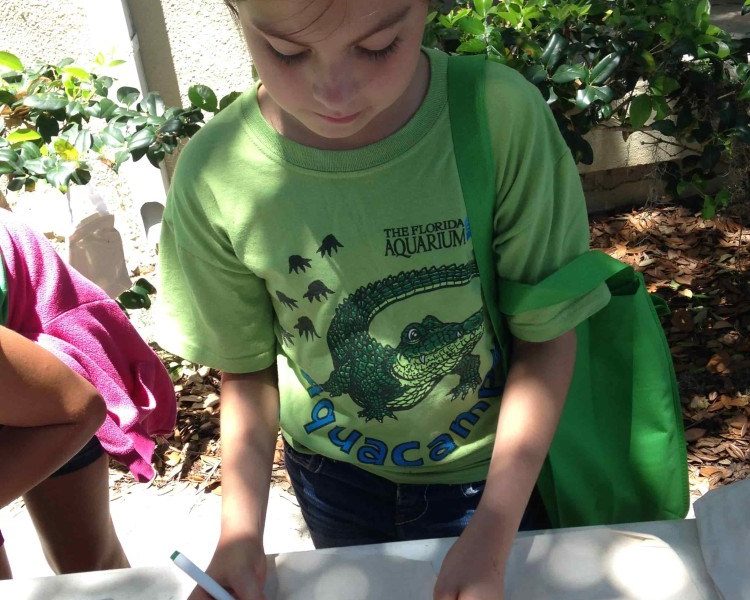
This guest post, by VP of Education Debbi Stone at The Florida Aquarium, is the final in a 3-part series on their Innovative Solutions Grants+ project, supported by a grant from NOAA to The Ocean Project. The Aquarium’s project asks “Can we gain valuable insights about how to engage an underrepresented audience by working together to design the approach?” Click here to read the previous post in this series. The Background: With our Innovative Solutions Grant, we worked with the students and staff of DeSoto Elementary to investigate an important question: Can we gain valuable insights about how to engage an underrepresented audience by working together with members of that audience to design the approach? As a growing population in our county is Hispanic, we have been interested in initiatives to engage this demographic. DeSoto was, in numerous ways, a perfect partner: a Title 1 School attended primarily by children whose families cite Spanish as their first language, as well as over 90% of students qualifying for free or reduced lunch. Throughout the school year, we worked with each grade level to identify an ocean problem of particular concern to students and families, as well as a solution step that they and others in the community could take to help address that issue (in keeping with the finding from The Ocean Project’s research that aquarium audiences expect, trust and appreciate when we start with the solutions, and recommend ways they can help). As discussed in our last blog post, we discovered that the children’s interests and concerns were not altogether different from what we found elsewhere. They were interested in conserving the ocean and its animals and were especially concerned about issues similar to those that resonated with other audiences. Together, we chose to focus on reducing marine debris and specifically plastic bags. Feedback from the design phase: We intended our project to provide a new and innovative way to gain insight into this audience, as well as how we could design meaningful engagement opportunities. Working together with the school in the design phase proved to be both informative and rewarding for aquarium staff, and, it turns out, the teachers too. To help with our evaluation, the Lead Teacher from DeSoto Elementary obtained and consolidated feedback from all of the participating teachers about their experience with the project. Here is her summary: What worked especially well? “Letting the students zero in on the issues that they wanted to explore provided ownership and contributed to increased confidence and engagement.” “Wrapping this project into Earth Day, something the school participates in annually, was a great idea (as it) didn’t feel like ‘another add-on.’” “Having a budget for materials and supplies made a huge difference!” What might they do differently? “Spend more time on (developing) ‘the ask.’ This was a challenging concept for the students, and even for some of the teachers....connecting content to what they and others can do to effect positive change was a cognitive leap for them.” (A concern also raised by our staff, as noted in our earlier blog post.) “They wished we could do the Aquarium field trips earlier in the (process), but this is unfortunately due to (factors) outside the scope of this project” Would recommend the project to others? “There was not a single teacher who indicated that this was not a worthy project and, in fact, the desire is to be able to do this annually with ongoing funding.” “(The teachers appreciated) that the Aquarium was so delighted by the students’ ‘spin’ on the reusable bag (experiment)…in this project, students helped us potentially solve a problem. What an opportunity for young minds!” From design to testing! A key goal of this project was to focus on an issue that resonated with the students and to test an approach developed by the students. As noted earlier, the students from DeSoto and the staff from the Aquarium together had determined that an “ask” of using reusable instead of disposable bags was what we would explore further and test. While many organizations promote the use of reusable bags, the students added their own twist, hypothesizing that decorating one’s own bag might make the practice more fun, more personally relevant, and more likely to be implemented. And after the great feedback from the teachers, we were even more excited to try it over several days and as a stand-alone activity. We ordered plain cloth bags, stamps, ink, stencils, and a few other supplies for inspiration for a test run over nine days in December. We piloted the approach we developed together, and the response was overwhelming! Aquarium staff set up tables during peak times. When guests approached the table, they were asked to make a verbal commitment to using reusable bags instead of disposable bags, and, once made, we gave them the opportunity to design a reusable bag of their own. Over 28 hours of testing, more than 2,735 bags were designed by our visitors. In other words, this was nearly 100 bags per hour, impressive given that we were space-limited by a table as well as each bag taking between five and ten minutes or more to make. As a comparison, for a normal activity station, we typically average less than 40 participants per hour engaging with educators. In short, there was never a break at the table. As soon as a space opened, it was filled. This was undeniably popular! In fact, this activity was so popular that it was a challenge to do more than just keep up with the demand for the bags! Our initial plan was to investigate whether there was a difference in response if the messaging around our “ask” was connected back to its origin with the DeSoto students, rather a more traditional aquarium association (e.g., “Help sea turtles…”), and perhaps also look at differences in response among visitor groups. But in practice, the seats were refilling before we could even say, “You can make a difference by designing your own reusable bag…” and attention quickly turned to the art. We were able to gather some qualitative feedback while the “artists” were at work, but not as much, nor as systematically, as we had hoped. We asked about the reasons why people were participating, and visitors told us that they were excited about the prospect of using their bags and indicated they planned to do so, including a common theme about designing bags to keep in their cars for grocery store trips. And when asked how they would be making a difference, it did seem as if our intent was getting through to them, as a majority of guests cited the reduction of plastics, as well as helping to ensure bags don’t end up in landfills or in the ocean. Lessons learned Those who staffed the table have been begging to do it again. Of the eight staff and volunteers who rotated through the staffing of the table, all were very enthusiastic. As our Education Volunteer Coordinator put it, “You would think this was entirely for the guests, but No Staff Member to show enjoyed setting a goal for distributing so many in a given time…they had so much fun decorating with the children and adults alike…fun was had by all!” Yet because we weren’t able to gather enough guest feedback, there are lingering questions about whether it was truly effective in terms of advancing conservation action. For example, our team reported that it was difficult to ascertain the extent to which the activity went beyond being a “craft” or “holiday gift” (given that we were trying this in December). And two team members felt it was likely that when we asked about the “why,” there was an element of guests giving the answers they suspected we wanted to hear. Another team member reported that since we were giving something “for free,” visitors might feel obligated to go out of their way to “thank us” by appearing to be extremely “on board,” something that has been raised in the past when attempting to gather visitor feedback. And it was clear that if we do this again, as we hope to do (see below!), it will be helpful to do so at a less crowded time and with more staff capacity, not only to engage the visitors, but also to more systematically track their reasons and responses. Final takeaways As our grant period comes to a close, here is our advice to zoo and aquarium colleagues based on our experience: If you want to engage a new or underserved audience, start by reaching out to members of that audience for insights and ideas. If there is an issue or action of common interest between your audience and you, but you worry, as we did with reusable bags, that it is “old news,” consider a new approach. The children’s idea to allow guests to customize or otherwise make a reusable bag more “their own” proved to be a fun way to engage visitors, and, we hope, just the beginning of a deeper relationship with the school and the Hispanic community. When testing a new approach, control your variables! As noted above, we worry, for example, that we didn’t adequately account for the impact of the holiday season when we tested our idea. Be prepared for success. We didn’t expect the high demand at our stations and struggled to keep up, especially with our monitoring and evaluation plans. Find ways to follow-up with interested guests. We will continue to follow up with the students and school, but we may have missed an opportunity to continue the engagement with the guests who were so keen to create a bag. An anticipated epilogue Because this proved to be so popular with our guests, we’re going to present this activity again in June around World Oceans Day weekend using funds in our operating budget or with external funding for more bags and art supplies. For all of the reasons cited above, we are intrigued by the promise of our test period and want to continue to work with The Ocean Project to help answer our lingering questions about the impact on our guests. Given how the activity essentially “sold itself,” we will focus less on testing different ways to invite people to participate, and focus more on assessing the impact of having participated. To do this, we plan to use an exit survey with a set of questions covering their concern about the problem, their opinion of the Aquarium and their feelings about making a difference, then compare and contrast the responses of those who participated (i.e. those who made a promise and designed a bag) and those who did not (i.e. those who simply visited the Aquarium), while also looking to see if, as our experience with the students suggested, this activity goes over especially well with our Hispanic guests. Through this experience, we have learned an invaluable lesson about deliberately considering how to pilot new and innovative ways to approach goals. We may find ourselves, at times, falling back into “tried and true” methods for engaging our audiences, yet if we’re simply maintaining success or not growing, it may be time to consider a new spin on our efforts. In short, we still haven’t answered all of our questions…yet isn’t that part of the thrill of striving to make a difference in the world? So stay tuned! About the Author: Debbi is Vice President of Education at The Florida Aquarium and has been challenging herself and others to move beyond information… and onto action! She enjoys living in harmony with all things furry, scaly, feathery, and slimy, whether on land or under the water. She is always eager to work with The Ocean Project and its partners and considers collaborations key to making a positive difference in the world.
Continue reading


