-

Youth for the Ocean Launches!
This month we officially launch the Youth for the Ocean initiative to collaboratively accelerate youth engagement and develop youth leaders for a healthy ocean. We’re excited to partner with you! Our youth initiative will…
Continue reading -
Saving Energy to Save Wildlife
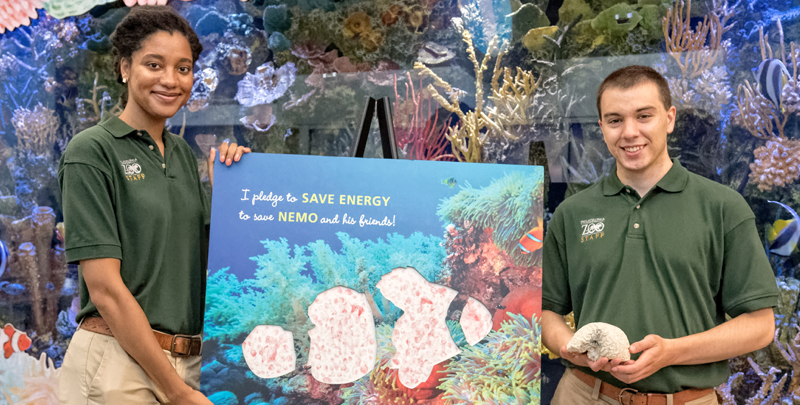
The recruitment phase of the Philadelphia Zoo’s “Saving Energy to Save Wildlife” project concluded at the end of 2016 with impressive results. Drawing from…
Continue reading -
Collaborating for Conservation in 2018
Happy holiday season! Thank you to all the organizations from around the world that are involved in our partner network and working to advance conservation….
Continue reading -
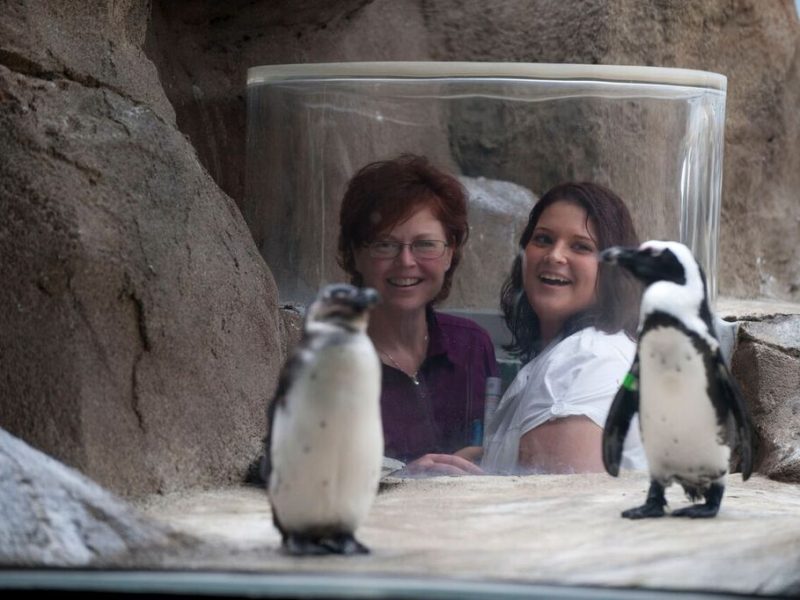
Communicating Conservation Effectively with Zoo and Aquarium Guests
Conservation is the action of protecting and rejuvenating ecosystems so that the plants and animals within them can thrive indefinitely. If those inhabitants could accomplish this on their own,…
Continue reading -
The Ocean Project launches new initiative to promote science-based federal fisheries policy and healthy, sustainable marine ecosystems
Healthy and productive marine ecosystems are critical to sustaining food, jobs, and recreation for millions of people, as well as producing other intrinsic quality of life benefits. To have…
Continue reading -
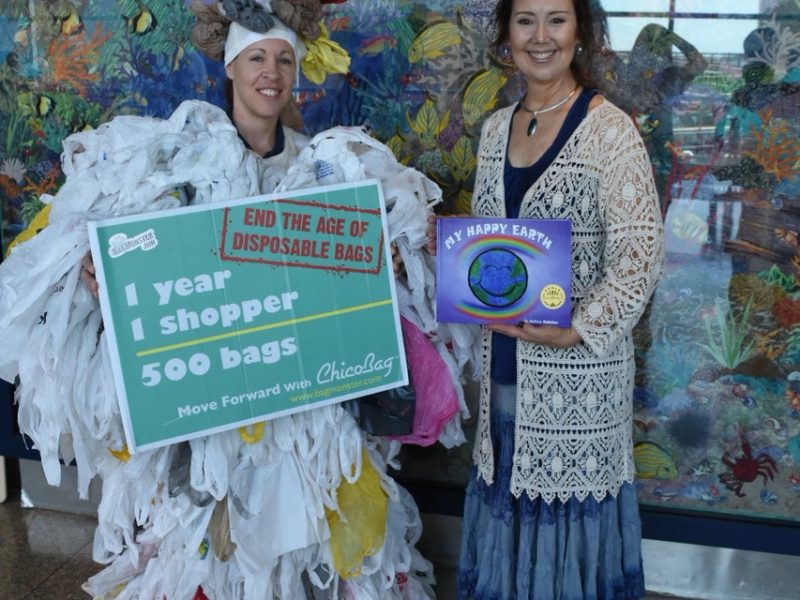
Pilot project shows that engaging visitors in conservation efforts can inspire commitments and enhance experience!
During the week surrounding World Oceans Day, 12 zoos, aquariums and museums (ZAMs) participated in a pilot project that had them asking their visitors about helping to address the…
Continue reading -
Advice from the Innovators: A summary of lessons learned in public engagement from year three of the Innovative Solutions Grants + Program (ISG+)
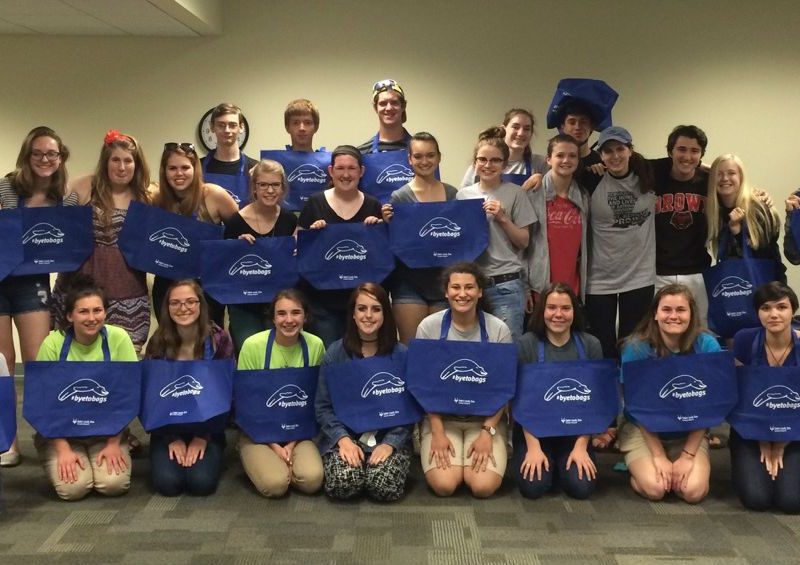
Our grantees from year three have completed their projects and submitted their final reports, which are filled with tips and lessons for other aquariums and zoos that share their interest in engaging visitors and advancing conservation. Many thanks to NOAA for making these grants possible. Per your request, we’ve compiled this summary of the top line takeaways. Links to their full reports with more detailed results, can be found below. Help your audiences turn inspiration into action! In other words, don’t just tell visitors what you are doing, invite them into the effort and document their support! Kirinne Slaughter, who led efforts under the grant to the Saint Louis Zoo, wrote in her final report, “our results confirmed The Ocean Project’s finding that (visitors) do indeed expect, trust, and appreciate the advice that you have to offer them on how they could become part of the plastic pollution solution…not only were our guests willing to sign a pledge (90% of those asked did so) but some were willing to share that pledge and stay invested on social media”. This finding was echoed by Wei Ying Wong of The Philadelphia Zoo, who reported that, “in addition to pledging to take action (to reduce their home energy use), 54% of those who were asked to participate in the tracking study (agreed to) let us track their household energy usage!” In a powerful presentation about her project at the AZA Annual Conference, Wei Ying could be heard wondering aloud if we are aiming too low with our conservation asks – these results certainly seem to suggest that! Seattle Youth CAN Empower youth to be conservation advocates. Instead of approaching youth as an audience for you to engage, ask youth to help you engage others, then hang on for the ride! Based on the experience of the Arizona-Sonora Desert Museum, Debbie Colodner strongly encouraged others to, “engage the power of young professionals or university students to help make the case,” which, in their case, was that, “millennial customers care about where their (seafood) comes from”. Kirinne at St. Louis Zoo also found this to be true, noting that, “one of the most exciting and successful parts of our campaigns was allowing the teens to experiment with the delivery of the #byetobags.” Notably, the team learned a lot not only about engaging visitors onsite, but, if you check out their final report also through social media, along with some bonus findings about the impact their onsite efforts had on guest behavior at their own gift shop. Eli Weiss of the Woodland Park Zoo shared similar advice, adding from his two years under the grant that “empowering youth leaders to develop public, and especially peer-to-peer, conservation engagement efforts is highly recommended and can lead to exciting new engagement strategies!” With one notable caveat, “that when teen leaders are developing public engagement efforts, their enthusiasm and ideas need focus to ensure successful implementation.” If you are interested in learning about youth engagement, look no further than the final report submitted by Eli and his partners at the Seattle Aquarium and Pacific Science Center. A group of TAYR congregation members during a community cleanup. Photo: National Aquarium Look beyond the impact you can have on individuals and consider community partnerships, especially when thinking of success at scale. Eli of Woodland Park noted that one of the primary lessons from their second year was to, “take the time to develop relationships with other organizations who have an overlapping interest in reaching youth and advancing conservation rather than doing it alone,” adding that, “zoos and aquariums can play a critical role in developing networks of youth conservation leaders, and in this electronic age don’t underestimate the power of in-person gatherings.” Debbie from the Desert Museum noted the incredibly positive response their project had from local restaurants, and advised others to, “work with interested chefs/owners to partner on strategies to build the local sustainable seafood (effort)”. If you’re interested in advancing sustainable seafood, or events that advance conservation, the full story of their efforts with local youth and local restaurants can be found here. Gabrielle Roffe and Curtis Bennett of the National Aquarium, who used a “pillar approach” to develop a truly inspirational partnership with their local community, advised, “take the time to familiarize yourself with the community, in both the physical and social sense (and) remember that building trusting community relationships is a two-way street. You have to get to know the community but you also have to give the community time to get to know you… from there focus on opportunities to create mutually beneficial goals in order to create a collaborative effort.” For anyone interested in community engagement, their final post is a must read! Our research tells us that when doing public engagement, start by giving your audience the solutions and then dive deeper into the details. So, audience, if you’re now inspired to go deeper, here are all of the links to their reports! Participants at Fini's Landing celebration of World Oceans Day Arizona-Sonora Desert Museum: Awarded $20,000 to engage university students in Tasting Sustainability, a community-based conservation initiative on the issue of seafood sustainability. Initial post Midterm post Final post TAYR Youth Group at a debris cleanup at Masonville CoveNational Aquarium: Awarded $25,000 for a project that engages the Hispanic community in a small Baltimore watershed on the issue of marine debris. Initial post Midterm post Final post Saint Louis Zoo: Awarded $15,000 to launch a project directed predominantly by teen volunteers on site and via social media with an emphasis on reducing the use of single-use plastic bags. Initial post Midterm post Final post Youth leaders on stage Woodland Park Zoo: Awarded a second year of funding, at $30,000 to expand their leadership role with Seattle Youth Climate Action Network (CAN), an evolution of Woodland Park Zoo, Seattle Aquarium and Pacific Science Center youth programs. Initial post (Transition between years) Midterm post Final post
Continue reading -
The Trump Administration: The Opportunity for Aquariums and Zoos
The optimist in me always looks for new opportunities that are presented with the changes that come after an election – and that is no different following the election of Donald Trump. Based on comments made before and after the election, I expect a rancorous debate between industry and conservative think tanks, and environmental groups and liberal think tanks on environmental laws and regulations. The new administration’s likely agenda will include reducing environmental regulations under the Clean Air and Clean Water Acts; increasing fishing, mining, logging, ranching and oil and gas exploration in public waters and on public and private lands; repealing the Antiquities Act, which every President since Teddy Roosevelt has used to protect America’s treasures; and reversing commitments made by President Obama to address climate change. It will likely impact the reauthorization or renewal of existing laws such as the Magnuson-Stevens Fishery Conservation and Management Act, or the Farm Bill. So…what role can aquariums and zoos play? An important one! Many of the same people will be making the same arguments about the same issues. Now more than ever there is a need for new voices, specifically sources of information that base their opinions on an objective analysis of available scientific information. This type of science-based work is exactly what aquariums and zoos do every day to care for animals, advance their survival in the wild, and engage visitors and the public for conservation. And it is exactly why you are so respected by your guests and neighbors. Additionally, your audience is likely more like America than any other conservation constituency. You can break through the social media silos and mainstream media silos and speak directly to people who trust you as a non-partisan, objective, and rational voice. The data is clear that when visiting an aquarium or a zoo, your visitors expect, trust, and appreciate information about conservation and how to help with solutions. In addition, “walking the talk” as an institution resonates with audiences, especially when visitors and members are positioned as part of the effort in a “together we can” approach that also helps get to the scale necessary to effect change. I began my career on Capitol Hill in 1987 and have been engaged in conservation ever since. What drew me to work with zoos and aquariums in 2004 is the incredible platform you have to inform the discussion and advance conservation in meaningful ways -- a dozen years later that opportunity still exists and is needed now more than ever. And as you do so, know that The Ocean Project continues to grow its policy advocacy capacity, and we stand ready to help you craft messages and develop approaches that are both strategic and effective. The space in these debates for aquariums and zoos includes translating the best available science into an objective recommendation versus using political science to shape natural science to achieve a policy objective. Your guests and neighbors trust you and look to your guidance on how to help with conservation issues. You have real opportunities to communicate at the local level through your platforms and channels while engaging in timely and coordinated actions on national policy issues. How you do it without a political backlash is simple – stick to the facts and use the data. For example, institutions engaged in conservation programs to protect endangered or threatened species, such as the SAFE campaign, can objectively analyze the available science to make informed decisions. That skill set can be transferred to policy debates with the simple preface such as: “As a science-based institution we’ve reviewed the available science and data and have concluded…” Much of the media coverage will be of the horse race regarding who is winning and losing, but what will fly under the radar of this coverage is that the science each side cites to support their cause will be cherry-picked, biased, or both. The two sides and many of their supporters in Washington will talk past and over each other, people near you will wonder what has changed and be open to objective information from sources they can trust. Since becoming The Ocean Project’s Policy Advisor just over two years ago, we’ve worked on several projects allowing aquariums and zoos to voice support for appropriations related to environmental education at NOAA and EPA and also the creation and expansion of marine protected areas in the Atlantic and Pacific Oceans. What I learned from these advocacy actions (from simple letter sign-ons to youth initiatives like Sea Youth Rise Up to fully implemented onsite visitor engagement campaign) was that aquariums and zoos want to be active in visible ways – and that may be needed now more than ever. You have an opportunity to leverage your unique position as a valuable community asset and valued community institution. As The Ocean Project builds out our policy program in support of and in partnership with aquariums and zoos, we hope you consider joining us, as we collaborate with others such as AZA and ACP, in future actions. If you are interested in doing so, please contact us. Learn more about Tom Adams and our team here.
Continue reading -