-
ISG+ Update: Will Philadelphia Zoo guests save energy to save “Nemo”?
This guest post by Wei Ying Wong of Philadelphia Zoo is the second in a 3-part series on Philadelphia Zoo’s Innovative Solutions Grants+ project. They’re exploring a new way of evaluating long-term conservation behavior change, specifically home energy use, in visitors to the zoo’s KidZooU exhibit. Hi! Welcome to our coral reef exhibit. Are there animals you recognize in here? Can you find Nemo? Clownfish like Nemo and many other species of fish depend on a very special type of habitat called coral reefs. In recent months, visitors to Philadelphia Zoo’s KidZooU (KZU) have been greeted with an opportunity take action to “Save Energy to Save Nemo” when they approach our coral reef exhibit. As discussed in our previous blog, we are capitalizing on a prime opportunity to communicate about ocean acidification at our coral reef tank. While our ultimate goal remains one of testing how well we use onsite conservation messaging to affect offsite behavioral change, we’ve found that getting those permissions and systems in place is a challenge. So to date we’ve focused on fine-tuning our messaging while asking visitors to pledge to reduce their home energy consumption. Early in the new year, our hope is to go one step further with our local visitors, asking not only for a pledge, but for permission to track their home energy usage! Asking for a pledge Our intended audience has been mixed age groups based on the research finding that children can be key influencers on household decision-making, and, fortunately, mixed age precisely describes most of the visitor groups to KZU. When visitor groups approach the coral reef tank, a zoo interpreter engages them in a conversation about the reef and other organisms in exhibit using strategic framing techniques that help visitors understand climate change and ocean acidification by overcoming traditional barriers and cuing people to think productively about solutions (see National Network of Ocean and Climate Change Interpreters for more details). On concluding the interpretation, we ask visitors to take a pledge to reduce their household energy consumption (“Save Energy to Save Nemo”), with children “signing” the pledge on behalf of their families by inking their fingerprint on a clownfish cut-out. Initial Findings To date, we have monitored our engagements with more than 600 people (in a total of 198 groups, with group sizes that varied from 1 to 12 people). Here are our preliminary findings: KZU visitors are open to a conservation message, provided there is no language barrier Almost three-quarters (73%) of the total number of groups stayed for at least a portion of the narrative. If they stayed through the first section, they were highly likely to stay on for the entirety of the message. While all visitors appeared to be generally happy when our interpreters approached them, we were not able to engage with about 5% of our visitors on account of the language barrier. Moving forward, we would like to include interpretation in other languages, especially as The Ocean Project’s market research indicates that households where English is a second language are likely to be very interested. KZU visitors are willing to take action on this issue Among the groups that stayed engaged with our interpreter till the final ask (“Pledge to Save Energy to Save Nemo”), 92% of the groups had someone take pledge to make a difference for the animals and their habitat. Overall, that represents almost half (42%) of the total number of people engaged. Engaging the child is critical to engaging the group Graph 1: Showing the percentage of people who left the interpretative station for the respective reasons As noted above, we noticed that if a group stayed through the full message, they had a high likelihood of pledging to take action (twice as likely as if they left early) With that in mind, we looked at why some groups were leaving early and found, as can be seen in the graph, that the biggest factor was whether the child stayed engaged. In most cases, especially when the child was young, adults allowed the child to determine their course. So when they child was no longer interested, the group left. Leaving the ask to the end might not be the best way to go While we continue to look for ways to keep the attention of the children, we’re also going to try moving the ask to the beginning. By doing so, we anticipate a significant increase in the number of groups who will make the pledge. Graph 2: Showing the percentage of people who leave the interpretive stations at various points of the narrative Inking a fingerprint works well for children, but not for adults The act of pledging by inking a fingerprint on a clownfish cut-out is, of course, an activity targeted at children. And as such, it has worked well. We even saw many of the adults who stayed through the interpretation bringing their children back to ‘fingerprint’ a pledge. But the number of adults willing to do so was quite low. Plus, of course, moving ahead we are likely to need more formal permission that a fingerprint would provide! Referencing Nemo was not helpful We had hypothesized that the hyper-personalized linkage between action and an identifiable animal character would increase the likelihood of engagement. We were wrong. Instead, the inclusion of “Nemo” created confusion as some of the younger children have not watched the movie, or the visitors’ attention is less interested in the clownfish than other things in the exhibit. So moving ahead, we have our interpreters paying attention to the organism that is capturing the attention of the visitors and then using that as a springboard into the script. Meeting the visitors where they are at is promising to be a much more successful approach. Next Steps We are now in the stages of finalizing the logistical and legal details for tracking the efficacy of our onsite messaging in changing offsite behavior. While that aspect of the project has taken a longer time than expected, the conversations it has generated both internally and with an ever-expanding number of partners is exciting. Moreover, we have learned all of the above lessons about how best to shape our messaging.
Continue reading -
Visitor engagement opportunity: COP21 and being part of the solution
With extensive news coverage of climate change talks underway at COP21 in Paris, and two-thirds of Americans wanting the US to take action, now is an especially good time to engage visitors at zoos, aquariums, and other trusted visitor-serving organizations. But what is the best way? Our research indicates that visitors probably don't want aquariums and zoos to attempt to explain the ins and outs of climate models or the climate negotiations. But they likely would be open to an aquarium or zoo citing examples of the impacts of climate change on specific animals, and then offering some hope by making, as the recent report from EcoAmerica put it, a “quick pivot” to solutions that emphasize “the power of we” - what we, together as a society, can do to help. As our friends at NNOCCI remind us, a critical concern right now is restarting the conversation about change. And with it in the news, now is an especially good time! Photo credit: John Englart
Continue reading -

Zoos and aquariums: Highlighting your mission is good for business
More evidence from our friends at IMPACTS that doing well by your mission helps you do well at the gate. As those who know me may have heard me say one too many times already, but here it is once more: visitors expect, trust and appreciate when aquariums, zoos, museums and other visitor serving organizations are active in advancing their missions. For environmental issues, we've found this is especially true when organizations provide their visitors with specific ways to be part of the solutions to the problems facing our planet. Let visitors know how they can join with you to help protect specific animals and particular places, and ideally give them something to do then and there. Here’s Colleen’s video overview of their findings. For more on how to do so, and the lessons we’ve learned with our partners, check out our other blog posts such as the lessons learned from the first year of our Innovative Solutions Grants Plus Program or our initial round of the Better Bag Challenge. Why not take those lessons and give the Better Bag Challenge a go next Word Oceans Day? Now you can do so with even more confidence that visitors will thank you for it!
Continue reading -

10 ways your zoo or aquarium can reduce plastic use
There is growing public awareness about the troubling accumulation of plastics in the environment, particularly in the oceans. Luckily, we are in a unique position to turn the tides on plastic use and disposal. Association of Zoos and Aquariums accredited institutions are trusted conservation organizations with millions of visitors annually. We can lead by example through the way we operate our businesses, and as The Ocean Project has reported, our institutional actions can help inspire our visitors, staff, and volunteers to make greener choices too. Reducing disposable plastics is critical for the health of our ecosystems and ourselves. And we know that our institutions want to take action, but where to begin? The AZA Green Scientific Advisory Group (GSAG) is here to help, supporting AZA institutions to make greener business operation choices and offering information on latest sustainability research and trends. The AZA Green Guide was created to help AZA institutions create their sustainability roadmaps, while allowing enough flexibility for individual institutions to identify their operational priorities. And in that spirit, here is a top ten list created by the GSAG, steps to help your operations be less reliant on disposable plastic products. Conduct a purchasing inventory, AND implement 'greener' purchasing practices (e.g. screen products for recyclability, promote bulk purchasing with minimal packaging, and avoid disposable items as much as possible). Purchase for the Planet. With durable plastic items, consider a switch from purchasing new plastic products to products made from recycled plastic. This action helps create a competitive market for products made from recycled materials. Old is New Again. Conduct a waste/recycling audit, AND implement a waste reduction and recycling improvement plan. Be Lean and Green! In food sales, reduce or eliminate single-use plastic bags, beverage bottles, straws, utensils, plates Don’t know where to start? Consider implementing a policy of providing these items only upon request, or stock your break rooms with reusable dishes, mugs and silverware. Bag It! Water station at Detroit Zoo Consider compostable service-ware, and you can largely replace plastic items with paper, cardboard, and bio-based items which can break down in a commercial scale composting facility or in a biodigester. Close the loop by composting the material to keep it out of the landfill. A Toast to Compost! If disposable plastics can’t be avoided, make sure they are recyclable plastics with plenty of bins throughout the campus to make recycling easy. Plastics Numbers 1 and 2 are the easiest to recycle. Styrofoam is very difficult to recycle, so eliminating that material is best. It’s a Numbers Game. In operations, avoid soaps, cleaners and other products with microbeads! Some cosmetics and cleaning products contain tiny pieces of plastic, which are also known as microbeads. These bits of plastic are too small to be captured by water treatment plants and they end up in our waterways where they can be ingested by animals and they accumulate in the oceans. Banish the Bead. Throughout the campus, install water fountains and bottle filling stations- this can help visitors make the better choice to utilize reusable bottles instead of buying bottled water. Provide Free Refills! Gift Shop Ops - Look at the items stocked in your shops and identify ways that plastic gift items can be swapped out with alternative options. Last but not least, work with your education and marketing teams to implement a program or competition to encourage your visitors, as well as staff and volunteers, to follow your lead. The lessons from the Better Bag Challenge offer some good insights here! Be a Muse for Reuse! -- Guest post from Wanda Evans at Saint Louis Zoo and Jennifer Hale at Denver Zoo Banner image credit to Saint Louis Zoo
Continue reading -
Visitor engagement opportunity: new CA microbead ban
Microbeads cause problems in the ocean - and even end up in our seafood. Great news in ocean conservation: Today the Governor of California signed the toughest bill to date banning microbeads. Our research suggests that news events like this one offer an important, albeit often fleeting opportunity, to connect with guests on ocean issues. We encourage you, especially staff at zoos and aquariums, to take advantage of it! Why talk about this? Though the public is largely aware of the overall problem of ocean pollution in the form of visible plastic trash, anecdotal evidence suggests that people remain largely unaware of the specific problem posed by microplastics. At the risk of using the technical term, people are “grossed out” when they learn that microbeads can be found in a lot of their personal care products such as facial scrubs, even toothpaste. So today’s news offers an opportunity to communicate about this issue in a way that both the ocean and guests will appreciate. Show that positive change is happening How do we incorporate this message? It's awesome to draw attention to conservation successes when we ask people to take action. Here are some ways to incorporate this messaging opportunity: A simple message referencing how visitors “may have seen in the news how states are taking action to ban products with microbeads," Adding that we all can help by avoiding the purchase of soaps, scrubs, toothpastes and other products with microbeads until such time that these bans come into effect Giving a specific example of how eliminating microbeads helps a specific ocean animal Use of these messages is exactly in line with our the overall finding from our research that zoo and aquarium guests expect, trust and appreciate information about ways they can help the ocean and its animals. For those in states that already have taken action (note that California now joins Colorado, Illinois, Indiana, Maine, Maryland and New Jersey in taking action), it also can be an opportunity for folks to ‘thank their lawmakers.' Let us know how it goes! Photo credit Wolfram Burner.
Continue reading -

Congrats! New Innovative Solutions Grants+ awardees announced
For over 18 years, The Ocean Project has been advancing conservation in partnership with zoos, aquariums, museums, and other visitor-serving organizations around the country and the world. We’ve provided strategic resources and tools to help our network of partners effectively engage visitors, both onsite and online so that together we can solve issues in our backyards and around our blue planet. Thank you to our partner aquariums and zoos for all you are doing to involve your visitors and the public in conservation awareness and action! Together, we are making a real difference, as the movement is continues to gain traction. A few years ago – with great thanks to the National Oceanic and Atmospheric Administration (NOAA) – we launched an Innovative Solutions Grants+ Program (ISG+) to test different ways to engage aquarium and zoo visitors. ISG+ has focused especially on reaching teens and minorities, empowering them to help with solutions to ocean and climate issues. Through this program, we award grants to innovative zoo and aquarium leaders; the “+” in ISG+ refers to pro-bono strategic communications coaching we provide throughout the grant period and the catalyzing work we do to enhance peer-to-peer sharing. ISG+ is helping to accelerate individual and societal actions, with lessons learned benefiting the aquarium and zoo community as a whole. Thank you to all who applied for a grant this year. This is the third year of ISG+, and each time we receive stronger proposals from zoos and aquariums around the country. It’s not easy for our Advisory Panel to select the winners. Ideally, we’d fund many more of your excellent proposals, and we’re trying to raise the funding to expand this program (see below). We are pleased to announce the following ISG+ recipients for 2015-2016 support: Arizona-Sonora Desert Museum: Awarded $20,000 to engage university students in Tasting Sustainability, a community-based conservation initiative to increase awareness of seafood sustainability and decrease consumption of unsustainably caught or farmed seafood. Working with Tucson-based group, Lead Local, activities will engage the community, as well as enhance opportunities on the Museum grounds for visitors to help with seafood-related solutions. National Aquarium: Awarded $25,000 for a project that engages the Hispanic community in a small Baltimore watershed. Through on-the-ground education and leadership training, they will create a network of community members who will spread plastic pollution and marine debris prevention messaging through their neighborhoods and networks. This project will also connect to the Aquarium’s Living Seashore exhibit, which features five Shore Heroes – individuals and groups who have taken action to protect aquatic resources. They plan to develop a sixth Shore Hero, their first with an urban focus, who will make clear the connection between urban waters and the ocean, and as well as set an example for plastic pollution and marine debris prevention. Saint Louis Zoo: Awarded $15,000 to launch a project directed predominantly by teen volunteers via social media in high school peer networks and with Zoo visitors to tackle the growing issue of plastic pollution and marine debris (100 billion plastic bags are used annually in the United States, with less than 1% recycled). To address these issues in a relevant, actionable manner, staff and Zoo teens will develop a project to reduce plastic bags at Zoo retail locations, within teen volunteer peer networks, and among Zoo visitors. This project has the potential to impact the local community and beyond. Teens at Woodland Park Zoo Woodland Park Zoo: Awarded a second year of funding, at $30,000 to expand their leadership role with Seattle Youth Climate Action Network (CAN). CAN was established with ISG+ support in 2014 as an evolution of Woodland Park Zoo, Seattle Aquarium and Pacific Science Center youth programs. Through collective action, these organizations aim engage local teens in effective climate change leadership opportunities. Achieving their vision for Seattle Youth CAN as a replicable model depends upon their ability to continue to integrate new voices, relationships and resources. In 2015-2016, they plan to build upon the existing structure, by expanding the Network and its efficacy through various activities. Congratulations to the grantees! With all our partners, The Ocean Project looks forward to working with you in 2016 and beyond, to help effectively engage your visitors for conservation outcomes and impact. This round of support is the third year of a three-year grant from NOAA. In total, with NOAA funding, we have provided approximately $260,000 to 10 AZA-accredited zoos and aquariums. We're seeking partners to continue to expand this program for aquariums and zoos. We’re hoping to secure additional support in 2016 from NOAA, and/or other funding sources. The Ocean Project is also looking to partner with key aquariums and zoos to target joint fundraising opportunities through collaborative grant applications. If interested, please contact us!
Continue reading -

It’s in the bag! Lessons learned from the Better Bag Challenge
With kudos to the Houston Zoo, which provided the inspiration for what proved to be a very popular bag design! For World Oceans Day 2015, we teamed with the Aquarium of the Bay, Shedd Aquarium, Vancouver Aquarium, and the Virginia Aquarium and Marine Science Center to test and assess various approaches to the Better Bag Challenge. Our intent was to explore the ways in which we might effectively engage visitors on the issue of plastic pollution in our ocean, and inspire them to take action in honor of World Oceans Day, specifically by signing up for the Better Bag Challenge, which, as a reminder, was a pledge not to use disposable plastic shopping bags for one year. Thanks again to the Riverbanks Zoo, whose work under their Innovative Solutions Grant+ sparked the idea for the challenge! At these four sites, visitors were offered a reusable shopping bag (Production cost: $1 each) in exchange for taking the challenge and agreeing to complete a short follow up survey, but, here’s the twist, each site came up with its own approach and messaging so we were able to compare and contrast experiences. And in addition to the coordinated effort undertaken at these four sites, we were excited to also receive feedback from similar outreach experiments at the North Carolina Aquarium at Fort Fisher, Oregon Coast Aquarium, SEA LIFE Centers and SeaWorld Parks and Entertainment. Thanks all! What we learned Guests were eager to participate! Across all sites, the response from guests was overwhelmingly positive, with not a single report of anyone objecting to the ask, and, on average, 3 out of 4 guests who were asked then signing up for the challenge! So, once again, more on-the-ground evidence that the public opinion research is right – visitors really do expect, trust and appreciate information as to how they can help solve the problems facing our ocean. It helps to have an “attention-getter” – On this point, the four core sites also reported that the offer of a reusable bag was a great way to attract attention, facilitate the ask, and inspire action. At the Aquarium of the Bay, the staff tried to engage visitors without, and then with a reusable bag on offer, and response jumped from less than 20% to nearly 60%. Interestingly, Shedd Aquarium said they also were able to attract attention by providing a free granola bar. And Oregon Coast Aquarium had success by offering an opportunity for a selfie with a staff member dressed as a “bag monster.” So while we don’t know if an actual carrot would work, a proverbial carrot definitely did! Make a direct connection to the impact on the animals – The sites with the best response rates – Shedd and Virginia, which reported a combined average of more than 90% of guests who were asked agreeing to sign up for the challenge – please take a minute and read that again, 90+% - wow! - both sites identified the way in which they were engaging guests in front of exhibits that featured sea turtles, and using simple messaging about how avoiding plastic bags benefited sea turtles, as keys to their success. And notably, the visual proximity to the sea turtles seemed to be as important as the words spoken. Provide additional inspiration by “walking the talk,” and connecting individual actions with larger efforts – In addition to the above, the Virginia Aquarium was able to inspire guests by pointing to their own efforts to reduce, and in their case actually eliminate all plastic waste as part of a “trash free weekend.” Likewise SeaWorld sites could tout their own commitment, having eliminated all plastic bags from their parks last year. Not enough in this experiment to know if the institutional action was as inspirational as the impact on the animals, but prior experiments suggest it may be. There also were indications, both anecdotal and in the subsequent visitor survey, that the idea of connecting with the aquarium in a larger effort helped instill confidence that individual actions could make a meaningful difference. Keep the ask and explanation “super simple” – The participating aquariums also noted that the simplicity of the ask helped facilitate engagement, as guests immediately grasped the idea of avoiding disposable plastic shopping bags as a “good thing” and understood the way that doing so could help the animals by keeping plastic pollution out of our ocean. Offering additional information about the extent of the problem with marine debris, or giving additional choices as to other actions an individual might take seemed to be counterproductive. The only catch, this ask may have been “aiming too low” for some sites, as both Aquarium of the Bay and Vancouver Aquarium reported high numbers of guests who said they were already avoiding plastic bags when shopping. Track guest response, but how? The problem with email sign ups, and the potential in texting – At the four core sites, guests were asked to “sign” the challenge by providing their email, and, again, agreeing not only to use the bag they received but to answer a follow up survey. Guests were surprisingly willing to provide their email addresses, but collecting the email addresses proved to be time intensive and tricky for staff, and all sites had problems with transcription. Moreover, and perhaps more important, the response rates for the follow-up survey were, in a word, disappointing. Only 7% of those who promised to take the survey actually did so. On a much more promising note, SeaWorld, asked visitors to engage not through email but by sending text messages with MyActions, and indications are that this was better for both staff and visitors alike, but again that was while guests were still on site. Our earlier research tells us that even a promise made with the best of intentions can be forgotten once they’re back in the bustle of their everyday life. Oregon Coast Aquarium's bag monster Still wondering if there is a long-term impact on visitor behavior - While the survey response was, again, very low and not necessarily representative, and, noting that we know people are inclined to tell us what they think we want to hear, but even with that big grain of salt, there were at least some indications that things were moving in the right direction. A very positive response to the provision of the reusable bag, both as an inspiration for signing up, and as a reminder for maintaining the commitment. Indications that guests were still taking action, as when asked about their use of reusable bags when grocery shopping, for example, the average response was “approximately 30-40% of the time” for “prior to taking the challenge” (which is right in line with grocery industry surveys), but that jumped to “approximately 50% of the time” for “after taking the challenge.” Some suggestion of a “carry over” effect, as approximately two thirds of respondents also claimed that they increased their use of reusable shopping bags at stores other than the grocery, reducing their use of other single use plastics, and speaking with friends or family about the issue. And last but not least, they reported a high level of appreciation for having been asked to take action, as well as an above average belief that their actions could make a difference for the ocean. Again, we wouldn’t hang our proverbial hats on these survey findings, but they do suggest we were moving the needle in the right direction. Looking ahead We expected a positive public response to the Better Bag Challenge, but if you would have told us that some sites would see 80 and 90 percent sign up rates I’m not sure we would have believed you. Without doubt, visitors welcomed the chance to join us in taking action, and helping to solve the problems facing the animals and our ocean. And while as visitor serving organizations we have spent a lot of time and energy wondering if our impact on guests is lasting, perhaps that isn’t the most pressing question. If we see that people care about issues like plastic pollution, and are willing to sign on for action when inspired and, notably, asked to do so during their visit, perhaps we should worry less about whether their attention may fade when they return to their busy lives, and think more about how to bring their interests and actions to the attention of civic leaders and policymakers - perhaps that is our next challenge?
Continue reading -

-
Innovative Solutions: Three projects completed, some great advice, and new opportunities ahead!
The three winners from the initial round of The…
Continue reading -
ISG+ Update: Teens at Riverbanks Zoo and Garden get their hands dirty
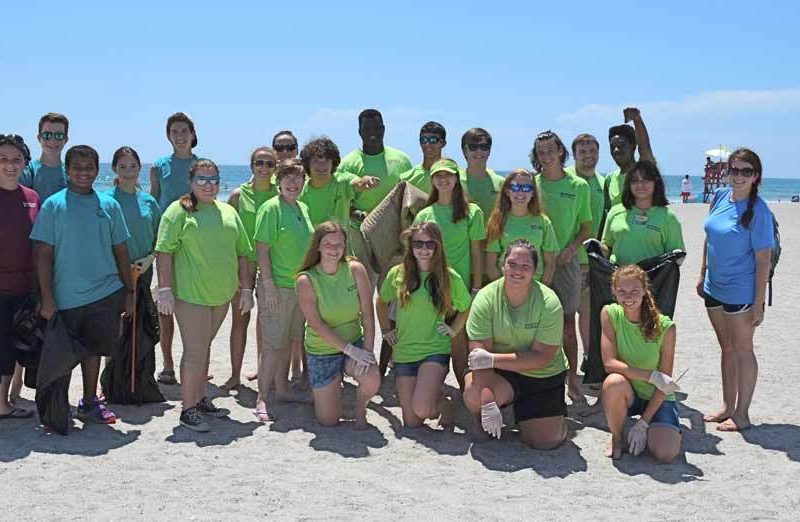
This guest post, by Director of Education Elizabeth Clemens and Coordinator of ZooTeens and Scout Programs Syndi Castelluccio, from Riverbanks Zoo and Garden is the second in a 3-part series on their Innovative Solutions Grants+ project, which investigates how engaging with teens and receiving incentives can impact zoo guest behavior. The Adventure Continues As reported in our initial blog post, the Riverbanks Zoo and Garden’s ZooTeen volunteers are on an exciting journey. They’re busy taking direct action and engaging our visitors in efforts to keep trash out of our ocean through an innovative initiative they’re calling Teen S.O.S. (Stewards of our Seas). You may have been wondering how far they have come in their efforts and, if so, here’s your answer! Getting Their Hands Dirty! Before giving them all the facts and figures about marine debris, we decided to have our ZooTeens roll up their sleeves and dig into the issue, litter-ally. They marked local storm drains, picked up trash along our very own river banks, and, after some sorting and scrubbing, even used some of it to create the “trash to treasure” artwork as part of the “inspiration stations” they’ve been developing. This “learning by doing” experience had a real impact on the ZooTeens. For starters, they were struck by the amount of plastic that they found during the waterway cleanups, and that, in turn, increased their interest in promoting reusable shopping bags as a solution step. In addition, several of our teens that have been with the program for 2-4 years commented that the zoo seems so much more productive now. “When I look at what we used to do in our monthly meeting and what we do now, it’s amazing how much we as teenagers can accomplish in our mass numbers” - Alyssa “The time goes so quickly, if we met more often we could get so much more done.” - Dillon This last comment was seconded by our Teen Volunteer of the Year, Samantha, who dedicated more than 300 hours this past year to the teen program and helping to spread our conservation messaging to our guests. We have seen a tremendous difference in the teens attitudes and dedication to the program since we changed our approach to getting them involved. They are more active, more engaged, and more confident – they are making a difference. Experiments in Outreach Staff is now working with the ZooTeens to test how effective they are in their efforts to encourage visitors to take action. To do this we decided to compare and contrast the experience of two groups, rather than three as we had initially proposed in our first blog post. 1. A “Control Group” that received the bag off site with no explanation other than, “please take the bag, use it and complete a follow-up survey” 2. An “Experimental Group” of zoo guests who while on site engaged with the ZooTeens and learned about the problem of marine debris before receiving the bag and agreeing to use it and take the follow up survey We had initially proposed comparing the above with a third group, guests who visited the zoo but did not engage with the ZooTeens, but decided not to include this group because it would have complicated the experiment, and we wanted to focus in on the influence of interactions with the teens at “Inspiration Stations.” With the “Experimental Group,” the ZooTeens also were interested in trying a couple of different ways to connect with our guests. While we wanted to encourage the ZooTeens’ creativity, we also made sure that the defining characteristics of our Experimental Group remained constant - all members of this group visited the zoo, interacted with a ZooTeen, were told about the problem with plastics, and then received a reusable bag. Inspiration Stations – As noted above, the ZooTeens set up an activity station or touch cart with biofacts in our Aquarium Reptile Complex, either by our sea turtle exhibit or at the exit away from any animal exhibit. The activities included: “It’s Not Easy Being a Green” – this activity allows a guest to do an endoscopy on a “stuffed” green sea turtle to determine what had made the turtle sick “Jelly Fishin’”– this fishing activity allowed guest to see how sea turtles could confuse plastic for food “All the Way to the Ocean” – demonstrated how debris from land makes it into our waterway “Washed Away” – shared the problems with microbeads in our common household products that we use daily The teens shared with us that they found it challenging to draw in guests to talk; however, when they had an activity, the guests flocked to the area. As one our teens, Abby, put it, “Having so many guests come to our activity allowed us to share the big issue at hand.” Information Booth – We also tried a stand-alone station near our guest relations center with our eye catching “bag monster ball” made of 500 bags tied together. We did give out a few of our reusable bags at this location, but it without the active engagement on the issues of plastics pollution, it didn’t seem to have the draw of the activities mentioned above. To date we have distributed 1500 reusable bags from a total of 2000, with 600 going to our “Control Group” and 900 going to our “Experimental Group,” and have begun requesting and collecting survey responses. Want our results? Stay tuned! -- Guest post by Elizabeth Clemens and Syndi Castelluccio
Continue reading
