-
World Oceans Day 2017 Annual Report
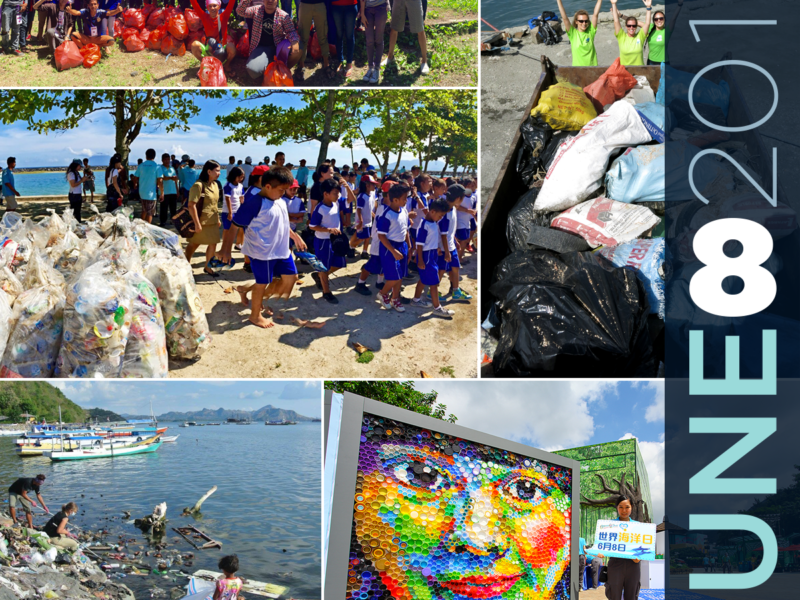
Thanks to your participation, and that of hundreds of organizations, schools, businesses, and governments, World Oceans Day reached new heights for global ocean awareness and involvement. With 1,000+ events…
Continue reading -
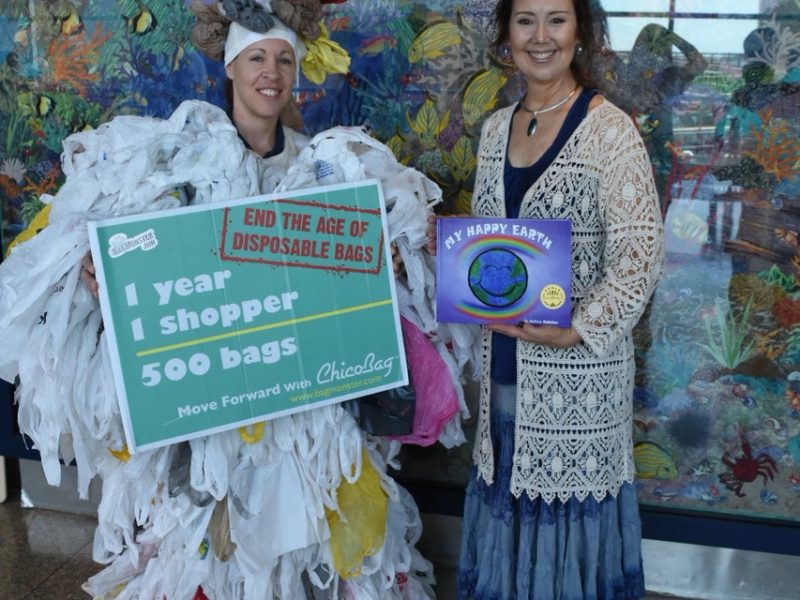
Pilot project shows that engaging visitors in conservation efforts can inspire commitments and enhance experience!
During the week surrounding World Oceans Day, 12 zoos, aquariums and museums (ZAMs) participated in a pilot project that had them asking their visitors about helping to address the…
Continue reading -
The World Unites On June 8 For World Oceans Day
World Oceans Day 2017 will be the biggest and best yet! For 2017, hundreds of celebrations are planned in…
Continue reading -
Get Ready for World Oceans Day 2017!
The Ocean Project promotes and coordinates World Oceans Day as a unique opportunity to celebrate our ocean and its life, and engage people in positive and empowering ways. The theme for World Oceans Day 2017 is "Our Oceans, Our Future," with a conservation action focus on encouraging solutions to plastic pollution and preventing marine litter for a healthier ocean and a better future. Get ready for World Oceans Day with updated free resources and event ideas for 2017. New promotional materials include posters available in 15 languages, graphics for social media, videos, and more! We have also teamed up again this year with The Octonauts to support you in celebrating in engaging ways for World Oceans Day. The updated Octonauts kit for 2017 includes graphics and activities that will help make your celebration more fun than ever! Looking for ideas for your World Oceans Day celebration? Check out the event planning guide for dozens of event and activity ideas and information, from art exhibits and festivals to races and contests. Head over to the World Oceans Day blog for even more event ideas updated regularly. Do you already know how you or your organization will be celebrating this year? Submit your event to the world map! The World Oceans Day site serves as a central coordinating platform for World Oceans Day, with new free resources each year and inspiring ideas for everyone – no matter where you live – to help expand the reach and impact of World Oceans Day on June 8, and continue year-round. Check the website frequently and sign up for the newsletter for updates!
Continue reading -
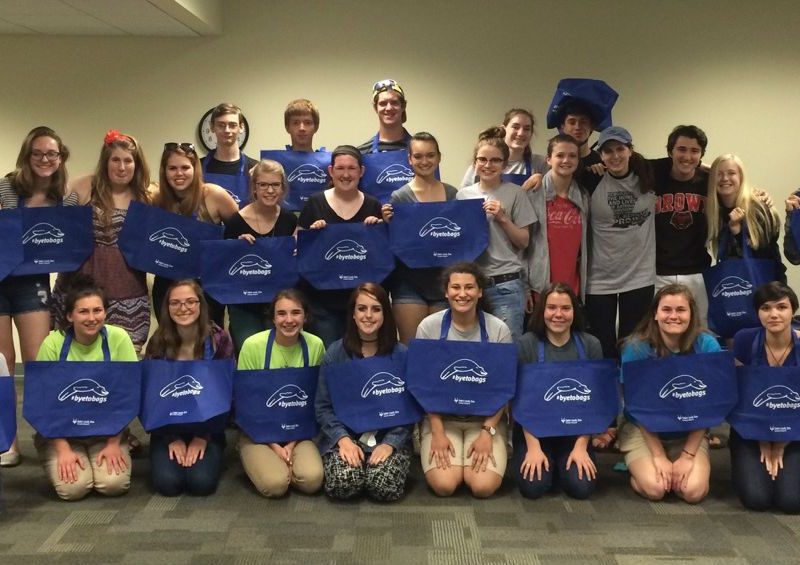
Youth Taking the Lead for Conservation Action
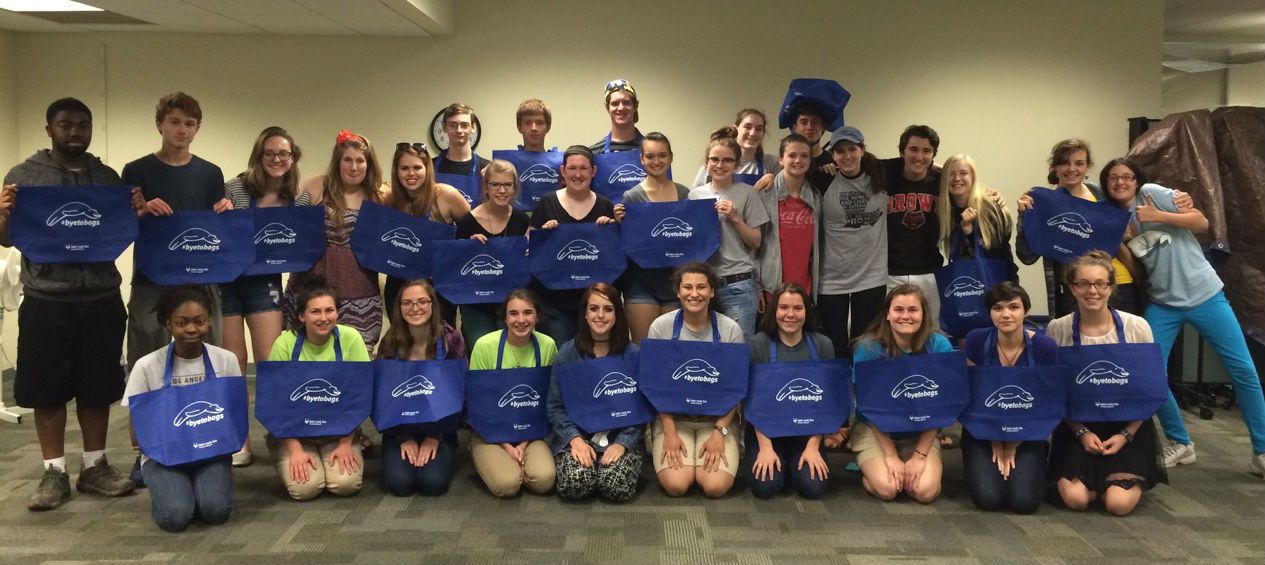
Teens with Bags: The ZooALIVE teen volunteers from the Saint Louis Zoo pose with their #byetobags reusable bags! They are ready to go and spread the reusable bag message! In the summer of 2016, Phillipe Cousteau, grandson of legendary explorer Jacques Cousteau, recognized youth as “the hope for our oceans.” Across the globe, there is an ever-growing group of young and passionate leaders with confident “can-do” attitudes ready to make positive changes for our planet. Today more than ever, these youth are involved in major conservation action projects. Countless organizations have dynamic youth groups helping them carry out their conservation missions. The Ocean Project placed special emphasis on youth engagement in 2016, with plans for expansion in 2017 and beyond. Despite these advancements, there is an untapped potential to allow youth to not only be involved in, but also build and lead conservation action projects. Providing youth with the right amount of guidance, while allowing them to create and accomplish meaningful actions for our oceans can reap invaluable benefits. During the course of the Innovative Solutions Grants program, our partners provided youth with some powerful opportunities. Program grantees uncovered new and innovative approaches towards youth engagement in the process. At the Arizona-Sonora Desert Museum, Debbie Colodner strongly encouraged others to, “engage the power of young professionals or university students to help make the case,” which, in their case, was that, “millennial customers care about where their (seafood) comes from”. Kirinne at St. Louis Zoo noted that, “one of the most exciting and successful parts of our campaigns was allowing the teens to experiment with the delivery of the #byetobags,” as their youth group learned a lot about not only engaging visitors on-site, but also through social media. The team led by the Woodland Park Zoo, summed it all up when writing, “empowering youth leaders to develop public, and especially peer-to-peer, conservation engagement efforts is highly recommended and can lead to exciting new engagement strategies!” They also added, “when teen leaders are developing public engagement efforts, their enthusiasm and ideas need focus to ensure successful implementation.” Rather than looking only at the opportunity to reach youth with information, many of the program grantees went “above and beyond” to explore how they might empower youth to improve and amplify a conservation message. The combined experience of grantees at the Oregon Coast Aquarium, New England Aquarium, Riverbanks Zoo, Saint Louis Zoo, Arizona-Sonora Desert Museum and Woodland Park Zoo all point towards an opportunity to increase youth leadership development all while advancing their conservation missions. In 2017, let’s strive to provide youth with more leadership opportunities and turn their positive “can-do” attitudes into meaningful action for our oceans. Stay tuned for more from the World Oceans Day Youth Advisory Council and from The Ocean Project on exciting new youth engagement and youth leadership development opportunities!
Continue reading -

Youth Making Waves for Ocean Conservation
2016 brought a variety of challenges and triumphs for our oceans. While the world faced the hottest year on record and Australia’s Great Barrier Reef suffered from its largest coral bleaching event, we were still able to celebrate the establishment of the largest marine protected areas on earth in Hawaii and Antarctica, and cities and countries around the world put disposable plastic bag bans in place. As 2017 begins, there are still many goals to be met towards a healthier ocean. With high expectations to continue the trend of protecting ocean spaces and decreasing plastic use, there is still a need to fill a major gap in these processes: creating opportunities for youth engagement. With youth ages 24 and younger making up nearly 40% of the world’s population, it is imperative that we involve young people in creating a movement for a healthier ocean. This past year, The Ocean Project prioritized youth engagement and youth leadership development in a few ways. We launched the collaborative campaign, Sea Youth Rise Up, and created the World Oceans Day Youth Advisory Council. We created the Council to expand the reach and impact of World Oceans Day not only on June 8th, but also year round. From dozens of applications, 11 youth were chosen from around the globe. This bright and diverse group of young people, ages 14-22, come from a variety of backgrounds and educations. They come together with unique sets of concerns and a passion for protecting our oceans. Among other things, the Council members helped decide the winner of the third annual World Oceans Day Photo Contest and also wrote a series of blog posts for the World Oceans Day website. In their blog posts, the Council members share stories of ocean issues which matter most to them, and their motivations for joining the Council. In 2017, we will be looking to significantly expand our youth initiatives, with the collaborative development of Sea Youth Rise Up and expanding the scope of activities with the World Oceans Day Youth Advisory Council. The Council will be furthering their involvement through helping us develop culturally appropriate information and materials in multiple languages and collaborating with us to create a global alliance of youth for our ocean, including tweens, teens, university-age students and other millennials. If you or your organization know young people who would like to get involved in World Oceans Day, subscribe to the World Oceans Day newsletter to learn more. We are excited to work with our partners to enable more youth take action for a healthy ocean, and together create a better future for us all. Click on the names below to read each Council member's blog post from the Youth Making Waves series. Kevwe, Nigeria Melati, Indonesia Eugenia, Portugal Brandon, Curaçao Gabriella, Canada Mohammed, Morocco Caitlin, Australia Sang Jin, Germany La Tisha, Trinidad & Tobago Baylee, United States
Continue reading -
ISG+ Final Report: Philadelphia Zoo visitors say an overwhelming yes to “Saving Energy to Save Wildlife!”
After almost a year of testing and active recruitment for our study, we’ve been learning a lot about how to engage visitors on the issue of Saving Energy to Save Wildlife! We have been humbled by our visitor's trust in us and wowed by their willingness to pledge to reduce their household energy use. Last year, with the generous grant from The Ocean Project, we set out to test whether onsite messaging can affect offsite behavioral change. Using NNOCCI (National Network of Ocean and Climate Change Interpretation) framing methods, we constructed a short activity that invites our visitor to learn about ocean acidification. The message and activity were constructed to engage intergenerational audiences – the children and their adult chaperones. As one interpreter engages with the child through play and pledging, the other interpreter speaks to the adult about ocean acidification and participating in our study to measure their household energy usage. If they are PECO customers, they sign a consent form allowing us to track their energy usage for a year. While circumstances outside of our control (e.g. finessing legal details, losing our contact person) have stretched out the project for longer than the original 12-months – and we are still waiting on final numbers – we are going to share some thoughts and onsite results if you should consider doing the same project at your institution. 1. High interest in opportunity to act As indicated in our last blog, our pledging (to reduce household energy consumption) rate was high, especially after we adapted our approach to foreground the “ask” and add a second staffer so one could engage the younger audience while the other recruited the adults (parents/guardians). While visitors are easily distracted by the charismatic animals that are all around us, those who remained were very likely to have someone in their group pledge their commitment to taking conservation action at home. Approximately 3 of every 4 groups who engaged with our staff were willing to pledge! Moreover, we found that visitors reacted very positively, and were pleased at the opportunity to participate. and few of them balked at the ask, which brings us to the next point… Our advice to other zoos and aquariums: If you’re worried about asking your visitors to take conservation action, don’t. As The Ocean Project and so many other studies have consistently provided clear evidence for, visitors DO NOT consider it a chore that you are asking them to take conservation action. 2. Zoo visitors are willing to back up their pledge In addition to pledging to take action, 54.3% of those who were asked to participate in the tracking study responded positively. This was a very pleasant surprise for us as we were not sure how willing zoo visitors would be to let us track their household energy usage. More than half of our visitors were willing to let us study the trend in their energy consumption. While there were some visitors who did ask our researchers for clarification, most of our visitors were ready and willing to participate. Figure 1: More than half of our intergenerational groups (consisting of at least one adult and a child) were willing to participate in the study Our advice to other zoos and aquariums: What has become clear for us as a result of this study (which is consistent with feedback we are receiving from other sources) is that our visitors want to do more. Oblige them. We were terrified that asking people for permission to track their household energy use would be too audacious, but the overall response has been positive. Trust that your visitors are ready to do even more than you suspect. 3. Biggest barrier to non-participation: different service providers Of the visitors who were interested in participating for the study, almost half (44.8%) were not eligible because they were not PECO customers. We collected a list of 17 service providers, but 4 primary providers – PSE&G, PPL, DelMarVa, and Atlantic City Electric – serviced almost three-quarters (74.4%) of our other interested (but not eligible) participants. We have always known that our visitors are diverse and come from the tri-state area, but now we know that they are also diverse in their electricity companies! This does suggest that a study such as this would work really well for an organization that has fewer providers in their market area. Figure 2: Almost as many people were interested in participating but were not eligible (not PECO consumers) Our advice to other zoos and aquariums: How many energy providers are there in your region? In the Philadelphia area, there were many providers by choice and by zipcode. To have a higher overall recruitment rate, you might want to consider setting up partnerships with the biggest providers in your region. If we had increased our partnership from 1 to 4, we could have doubled our number of participants. The greatest barrier to participation is not visitor interest but our lack of ability to support their interest. 4. Intensive project Throughout the six months, we engaged more than 1500 visitor groups to KidZooU’s coral reef tank. Of the 1327 groups with at least one adult that we spoke to, we had the opportunity to ask 641 (48.3%) of them if they were interested in participating project. Of those 641 groups, 348 (54.3%) said they were interested, and 293 (45.7%) were not interested. Our advice to other zoos and aquariums: This situation could be improved by addressing the number of providers you partner with, but there is no denying that this (at least in its current form) is a highly intensive project. But take the lessons that we have learnt and build on it instead of starting from scratch – such a preponderance of evidence already exists that our visitors want to take conservation action, we don’t need prove that repeatedly. If you should take on such a project, make sure to provide adequate support for your staff – it is a highly repetitive and tiring process for them. Have them out for short (1-2 hours) shifts; intersperse their sessions with other projects to provide variety; provide them with tasks that have more immediate positive feedback to keep their energy up. Conclusion Despite the intensive and tiring process, we are extremely glad we took on this project. We are glad that The Ocean Project’s Innovative Solutions Grants+ provided us with the opportunity to clearly demonstrate that our visitors are ready for bigger asks. Much bigger. As a result of this study, the Philadelphia Zoo is now examining the opportunities to expand this to other parts of our institution, focusing on scaling and learning how to deepen the impact. This framework and approach will be incorporated into our institutional operations. And now that we know our visitors are ready and willing to do what it takes to make a significant difference for wildlife, we are excited to embark on the next stage of the journey. Our take home message? Ask early and ask BIG. Don’t be shy.
Continue reading -
Advice from the Innovators: A summary of lessons learned in public engagement from year three of the Innovative Solutions Grants + Program (ISG+)
Our grantees from year three have completed their projects and submitted their final reports, which are filled with tips and lessons for other aquariums and zoos that share their interest in engaging visitors and advancing conservation. Many thanks to NOAA for making these grants possible. Per your request, we’ve compiled this summary of the top line takeaways. Links to their full reports with more detailed results, can be found below. Help your audiences turn inspiration into action! In other words, don’t just tell visitors what you are doing, invite them into the effort and document their support! Kirinne Slaughter, who led efforts under the grant to the Saint Louis Zoo, wrote in her final report, “our results confirmed The Ocean Project’s finding that (visitors) do indeed expect, trust, and appreciate the advice that you have to offer them on how they could become part of the plastic pollution solution…not only were our guests willing to sign a pledge (90% of those asked did so) but some were willing to share that pledge and stay invested on social media”. This finding was echoed by Wei Ying Wong of The Philadelphia Zoo, who reported that, “in addition to pledging to take action (to reduce their home energy use), 54% of those who were asked to participate in the tracking study (agreed to) let us track their household energy usage!” In a powerful presentation about her project at the AZA Annual Conference, Wei Ying could be heard wondering aloud if we are aiming too low with our conservation asks – these results certainly seem to suggest that! Seattle Youth CAN Empower youth to be conservation advocates. Instead of approaching youth as an audience for you to engage, ask youth to help you engage others, then hang on for the ride! Based on the experience of the Arizona-Sonora Desert Museum, Debbie Colodner strongly encouraged others to, “engage the power of young professionals or university students to help make the case,” which, in their case, was that, “millennial customers care about where their (seafood) comes from”. Kirinne at St. Louis Zoo also found this to be true, noting that, “one of the most exciting and successful parts of our campaigns was allowing the teens to experiment with the delivery of the #byetobags.” Notably, the team learned a lot not only about engaging visitors onsite, but, if you check out their final report also through social media, along with some bonus findings about the impact their onsite efforts had on guest behavior at their own gift shop. Eli Weiss of the Woodland Park Zoo shared similar advice, adding from his two years under the grant that “empowering youth leaders to develop public, and especially peer-to-peer, conservation engagement efforts is highly recommended and can lead to exciting new engagement strategies!” With one notable caveat, “that when teen leaders are developing public engagement efforts, their enthusiasm and ideas need focus to ensure successful implementation.” If you are interested in learning about youth engagement, look no further than the final report submitted by Eli and his partners at the Seattle Aquarium and Pacific Science Center. A group of TAYR congregation members during a community cleanup. Photo: National Aquarium Look beyond the impact you can have on individuals and consider community partnerships, especially when thinking of success at scale. Eli of Woodland Park noted that one of the primary lessons from their second year was to, “take the time to develop relationships with other organizations who have an overlapping interest in reaching youth and advancing conservation rather than doing it alone,” adding that, “zoos and aquariums can play a critical role in developing networks of youth conservation leaders, and in this electronic age don’t underestimate the power of in-person gatherings.” Debbie from the Desert Museum noted the incredibly positive response their project had from local restaurants, and advised others to, “work with interested chefs/owners to partner on strategies to build the local sustainable seafood (effort)”. If you’re interested in advancing sustainable seafood, or events that advance conservation, the full story of their efforts with local youth and local restaurants can be found here. Gabrielle Roffe and Curtis Bennett of the National Aquarium, who used a “pillar approach” to develop a truly inspirational partnership with their local community, advised, “take the time to familiarize yourself with the community, in both the physical and social sense (and) remember that building trusting community relationships is a two-way street. You have to get to know the community but you also have to give the community time to get to know you… from there focus on opportunities to create mutually beneficial goals in order to create a collaborative effort.” For anyone interested in community engagement, their final post is a must read! Our research tells us that when doing public engagement, start by giving your audience the solutions and then dive deeper into the details. So, audience, if you’re now inspired to go deeper, here are all of the links to their reports! Participants at Fini's Landing celebration of World Oceans Day Arizona-Sonora Desert Museum: Awarded $20,000 to engage university students in Tasting Sustainability, a community-based conservation initiative on the issue of seafood sustainability. Initial post Midterm post Final post TAYR Youth Group at a debris cleanup at Masonville CoveNational Aquarium: Awarded $25,000 for a project that engages the Hispanic community in a small Baltimore watershed on the issue of marine debris. Initial post Midterm post Final post Saint Louis Zoo: Awarded $15,000 to launch a project directed predominantly by teen volunteers on site and via social media with an emphasis on reducing the use of single-use plastic bags. Initial post Midterm post Final post Youth leaders on stage Woodland Park Zoo: Awarded a second year of funding, at $30,000 to expand their leadership role with Seattle Youth Climate Action Network (CAN), an evolution of Woodland Park Zoo, Seattle Aquarium and Pacific Science Center youth programs. Initial post (Transition between years) Midterm post Final post
Continue reading -
The Trump Administration: The Opportunity for Aquariums and Zoos
The optimist in me always looks for new opportunities that are presented with the changes that come after an election – and that is no different following the election of Donald Trump. Based on comments made before and after the election, I expect a rancorous debate between industry and conservative think tanks, and environmental groups and liberal think tanks on environmental laws and regulations. The new administration’s likely agenda will include reducing environmental regulations under the Clean Air and Clean Water Acts; increasing fishing, mining, logging, ranching and oil and gas exploration in public waters and on public and private lands; repealing the Antiquities Act, which every President since Teddy Roosevelt has used to protect America’s treasures; and reversing commitments made by President Obama to address climate change. It will likely impact the reauthorization or renewal of existing laws such as the Magnuson-Stevens Fishery Conservation and Management Act, or the Farm Bill. So…what role can aquariums and zoos play? An important one! Many of the same people will be making the same arguments about the same issues. Now more than ever there is a need for new voices, specifically sources of information that base their opinions on an objective analysis of available scientific information. This type of science-based work is exactly what aquariums and zoos do every day to care for animals, advance their survival in the wild, and engage visitors and the public for conservation. And it is exactly why you are so respected by your guests and neighbors. Additionally, your audience is likely more like America than any other conservation constituency. You can break through the social media silos and mainstream media silos and speak directly to people who trust you as a non-partisan, objective, and rational voice. The data is clear that when visiting an aquarium or a zoo, your visitors expect, trust, and appreciate information about conservation and how to help with solutions. In addition, “walking the talk” as an institution resonates with audiences, especially when visitors and members are positioned as part of the effort in a “together we can” approach that also helps get to the scale necessary to effect change. I began my career on Capitol Hill in 1987 and have been engaged in conservation ever since. What drew me to work with zoos and aquariums in 2004 is the incredible platform you have to inform the discussion and advance conservation in meaningful ways -- a dozen years later that opportunity still exists and is needed now more than ever. And as you do so, know that The Ocean Project continues to grow its policy advocacy capacity, and we stand ready to help you craft messages and develop approaches that are both strategic and effective. The space in these debates for aquariums and zoos includes translating the best available science into an objective recommendation versus using political science to shape natural science to achieve a policy objective. Your guests and neighbors trust you and look to your guidance on how to help with conservation issues. You have real opportunities to communicate at the local level through your platforms and channels while engaging in timely and coordinated actions on national policy issues. How you do it without a political backlash is simple – stick to the facts and use the data. For example, institutions engaged in conservation programs to protect endangered or threatened species, such as the SAFE campaign, can objectively analyze the available science to make informed decisions. That skill set can be transferred to policy debates with the simple preface such as: “As a science-based institution we’ve reviewed the available science and data and have concluded…” Much of the media coverage will be of the horse race regarding who is winning and losing, but what will fly under the radar of this coverage is that the science each side cites to support their cause will be cherry-picked, biased, or both. The two sides and many of their supporters in Washington will talk past and over each other, people near you will wonder what has changed and be open to objective information from sources they can trust. Since becoming The Ocean Project’s Policy Advisor just over two years ago, we’ve worked on several projects allowing aquariums and zoos to voice support for appropriations related to environmental education at NOAA and EPA and also the creation and expansion of marine protected areas in the Atlantic and Pacific Oceans. What I learned from these advocacy actions (from simple letter sign-ons to youth initiatives like Sea Youth Rise Up to fully implemented onsite visitor engagement campaign) was that aquariums and zoos want to be active in visible ways – and that may be needed now more than ever. You have an opportunity to leverage your unique position as a valuable community asset and valued community institution. As The Ocean Project builds out our policy program in support of and in partnership with aquariums and zoos, we hope you consider joining us, as we collaborate with others such as AZA and ACP, in future actions. If you are interested in doing so, please contact us. Learn more about Tom Adams and our team here.
Continue reading -
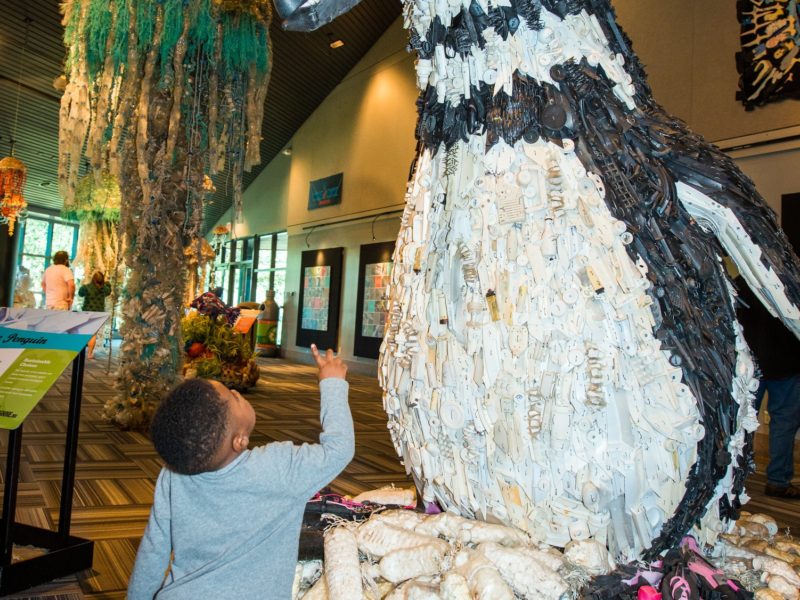
The Houston Zoo Explores Whether Artistic Displays Inspire Conservation Action!
This guest post is by Martha Parker, Conservation Impact Manager at The Houston Zoo. The Houston Zoo is committed to saving wildlife through partnerships and the support of global and local conservation projects, while connecting the Houston community to wildlife at the Zoo and inspiring them to action. To help fulfill our goal of saving wildlife, the Houston Zoo has been addressing the issue of plastic pollution. We went plastic bag free in July 2015, a decision that helped reinforce our commitment to reducing plastic pollution, a major threat for marine wildlife like sea turtles, which we work diligently to protect. The Houston Zoo receives wild sea turtles who require medical care and rehabilitation support from our partners at NOAA. Some of these turtles arrive at the Houston Zoo because they have ingested plastics or are entangled in marine debris. This makes the connection between the wildlife we work to protect and the threat of marine debris quite clear for us. The Approach To further our protection efforts of local sea turtles and help connect our community to the threat of marine debris and how they could take action, we welcomed Washed Ashore to the Zoo in January of 2016. Displayed at the Zoo’s Brown Education Center, Washed Ashore was the perfect visual representation of a global issue that hits home for Houstonians living so close to the Gulf of Mexico: plastic pollution. This awe-inspiring exhibit brings to life an overwhelming problem and puts it right in front of your eyes, connecting visitors with the animals affected by trash in our oceans. The Houston Zoo not only wanted to provide a fun experience for their guests, but also wanted to inspire action to save animals in the wild with a very specific ask of going single-use plastic bag free when shopping. After some brainstorming for a fun, interactive guest experience that incorporated data collection, Zoo staff decided the best way to get guests to take a pledge to use reusable bags was to have them add their fingerprint to another artistic display, an underwater-themed mural, designed and painted by famous Houston street artist, Gonzo247. Before participating, however, guests took a short survey and committed to going plastic bag free for three months. Between January and April 2016, colorful sea turtles, sharks, rays, shore birds, and fish were filled in as 1,482 guests took the pledge and showed their commitment by adding their thumbprint to the mural wall, in the animal they were helping to protect by going plastic bag free. This challenge is important to the Zoo’s mission of saving animals in the wild and inspiring behavior change by empowering Houstonians to make a difference. But how do we know if it worked? The Results With our evaluation methods, we aimed to answer the question; do visitors to the Washed Ashore exhibit at the Houston Zoo become inspired to use reusable bags more frequently than those zoo visitors who did not? We asked visitors from both a control group and an intervention group to take the challenge to go plastic bag free for 3 months to save wildlife like sea turtles. The control group was asked this question at the sea lion exhibit before Washed Ashore opened. The intervention group included those zoo visitors who visited the Washed Ashore exhibit. Three months from the time the visitor signed up to go plastic bag free, the Houston Zoo followed up with them by email to see how they did with the challenge. In total, we had 68 participants in our control group, with only 6% responding to the 3-month follow up. Our intervention group included 1,482 participants, and we had a notably better 16% response rate, with 230 of those responded to the 3-month follow up. While the better response rate was a good indication of a positive impact from the exhibit, we did not have enough participants in our control group to answer our original research question. We did gather valuable data that we can use to influence future exhibits and messaging. For example, we confirmed that in keeping with research by The Ocean Project and others, our guests are indeed motivated to make changes in their behaviors to protect animals, and their visit to the Zoo was an important aspect of taking action. Specific to using reusable bags, we know that our messaging should include ways to remember your bags, including tips on keeping them in your car. Finally, it was a great learning experience for the Zoo to evaluate (on a small scale), the impact of our work to save wildlife by empowering our community to take action. What enabled us to be successful in our effort to connect guests to the issue of marine debris and move them to action was the collaboration across numerous departments of the Zoo, and the strong tie between the exhibit and our efforts to save ocean animals like sea turtles, locally. This project has certainly influenced the way we think and plan for future exhibits and experiences. Our advice to others…... Start planning early. Get all relevant departments/people involved so that you choose the correct exhibit for your audience. Develop an institutional goal. No matter the exhibit content, you should have an institutional goal for that exhibit determined so that planning and evaluations can take that goal into consideration. Revisit the exhibit/process at regular intervals. Avoid implementing a project and then when finished, evaluating how it went. Bring all stakeholders together frequently to see how the project is going and make changes as you go. Align messaging/content with what is relevant for your institution, your audience, and the work you do. Communicate with other organizations who have experience with the content/exhibit-find out what worked for them, what didn’t. Track your success-even seeing what didn’t work is critical information to move forward in the future Additional Data Responses from both groups in 3-month follow-up included some positive indications that we were helping to increase bag use: 43.35% of respondents used their bags “almost every time they shopped” during the 3-month challenge, compared to 16.31% of respondents used their bags “every time they shopped” during the 3-month challenge, and only 2.58% of respondents “never” used their bags when they shopped during the 3-month challenge More than 60% of survey respondents put their likelihood of continuing to use reusable bags at “extremely likely” 198 respondents have encouraged family/friends to go plastic bag free as a result of their participation in the challenge, reaching an additional ~1,379 people. It was important for the Zoo to understand the motivations behind why our guests were successful in the reusable bag challenge. We found that motivations for continuing to use reusable bags during 3-month challenge included the following: Visiting the Zoo increased knowledge of how plastic bags are a problem for wildlife was cited by more than 52% of survey respondents. “That exhibit at the zoo really did change things for me. Not just about plastic bags. I have tried to buy less plastic in general - kids dishes and bowls (switched to bamboo), kids toys (wood, fabric, handmade), and I've tried to avoid buying food that comes with a lot of extra packaging. I loved that exhibit because it shocked me to see all of the toys and bottles and things that don't just disappear, thank you for teaching me that I'm contributing even if I think I'm not!” “I have used reusable bags for many years. Mostly at the grocery store. The positive thing in my life about the challenge was not taking bags at other stores such as clothing or craft stores. Taking the challenge actually made me take my reusable bag to the next level, which is to use them everywhere including on trips.” In order to make the Zoo’s messaging more effective in the future, we also asked respondents about barriers, which included remembering their bags. 80% of respondents remembered their reusable bags by keeping them in their car. In the future, we can utilize this information to remove barriers for guests when we ask them to switch to reusable bags. (E.g. “If I forgot my bags at home, I would ask for paper, which got reused. If I forgot my bags in the car, I would just ask them not to bag my groceries and then would cart them out and put them in the bags once I got to the car. It really helped me remember to take them out of the car when I had to do this!”) Additional feedback from Houston Zoo participants: ~Great program to encourage less plastic bag use, thank you! ~I have been using only recyclable bags, mostly fabric, for more than 5 years. I was happy to see the bag challenge at the zoo! I hope you have had an excellent response from others. ~I tell the store clerks about our pledge with the zoo and encourage family to think about using reusable bags. ~The bag challenge did not work for me. I chose to reduce my use of disposable plastic bottles instead. I now have a metal water bottle and have encouraged my children to use reusable water bottles also. ~Great program. The education by the zoo raises our awareness to the damage of plastic bags. Continued education and awareness remind us and help us change our ways permanently. Thank you for all of your hard work! ~This was not easy at first! A few times I forgot my bags in the car and had to take a full cart of groceries out to the car and load them in my reusable bags in the parking lot. Ha! But it was worth it, to know that I helped. Thank you for the challenge! ~This survey is a test reminder to get back on track with using reusable bags! ~Going shopping with reusable bags is fun and fashionable. I use them where ever I shop or visit! The zoo bags are the best. I have 3 of them so far. Please design more! ~I now also recycle all my paper and plastics. Thanks to my Houston zoo visit. Was very impressed with your plastic artwork. ~I have shared this incentive through Facebook by posting photos of the zoo's exhibit and the impact on not only sea turtles, but other sea creatures as well. When I use plastic bags, I always bring them back for recycling, and never throw them in the trash. The exhibit at Houston Zoo changed my behavior absolutely, I had no idea the impact of such a simple, daily use item on wildlife. Thank you! ~It was a great experience and if it had not been for that visit at the Zoo with my grandson, I would still be using plastic bags. Now I find that it is actually so much more efficient to use my own reusable bags, because more items fit into the bag, or maybe the store packers put more into one bag. Therefore, it is also more convenient to carry it into the house. Helping to save the environment is great. Keep up with such programs. Thanks. ~I often forgot my reusable bag but I would still carry out the items rather than asking for a plastic bag. When questioned or given that unsure look by my cashier, I often responded with "I'm plastic bag free, save a sea turtle". At least twice I was asked what I meant and was able to have a short but great conversation about the subject.
Continue reading