-
ISG+ New Project: Teens at Riverbanks Zoo and Garden take action “all the way to the ocean”
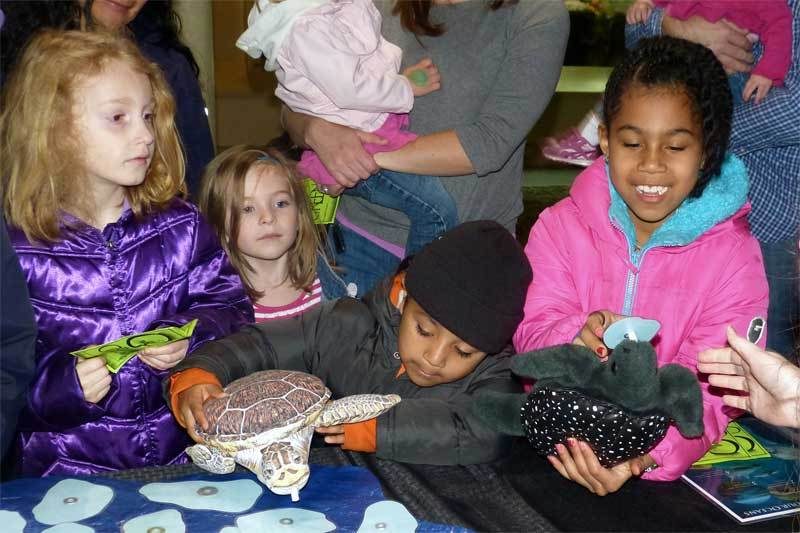
This guest post, by Director of Education Elizabeth Clemens and Coordinator of ZooTeens and Scout Programs Syndi Castelluccio, from Riverbanks Zoo and Garden is the first in a 3-part series on their Innovative Solutions Grants+ project, which investigates how engaging with teens and receiving incentives can impact zoo guest behavior. Teen S.O.S. The Riverbanks Zoo and Garden began connecting area teenagers to nature and building successful, caring members of the community more than a decade ago. Now with the support from The Ocean Project’s Innovative Solutions Grant+ we have tasked our current teens to take their love of nature one step further, to reach out and take action “all the way to the ocean.” Although not on the coast, Riverbanks Zoo and Garden has a unique setting nestled along the banks of the Saluda River, and a direct connection to the ocean. Over the years Riverbanks teens have felt strongly about the unsightly and potentially dangerous debris left on our very own riverbanks. Regardless of the source it is an ugly problem - in more ways than one! So this year, the teens will attempt to answer the distress call of our oceans through the Teen S.O.S (Stewards of Our Seas) initiative by tackling one of the biggest issues facing our oceans today – marine debris. As part of a yearlong immersive effort, Teen S.O.S will look to enlighten and inspire the teens to not only take action individually, but to become a true motivational force by inspiring the community to take action that will make an impact both locally and globally. Building on their past community actions, the teens will set up “Inspiration Stations” where they can connect with Zoo guests, and engage with them in a behavior change experiment. Setting Sail We began by educating our teens on the issue of Marine debris and provided them opportunities to be actively engaged in reaching a solution. The teens teamed up with the City of Columbia this past fall to mark all the storm drains in the Zoo that lead to local waterways with colorful medallions to educate the public about storm drains and watersheds. Partnering with Keep the Midlands Beautiful, ZooTeens have scheduled a number of local waterway clean ups through the Adopt-A-Waterway program. Joining forces with the Riverbanks Zoo Green Team, teens have been tasked to evaluate and identify at least one action item that would help to reduce our plastic footprint by making a permanent change in the Zoo’s daily operations. All Aboard Knowing that Columbia takes pride in its state, its parks, rivers, beaches and yes its Zoo, we felt the need inspire everyone to find these treasures beneath all of the trash! The teens are taking an innovative approach to reach the zoo’s one million guests. The group will be crafting “Trash to Treasure” artwork from the items collected during the waterway clean-ups. This art will be displayed in the Zoo as a way to attract the attention of our guests, introduce them to the issue of marine debris and, we hope, remind South Carolinians of their Palmetto pride. The teens will also create “Inspiration Stations," which will emphasize ways that zoo guests can be part of the solution, and inspire them to make changes in their daily lives to help address the problem of marine debris. Inspiration Stations will be showcased at the community-wide events - Go Green Day, Party for the Planet and World Oceans Day. Is Knowledge Power? Let the experiment begin! As part of inspiring change and community action, the teens will next test the theory, “Is an individual more likely to use a reusable shopping bag if they are engaged by teen leaders on the problem of marine debris?” This question will be tested using random samples of three test groups: Guests simply visiting the Zoo Guests engaged at an “Inspiration Station” Control group of the general public As part of this effort, we’ll be giving away reusable bags to guests. Each guest will be asked to sign a pledge that they will take the bag, use it, and complete a survey 1-2 months after receiving the bag. We’ll be looking at whether or not guests that visited the Inspiration Station are more likely than the others to report taking action to reduce their plastic footprint. Stay tuned!
Continue reading -
ISG+ Final Report: What we learned at the New England Aquarium
This guest post by Heather Deschenes of New England Aquarium, the final in a 3-part series on the aquarium's Innovative Solutions Grants+ project, is a look at what the aquarium learned from their efforts. Thank you to Heather and everyone who helped at the aquarium for your hard work! The Ocean Project’s Innovative Solutions grant enabled us to try a different approach to training our teen volunteers to engage various audiences about the steps those audiences might take reduce their fossil fuel use. Our hypothesis was that if the teens were able to convey their knowledge about climate change, then audiences would be more willing to act. Here's a summary of what we did, including the successes we had, as well as the lessons we learned. Beginning the project Our original vision for the ClimaTeens program was to develop an educational program that aimed to empower teens to stimulate an increase in community dialogue, planning, and action to address the issues of climate change. We aimed to develop the youth participants’ understanding of the science behind and impacts associated with global climate change, and a stronger sense of confidence in sharing this knowledge with peers, adults, and community leaders. Our goal was to create two academic year cohorts of students who would take part in monthly meetings where they would develop their content knowledge on the subject area, have opportunities to practice developing presentations and making connections with other youth audiences in the in the City of Boston and Aquarium visitors. To form the first cohort of ClimaTeens, we recruited those who were already participating in other NEAq youth programs. We assembled a group of 12 who had varying levels of knowledge of climate change science and impacts. We experimented with the idea that, once all were up to speed, the teens could and would engage deeply with a topic as large and potentially scary as climate change. We found that the answer, overwhelmingly, was that they could and they would, even going so far as to talk with EPA Administrator Gina McCarthy, Energy Secretary Ernest Moniz, as well as Massachusetts Senator Ed Markey, and Boston Mayor Marty Walsh! We set a goal of having the teens develop additional presentations, blog posts and videos that would all encourage a wide audience to join a citywide effort to reduce carbon emissions called Greenovate Boston. We anticipated being able to measure impacts of ClimaTEENS efforts because the Greenovate website was to be enabled with a number of built in evaluative properties. We were really excited about the opportunities presented by the partnership with Greenovate, and the web tools in particular, but as the project progressed, it became apparent that our timelines were not aligned. While Greenovate was making significant progress in developing the City’s Climate Action Plan (CAP), their website plans were much slower to take off. A change of plans By the fall of 2014, we knew we needed to change course, and we decided to put greater emphasis on having the teens presenting directly to aquarium visitors rather than the broader community. We also launched the second academic year cohort of ClimaTeens (retaining five alumni from the first cohort). So in addition to starting the process of training the new cohort, which had grown from 12 – 20 youth, we also started gathering data to support our evaluation strategy through a monthly program called Blue Discovery Family Days (BDFD.) Each BDFD has a theme (such as Lobsters, Octopus, or Sustainable Seafood) and an array of hands-on activities are set up either inside or outside the aquarium, depending on weather. Teens run most of the stations, with support from adult educators. For a series of fall and winter BDFD events this academic year, the ClimaTeens had a table in the same area as the other activities, but with a climate change-specific activity. The teens used interactives NEAq developed as part of a NOAA-funded climate education grant a few years ago. These activities feature either basic climate science, such as carbon sinks and sources, or human impacts, such as an ‘eco-footprint’ quiz. The teens were encouraged to convey the science and also engage visitors in solutions-oriented conversations, touching on three specific actions the visitors might take (wash laundry in cold water, request a home energy audit, and/or connect with a community-based effort such as Greenovate). After visitors had the opportunity to interact with the teens, an adult educator would ask a random sample of visitors leaving that area if they were willing to complete a short survey on an iPad. The surveys asked some attitudinal questions and also asked visitors to indicate their willingness to take the three possible actions the teens were mentioning. Since NEAq surveys visitors on many subjects, we were already aware that our visitorship is generally interested in and concerned about climate change, but we didn't know if the interactions with the teens would increase a visitor's willingness to take action. Looking at the data While the data we gathered was not statistically significant, it did suggest that interacting with the teens could indeed help expand our visitor's willingness to act. When we compared the responses of those who did interact with the teens ("yes group") and those who did not ("no group"), we couldn't help but notice that those in the "yes group" seemed to be coming into the conversations with a higher level of interest in the issue. A strikingly high 26% of those in the "yes group" reported that they already were involved with a community-based effort such as Greenovate, whereas that number dropped to 8% for those in the "no group." At the same time, we still saw some evidence that interacting with the teens was having an impact. When we compared yes and no group responses on the other two actions - washing clothes in cold water and requesting a home energy audit - approximately equal percentages from each group reported that they were already taking those actions prior to their visit. However, among those who were not already taking those steps prior to their visit, those who interacted with one of the teens did report a notably higher willingness to take these actions in the future. What we still do not know, however, is the extent to which that difference in response was due to the provision of new information about the solution steps, new information about the underlying problem, and/or the personal nature of the interactions. Our "gut sense" would be that the impact we saw was largely attributable to an already interested audience being provided with new information about solution steps they could take by a group of enthusiastic interpreters. But as they say in academia, "more study is needed!" Over the course of our ClimaTeens adventure, we have learned that our teens are capable of understanding large and complex topics with a mixture of wisdom, enthusiasm, and energy that inspires the adults around them. We also have learned that getting a group of young people around a table to share pizza and ideas can be silly, deep, chaotic, and ultimately incredibly rewarding. One note of caution for our colleagues in the Aquarium and Zoo community looking into this kind of program, however - the same teens that are deeply engaged leaders in your institution are most likely deeply engaged students, athletes, performers, and leaders in their school and home communities, and they may become overcommitted. Other lessons learned Coordinating with a community wide effort on a scale like Greenovate can be, despite the best of intentions on both sides, really tough, especially with the limited availability of the teens themselves and just the basic operational differences between organizations We learned the teens didn’t need in-depth training on climate science but rather needed the time to build their confidence in speaking about climate basics. The teens often expressed that building their own social identity was more important that learning the scientific information. Having the teens already invested in our organizational mission was really helpful. For example, our second cohort of teens (formed in fall 2014) has had considerable attrition because many of participants were new to the Aquarium and the expectations on behalf of the program and the teens themselves, were very different. When asked what lies ahead for ClimaTeens, there are some unknowns (program funding) but there are also some certainties. The youth who continue to participate in the program are really emerging as model ocean stewards, something that is core to our institutional mission and goals. These youth all have some very positive traits in common; they see involvement with ocean-helping activities as crucial part of life, many are actively pursuing schooling that will help them to work in an ocean/environment related career, they are well educated on ocean issues and can speak articulately about the issues, frequently talking with others and sharing their passion to help raise awareness. We are very excited to see what these teens will do next and really appreciate that this grant helped us to empower a group of young people who understand their connections to the ocean and participate as a community of informed citizens who are inspired to change the world.
Continue reading -
Seas the Day in February – Community Connections
“Never doubt that a small group of…
Continue reading -

New 2015 research reveals an ocean of opportunities
This is a guest post by Jim Hekkers of…
Continue reading -
ISG+ New Project: Philadelphia Zoo asks, “Can an exhibit change visitor behavior at home?”
This guest post by Wei Ying Wong of
Continue reading -
ISG+ Final Report: What we learned at the NC Aquariums
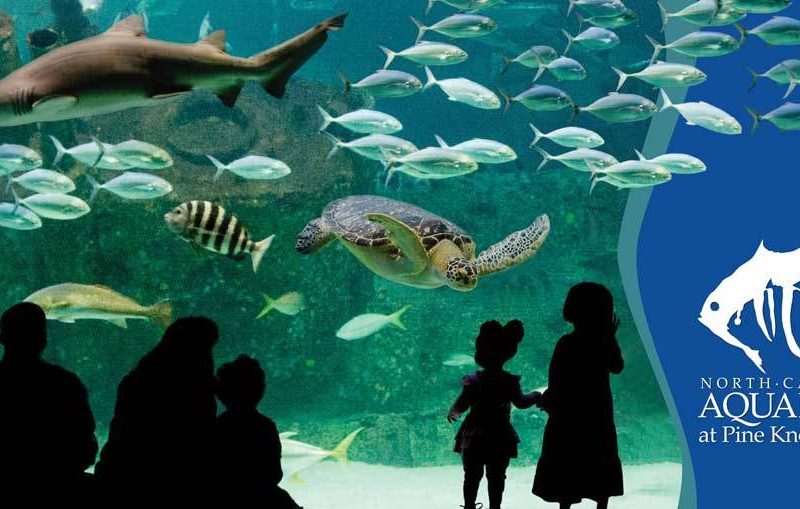
This guest post by Windy Arey-Kent of NC Aquarium at Pine Knoll Shores is the final in a 3-part series on NC Aquariums’ Innovative Solutions Grants+ project, aimed at testing different approaches to engaging guests for conservation action at aquariums. This blog post is a look at what NC Aquariums learned as a result of this project. Thank you to Windy and everyone who helped at NC Aquariums for your hard work! The North Carolina Aquariums were awarded a $16,000 Innovative Solutions Grant to see if our visitors would be interested in joining us in the purchase of Renewable Energy Certificate’s (REC’s) to help address the problems of climate change and ocean acidification. We were awarded the grant in December, 2013 and the project was funded through December, 2014. With this support, we were able to implement programs at each of our four sites and take four very different approaches to engaging visitors in this conservation ask during our high visitation months of May-September. My experience working with The Ocean Project was extremely positive from the beginning. Working with the staff, in advance, to research and identify the best ways to approach a project of this scope, with 4 facilities, was extremely useful. I even had issues submitting the grant online, due to my inexperience with some technology formats, and staff at The Ocean Project worked with me directly to answer my questions so that I could successfully complete the application. This process was so beneficial, not only for me, but for my staff and our facility. The lessons learned through this project were significant and pertinent to our departmental goals, plus we had a lot of fun! Why we tried What we learned Our advice to others Why we tried For our aquariums, our interest in doing this stemmed from our mission, which is to inspire appreciation and conservation of NC’s aquatic ecosystems, and also because it fit very nicely with a new strategic initiative at the NC Aquarium at Pine Knoll Shores, where our education department was focusing very intently on visitor’s conservation actions. And on the specific issue of climate change, we were really interested in an opportunity to move our visitors beyond “changing a light bulb" to a more meaningful action around energy choice, and this led us to RECs. According to the EPA, “One of the simplest and most effective ways to reduce your carbon footprint is to purchase REC’s, (which) are critical, effective and valuable instruments for expanding renewable energy in the U.S.” For our visitors, our working assumption, based on research by The Ocean Project and others, was that they'd welcome information about how to be part of the solution, and "go green." So with this effort, here was an opportunity for us to do just that by supporting green power by buying a REC for the amount of energy typically used by a home in one month, while also helping our Aquariums achieve our own green energy goals though a "watt-for-watt" match from our partner, Greenlight Energy. (A secondary goal of the project was for each site to acquire enough REC’s to allow us to each become EPA Green Power Partners by obtaining at least 25% of our energy from renewables.) We wanted to see what would work best, not only in terms of inspiring our visitors to take action, but also in terms of ensuring a positive staff and visitor experience. To do this, we tried different approaches at each site, yet kept a lot of the variables the same, most notably the ‘ask’ of purchasing a REC. What we learned The lessons learned were meaningful and pertinent: we were able to ascertain that our visitors expect and appreciate it when we suggest ways for them to help, and seem most inspired to act on behalf of conservation when we model those behaviors as a staff and facility, and relate the importance of those behaviors back to our animals and our mission. The most straightforward measure was the amount of RECs purchased, and the table below shows our total kWh of green energy purchased, therefore avoiding the equivalent of that energy from traditional sources. While we did not reach our goal of becoming a Green Power Partner with the EPA, we learned a lot about how to go about obtaining that goal for our facilities in the future. NC Aquarium facilities kWh Purchased kWh Matched by Greenlight Energy Total kWh Fort Fisher 76,798 76,798 153,596 Pine Knoll Shores 21,870 21,870 43,740 Roanoke Island 14,731 14,731 29,461 Jennette's Pier 80,601 80,601 161,202 194,000 194,000 387,999* But the more interesting insights came to us when looking at the above together with the results of the visitor surveys we conducted during the three-month trial period. We found that at all sites, visitors were indeed welcoming of suggestions of how to help solve ocean problems, and very interested in the topic of energy choice. The sites surveyed more than 1,100 visitors, with three key findings: 92% agreed (slightly agree to strongly agree) that “learning ways people like me can help conserve the ocean and its animals makes this aquarium a better place to visit” 92% agreed (slightly agree to strongly agree) that “this aquarium is a good source of information for people like me to learn ways to help conserve the ocean and its animals” 83% were interested (somewhat to very interested) in learning about "options for conserving energy or energy choices available to me at my home” As for the staff’s response to the project, feedback from staff suggested that visitors were unfamiliar and easily confused by the REC concept, leading the Aquariums to conclude that alternate clean energy /energy saving asks should be explored. By comparing and contrasting their experiences, the Aquariums also learned some valuable lessons: When making an active appeal – staff or volunteers asking visitors to consider action through the purchase of RECs – the efforts were much more effective when interpreters used auditorium programs and dive shows to connect the ask with the animals and appeal to widely shared values, such as a belief in American ingenuity and a concern for the future. In contrast, interpreters were far less effective when they tried to intercept visitors outside of these programs and provide more detailed information about clean energy and RECs. "Our visitors expect and appreciate it when we suggest ways for them to help, and seem most inspired to act when we model those behaviors as a staff and facility, and relate the importance of those behaviors back to our animals and our mission." When making a passive appeal – relying on exhibits or displays that did not include staff interpretation – the key appeared to be demonstrating the Aquarium's own commitment to taking action on the issue, as the presence of working wind turbines was cited as the reason why support was so strong at Jennette's Pier. In comparison, similar messaging about the aquarium's interest in the issue had much less impact when combined with a nonfunctioning windmill display. This finding was more of a surprise, as although visitors spent very little time at the exhibits and did not have the benefit of an interpreter's explanation, those who saw the actual wind turbines at Jennette's Pier seemed to know immediately and support the Aquarium's commitment to clean energy. Visitors were inclined to take action then and there, with little evidence that they would follow up and take action later via, for example, a web link. Notably, visitors wanted the action to be simple, with a strong inclination to donate, and a resistance to completing a sign-up form, though the latter may reflect in part some public concern about privacy as well as some visitor confusion around RECs. The project, unfortunately, came to a premature end due to circumstances well beyond our team's control. Even though the overwhelming majority of visitors and staff were strongly supportive, as exemplified in the aforementioned survey data, one influential person from within the small minority of objectors was able to shut the project down. This individual, a writer affiliated with a private foundation that is vocal in its opposition to the scientific consensus on climate change--complained about the project in a blog post that was circulated within conservative circles, and reached state officials who, in turn, asked that the Aquariums end the project after Labor Day. Our advice to others For facilities that are interested in engaging your visitors in conservation “asks” related to energy and energy choice, I have several recommendations for you. Be sure that you have an overall organizational commitment to this objective. While we feel that energy choice is something that everyone should be interested in and knowledgeable about, the conversations around energy choice, like those around climate change, can become politicized. So having organizational ‘buy-in’ to your project is key. Fully investigate and be prepared to showcase your facilities sustainability efforts. Visitors really committed to participating when they saw that the facility was also committed to the cause. Relating your conservation messages and actions back to your facility and your collections is an important and effective method to use to engage visitors in your efforts. Don’t be afraid to take on seemingly “impossible” tasks, jump in and engage your visitors in conversations around ‘difficult’ topics. It is important for us all to gauge our comfort levels and push our staff to figure out the best time and place to have these important and meaningful conversations.
Continue reading -
Seas the Day in January – Get Inspired
“The least movement is of importance to all nature. The entire ocean is affected by a pebble.” - Blaise Pascal “For whatever we lose (like a you or a me) it’s always ourselves we find in the sea” -e.e. cummings With a new year beginning it's a perfect time to get inspired by something. The ocean has long since been a source of inspiration. The chopping waves and mysterious deeps have generated many stories, songs, and other works of art. We depend on and look to the sea for everything from food to the air we breathe. The ocean helps us and now it's time to get motivated to help our ocean. By Courtney McGough flickr user courtneymcgough Read about the ocean There is a lot going on within the ocean and you can use a book to get informed about it and how to help! You can learn about the issues our ocean is facing, such as ocean acidification and overfishing, and then join the conversation and help with conservation! There are a lot of great books of fiction and poetry about the ocean for you to read as well. You can see the inspiration the sea has had on others, and hopefully get inspired too. Quick tip: If you want to read about the ocean, check out The Ocean Project's list of great ocean books. Or you can ask your local librarian for suggestions. By: Jeroen Elfferich, flickr user jeroen020 Meet the animals You can spend time this month seeing ocean animals up close. Why not visit a local aquarium, zoo, museum, or nature center this weekend? You can see some of the marine animals you are learning about up close. And if you have the time, you can also ask staff about volunteering part-time at any of these institutions and contribute to their efforts to conserve the ocean. Take action It's a great time to start planning action to help the ocean. Check out World Oceans Day - the international day of ocean celebration and action held every June 8th! You can hold an event to get your community involved, attend an event and show your support, or engage with others online. Cover photo by Teddy Llovet, flickr user teddyllovet The Seas the Day initiative encourages and empowers people to take ocean conservation personally and get involved with others to help collectively. Each month, we feature a new conservation theme with ways to help so come back regularly for more ocean-helping ideas and tips! Created mainly to support our partner ZAMs (Zoos, Aquariums, and Museums and other visitor-serving organizations involved in our growing network) to inspire and motivate conservation action, Seas the Day is for you to tailor for your own purposes. Please use any or all of the content verbatim and re-post on your own blog, social media channels, website, newsletter, etc. We have a large database of action tips and related content for you to use so let us know what’s most helpful and what other action-able types of information and resources we can provide to enhance your conservation efforts.
Continue reading -
ISG+ New Project: Climate change action? Seattle youth CAN!
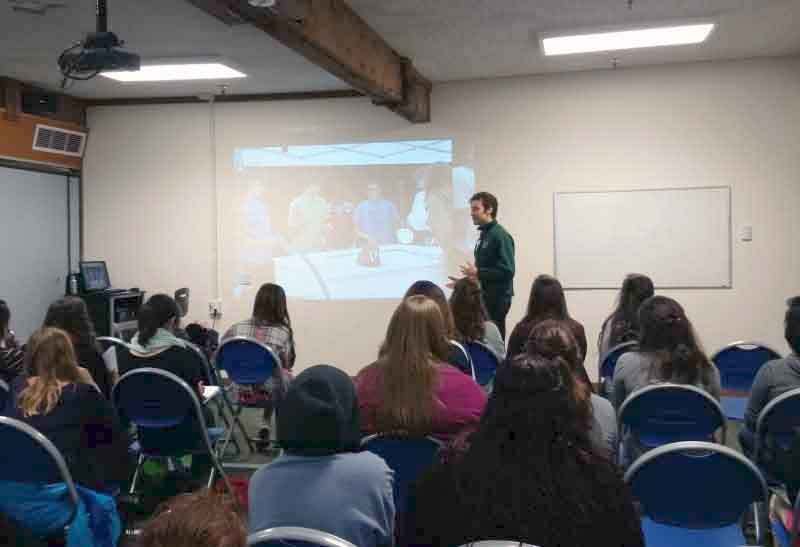
This guest post by Eli Weiss of Woodland Park Zoo is the first in a 3-part series on their Innovative Solutions Grants+ project, exploring how teens in the Seattle area can empower each other and their peers for action on climate change. The Path Forward At the Woodland Park Zoo, we have been working for the past several years to engage our teen volunteers and interns on the issue of climate change. These efforts have ranged from trainings on climate science and interpretation to involvement in our pilot of a variety of on-grounds climate focused activities and games, and have resulted in a group of teens that share a common interest in climate change. What we are still working on is getting our youth to the next stage of engagement, inspiring others to follow their example in taking action. This challenge is at the core of our current project, the Seattle Youth Climate Action Network (Seattle Youth CAN!), a project that we will be undertaking in partnership with the Seattle Aquarium and the Pacific Science Center thanks to support from The Ocean Project's Innovative Solutions Grants+ Program . Over the past couple months I have been meeting with climate leaders in Seattle and have been received with resounding enthusiasm for both supporting Seattle Youth CAN and for exploring new opportunities for our teen participants to engage other youth in community climate action efforts which may align with the city's recently adopted Climate Action Plan. This feedback on the model we have set in motion is encouraging and I am optimistic that when our teens feel connected to local climate efforts and leaders that they will be more engaged in the issues and feel more compelled to want to do something about it. Seattle Youth CAN! ACTION is the key to change, and through forming Seattle Youth CAN we will train and support youth leaders to deepen their understanding of climate science, feel confident in engaging others in dialogue about climate change, and develop and launch successful climate action campaigns. Over the past year with the latest IPCC report, UN Climate Summits, and the Peoples Climate March, the story has become even clearer. We need to take collective action and the change needs to be BIG and BOLD. Global and local leaders seem to agree that the days of just focusing on personal actions are behind us and this is why we believe our teens need to be engaged in supporting broader efforts and innovative solutions for change. We have designed Seattle Youth CAN with this in mind. Our aim is to train and support teen leaders to develop local campaigns which will engage their peers in measurable climate action. We believe that through creating dialogue and connection to existing community scale efforts and leaders we will help our teens to find their role in the growing movement to take clear action to reduce carbon emissions. What makes our model unique? A local network. We are bring together teens who have already expressed an interest in climate change and conservation through their involvement in teen programs at three leading informal science institutions in Seattle; Woodland Park Zoo, Seattle Aquarium and Pacific Science Center. Teens will have many touch points throughout the year including collective training, events, opportunities to take action, and a culminating summit at the end of year one. A focus on youth action. Our initial audience for this project are the teen leaders in our existing programs, and then, in turn, their peers in the community. Teens supported by community. Throughout the year teens will be working with local climate action leaders to learn, develop and launch campaigns and connect to city wide efforts. Ultimately our campaign will be designed and carried out by youth leaders in our network, but they will be supported by staff at each institution and our climate action partners in the community. With this project we are looking to explore if and how connecting youth to existing local climate action efforts enables them to create their own successful campaign and increases their ability to successfully engage their peers in action. In launching Seattle Youth CAN, we are hopeful that we will identify key elements needed to support a youth action network that brings teens and community stake holders together. We believe that if we are successful, this model will become a valuable example for other communities that are looking to engage youth in climate action. Recently, I was asked to lead a workshop on climate action at the Seattle Aquarium for their Youth Ocean Conservation Summit. I asked Xander Barber, of my teen climate leaders, to co-present with me. For us this was a great chance for us to share our Seattle Youth CAN model with a group of youth from around the Puget Sound. Based on the number for attendees that approached Xander and I after our session with interest in the network, I am hopeful that there will be broad support for the network. 2015 will be an exciting year as Seattle Youth CAN develops. We are encouraged by the enthusiasm of our teens that have helped us to build the vision for this project as well as our community partners and look forward to sharing our success with you in the months ahead! -- Eli Weiss, Youth Programs Supervisor at Woodland Park Zoo
Continue reading -
Tell a local story
The average person has 50,000 – 70,000 thoughts every single day. That’s a LOT of ideas to be sorted and dealt with! Considering the mental maelstrom, how can we make the complex threat of climate change seem worth not only thinking about, but possibly making major life changes to address? One reason climate change is so hard to act on is our psychological distance from it. The harm from climate change seems to be physically distant from us, far off in the future, and happening to other people. These factors make climate action seem a lot less important than the many other concerns constantly fighting for our attention all day long. For more on bringing climate closer-to-home, check out Connecting on Climate: A Guide to Effective Climate Change Communication guide. The guide covers a variety of great topics, insights on making the local connection start on page 29. It’s extremely important to close this psychological distance for your audience so that they can give climate action the attention it deserves. This is a cross-post from ClimateInterpreter.org. Please visit for more resources and articles about communicating climate change for interpreters! Pair close-to-home examples with big-picture concepts The reality is that climate change is already causing harm, right here and now. A great way to make climate change real and relevant to a person is to directly connect it to their everyday life. For example: the concept of sea level rise is much more impactful when supported with a local story about the real-world harm it causes to people like those in your audience. The less abstract the threat is, the more engaged people will be with being part of the solution. Be sure to highlight the solutions to the problem to avoid making people feel overwhelmed or hopeless – heightened engagement with a scary threat can actually cause people to give up instead of take action if they see the problem as insurmountable. Finding your community’s story There are some great resources online for finding ways to tell your community’s story. Using search engines is a good way to start – you can google “environmental problems in (your city or state)” and follow links to local non-profits for more information. You can also check out some of these specific resources for leads on story ideas MyEnvironment - enter your location and get access to several EPA databases to provide you with information about environmental activities that may affect air, water, and land anywhere in the United States Coming Clean: The State of US Renewable energy – see how your state is doing on renewable energy State and local climate adaptation – see what your state is doing to adapt to climate change. There is some disagreement on this depending on source: see the Center for Climate and Energy Solutions map and/or Georgetown Climate Center’s map and info. GlobalChange.gov – the US government has a new website on how different US regions are impacted by climate change based on the Third National Climate Assessment. Explore the their interactive map or see your region’s highlights. Next: some ways to incorporate these stories into interpretation. This is the first part in a 3-part miniseries about “small” stories for big impact: Tell a “wildly” emotional story; Tell a local story; Tell YOUR story
Continue reading -

Tell a wildly emotional story
Climate change is a big story. It’s such a big story in fact, it sometimes seems larger than life – and WAY too big to do anything about. As we’ve talked about before, it’s important to keep climate change real and tangible. One way to do that is to narrow the frame and tell a smaller story. By showing how the small or individual story is part of the big picture, you can help people make the emotional connection to the larger issue. This is a cross-post from ClimateInterpreter.org. Please visit for more resources and articles about communicating climate change for interpreters! Tell a “wildly” emotional story to connect people to wildlife Most humans have an interest and emotional connection with animals. How strong that connection is depends on a lot of factors (the individuals’ demographic and the species of the animal they’re engaged with) – but it’s safe to assume anyone visiting your institution is there to get better acquainted with wildlife. Research strongly suggests that just engaging with these animals inspires an intent to take some conservation action to help them, but there are steps you can take to translate this intent into action. Tell a story about how your visitors are connected with the animal Learning facts about an animal can help visitors feel more connected with it, but you can take things a step further. Also explain how – using techniques like casual chains and analogies – human activities can positively or negatively impact the animal. Watch this: tell a story about how the animal’s survival is linked with humans. Not sure how you can connect a particular animal with an environmental threat? See if there’s an entry for the species in question on PARIS – the Program Animal Rating Information System! Check out the “Potential Messaging” section for how other institutions have approached things. Give visitors a way to get involved, immediately if possible Your audience needs to know that there are solutions for problems, or they can become overwhelmed. If you focus just on problems, people can shut down and give up. It’s too much of a downer, especially when many don’t see themselves as able to help. Like I mentioned, people come away from encounters with animals intending to do something for that animal’s conservation and survival. However, this intention isn’t necessarily long-lasting. Research is scarce, but there’s evidence that most don’t follow through. Why not? They don’t know what to do, their attention is directed elsewhere, etc. There are many barriers to behavioral change. Give your audience something to do – right now! Provide an action when interpreting environmental threats. The ideal situation is to provide visitors with an action they can take during their visit, and to follow up with them afterwards. It can be extremely encouraging to feel like you’re part of a bigger effort, so emphasize that the action is something members of your community and/or institution are doing together. Have you tried giving an immediate action to visitors while or directly after interpreting about how animals are impacted by human activities? For one example, see NC Aquariums' green power push. This is the first part in a 3-part miniseries about “small” stories for big impact: Tell a “wildly” emotional story; Tell a story that’s close-to-home; Tell YOUR story Image from Shutterstock.
Continue reading


