-
Communications medley: A car-free future and the impacts of extreme weather on climate opinion
In this week’s round up: How millennials are thinking about transportation, Americans' view environment more important than growth and the impacts of recent weather events on public perception of climate change. If you’re a science communicator or educator at an informal science center (such as a zoo, aquarium, or museum) trying to understand the perspectives of your audience and find ways to promote conservation action – this is the round up for you! Every week we break down the most interesting recent news and best resources to help you frame the issues as effectively as possible. Some of these resources will be practical communications and framing tips, and others are great starting points for brainstorming future strategies. Jump to… Millennials go car-free American's pick environment over climate change Extreme weather impacts climate change perceptions Millennials go car-free Millennials Don't Care About Owning Cars, and Car Manufacturers Can't Figure Out Why - From 2007 to 2011, car purchases by ages 18-34 fell by 30%! This article by Darren Ross describes how millennials are choosing not to own cars and why car manufacturers can't figure it out. What we can learn from millennials who opt out of driving - Are young people becoming more aware of the high costs of driving? This article takes a closer look at why millennials are opting out of driving and the lessons that we can learn. American's choose environment American's Again Pick Environment Over Economic Growth - A recent Gallup poll has demonstrated the largest partisan gap over priority ever recorded! The Gallup poll shows that American's choose the environment over economic growth by a healthy margin, particularly among ages 18-29. The impact of extreme weather Natural Disaster's Play a Significant Role in American's Climate Opinions - According to a 2014 Gibbs & Soell Sense & Sustainability® Study, 60% of American's attribute climate change to human actions. Can Extreme Weather Build Support for Climate Solutions - In the wake of extreme weather conditions, climate communicators strive to find ways to communicate the importance of recognizing the impacts of climate change. This article provides six key talking points for climate communicators on how to engage your audience effectively.
Continue reading -
Communications medley: Looking at numbers and what it takes
In this week’s round up: Public perspectives on climate change and thoughts on what stimulates social change, If you’re a science communicator or educator at an informal science center (such as a zoo, aquarium, or museum) trying to understand the perspectives of your audience and find ways to promote conservation action – this is the round up for you! Every week we break down the most interesting recent news and best resources to help you frame the issues as effectively as possible. Some of these resources will be practical communications and framing tips, and others are great starting points for brainstorming future strategies. Jump to… The stats What motivates change The stats 80% of Europeans Agree Tackling Climate Change Boosts Economic Growth – according to a new Eurobarometer opinion poll 4 out of 5 European Union citizens believe that mitigating climate change and increasing energy efficiency can boost the economy and employment. A Steady 57% in U.S. Blame Humans for Global Warming – according to a fresh Gallup poll which tracks American’s views on climate change, more Americans believe the increase in Earth’s temperature over the recent decades is a result of human pollution, not natural causes. Americans Most Likely to Say Global Warming Is Exaggerated – although most American’s believe that global warming is happening, they also believe that the news is responsible for over exaggerating the impacts that climate change is having on the Earth Emerging Economies Lead Climate Action, Globe Study Finds – A Globe International study investigating which countries lead in fighting climate change shows that emerging economies are at the front of the pack for establishing ambitious policies. What motivates change? How Ultra-Conservative Utah Became An Unlikely Bastion Of Environmental Activism – One might not expect the citizens of Utah to be the most environmentally active population in the United States. However, growing recognition for the need to protect the environment has been sparked by the unpleasant impact of air pollution, which causes immediate short term effects for Utah residents. What Moves Americans to Support Social Change? – A recently released report by ecoAmerica dives into in investigation of what moves American’s to support social change by looking at recent successful social movements. The report identifies four synergistic stages that were fundamental for each campaign.
Continue reading -
Seas the Day March – Green Transportation Choices
The Seas the Day initiative encourages and empowers people…
Continue reading -
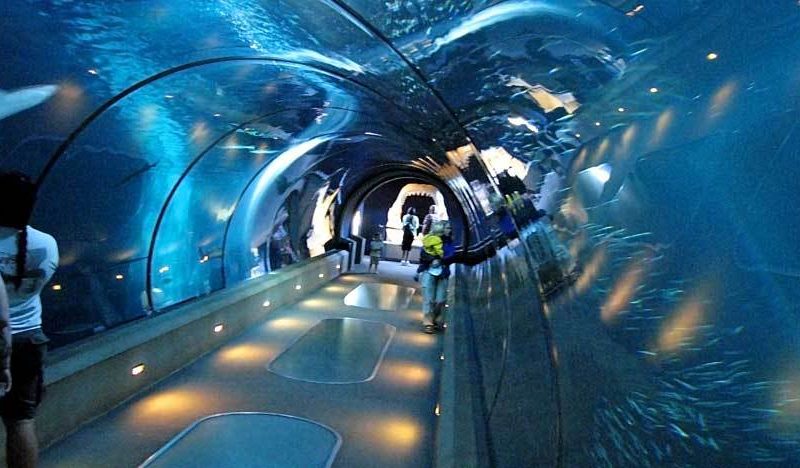
ISG+ New Project: Oregon Coast Aquarium sets out to explore empowering youth for change
This guest post by Teresa Mealy of Oregon Coast Aquarium is the first in a 3-part series on their Innovative Solutions Grants+ project, exploring the question “How do we fuel behavior changes in teens to decrease their impact on ocean acidification?” Drive, enthusiasm and passion for change; these are three qualities that fuel the teen members of the MOANA group (Making Ocean Acidification Nationally Aware). Moana, the Hawaiian word for ocean, represents the underlying interest that connects these teens, but also stands for something more. Making Ocean Acidification Nationally Aware, is not just a name or a connection, it is the ultimate goal for this group of driven, enthusiastic and impassioned youth. With support from the Ocean Project’s Innovative Solutions Grants Program, five youth volunteers will examine a single question: “How do we fuel behavior changes in teens to decrease their impact on ocean acidification?” Using social marketing as a foundation, the teens will explore how to create a campaign to encourage positive behavior changes by their peers. For these volunteers to share their campaign with the world, they need to become informed advocates. Their training will include: Training with a community based social marketing guru, with hands-on activities to develop and practice messaging strategies. Webinars with evaluation consultants to zone in on the behavior asks for their peers, and how they’ll measure the success of their efforts. Workshops and field trips to meet with ocean acidification researchers and experts. The youth volunteers will be involved in every step, from creating the messages, to testing the audiences, and evaluating their techniques. In fact, these teens will not only participate, they will lead the process. Their role as decision makers in this project provides a unique set of challenges and rewards for these young volunteers and Aquarium staff alike. The first task the MOANA Group will tackle, after learning some of the basics of community based social marketing, is deciding on the messages they want to test in addition to the campaign’s delivery mechanisms. Ultimately, the goal is for the volunteers to develop and test a campaign that helps them connect with their peers in a way that compels their peers to learn about ocean acidification and change their behavior. With five minds contributing perspectives to the process, reigning in the collective genius to pick and focus on a limited number of messages may prove challenging. Another challenge is the distance and schedules of the youth volunteers. Most of the participants live on the coast, but a few commute from as much as one-and-a-half hours away. To facilitate communication between in-person meetings, the students are familiarizing themselves with Google Hangouts. This technology allows them to meet face to face from miles away to interact and share ideas in a quick, informal setting without taking precious time away from homework or extracurricular activities. The goal of this project is ambitious, and there are undoubtedly many more unforeseen challenges on the horizon, but one thing is certain, it is a goal these teens whole heartedly accept. Their love for the ocean is inspiring and that is a quality they will count on. They hope their passion, enthusiasm and drive will inspire others to care for the oceans, and in turn, help MOANA. -- Teresa Mealy, Youth Programs Coordinator at Oregon Coast Aquarium
Continue reading -
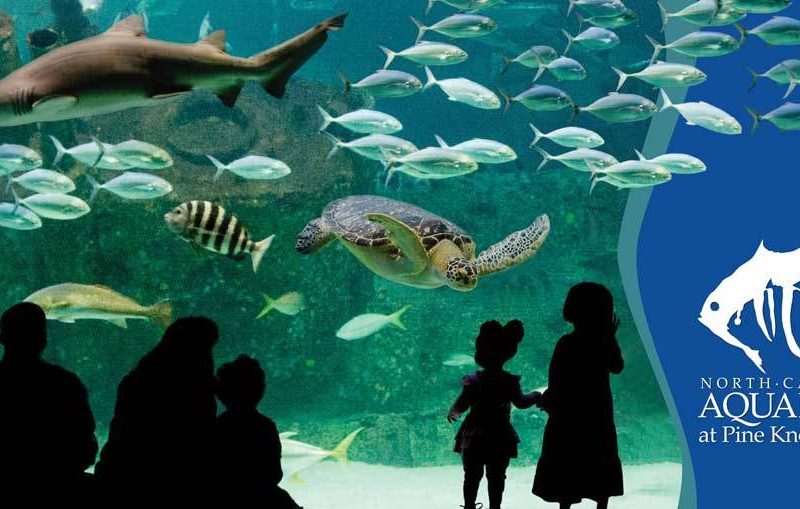
ISG+ New Project: NC Aquariums prepare a green power(ful) experiment
This guest post by Windy Arey-Kent of NC Aquarium at Pine Knoll Shores is the first in a 3-part series on their Innovative Solutions Grants+ project, aimed at testing different approaches to engaging guests for conservation action at aquariums. The North Carolina Aquariums are excited to be working with The Ocean Project on their Innovative Solutions Grant projects in 2014. There are four NC Aquarium sites that are each participating; the Aquarium at Fort Fisher, Aquarium at Pine Knoll Shores, Aquarium at Roanoke Island and Jennette’s Pier at Nags Head. Each of the sites, working in cooperation with Greenlight Energy, will be focusing our efforts to promote and market clean energy in the form of Renewable Energy Certificates (RECs) to our visitors during the peak visitation months of May – September, 2014. The three Aquarium facilities will be testing separate interpretive messages and approaches to see which approach is most effective in motivating our visitors to engage in a specific conservation ‘ask’, and to take personal action by purchasing REC’s for their homes. In turn, each site will receive a 1:1 match from Greenlight; for each REC purchased at a site, that facility will receive a REC to move each of us towards a goal of 100% green power. The pier site, offering a very different facility and path for visitors, will offer this opportunity for visitors through a stand-alone kiosk. There will be similarities at each site in our content, our ‘ask’, and the types of information given to visitors regarding the program and green power, in general. The approach at each site however, is the variable that we will be testing. At Fort Fisher, educators will be utilizing the NNOCCI model (National Network for Ocean and Climate Change Interpretation) of interpretation where emphasis is placed on framing and engaging audiences in a positive way to overcome barriers and think productively about solutions to climate change and ocean acidification. At Roanoke Island, a single conservation educator will be versed in promoting REC’s to visitors one-on-one, and will be able to engage in in-depth conversations about green power, REC’s, and the environmental consequences to living in a carbon-reliant society. A third model at Pine Knoll Shores, will take a community-based social marketing approach that utilizes the principles of conservation psychology to stress the benefits of purchasing REC’s for the Aquarium and its’ animals. The pier site, a LEED (Leadership in Energy and Environmental Design) certified facility with wind turbines and green power showcased on-site, will offer a kiosk where visitors are inspired to action, not through interpretation, but as a result of their visit to the site itself. To evaluate the effectiveness of each approach and method, we will utilize technology provided by Greenlight Energy that offers visitors an on-site ‘dashboard’ for sign-ups through tablets, cell phones or laptops. In addition, there will be a “text to” option for visitors onsite to gain more information on the program or directly sign up to purchase REC’s for their own homes. We will test each approach by measuring: the numbers of inquiries for additional information (texts sent or hits to each individual ‘landing page) how many visitors purchase REC’s visitor satisfaction in the program, using ipad surveys and visitor intercepts at each site. We will then compare the three approaches at the Aquariums to the kiosk at the pier, which relies on the visual inspiration and behavior modeling to inspire action. Progress and results will be disseminated widely amongst our colleagues in the aquarium, zoo and museum communities, both by way of this blog and using sites such as climate interpreter, as well as, we hope, at the AZA annual meeting. Send along a note if you want to know more. We welcome your feedback! - Windy Arey-Kent, Education Curator at North Carolina Aquarium at Pine Knoll Shores
Continue reading -
Seas the Day February – Get connected!
The Seas the Day initiative encourages and empowers people…
Continue reading -
Poll: Red or blue, regulate CO2
Results from a national survey conducted in late 2013, and made public yesterday by the Yale Project on Climate Change Communication and the George Mason Center for Climate Change research, show strong support for action among Americans of every political orientation. A whopping 83% of Americans say "the U.S. should make an effort to reduce global warming, even if it has economic costs." In a sign of hope for generating the political will to do what needs to be done to ensure a healthier climate and ocean, and a sustainable society for the future, majorities of both Democrats and Republicans support national action on climate and energy policies. Majorities of Americans in red, blue, and purple states support: providing tax rebates on the purchase of energy efficient vehicles or solar panels; funding more research into renewable energy sources; regulating CO2 as a pollutant; and eliminating all subsidies for the fossil fuel industry. From ClimateProgress: "In general, Americans want less fossil fuels and more low-carbon energy — with many willing to pay more for those benefits: 67% want to regulate carbon dioxide as a pollutant 59% want to cut fossil fuel subsidies entirely — while 60 percent think cutting renewable subsidies is a bad idea 56% would pay an extra $100 a year if it meant their electric utility was required to produce more than 20 percent electricity from renewables 72% want more research funding for renewable energy" For the complete study, "Public Support for Climate and Energy Policies in November 2013," please link here. Also, stay tuned as we will soon be releasing action guides, specifically to help our partner network effectively engage their visitors and the public in helping with solutions to climate change and ocean acidification through green power opportunities around World Oceans Day.
Continue reading -
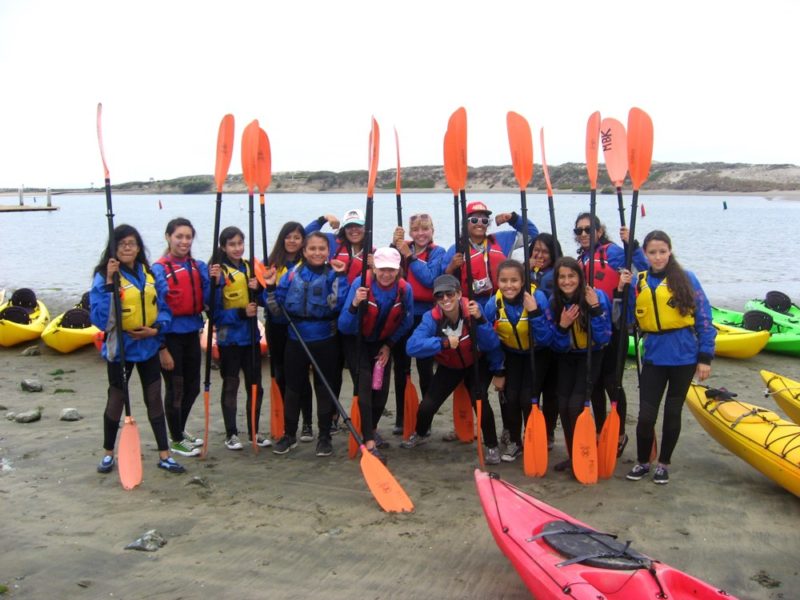
Young women are Monterey Bay Aquarium’s “Ocean Guardians”
In part 3 of our blog series on past Small Grants projects at zoos and aquariums, Dolores Toledo of Monterey Bay Aquarium shares what they've learned about helping young women from diverse backgrounds become confident, science-capable, and personally active in conservation. Background Monterey Bay Aquarium’s Young Women in Science (YWS) program began in 1999. Each summer we offer three, week-long, bilingual YWS camps. The camps provide young women entering grades 7-8 with extracurricular, hands-on science experiences and introduce them to women in the science field. The goal is to provide these girls with opportunities that foster their curiosity and sense of wonder, as well as bolster their self-image of being science-capable. Young women who live in Monterey, Santa Cruz, and San Benito counties are eligible to apply. YWS was created to motivate more girls to pursue science careers and feel science savvy. Today, studies show that while more females are making their way in the science fields, minority women are still falling short. Over the years YWS has strengthened our recruitment of low income and Hispanic young women who typically do not visit the Aquarium or pursue careers in science. Now more than ever, we ensure the program is conducted bilingually in English and Spanish to reach the underrepresented local Hispanic audience. Every summer more than 70 middle school girls participate in the two first-year camps “Otter Mystery.” Through their experiences, participants identify and connect the factors that influence the health of the threatened Southern sea otter population. The girls have the opportunity to observe sea otters while kayaking in Elkhorn Slough, use telemetry to track wild sea otters, go sand crab monitoring and surface scuba diving, among other activities. Making conservation personal In addition, 40 girls have the opportunity to return for a second year of camp-- “Ocean Guardians.” In this camp, participants are challenged to rethink their ideas about single-use plastic and learn about threats plastic can cause to marine species and to the local community. At the end of the week students create a Public Service Announcement to encourage others to become Ocean Guardians. This year, we are increasing the science content by including activities on bioaccumulation and plastic toxicity and including a conservation action, where students will rally the community to sign a pledge to SAY NO to disposable plastics. The Monterey Bay Aquarium’s Young Women in Science program engages middle school girls in real, hands-on science in a friendly, supportive context. Female role models support their learning about the science process. Girls interact with science professionals, learn about the kinds of activities that scientists do, and the preparation they need in order to become a scientist. The ultimate vision is to give them positive science experiences that will keep them interested in science throughout their high school years. Goals of the program At the same time, we know not all girls will be attracted to science careers. We hope that they will feel self-empowered to pursue higher degrees and feel capable of making life and consumer decisions that may involve understanding science information. Our overall goals: Empower low income and Hispanic young women participants to engage in science. Help students feel inspired, confident, ocean literate and ready to act on behalf of the ocean. Increase their awareness of conservation and their personal role in conservation. Introduce participants to community partners and opportunities that support their involvement in science. Understand how events in nature can be explained by science. Throughout the camps, the young women discuss what they know about conservation practices and how they put those practices. Most are familiar with recycling and reusing, but this year, we are introducing them to the idea of refusing. The goal is that participants will continue practicing these actions at home, school and in their community after the program ends. In addition, all curriculum is woven with conservation themes of habitat conservation and ecosystem interconnectedness. The program is staffed by science educators from the Monterey Bay Aquarium. Women scientists from various fields share their work and mentor young women during the weeks. Middle school science teachers also participate as staff, serving to foster the student-teacher that relationship. Recently, some of our YWS alumni have been hired as paid Program Assistants for Young Women in Science. These college students are excellent and inspirational role models for our girls and for us. -- Dolores Toledo, Bilingual Education Specialist at Monterey Bay Aquarium
Continue reading -
Seas the Day January- Resolve to do Great
The Seas the Day initiative encourages and empowers people to take ocean conservation personally. Each month, we feature a new conservation theme with ways to help so come back regularly for more ocean-friendly ideas and tips! Created mainly to support our partner ZAMs (Zoos, Aquariums, and Museums and other visitor-serving organizations involved in our growing network) in their efforts to motivate conservation action with their visitors, Seas the Day is for you to tailor for your own purposes. Please use any of the content verbatim and re-post on your own blog, social media channels, website, newsletter, etc. We have a large database of action tips and related content for you to use. Let us know what’s most helpful and what other types of information and resources we can provide to enhance your efforts to motivate action for the ocean. Resolve to do Great! Did you know that the health of the ocean directly contributes to the health of the human race? From the type of food that we consume to the quality of the air we breathe, a healthy ocean means healthy people. By adding “Ocean Fitness” to a list of New Year’s Resolutions, you can be part of sustaining the beauties of beaches, the communities in coral reefs, and the playtimes of porpoises. Create The Ocean is a beautiful place that has provided the inspiration for many excellent pieces of art. You can be a part of that wonderful tradition by making something beautiful inspired by it. Write, draw, or paint and share your creations. Art, after all, has long given important topics emotional weight necessary to create change. Meditate It can be hard to want to go outside while Old Man Winter has you in his grip. Fortunately, most people feel this way. Pile on some layers, grab a hot beverage and go outside! For those by beaches there are the myriad benefits: the ocean looks wilder, is emptier, and the air more crisp. Grab your camera and enjoy the fresh, salty breaths. Not near the ocean? There are unique natural beauties everywhere, all with their own perks. Go get surprised how the noise of nature can silence the bustle in your brain. Participate After celebrating Dr. Martin Luther King Day on the 17th, do honor to his memory by taking action. Many towns and states have their own Adopt-A-Spot program and a group can make a great difference. Want to do more? June 8th and World Oceans Day is coming up quickly! Visit the World Oceans Day website for event ideas and put one together in your community. WOD events are a great way to celebrate this wet planet and take small steps toward keeping it healthy. - Arianna Baker, Conservation Associate
Continue reading -
Aquarium of the Bay: reframing climate change for action
In part 2 of our blog series on past Small Grants projects at zoos and aquariums, Quinn White of Aquarium of the Bay shares what they've learned about making climate change personal, and asking visitors to take action. Background and summary of project Aquarium of the Bay strives to improve the future of San Francisco Bay and its watershed by engaging a new generation of stewards and advancing real solutions for a healthier habitat. We reach a broad audience of residents as well as visitors from all over the world. Our goal was to help these guests commit to addressing climate change on a personal level. Updates on project Thanks to support from The Ocean Project, the Aquarium successfully trained our staff to frame climate change in a way that helps guests understand climate change and its impact on their own lives. Previous experiences frame how people see the world, so two people can look at a prop or an animal and understand it in two completely different ways. By connecting guests’ personal experiences to the topic at hand, we can expand their frame of reference to help them understand the problem of climate change—and its solutions. In addition to our improved messaging, we added an environmental action dimension to visitors’ experiences. Our Climate Change Action cards reinforce messages about taking local action, so Aquarium visitors understand specific ways they can personally make a difference in their own backyard. These tools have been combined to update all five of our climate change-focused daily visitor presentations. Our animal ambassadors and their associated call to action have successfully turned a moment of inspiration into an opportunity for visitors to make lifelong changes that lessen their environmental impact. We took our message online as well—you can find our climate action cards on our website. The online component was inspired by The Ocean Project’s recent research on the importance of online education. Our website now shares these printable cards as well as stories that highlight what our staff is doing to reduce their own carbon footprints. Lessons Learned The responses we’ve received regarding the updated visitor presentations from staff and guests have been very positive. Staff report that it is easier to talk to guests with a more hopeful message and it is easier to have a conversation when connecting to their universal values. The stay time for guests has also increased; in the past, guests would listen for a few minutes and then leave; now they stick around for the entire presentation. Guests are also more engaged and asking more questions, and the presentations have turned into productive conversations, sparking curiosity and inspiring further action. After learning about framing and universal messaging, one staff member said “Frankly, I’m blown away.” He mentioned that he had heard about universal framing but had never realized its effectiveness until the training. Staff have noticed that children especially are more excited when they participate in the visitor presentations. For example, in our ocean acidification presentation, children are excited to learn more about ocean chemistry and why it’s important to keep the ocean’s water healthy. Also, in our solar and wind power presentations where we focus on innovation for alternative energy, visitors leave inspired and children want to learn more so that when they grow up they can help innovate other forms of energy. In regards to putting their training into practice, staff often responded by simply saying, “It really works!” The training also resonated with staff by identifying ways to front load key messages. In other words, putting the conservation message at the beginning of the presentation grabs the audience’s attention and helps them be more invested in the issue. - Quinn White, Development Manager and Grant Writer at Aquarium of the Bay
Continue reading


