-

You Can Help Create a Strong Global Plastics Treaty
Our planet – our home – is overwhelmed with plastic pollution; it’s everywhere: from the highest mountains to the deepest ocean trenches, in our food, and in our bodies. Most…
Continue reading -
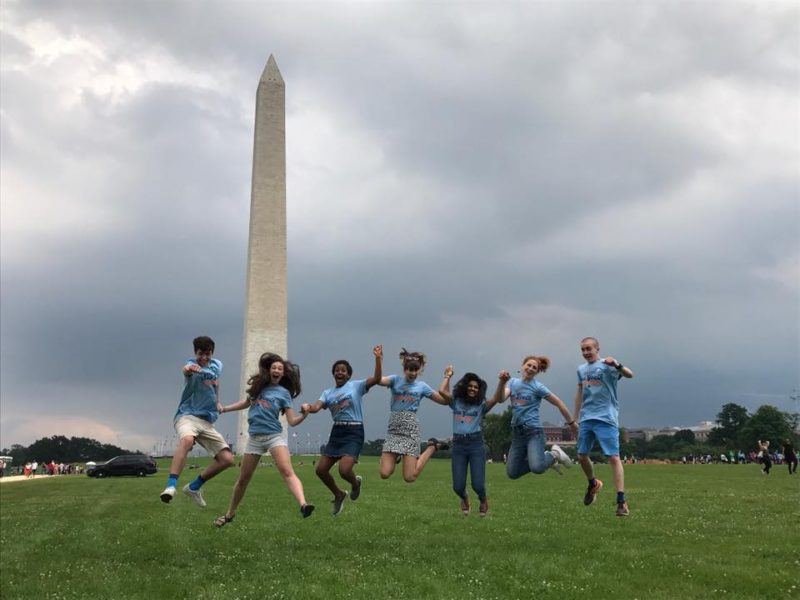
Sea Youth Rise Up 2018
At a time where the world is faced with herculean challenges, it is imperative that we engage the passion, idealism, and energy found within the youth of today. Among…
Continue reading -
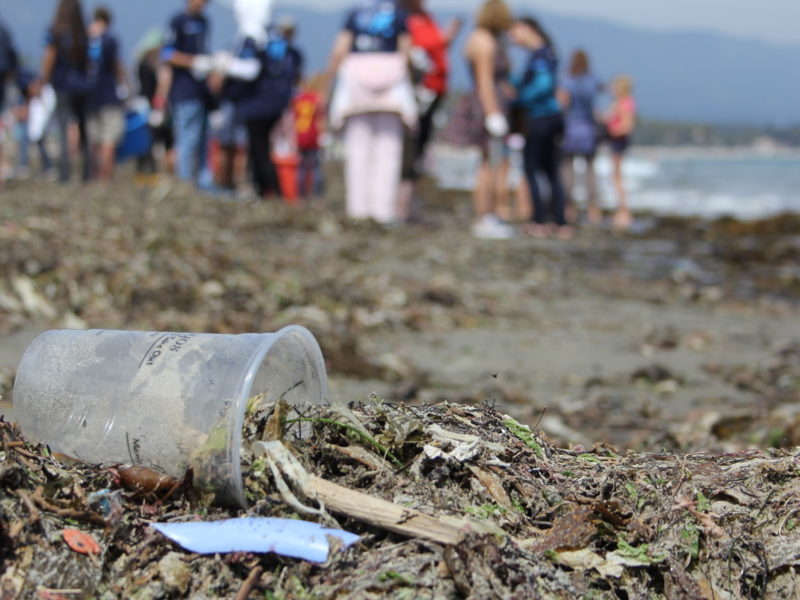
South Carolina Aquarium Breaking Down Plastic: A Call to Action to Address Plastic Pollution
Guest Blog by Al George, Director of Conservation, South Carolina Aquarium [Note from Editor: With it being World Oceans Day week, with…
Continue reading -

People want to help! Using your existing resources to help your visitors do even more for conservation action
Recently, I was spending a couple of days by myself at the Southern Delaware shore that advertises itself as “low and slow,” and this time of year it’s more…
Continue reading -
Youth for the Ocean Launches!
This month we officially launch the Youth for the Ocean initiative to collaboratively accelerate youth engagement and develop youth leaders for a healthy ocean. We’re excited to partner with you! Our youth initiative will…
Continue reading -
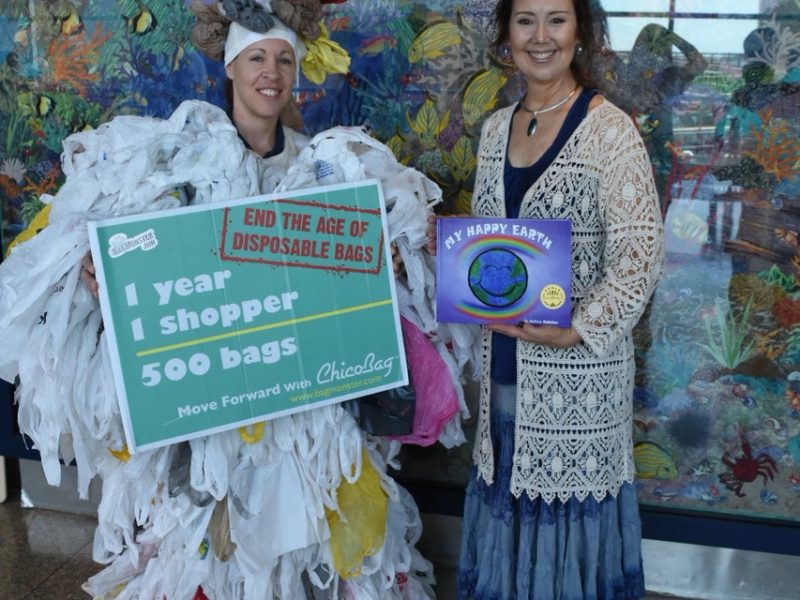
Pilot project shows that engaging visitors in conservation efforts can inspire commitments and enhance experience!
During the week surrounding World Oceans Day, 12 zoos, aquariums and museums (ZAMs) participated in a pilot project that had them asking their visitors about helping to address the…
Continue reading -
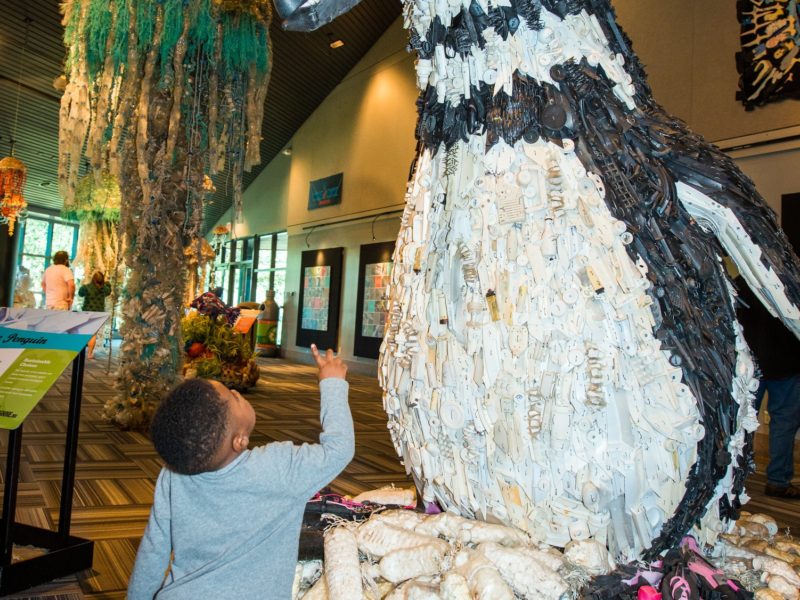
The Houston Zoo Explores Whether Artistic Displays Inspire Conservation Action!
This guest post is by Martha Parker, Conservation Impact Manager at The Houston Zoo. The Houston Zoo is committed to saving wildlife through partnerships and the support of global and local conservation projects, while connecting the Houston community to wildlife at the Zoo and inspiring them to action. To help fulfill our goal of saving wildlife, the Houston Zoo has been addressing the issue of plastic pollution. We went plastic bag free in July 2015, a decision that helped reinforce our commitment to reducing plastic pollution, a major threat for marine wildlife like sea turtles, which we work diligently to protect. The Houston Zoo receives wild sea turtles who require medical care and rehabilitation support from our partners at NOAA. Some of these turtles arrive at the Houston Zoo because they have ingested plastics or are entangled in marine debris. This makes the connection between the wildlife we work to protect and the threat of marine debris quite clear for us. The Approach To further our protection efforts of local sea turtles and help connect our community to the threat of marine debris and how they could take action, we welcomed Washed Ashore to the Zoo in January of 2016. Displayed at the Zoo’s Brown Education Center, Washed Ashore was the perfect visual representation of a global issue that hits home for Houstonians living so close to the Gulf of Mexico: plastic pollution. This awe-inspiring exhibit brings to life an overwhelming problem and puts it right in front of your eyes, connecting visitors with the animals affected by trash in our oceans. The Houston Zoo not only wanted to provide a fun experience for their guests, but also wanted to inspire action to save animals in the wild with a very specific ask of going single-use plastic bag free when shopping. After some brainstorming for a fun, interactive guest experience that incorporated data collection, Zoo staff decided the best way to get guests to take a pledge to use reusable bags was to have them add their fingerprint to another artistic display, an underwater-themed mural, designed and painted by famous Houston street artist, Gonzo247. Before participating, however, guests took a short survey and committed to going plastic bag free for three months. Between January and April 2016, colorful sea turtles, sharks, rays, shore birds, and fish were filled in as 1,482 guests took the pledge and showed their commitment by adding their thumbprint to the mural wall, in the animal they were helping to protect by going plastic bag free. This challenge is important to the Zoo’s mission of saving animals in the wild and inspiring behavior change by empowering Houstonians to make a difference. But how do we know if it worked? The Results With our evaluation methods, we aimed to answer the question; do visitors to the Washed Ashore exhibit at the Houston Zoo become inspired to use reusable bags more frequently than those zoo visitors who did not? We asked visitors from both a control group and an intervention group to take the challenge to go plastic bag free for 3 months to save wildlife like sea turtles. The control group was asked this question at the sea lion exhibit before Washed Ashore opened. The intervention group included those zoo visitors who visited the Washed Ashore exhibit. Three months from the time the visitor signed up to go plastic bag free, the Houston Zoo followed up with them by email to see how they did with the challenge. In total, we had 68 participants in our control group, with only 6% responding to the 3-month follow up. Our intervention group included 1,482 participants, and we had a notably better 16% response rate, with 230 of those responded to the 3-month follow up. While the better response rate was a good indication of a positive impact from the exhibit, we did not have enough participants in our control group to answer our original research question. We did gather valuable data that we can use to influence future exhibits and messaging. For example, we confirmed that in keeping with research by The Ocean Project and others, our guests are indeed motivated to make changes in their behaviors to protect animals, and their visit to the Zoo was an important aspect of taking action. Specific to using reusable bags, we know that our messaging should include ways to remember your bags, including tips on keeping them in your car. Finally, it was a great learning experience for the Zoo to evaluate (on a small scale), the impact of our work to save wildlife by empowering our community to take action. What enabled us to be successful in our effort to connect guests to the issue of marine debris and move them to action was the collaboration across numerous departments of the Zoo, and the strong tie between the exhibit and our efforts to save ocean animals like sea turtles, locally. This project has certainly influenced the way we think and plan for future exhibits and experiences. Our advice to others…... Start planning early. Get all relevant departments/people involved so that you choose the correct exhibit for your audience. Develop an institutional goal. No matter the exhibit content, you should have an institutional goal for that exhibit determined so that planning and evaluations can take that goal into consideration. Revisit the exhibit/process at regular intervals. Avoid implementing a project and then when finished, evaluating how it went. Bring all stakeholders together frequently to see how the project is going and make changes as you go. Align messaging/content with what is relevant for your institution, your audience, and the work you do. Communicate with other organizations who have experience with the content/exhibit-find out what worked for them, what didn’t. Track your success-even seeing what didn’t work is critical information to move forward in the future Additional Data Responses from both groups in 3-month follow-up included some positive indications that we were helping to increase bag use: 43.35% of respondents used their bags “almost every time they shopped” during the 3-month challenge, compared to 16.31% of respondents used their bags “every time they shopped” during the 3-month challenge, and only 2.58% of respondents “never” used their bags when they shopped during the 3-month challenge More than 60% of survey respondents put their likelihood of continuing to use reusable bags at “extremely likely” 198 respondents have encouraged family/friends to go plastic bag free as a result of their participation in the challenge, reaching an additional ~1,379 people. It was important for the Zoo to understand the motivations behind why our guests were successful in the reusable bag challenge. We found that motivations for continuing to use reusable bags during 3-month challenge included the following: Visiting the Zoo increased knowledge of how plastic bags are a problem for wildlife was cited by more than 52% of survey respondents. “That exhibit at the zoo really did change things for me. Not just about plastic bags. I have tried to buy less plastic in general - kids dishes and bowls (switched to bamboo), kids toys (wood, fabric, handmade), and I've tried to avoid buying food that comes with a lot of extra packaging. I loved that exhibit because it shocked me to see all of the toys and bottles and things that don't just disappear, thank you for teaching me that I'm contributing even if I think I'm not!” “I have used reusable bags for many years. Mostly at the grocery store. The positive thing in my life about the challenge was not taking bags at other stores such as clothing or craft stores. Taking the challenge actually made me take my reusable bag to the next level, which is to use them everywhere including on trips.” In order to make the Zoo’s messaging more effective in the future, we also asked respondents about barriers, which included remembering their bags. 80% of respondents remembered their reusable bags by keeping them in their car. In the future, we can utilize this information to remove barriers for guests when we ask them to switch to reusable bags. (E.g. “If I forgot my bags at home, I would ask for paper, which got reused. If I forgot my bags in the car, I would just ask them not to bag my groceries and then would cart them out and put them in the bags once I got to the car. It really helped me remember to take them out of the car when I had to do this!”) Additional feedback from Houston Zoo participants: ~Great program to encourage less plastic bag use, thank you! ~I have been using only recyclable bags, mostly fabric, for more than 5 years. I was happy to see the bag challenge at the zoo! I hope you have had an excellent response from others. ~I tell the store clerks about our pledge with the zoo and encourage family to think about using reusable bags. ~The bag challenge did not work for me. I chose to reduce my use of disposable plastic bottles instead. I now have a metal water bottle and have encouraged my children to use reusable water bottles also. ~Great program. The education by the zoo raises our awareness to the damage of plastic bags. Continued education and awareness remind us and help us change our ways permanently. Thank you for all of your hard work! ~This was not easy at first! A few times I forgot my bags in the car and had to take a full cart of groceries out to the car and load them in my reusable bags in the parking lot. Ha! But it was worth it, to know that I helped. Thank you for the challenge! ~This survey is a test reminder to get back on track with using reusable bags! ~Going shopping with reusable bags is fun and fashionable. I use them where ever I shop or visit! The zoo bags are the best. I have 3 of them so far. Please design more! ~I now also recycle all my paper and plastics. Thanks to my Houston zoo visit. Was very impressed with your plastic artwork. ~I have shared this incentive through Facebook by posting photos of the zoo's exhibit and the impact on not only sea turtles, but other sea creatures as well. When I use plastic bags, I always bring them back for recycling, and never throw them in the trash. The exhibit at Houston Zoo changed my behavior absolutely, I had no idea the impact of such a simple, daily use item on wildlife. Thank you! ~It was a great experience and if it had not been for that visit at the Zoo with my grandson, I would still be using plastic bags. Now I find that it is actually so much more efficient to use my own reusable bags, because more items fit into the bag, or maybe the store packers put more into one bag. Therefore, it is also more convenient to carry it into the house. Helping to save the environment is great. Keep up with such programs. Thanks. ~I often forgot my reusable bag but I would still carry out the items rather than asking for a plastic bag. When questioned or given that unsure look by my cashier, I often responded with "I'm plastic bag free, save a sea turtle". At least twice I was asked what I meant and was able to have a short but great conversation about the subject.
Continue reading -

ISG+ Final Report: Say #byetobags with the Saint Louis Zoo!
This guest post is submitted by Kirinne Slaughter at the Saint Louis Zoo, and is the last in a 3-part series on their Innovative Solutions Grants+ project. It is hard to believe that it has been almost a year since we began our partnership with The Ocean Project under the Innovative Solutions Grants+ Program. It has been an exciting and rewarding year for everyone involved in the project, especially our Zoo ALIVE teen volunteers as they have developed and implemented the #byetobags campaign. (See previous post). This campaign, based on the successes of the Better Bag Challenge, aimed to get Zoo visitors to make the change to reusable bags. For our innovative twist, we used social media in an attempt to amplify the effects of our on-grounds campaign. KEY FINDINGS As our data collection comes to a close with the end of our summer event season, we have concluded that social media can be an invaluable tool to increasing the effectiveness of an on-grounds campaign. Specifically, our results can be summarized into three key findings: Our on-grounds campaign confirmed the success of the public engagement model from the Better Bag Challenge. Since our first official event on April 23rd, 90% of guests that were asked during their visit to take the pledge did so, and most did so with enthusiasm! The teens approached guests who came near their activity table, connected the problem of plastics in our ocean to its impact on the animals using their own messaging (as I’ll explain later), and then asked guests to pledge to avoid disposable plastic bags in exchange for a reusable bag. And, again, a remarkable 90% of those who were asked filled out a pledge form and “signed” it by providing us with their email address. One guest even hugged each teen, thanking them for the work they were doing. As of the end of August, 1,373 visitors pledged to switch from plastic bags to reusable bags, and 1,669 #byetobags reusable bags have been given away! To “gut check” our impact, we also tracked the taking of small and medium plastic bags in our gift shops, where bags are available upon request, and found that use was down 9% since the beginning of the year, while the sale of reusable bags had increased by 65%! While our project can’t claim credit for all of this impact, it certainly was reassuring to see the trend moving in the right direction. Teens working Shark Week We also tried to generate pledges, and found a consistent (but comparatively low) return on investment. As a part of our project, we wanted to know if we could get people to take our pledge through social media, with no interaction on grounds and no bag in return. We embedded links to the pledge page into #byetobags social media accounts and posts we created on Facebook, Twitter, Tumblr and Instagram, as well as onto the Saint Louis Zoo website. While the social media platforms garnered a consistent number of pledges each week, we found that when comparing the number of pledges generated with the number of hours invested, our teens were much more effective - by our estimates more than twice as effective - in their on-grounds engagements. But, we concluded that our social media effort was still important, especially when thinking in broader terms of increasing our project’s overall reach. Of the platforms that we did use, the #byetobags Facebook page was our most successful in this regard - in spite of the teens’ initial doubts! - growing to nearly 300 likes and a reach of over 25,000 - it proved to be a great platform to engage with individuals, including but not limited to those who completed the pledge form. Meanwhile, Twitter was our second most successful platform, used primarily for interacting with other plastic pollution organizations, and making professional connections such as St. Louis City Recycling and Earth Share. So having a variety of social media accounts was useful for us, as each platform can be utilized in different ways including and beyond generating pledges. We learned that those who took the pledge were willing to share their commitment with friends and family, but did not utilize the mechanisms that we created and provided to them. We created a platform with our email service provider through which we emailed every person who took the pledge, giving them the option to then share the pledge out to their friends and family by using one of our preset share buttons that would link them either to Facebook, Twitter, or their email. While we were anticipating a snowball effect, we found that this method did not see the success in which we had hoped. Only a handful of visitors - less than 5 of the nearly 1,600 pledge takers - used the social sharing options we provided to them via email, with 42 total unique social shares. Surprisingly, though, some visitors were very willing to share the pledge utilizing a different method, one that we originally did not anticipate – they copied and pasted the link to our pledge page into their own posts and used #byetobags. Our teens found more than 10 examples where visitors did this, with one person even sharing out the pledge in a Google link format she created, generating another 8 pledges. It seems our guests are willing to share the message, but we need to rethink how we help them to do it! Who takes the #byetobags pledge? As a part of our pledge form, we gave guests the option to select their age group from a drop down menu, and to answer the question, “How often do you use reusable bags?” These questions give us some insight into who is most often taking our pledge on-grounds versus who is most often taking our pledge online. As shown in the charts, we found that on grounds the most common age group of pledge takers were 31-45 year olds, while online it was 12-18 years olds. This suggests that social media accounts can help us reach a distinct group of pledge takers, notably the youth that research tells us are so important to our missions, and who may be more likely to pledge to conservation action via the internet. Additionally, of the 1,521 total pledge takers who choose to answer the question, “How often do you use reusable bags?” 57% stated that they either “often” or “always” use reusable bags, which was notably higher than the 40% of the public reported by the grocery industry as the national average (Source: http://www.fmi.org/research-resources/u-s-grocery-shopper-trends/grocerytrends2014) So our pledge may have been more of a reinforcement and reminder to those who already use reusable bags, with encouragement to share with others. It will be an interesting challenge as we move forward to see how we can do better, on our own and with our guests, at reaching those who rarely or never use reusable bags. Our goal of course being that one-day, everyone will select, “always.” #byetobags continues at the Saint Louis Zoo program Thanks to funding from a Saint Louis Zoo family donor, the #byetobags campaign will be able to continue at the Saint Louis Zoo for another year! As mentioned in the previous blog post, this campaign is the first of its kind at the Saint Louis Zoo, and the opportunity to continue will allow for further fine tuning, paving the road for the Zoo to have many more in the future. We have a number of very targeted goals for the upcoming year, including: Implementing a bag policy in the gift shops that is more in line with our #byetobags messaging. We had some initial success as noted above, and will continue working with our retail team, as well as the Business and Strategic Operations Departments at the Zoo to come up with a bag policy that works for all. We are also looking forward to pushing our message further outside the Zoo into the St. Louis community. To launch this, the #byetobags campaign is going to be the feature article in our quarterly stlzoo magazine that goes out to all 50,215 of our membership households. Additionally, our Zoo ALIVE teen volunteers are anxious to continue to spread the message to their high schools and our Young Zoo Friends board, a group of young professionals who are Zoo members, are extremely interested in the campaign and are eager to take the message back to their home companies and organizations. Finally, the Saint Louis Zoo is excited to be hosting a Youth Ocean Conservation Summit on our campus on February 11, 2017. Youth Ocean Conservation Summit is a youth-oriented conference whose goal is to educate about how to turn a conservation idea into an action project. The event will feature notable speakers and workshops that will teach young people the skills they need to start a conservation project. We are excited to be hosting the first summit in the Midwest, and are eager to feature #byetobags as an example of a youth run campaign. We are eager to see where the second year of the #byetobags campaign takes us. All departments at the Zoo have been supportive of the project and the possibilities for expansion are truly endless! Teens with Dr. Jeffrey Bonner Advice to others As we reflect back on the creation of our campaign, it is an honor for us to be able to offer advice to other institutions hoping to create similar campaigns. Guests are excited to be asked to partake in a conservation action campaign. Our results confirmed The Ocean Project’s finding that they do indeed expect, trust, and appreciate the advice that you have to offer them on how they could become part of the plastic pollution solution. Not only were our guests willing to sign a pledge, but some were willing to share that pledge with friends and family, and stay invested in a conservation action campaign on social media – we just need to give them more flexibility to share more easily and on their own terms. Use multiple social media platforms, manage each separately, and play to their strengths. Managing each separately, as opposed to making one post for all, allows you to truly tailor the post to each platform’s strengths. Allow for teens to be creative and experimental in messaging. One of the most exciting and successful parts of our campaigns was allowing the teens to experiment with the delivery of the #byetobags message. The emphasis was on connecting the requested action to its importance for the animals, but the teens also were given the ability to deliver the #byetobags message in the way that was most comfortable for them, they were more excited, and more eager to get pledges. Finally, one thing that worked out well for us was that for this project we hired a part-time campaign coordinator, funded by the ISG+ grant. Having someone completely devoted to the #byetobags campaign made communication, facilitation and advocacy about the campaign seamless, and gave the Zoo ALIVE Teen’s a great resource for the project. It also allowed for the message to spread further and faster as the campaign was not limited by staff attention or availability. Overall, this year has been amazingly rewarding. As one Zoo ALIVE teen volunteer, Kiara Hardmon states, “I am really proud to have made an impact for the environment at such a young age.” As the project continues, we are eager to allow more Zoo ALIVE teens the opportunity to work on a project that allows them to feel proud of themselves, while positively influencing the environment around them! #byetobags spreading to Africa
Continue reading -
Shedd Aquarium Pledges to Protect our Blue Planet Year-Round
This guest blog comes from Aislinn Gauchay, Assistant Director of Great Lakes and Sustainability at Shedd Aquarium. Shedd Aquarium is a Supporting Partner of The Ocean Project. Earth. The third rock from the sun. Our humble planet has many names, but what makes our Blue Planet truly unique is what covers 71 percent of our surface and without which life would not exist: water. Oceans are the heart of our planet: they shape weather and wind, are home to one million animal and plant species and are the primary source of protein for more than 2.6 billion people. Oceans serve as the foundation for a delicately balanced food web that supports all life, from the Marianas Trench to the top of Mount Everest. Our oceans and the animals that call them home are critical to sustaining life on earth, human life included. However, our relationship to and dependence upon healthy, abundant oceans is not universally acknowledged. The most critical threats to our oceans are produced by human activity, such as overfishing, habitat degradation and pollution. More than 8 million tons of plastic trash end up in the ocean every year, including millions of disposable plastic bags and bottles. Though our oceans are often uncelebrated, there is one day out of the year where a plethora of organizations like the Ocean Project and Shedd Aquarium team up to celebrate what makes our planet blue on World Ocean’s Day. For this year’s celebration, the Ocean Project and singer Jack Johnson ignited the #WaveForChange challenge, asking people to do something to help our oceans. Shedd Aquarium’s President and CEO Dr. Bridget Coughlin took the #WaveForChange challenge on behalf of our organization and pledged to continue to reduce our plastic usage, spread the message, and encourage others to join us in making a difference. Shedd Aquarium is taking action on the issue of plastic pollution in our ocean and is constantly looking for ways to reduce our use of this seemingly omnipresent commodity in innovative ways. We started small, by providing reusable bags instead of disposable plastic bags, installing reusable water bottle refilling stations, and eliminating plastic straws onsite. Our goal is to continue this initiative at Shedd, in our community, and throughout the country. For example, during this year’s Louis Vuitton America’s Cup World Series event in Chicago, we worked with race organizers and sustainability partner organizations 11th Hour Racing and America’s Cup Endeavor Chicago to inform event attendees and thousands of guests visiting Chicago’s landmark Navy Pier about the impact of plastic pollution on our lakes and oceans, offering them an opportunity to pledge to reduce their household plastic use. In 2015, we extended our commitment to freshwater and marine conservation at a higher level by joining forces with two other aquariums, Monterey Bay Aquarium and National Aquarium, to form the Aquarium Conservation Partnership (ACP). As a co-founder, and thus an executive committee member, Shedd works with fellow industry leaders to advance ocean and freshwater conservation policy goals. This includes advocating for the expansion of marine protected areas and increasing protection for exploited species. At Shedd, conservation is critical to everything we do. Whether it be sourcing only sustainable, restaurant quality seafood for our animals or pledging to reduce our use of plastic, Shedd believes we can all take steps and make a big difference toward protecting and preserving our oceans. We can do more together than alone. You can learn more about Shedd’s conservation initiatives on our website.
Continue reading -
Last minute World Oceans Day event ideas!
Last minute ways to mark this special day! World Oceans Day is just around the corner, but it's never too late to plan a great activity or event to celebrate World Oceans Day on June 8th! Here are some last-minute, quick n’ easy ways to do something to celebrate World Oceans Day and help out our ocean. First and foremost - join the #waveforchange! This World Oceans Day we invite you to commit to reduce the amount of plastic you use with a video pledge, and challenge your friends to do the same! Plastic pollution is a huge problem for the ocean. On May 25th, singer Jack Johnson started The Wave, asking people to reduce their plastic usage on World Oceans Day, and spread the message that the oceans need our help. Share your video commitment online with the tags #WaveForChange and #WorldOceansDay. Don’t forget to tag World Oceans Day on Facebook & Instagram, and @CelebrateOceans on Twitter. With social media, we can turn individual ripples into a wave of support for the ocean. Together we can help this movement grow and swell! Let’s get everyone to make a wave for ocean conservation! The Better Bag Challenge Take the Better Bag Challenge: promise not use any disposable plastic bags for a whole year. Take a better bag instead! Challenge your friends, family, coworkers, or club members to join you. Petition to Recognize World Oceans Day in Your Community Is World Oceans Day officially observed in your town or city, state, district, province, or nation? If not, follow our easy 5 step Community Proclamation & Petition Step By Step Guide to help your community join the growing list of those around the world who are making this unique celebration on June 8th an officially recognized annual event. Create a community art piece Getting your visitors, neighborhood, or any group of friendly folks together is a wonderful opportunity to make some art! Create a mural somewhere public – depict ocean animals, or display your community’s ocean promises. An even easier option is to do a sidewalk mural or art piece. You can even make eco-friendly sidewalk chalk at home! Clean up your favorite spot It’s great to get hundreds of community members out cleaning the beach or river, but it’s not the only kind of cleanup that makes a difference! Grab a few friends or family members and make an outing of it. Go visit your favorite beach, river, lake, or park for a picnic and bring some bags for trash. Go a step further and host a beach, river, lake, wetland, or underwater cleanup. Try contacting local outdoor, dive and water sport shops to help organize and spread the word. You can recruit volunteers through the media, community posters, or local youth groups. Follow the cleanup with a celebratory dinner featuring sustainable seafood! Check out all of our free online resources, and see our latest news for further last minute ideas.
Continue reading


