-
ISG+ New Project: Teens at Riverbanks Zoo and Garden take action “all the way to the ocean”
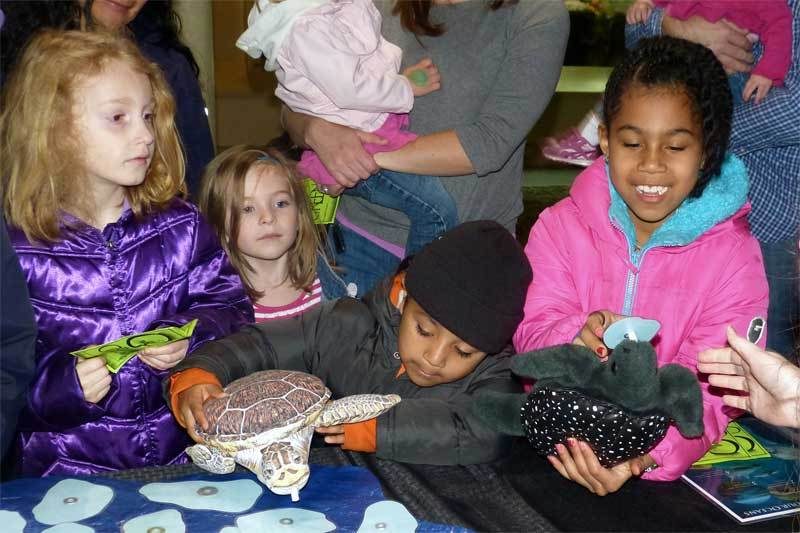
This guest post, by Director of Education Elizabeth Clemens and Coordinator of ZooTeens and Scout Programs Syndi Castelluccio, from Riverbanks Zoo and Garden is the first in a 3-part series on their Innovative Solutions Grants+ project, which investigates how engaging with teens and receiving incentives can impact zoo guest behavior. Teen S.O.S. The Riverbanks Zoo and Garden began connecting area teenagers to nature and building successful, caring members of the community more than a decade ago. Now with the support from The Ocean Project’s Innovative Solutions Grant+ we have tasked our current teens to take their love of nature one step further, to reach out and take action “all the way to the ocean.” Although not on the coast, Riverbanks Zoo and Garden has a unique setting nestled along the banks of the Saluda River, and a direct connection to the ocean. Over the years Riverbanks teens have felt strongly about the unsightly and potentially dangerous debris left on our very own riverbanks. Regardless of the source it is an ugly problem - in more ways than one! So this year, the teens will attempt to answer the distress call of our oceans through the Teen S.O.S (Stewards of Our Seas) initiative by tackling one of the biggest issues facing our oceans today – marine debris. As part of a yearlong immersive effort, Teen S.O.S will look to enlighten and inspire the teens to not only take action individually, but to become a true motivational force by inspiring the community to take action that will make an impact both locally and globally. Building on their past community actions, the teens will set up “Inspiration Stations” where they can connect with Zoo guests, and engage with them in a behavior change experiment. Setting Sail We began by educating our teens on the issue of Marine debris and provided them opportunities to be actively engaged in reaching a solution. The teens teamed up with the City of Columbia this past fall to mark all the storm drains in the Zoo that lead to local waterways with colorful medallions to educate the public about storm drains and watersheds. Partnering with Keep the Midlands Beautiful, ZooTeens have scheduled a number of local waterway clean ups through the Adopt-A-Waterway program. Joining forces with the Riverbanks Zoo Green Team, teens have been tasked to evaluate and identify at least one action item that would help to reduce our plastic footprint by making a permanent change in the Zoo’s daily operations. All Aboard Knowing that Columbia takes pride in its state, its parks, rivers, beaches and yes its Zoo, we felt the need inspire everyone to find these treasures beneath all of the trash! The teens are taking an innovative approach to reach the zoo’s one million guests. The group will be crafting “Trash to Treasure” artwork from the items collected during the waterway clean-ups. This art will be displayed in the Zoo as a way to attract the attention of our guests, introduce them to the issue of marine debris and, we hope, remind South Carolinians of their Palmetto pride. The teens will also create “Inspiration Stations," which will emphasize ways that zoo guests can be part of the solution, and inspire them to make changes in their daily lives to help address the problem of marine debris. Inspiration Stations will be showcased at the community-wide events - Go Green Day, Party for the Planet and World Oceans Day. Is Knowledge Power? Let the experiment begin! As part of inspiring change and community action, the teens will next test the theory, “Is an individual more likely to use a reusable shopping bag if they are engaged by teen leaders on the problem of marine debris?” This question will be tested using random samples of three test groups: Guests simply visiting the Zoo Guests engaged at an “Inspiration Station” Control group of the general public As part of this effort, we’ll be giving away reusable bags to guests. Each guest will be asked to sign a pledge that they will take the bag, use it, and complete a survey 1-2 months after receiving the bag. We’ll be looking at whether or not guests that visited the Inspiration Station are more likely than the others to report taking action to reduce their plastic footprint. Stay tuned!
Continue reading -
Seas the Day in November – Rethink Your Habits
We won't have a society if we destroy the environment. - Margaret Mead Our personal consumer choices have ecological, social, and spiritual consequences. It is time to re-examine some of our deeply held notions that underlie our lifestyles. - David Suzuki Last month we talked about reducing our use of electricity. That is just one of the four R's: Reduce, Reuse, Recycle, and Rethink. In our current society there is a large impulse to buy new things and toss the old. Buying the newest iphone may seem like a good reason to throw away the old one, but why not hold onto it for a while longer? Our trash can end up polluting the land and aquatic ecosystems including the ocean! It's best to rethink every purchase, reuse what we have, reduce what we buy, and recycle as much as we can. In this way we can rescue the ocean. by Carlos Peñalba, flickr user carlospenalbaphotography Reduce plastic. Plastic plays an unfortunately large role in our lives. Many of the things we buy come packaged in plastic and then stores give us plastic bags to bring these items home in. This is a problem since plastic items, such as plastic bags can make their way into the ocean. When this happens ocean creatures such as sea turtles eat them by accident. Quick tip: When you are out shopping, bring your own reusable bags. Cloth bags are not only better for the environment, but they are sturdier and less likely to rip open. Reuse for crafts. Instead of disposing of your stuff, how about finding other uses for the things you have? Old shoe boxes can easily be used for storage. Have something extra lying around? Why not use it for a family craft project? Many things can be transformed into something useful given time and creativity. Quick tip: Have something you don't need but someone else may? Try going on freecycle.org and find someone who wants it. (Or find something you may need, for free!) by Mary Anne Enriquez, flickr user urbanwoodsswalker Recycle smart. If you can't find a use for something, it may be time to recycle it. Recycling can be difficult though, so it's helpful to have a guide. There are quite a few guides out there that will tell you what you can and can't recycle. If you want to know about recycling electronics, the EPA has a handy guide for that. Rethink purchases. Sometimes we just want something and it's hard to ask ourselves, do I really need that? Take the time to really think about your purchases. Buying less, in bulk, and things with less packaging can really help reduce the waste that ends up in landfills. Cover Photo by by flickr user crash-candy The Seas the Day initiative encourages and empowers people to take ocean conservation personally. Each month, we feature a new conservation theme with ways to help so come back regularly for more ocean-helping ideas and tips! Created mainly to support our partner ZAMs (Zoos, Aquariums, and Museums and other visitor-serving organizations involved in our growing network) in motivating conservation action, Seas the Day is for you to tailor for your own purposes. Please use any or all of the content verbatim and re-post on your own blog, social media channels, website, newsletter, etc. We have a large database of action tips and related content for you to use so let us know what’s most helpful and what other action-able types of information and resources we can provide to enhance your conservation efforts.
Continue reading -
Two fish with one hook: Conservation action at World Oceans Day Events
Many zoos, aquariums, and museums (ZAMs) consider inspiring conservation one of their major goals for interacting with their visitors and the public. Recently, many of our partner ZAMs helped their visitors take a first step for ocean conservation by getting them involved at World Oceans Day celebrations. Smart staff "caught two fish with one hook" by explaining to guests how they can adopt long-term environmentally friendly habits, and then supported their sense of personal efficacy and identity as "green" ocean protectors by having them take real conservation action in their communities on that day. It's exciting to see more and more partner ZAMs' commitment to encouraging environmental stewardship among their visitors. Here are a few examples of what our partner ZAMs did for World Oceans Day this year. Plastic bag pollution: Provide a solution Utah’s Hogle Zoo addressed plastic bag pollution by encouraging guests to recycle their trash and stop it at the source. The Zoo kept it local by collaborating with a community recycler, Rocky Mountain Recycling, to collect and recycle plastic bags, and joined forces with a local grocer, Fresh Market, to donate a free reusable bag to guests who brought 10 or more plastic bags to recycle. According to Hogle Zoo’s Events Coordinator, Cagney Smullin, “It was very popular and we had hundreds of plastic bags turned in. We put out messaging and tried to educate guests that it's best not to use plastic bags.” Hogle Zoo was smart about addressing this problem because stopping a harmful behavior (using plastic bags) isn’t enough; it's important to replace it with a positive behavior (using a reusable bag). This successful collaboration informed visitors about the negative effects plastics have on the oceans and its wildlife while providing them with a way to help as part of the solution to this issue. Visitors to Utah’s Hogle Zoo exchange plastic shopping bags for reusable ones. Interactive games for conservation win over kids... and adults Many of our ZAM partners found it helpful to embed information and appeals for environmentally friendly actions into fun activities, which reinforced the environmental conversation message and gave visitors opportunities to practice taking on such actions. For example, at their World Oceans Day event, the Santa Barbara Zoo created a fun, interactive game for visitors to learn more about sustainable seafood. “The fishing game for Seafood Watch, where kids 'fished' out laminated fish and then consulted a large manual to see if they should eat them was really successful… It was very successful to have a game where we could engage people and keep them around longer. Even adults would fish out laminated fish and check to see if they should eat them” explains Ria Boner, Conservation and Research Coordinator at the Santa Barbara Zoo. Visitors also were excited to learn about the Seafood Watch phone application because it “would be harder to lose” than a paper pocket guide. Seafood Watch has a new downloadable app to help users learn up-to-date sustainable seafood info. Coastal cleanups: Threats from marine debris taught through action Around the globe, one of the most popular World Oceans Day activities was a coastal cleanup. Volunteers of all ages helped to clean up their local shores, some collecting hundreds of pounds of trash. This type of event is a great opportunity to teach people about the threats of marine debris, which can be reinforced with first-hand accounts of coastal pollution. The cleanup event held by Museo Sang Bata Sa Negros, an interactive marine museum for children found in Sagay City, Philippines, was particularly exciting. The museum’s director Elizabeth Cordova-laO' explains, “Since our museum is located right beside the sea, during World Oceans Day, we had a coastal cleanup activity with 60 kids participating and some of their parents.” Not only did they hold a cleanup, but they engaged the kids about what they had learned with a lot of fun and excitement: drawing contests, freeing an entangled sea turtle, talking about why their local mangroves were important to their community, a dance performance, and more. Researchers have noted the benefits of volunteering in actions like these, especially with children. Some of the benefits include the potential to promote healthy lifestyles and choices, improve one’s sense of community, and encourage civic responsibility. Coastal Cleanup at Museo Sang bata Sa Negros in Sagay City, Philippines. Look out next week for our next blog posting, which will talk about ZAM partners who asked visitors to make an Ocean Promise in honor of World Oceans Day.
Continue reading -
Weekly Round Up: ecosystems at our service
In the round up this week: ecosystems at our service, bag the nag if you want shoppers to be green, and keeping up with the Joneses lawn. If you’re a science communicator or educator at an informal science center (such as a zoo, aquarium, or museum) trying to encourage conservation action – this is the round up for you! Every week we break down the most interesting recent news and best resources to help you frame the issues as effectively as possible. Ecosystems: at your service! A new study by Stanford researchers published in Nature shows just how important healthy coastal ecosystems - oysters, reefs, swamps, dunes, etc - are to healthy coastal communities. The study mapped existing such systems in the US and found that without them "twice as much coastline and 1.4 million more people will be highly exposed to climate risks." Try using the concept of free ecosystem services (in plain language) to communicate with audiences and visitors about the value of conservation. "Nature" isn't just important to protect because of abstract, distal reasons (it's beautiful! biodiversity!); it has an immediate effect on the health and economies of coastal communities. Putting it in terms of recent events is even more impactful: healthy coastal ecosystems help protect people from extreme weather like Hurricane Sandy, they do it for for free! Oh, behave If you read last week's round up, you know that motivated reasoning can make it hard to get through to people about their beliefs and habits. Here are a few interesting studies that get at why people behave the way they do, and insights for how communicators may be able to nudge them in an eco-friendly direction. Study: Remind people to make green decisions, don't make them feel guilty French and Italian researchers experimented with two community-based social marketing techniques: public declarations and prompts. They asked shoppers entering a supermarket to sign a poster that said “Stop using plastic bags. If I can do it, so can you.” Then - half were forced to admit they sometimes used plastic bags, and the other half were left alone. Researchers then observed how the two groups behaved at the checkout line: people who only signed the poster were more likely to buy a reusable bag (rather than take a free plastic bag) than the people who were forced to admit they sometimes used plastic. The takeaway? Asking someone to make a public pledge or publicly identify themselves as "green" will motivate them to act accordingly - it's uncomfortable to feel like your actions don't match up with your identity. However, if you guilt and nag them about it they might be more likely to rationalize and justify their bad behavior, making them care less about acting green in the future. Study: Homeowners Use Lawn Chemicals Mostly Because Neighbors Do It Ohio Sate University recently investigated why people use chemicals on their lawns - 62% of respondents to their survey said their lawns are important to their "sense of social status and acceptance in their neighborhoods." A quote from one of the researchers: "Based on the study, the main factor influencing a homeowner's decision to use lawn chemicals is whether neighbors or other people in the neighborhood use them," Blaine said. "Homeowners crave acceptance from their neighbors and generally want their lawns to fit in with their surrounding community, so they adopt their neighbors' practices. It's not that they feel pressured to treat their lawns. Rather, they genuinely want to fit in." You don't have to be actively pressured to be motivated to keep up with the Joneses. The study concluded those hoping to encourage responsible environmental lawn care would be more successful targeting their campaigns at neighborhoods rather than individuals. This study is a great example of why it's important to know your audience's motivations when planning a campaign to change behavior.
Continue reading -
California: 25 days to rise above plastics!
California has until August 31st to pass two groundbreaking pieces…
Continue reading -
What can we learn from the latest Six Americas reports?
The recently released “Knowledge of Climate…
Continue reading
