-
Time to Get Busy
If you’ve been tuning into our Make Conservation Happen webinar series that launched in April 2018, you’ve learned about the nuts and bolts of how you and your institution…
Continue reading -

When GOOD NEWS changes your plans – encouraging support for Marine Protected Areas in South Africa
Editorial note: In 2017 The Ocean Project launched a new initiative to support zoos, aquariums, and museums (ZAMs) in getting more involved to effectively inform science-based fisheries policy…
Continue reading -

The Tackle Box: Tools and tips for immediately and easily incorporating the lessons from the fisheries public engagement pilot project
While aquarium and zoo leaders from across AZA and ACP are working with The Ocean Project in reaching out to their representatives and senators in support of maintaining a…
Continue reading -
Visitors respond positively to fisheries engagement pilot project!
The question: Can we engage the visiting public about science-based fisheries management in a way that raises their awareness, documents their opinions, and enhances their experiences? The answer: Yes, yes…
Continue reading -
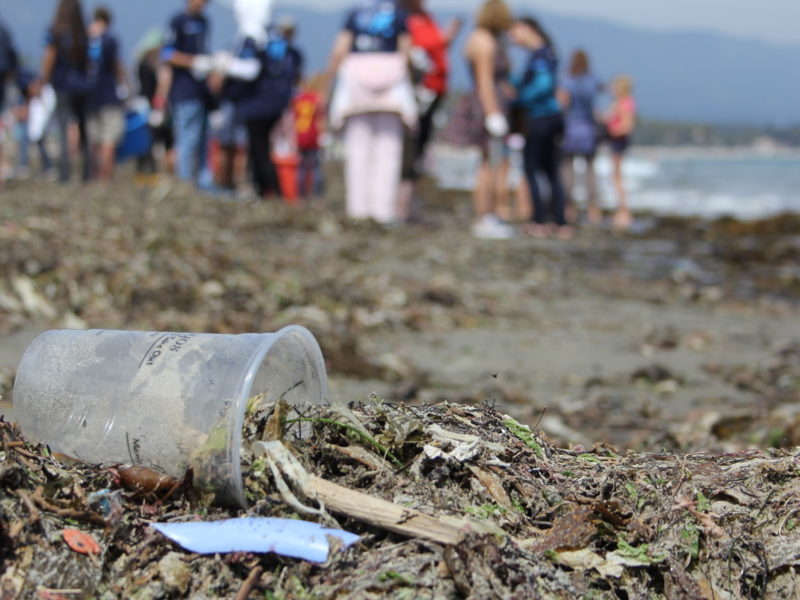
South Carolina Aquarium Breaking Down Plastic: A Call to Action to Address Plastic Pollution
Guest Blog by Al George, Director of Conservation, South Carolina Aquarium [Note from Editor: With it being World Oceans Day week, with…
Continue reading -
Get to Know Your Conservation Impact
Earlier this month, The Ocean Project hosted a second webinar in the Making Conservation HappenBrown Bag Webinar Series.These Friday webinars are geared specifically to helping aquariums and zoos do…
Continue reading -
Collaborating for Conservation in 2018
Happy holiday season! Thank you to all the organizations from around the world that are involved in our partner network and working to advance conservation….
Continue reading -
Americans Are Heartwired to Love the Ocean
In a deeply divided country, here’s how advocates can put that to work to protect the ocean for future generations By Robert Pérez & Amy Simon “The ocean does something…
Continue reading -
ISG+ Final Report: Philadelphia Zoo visitors say an overwhelming yes to “Saving Energy to Save Wildlife!”
After almost a year of testing and active recruitment for our study, we’ve been learning a lot about how to engage visitors on the issue of Saving Energy to Save Wildlife! We have been humbled by our visitor's trust in us and wowed by their willingness to pledge to reduce their household energy use. Last year, with the generous grant from The Ocean Project, we set out to test whether onsite messaging can affect offsite behavioral change. Using NNOCCI (National Network of Ocean and Climate Change Interpretation) framing methods, we constructed a short activity that invites our visitor to learn about ocean acidification. The message and activity were constructed to engage intergenerational audiences – the children and their adult chaperones. As one interpreter engages with the child through play and pledging, the other interpreter speaks to the adult about ocean acidification and participating in our study to measure their household energy usage. If they are PECO customers, they sign a consent form allowing us to track their energy usage for a year. While circumstances outside of our control (e.g. finessing legal details, losing our contact person) have stretched out the project for longer than the original 12-months – and we are still waiting on final numbers – we are going to share some thoughts and onsite results if you should consider doing the same project at your institution. 1. High interest in opportunity to act As indicated in our last blog, our pledging (to reduce household energy consumption) rate was high, especially after we adapted our approach to foreground the “ask” and add a second staffer so one could engage the younger audience while the other recruited the adults (parents/guardians). While visitors are easily distracted by the charismatic animals that are all around us, those who remained were very likely to have someone in their group pledge their commitment to taking conservation action at home. Approximately 3 of every 4 groups who engaged with our staff were willing to pledge! Moreover, we found that visitors reacted very positively, and were pleased at the opportunity to participate. and few of them balked at the ask, which brings us to the next point… Our advice to other zoos and aquariums: If you’re worried about asking your visitors to take conservation action, don’t. As The Ocean Project and so many other studies have consistently provided clear evidence for, visitors DO NOT consider it a chore that you are asking them to take conservation action. 2. Zoo visitors are willing to back up their pledge In addition to pledging to take action, 54.3% of those who were asked to participate in the tracking study responded positively. This was a very pleasant surprise for us as we were not sure how willing zoo visitors would be to let us track their household energy usage. More than half of our visitors were willing to let us study the trend in their energy consumption. While there were some visitors who did ask our researchers for clarification, most of our visitors were ready and willing to participate. Figure 1: More than half of our intergenerational groups (consisting of at least one adult and a child) were willing to participate in the study Our advice to other zoos and aquariums: What has become clear for us as a result of this study (which is consistent with feedback we are receiving from other sources) is that our visitors want to do more. Oblige them. We were terrified that asking people for permission to track their household energy use would be too audacious, but the overall response has been positive. Trust that your visitors are ready to do even more than you suspect. 3. Biggest barrier to non-participation: different service providers Of the visitors who were interested in participating for the study, almost half (44.8%) were not eligible because they were not PECO customers. We collected a list of 17 service providers, but 4 primary providers – PSE&G, PPL, DelMarVa, and Atlantic City Electric – serviced almost three-quarters (74.4%) of our other interested (but not eligible) participants. We have always known that our visitors are diverse and come from the tri-state area, but now we know that they are also diverse in their electricity companies! This does suggest that a study such as this would work really well for an organization that has fewer providers in their market area. Figure 2: Almost as many people were interested in participating but were not eligible (not PECO consumers) Our advice to other zoos and aquariums: How many energy providers are there in your region? In the Philadelphia area, there were many providers by choice and by zipcode. To have a higher overall recruitment rate, you might want to consider setting up partnerships with the biggest providers in your region. If we had increased our partnership from 1 to 4, we could have doubled our number of participants. The greatest barrier to participation is not visitor interest but our lack of ability to support their interest. 4. Intensive project Throughout the six months, we engaged more than 1500 visitor groups to KidZooU’s coral reef tank. Of the 1327 groups with at least one adult that we spoke to, we had the opportunity to ask 641 (48.3%) of them if they were interested in participating project. Of those 641 groups, 348 (54.3%) said they were interested, and 293 (45.7%) were not interested. Our advice to other zoos and aquariums: This situation could be improved by addressing the number of providers you partner with, but there is no denying that this (at least in its current form) is a highly intensive project. But take the lessons that we have learnt and build on it instead of starting from scratch – such a preponderance of evidence already exists that our visitors want to take conservation action, we don’t need prove that repeatedly. If you should take on such a project, make sure to provide adequate support for your staff – it is a highly repetitive and tiring process for them. Have them out for short (1-2 hours) shifts; intersperse their sessions with other projects to provide variety; provide them with tasks that have more immediate positive feedback to keep their energy up. Conclusion Despite the intensive and tiring process, we are extremely glad we took on this project. We are glad that The Ocean Project’s Innovative Solutions Grants+ provided us with the opportunity to clearly demonstrate that our visitors are ready for bigger asks. Much bigger. As a result of this study, the Philadelphia Zoo is now examining the opportunities to expand this to other parts of our institution, focusing on scaling and learning how to deepen the impact. This framework and approach will be incorporated into our institutional operations. And now that we know our visitors are ready and willing to do what it takes to make a significant difference for wildlife, we are excited to embark on the next stage of the journey. Our take home message? Ask early and ask BIG. Don’t be shy.
Continue reading -
ISG+ Update: Zoo-Alive teen volunteers at the Saint Louis Zoo take the #byetobags pledge and spread the word!
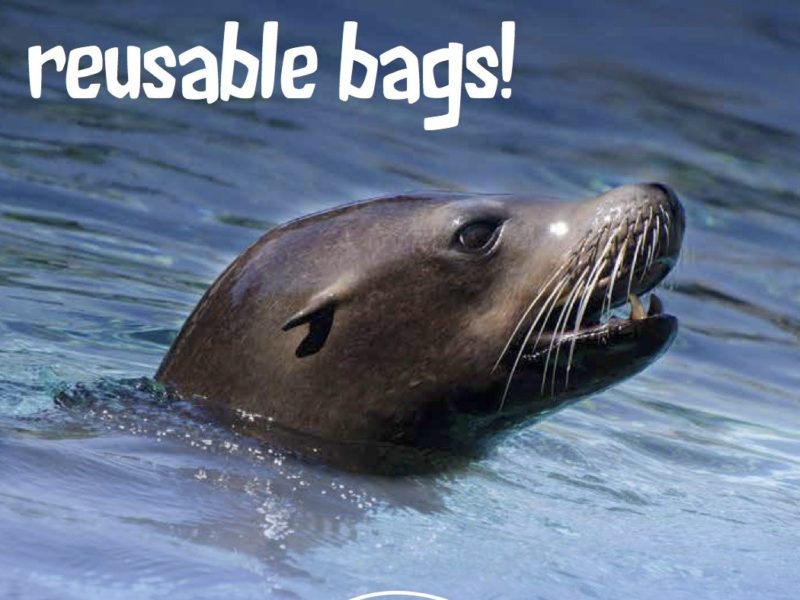
This guest post is submitted by Kirinne Slaughter at the Saint Louis Zoo, and is the second in a 3-part series on their Innovative Solutions Grants+ project. Since our last post, our Zoo ALIVE (ZA) teen volunteers have been hard at work helping Zoo visitors say #byetobags! Successfully building on the lessons learned from the Better Bag Challenge, our teens have developed a campaign that asks visitors to be a part of the plastic pollution solution by switching to reusable bags to help sea lions. The teens designed a reusable bag giveaway, and a pledge that states: “I pledge to switch to reusable bags in order to keep our oceans clean for sea lions & all ocean animals!” Since our official launch on April 23rd, they have asked more than 1200 people to take this pledge. As the main question under our grant, we wanted to know how effective social media was at amplifying an on-grounds conservation ask and, at the same time, how effective it could be as a standalone medium of asking people to take conservation action. Specifically, our teens wanted to know: Could they get visitors who took our pledge on-grounds to become active on #byetobags social media, and share the #byetobags pledge with friends and family? How many people could they get to take the #byetobags pledge just through discovery on social media, without the on-grounds bag offer? If people do share the pledge with their friends and family, which method of sharing do they use most? How can we measure all this? These were a lot of questions, and it took a lot of hard work to figure out a way to track the data that we needed to answer these questions. But, with the help of the Zoo’s marketing department and advertising agency, we developed an innovative online pledge taking platform that not only adds a level of sophistication to our campaign, but is the first online campaign of its kind at the Saint Louis Zoo. To properly track data in order to answer these questions, two separate pledge pages were created: one for visitors to sign if they visit a #byetobags table on-grounds, and another for people who accessed the effort through our social media streams or through the Saint Louis Zoo website. The forms are identical in almost every way, save for the fact that the on-grounds form is a ghost page, accessible only to #byetobags staff when on-grounds. Both forms require visitors to give their name, email and zip code. It also gives them the option to give their age, and answer the question, “how often do you use reusable bags?” Have you taken the #byetobags pledge? Do so now, and then help spread the word! The online pledge form can be found here. After taking the pledge, everyone, no matter which pledge form they use, receives an email thanking them for taking the pledge, and asking them to spread the word to their friends and family. The teens came up with three share options to choose from: Facebook, Twitter, and email. No matter which method they choose, an automatic message is provided for them to spread the #byetobags message. For example, if you were to choose to share via Twitter, the following message will be automatically tweeted from your account: “Keep sea lions safe from plastic bags in the ocean! Join us and take the pledge!" The tweet contains a link back to the #byetobags online pledge page. Because these separate pledge pages generate two separate lists of people, we are able to track whether someone took the pledge on grounds, whether they found the pledge on our social media or on the Saint Louis Zoo website. Additionally, through analysis software provided through Google, Formstack and our email service provider, Sharpspring, we are able to track through which social media channel people access the pledge, and what share option people use most often when spreading the message to their friends and family. As we continue to collect data, there seems to be no limit to the number of questions we can answer with this sophisticated software. What have we found out so far? So far, since our launch on April 23rd, the Zoo ALIVE Teen volunteers have collected data that begins to shed light on their research questions: On grounds: A total of 732 on-grounds pledges have been taken! Meaning this many more reusable bags are being put to use! Additionally, across all events at which the teen volunteers were presenting #byetobags information, 90% of the people that the teens interacted with and asked to take the pledge, did so. While relatively few of these people have shared the pledge from the email that they received, our Facebook following and reach has been increasing steadily each week, with a total Facebook reach of 17,081 people! Online: We also have seen success on our online pledge, with an additional 168 pledges received with no on-grounds interactions at all, due only to presence on social media and the Saint Louis Zoo website. Since the first posting of the online pledge link on #byetobags social media on April 26th, we have averaged around three online pledges taken per day. These pledges come mostly from people responding to our posts on social media, however we do get pledge takers who stumble upon the pledge while simply navigating the Saint Louis Zoo’s website. Which share option has proved most successful so far? Facebook has been used three times as often as other share options for spreading the word about the #byetobags pledge. Anecdotally, however, our Twitter account has garnered lots of attention from other sustainability organizations, such as St. Louis County Recycling and Coast Plastics. I anticipate that our visibility and networking with these organizations will help us greatly as we continue to spread our message into the St. Louis community at large. As we continue to move forward with this campaign… Our teens are focusing on modifying our messaging to emphasize the importance of sharing the pledge with friends and family. Additionally, they will be increasing their engagement on social media in an effort to increase the number of pledges taken online, and the number of followers on our sites. Just this past week, we unveiled a #byetobags challenge that asks followers to post a photo/video with their reusable bag. With this challenge we hope to increase awareness and engagement with our campaign. As we continue to interact with visitors throughout the summer, we expect to see these numbers increase, with more and more people joining the pledge through social media, and spreading the word! The whole Zoo says #byetobags! In addition to the primary aspect of our grant, we have also been involved in many other important parts of Zoo culture. Our gift shops have been very involved with the project. They have incorporated signs into their shops encouraging people to choose reusable bags, and ask visitors, “Do you need a bag today?” upon checkout. Additionally, our #byetobags messaging has been integrated into our Sea Lion Show. Before each show, an audio clip recorded by the Zoo ALIVE teen volunteers plays that gives an overview of the #byetobags project. During the show, the trainers explain how important reusable bags are, and give away a #byetobags reusable bag. The sea lions themselves also take part and during the show they put their “lunch” into a prop #byetobags reusable bag. https://theoceanproject.org/wp-content/uploads/2016/07/OPR-Audio-Clip-2-Final-1.mp3 Finally, we are an integral activity at our weekly summer concert series, Jungle Boogie. We have formed strong connections with visitors who attend this event each week, and they have become advocates for our project as they encourage new visitors to stop by our table. An overwhelming majority of our guests have been nothing but positive when interacting with our #byetobags table. They seem grateful for the information, and excited about receiving our help in starting to work towards more sustainable behaviors. Our next steps include continuing to work with the various departments around the Zoo and the Saint Louis community to increase the spread of our message. We will be at an increasing number of events throughout the summer, and new ZA’s have been trained and will begin working with the #byetobags campaign. Additionally, as we continue to analyze different parts of our data, we will continue to answer our research questions as to how we can most successfully amplify an on-grounds ask using social media.
Continue reading