-
Tell a local story
The average person has 50,000 – 70,000 thoughts every single day. That’s a LOT of ideas to be sorted and dealt with! Considering the mental maelstrom, how can we make the complex threat of climate change seem worth not only thinking about, but possibly making major life changes to address? One reason climate change is so hard to act on is our psychological distance from it. The harm from climate change seems to be physically distant from us, far off in the future, and happening to other people. These factors make climate action seem a lot less important than the many other concerns constantly fighting for our attention all day long. For more on bringing climate closer-to-home, check out Connecting on Climate: A Guide to Effective Climate Change Communication guide. The guide covers a variety of great topics, insights on making the local connection start on page 29. It’s extremely important to close this psychological distance for your audience so that they can give climate action the attention it deserves. This is a cross-post from ClimateInterpreter.org. Please visit for more resources and articles about communicating climate change for interpreters! Pair close-to-home examples with big-picture concepts The reality is that climate change is already causing harm, right here and now. A great way to make climate change real and relevant to a person is to directly connect it to their everyday life. For example: the concept of sea level rise is much more impactful when supported with a local story about the real-world harm it causes to people like those in your audience. The less abstract the threat is, the more engaged people will be with being part of the solution. Be sure to highlight the solutions to the problem to avoid making people feel overwhelmed or hopeless – heightened engagement with a scary threat can actually cause people to give up instead of take action if they see the problem as insurmountable. Finding your community’s story There are some great resources online for finding ways to tell your community’s story. Using search engines is a good way to start – you can google “environmental problems in (your city or state)” and follow links to local non-profits for more information. You can also check out some of these specific resources for leads on story ideas MyEnvironment - enter your location and get access to several EPA databases to provide you with information about environmental activities that may affect air, water, and land anywhere in the United States Coming Clean: The State of US Renewable energy – see how your state is doing on renewable energy State and local climate adaptation – see what your state is doing to adapt to climate change. There is some disagreement on this depending on source: see the Center for Climate and Energy Solutions map and/or Georgetown Climate Center’s map and info. GlobalChange.gov – the US government has a new website on how different US regions are impacted by climate change based on the Third National Climate Assessment. Explore the their interactive map or see your region’s highlights. Next: some ways to incorporate these stories into interpretation. This is the first part in a 3-part miniseries about “small” stories for big impact: Tell a “wildly” emotional story; Tell a local story; Tell YOUR story
Continue reading -
Aquariums invite guests to meet sharks for fun and conservation
We're well into Shark Week 2014, and there's a huge need to represent TRUE shark facts on social media and our outreach. Last year, there were almost 3 million tweets about sharks during this event! You can see Upwell’s great coverage of how things went in 2013. All of this attention means it’s a great time to talk to people about sharks – and especially to demonstrate that sharks are more complex than the bloodthirsty monsters that get people in a frenzy. Let's take Shark Week to the next level, and turn it into a time to educate about and advocate for sharks. There’s nowhere better to talk with people about sharks than at an aquarium, a rare opportunity to get up close and personal with a shark… without the fear. Here are what some of our partners are already doing for sharks. Aquariums bringing sharks and people together Would you hug a shark? Nicky, senior aquarist at The Aquarium of the Pacific would! That’s because she and Fern the shark have developed a special relationship full of trust. Fern allows herself to be put into a state of paralysis called “tonic immobility.” This puts Fern in a vulnerable position, so it took a lot of training and relationship-building to reach this point. As husbandry volunteer Hugh writes: “In reality, our relationship with sharks is what we make of it.” Montery Bay Aquarium positions the “fearsome” great white sharks as ocean ambassadors along with other sharks and rays. Their Project White Shark helps guests look past the Great White’s scary reputation. Their research includes collecting juvenile great whites and studying them before safely releasing them back to the wild. Knowing more about these sharks can help us do an even better job of protecting them. Picture by flickr user noodlefish Whale sharks are some of the most intriguing fish in the ocean – huge and intimidating, yet gentle and docile. Despite their charm, there’s still much we don’t know about whale sharks. Georgia Aquarium, which houses several whale sharks, also studies them in the wild to discover new information - such as how the sharks find food in the open ocean. Their research has even contributed to the creation of a whale shark reserve. The Wildlife Conservation Society studies the movement of whale sharks and their relationship to the tourism industry. Both organizations understand that the more we know more about these spotted giants, the better we can protect them. The National Aquarium also works with sharks in the wild – and they’re inviting you to help out! Anyone age 10 and up can help the aquarium tag sharks on their annual trip. It’s a great opportunity to experience sharks in the wild, and help scientists gather vital information to protect them. Join in the sharky fun You can celebrate shark conversation at your own organization. Why not follow one of these partners' example and throw an event for Shark Week? For next year - how about staging fun events such as a Shark Week scavenger hunt (Texas State Aquarium), or having shark themed apparel for people to wear (The Florida Aquarium)? You can even let visitors interact directly with shark items such as shark egg cases (Cabrillo Marine Aquarium). It's great for young children to have positive associations with sharks and to be able to physically interact with the world around them. Picture by Willy Volk, flick user volk There are many conservation activities you can plan as well. Having speakers talk about sharks and shark conservation is a great idea. Invite anyone from a wildlife artist to a SCUBA team engage your audience about sharks (Oregon Coast Aquarium). You can even stage a sleepover where guests can learn about sharks in a less crowded setting (Newport Aquarium). Are you doing anything to help out sharks? Tell us in the comments! Cover Photo by flickr user Albert Kok
Continue reading -
Communications medley: costs of climate change and the power of storytelling
In this week’s round up: Talking to businesses about the economic impacts of climate change, and the importance of being a good story teller. If you’re a science communicator or educator at an informal science center (such as a zoo, aquarium, or museum) trying to understand the perspectives of your audience and find ways to promote conservation action – this is the round up for you! Every week we break down the most interesting recent news and best resources to help you frame the issues as effectively as possible. Some of these resources will be practical communications and framing tips, and others are great starting points for brainstorming future strategies. Jump to… Dollars and Sense What's the story? Dollars and Sense Risking it all: Report highlights how climate change threatens US business - Could climate change actually affect worker output? Extreme heat expected to reduce labor productivity, while sea level rise poses additional threats to East Coast businesses. Plastic Tide 'Causing $13 Billion in Damage', UN Says - Ocean plastic and marine debris take a hit on our wallets. According to the UN, It is estimated that the dumping of plastic waste into world oceans causes $13 billion worth of damage annually to marine life, fisheries, and tourism industries. Putting a Price Tag on Nature’s Defenses - Think building levees is expensive? Coastal marshes and wetlands - and not levees - are our number one defense against storms, soil erosion, and other natural disasters. The value of these ecosystem services is estimated to be well into the trillions, making them an irreplaceable commodity. What’s the story? Telling a good story is key to conveying the reality of climate disruption to our audiences. How Storytelling Can Make Climate Change Real - Check out this article and short video, which demonstrate an effective technique on communicating climate change issues with everyday folks. It’s all about telling a story with conviction, and putting a human face on the science. Messages Made to Stick: Six Principles to Make Your Messages Memorable - Follow these tips for making your message stick! This article outlines the six simple steps to ensure that your voice is heard, and your message is clear, when engaging in any type of meaningful dialogue. Bringing Heart and Spirit into the Climate Movement - This article highlights the interdisciplinary nature of working towards environmental solutions.
Continue reading -
Environmental communications lessons: always relevant
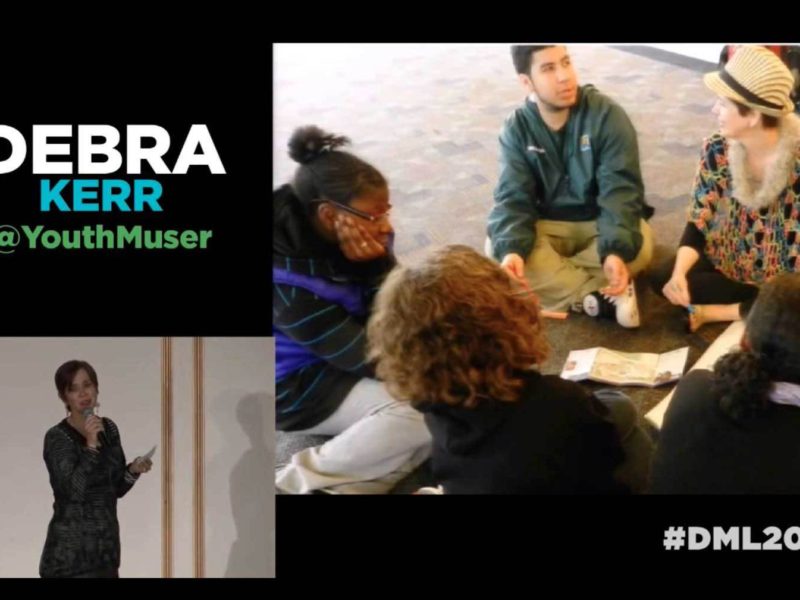
This is a guest post by Deb Kerr who has worked with The Ocean Project as consultant on youth engagement. Most of my talks lately have begun with a “Family Feud”-style question with an environmental twist. Relying on excellent research from The Ocean Project (TOP), I pose this question to the audience: “Americans said, ‘I live a green-friendly lifestyle.’ Then, when asked how they are supporting that lifestyle, what did they say?” The audience is always way savvier than the average American answer, and they get a kick out of the reveal of the top five answers, allowing me to grab listeners with some early laughs. Recently, I prepared an Ignite-style talk—my first—for the Digital Media and Learning Conference. With its focus on reimagining educational practice, DML is attended by academics, technologists, educators, funders and big thinkers. I wanted to do a really great job on this high-pressure presentation in front of the entire assembly (Ignite-style means 20 slides in five minutes—yikes!), and I wanted to stick to material I know well. But would the lessons learned from my environmental colleagues translate to this more broadly- and student-focused audience? I asked my opener, in a packed ballroom. They called out the typical guesses: “recycle,” “turn out the lights,” “Take public transportation.” I revealed three of the five real answers: replace lightbulbs, use organic products and drive a hybrid. Noises of surprise. Then I reveal the sad truth, which is also the laugh getter. “How are they supporting their green lifestyle? They said, ‘I don’t know’ and ‘nothing.’” To make this relevant for DML, I then explained why this audience should care. Americans see themselves as good guys, but they don’t know what to do. We DML folks—and our partners, youth—have an opportunity to recommend appropriate action. Let’s try recommending positive personal action in non-environmental realms as well. I used my favorite TOP data points and drew my own associations for the audience. Teens are seen as change agents: Easy. This audience is all about teens. The public trusts the museum sector and wants recommendations for action: About 10 percent of the audience raised hands when I asked who was from museums. Americans are America-centric: Keep your message local, focused on places, people or animals your audience cares about. Knowledge does not lead to action; knowledge and action are disconnected: Make action happen first. And, from work done back in my Shedd days: Focus on the congregation, not the choir (which already buys into your message), nor the non-believer (which may never buy into your message). Among the digital savvy, Twitter, of course, is a popular tool. When I sat down, I was thrilled to see the scrolling tweet screens carrying tweets repeating my main messages, especially “Knowledge isn’t connected to action. Make action happen first.” Whew! I made a connection to my audience. To top it off, Amy Storrow, the speaker after me, did a fun, improvisation exercise, trying to get everyone in the audience to work together to choose the same pantomime. It didn’t quite work the first time, and, in fine improv-style, she called out, “We have some non-believers in the audience!”
Continue reading -
Communications medley: Survey roundup and framing tips
In this week’s round up: How millennials are thinking about transportation, Americans view environment more important than growth, and the impacts of recent weather events on public perception of climate change. If you’re a science communicator or educator at an informal science center (such as a zoo, aquarium, or museum) trying to understand the perspectives of your audience and find ways to promote conservation action – this is the round up for you! Every week we break down the most interesting recent news and best resources to help you frame the issues as effectively as possible. Some of these resources will be practical communications and framing tips, and others are great starting points for brainstorming future strategies. Jump to… Survey roundup: Protecting our environment and climate change threats Communicating climate change: What to say and what not to! Today's surveys: Protecting our environment and climate change threats Many around the world see climate change as a major threat - This 39-nation survey conducted by Pew Research Center dives into the question of whether or not individuals view climate change as a threat to their country. Did they survey your country? If so, what are the results and what can you do to make a difference? Americans want government action to protect the environment - According to a recent survey by Yale, American's do want their government to protect the environment. But, depending on what they want you to protect the environment from, well, that depends. Check out the link for additional info. Communicating climate change: What to say and what not to! Climate change communication: Key psychological research findings - This two-part report takes an interesting exploration into some of the psychological barriers we face when trying to engage the public in climate change discussions. The results are fascinating. 13 useful tips for climate action from the IPCC Report - More than likely you're aware that the IPCC has released another climate change report. Just as likely, you probably haven't read the massive document. This summary shares 13 important, actionable tips that you can incorporate into your programs today. Can empathy help stop climate change? - Ever wonder why it doesn't work very effectively to tell people that climate change is a major threat to humans? Well, this article takes a look at some alternative ways to get the public to acknowledge climate change is indeed a threat not only to our lives, but to wildlife as well. Don't give up on engaging conservatives - Have you ever experienced the difficulties of communicating climate change to conservative? I know I have! This article takes an interesting look at different ways to engage conservatives in climate change discourse.
Continue reading -
Seas the Day February – Get connected!
The Seas the Day initiative encourages and empowers people…
Continue reading -
Communications medley: climate story-time
In this week’s round up: climate story-time in America,…
Continue reading -
Talking to Teens about Talking to Angry “Birds”
Deb Kerr on why teens who want environmental action don't need to preach to the choir nor the critics. Relief. That’s the first reaction I get from teenagers when I start explaining the choir, congregation and non-believer model—relief to be off the hook and no longer under pressure to persuade and convert someone who is clearly not ready to be an advocate for the environment. Back in 2009, when I was at Shedd Aquarium, we asked Slover Linett Audience Research to take a look at how our outreach team was doing when they approached members of the public to ask them to take action for the Great Lakes. One result of that work is a great lesson I take with me whenever I talk to teens, teachers, educators and interpreters. In every group of people, you will encounter three kinds of persons. The choir. These are folks who reflect your value system. They are already on board, passionate about the planet and taking action in their lives. The congregation. These people are interested in what you have to say. They may not know much about the issue, and they are ready to be persuaded. And this is the largest segment of those we will encounter! Here is the opportunity we message carriers have to bring someone on board and make a choir member. The non-believer. This person has some other issue that is blocking his or her receptivity to your message. Changing this person’s mind will take huge amounts of effort and ability, and will probably be unsuccessful anyway. Here is the key: Focus on the congregation. When you encounter a non-believer, politely disengage yourself from the conversation as quickly as possible and move on to influence a congregation member! Just two weeks ago when I spoke with Reid Park Zoo and Arizona Sonora Desert Museum teens, one of the Museum teens described an unpleasant encounter with a visitor, who was clearly a non-believer. The Museum teen—in fact, all the teens in the room—were relieved to know they don’t have to convert the non-believers. They can make more progress by influencing a congregation member. At a recent Coastal America Student Summit, a teen from Texas asked me, What do I do with this guy in my class, who is always arguing with me about climate change? I answered, “Tell him to please be quiet while you talk to others in your class who ARE interested in what you have to say.” A big smile spread across her face.
Continue reading -
Climate communication: know thy audience, know thyself
Our friends over at EcoAmerica have published an insightful overview, “Communicating on Climate: 13 Steps and Guiding Principles,” that pairs nicely with the recent research by the Climate Literacy Zoo Education Network (CliZEN), as well as the ongoing research we’ve been doing here at The Ocean Project. "Communicating on Climate" offers a set of quick tips for audience engagement, offering a good review and food for thought for those of us who've been working on this issue for a while, or a good starting point for colleagues who may be not have been as focused on these concerns but are now getting involved. To what is covered in this report, we’d add that not only to do we need to know our audiences, but we need to know ourselves. In other words, we need to ask not only, "Where are our audiences on this issue?" but, "Where do our institutions have credibility?" and, "What works best in the context of a zoo or aquarium visit?" So as to be sure we are playing to our strengths and avoiding our weaknesses. On this last note, our research here at The Ocean Project suggests that aquariums and zoos, for example, are likely to do best when the discussing the problem in relation to its impact on the animals, and offering solutions that are centered in the sort of personal action steps that help people feel good about themselves, and their visit. For more on that, see our general advice on what the research says about "shaping a good ask" for visitors. Hoping this helps, and, as always, we welcome your feedback!
Continue reading
