-
Youth organizations unite for 30×30!
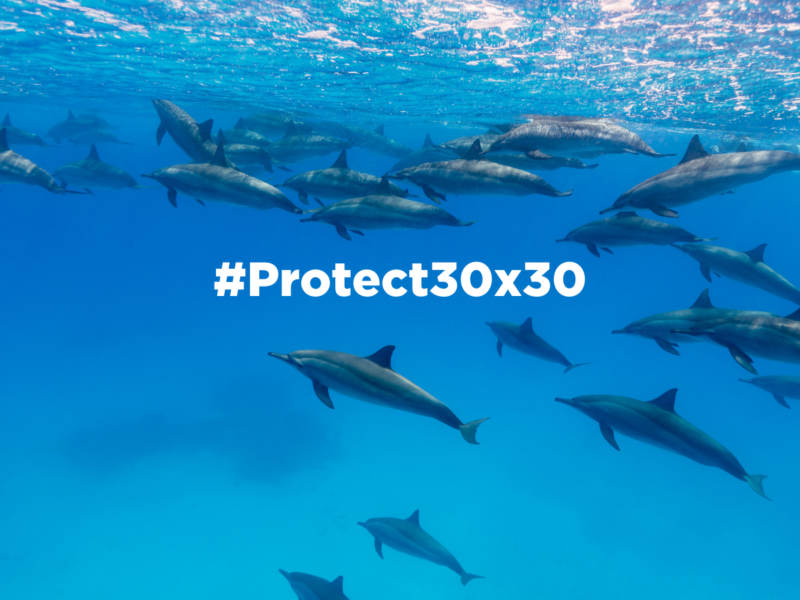
Calling all Youth Groups and Organizations! Tell the Biden Administration to Protect 30% of our Lands and Ocean! We wanted to let you…
Continue reading -
30×30 Annual Update for 2021: Engaging the public and informing policymakers
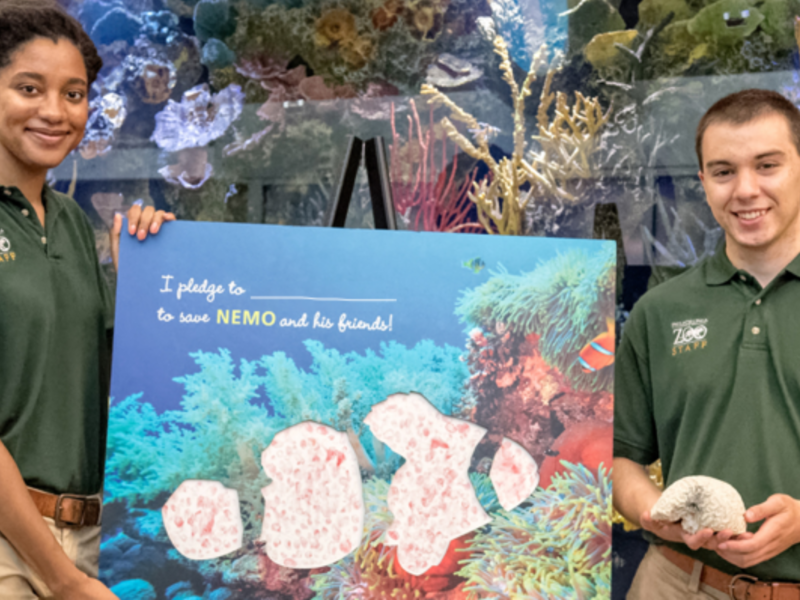
Collaboration on to protecting at least 30% of our blue planet, including its lands, waters and ocean, by 2030 (“30×30”) has been our top organizational priority for two years,…
Continue reading -

Speak for the fish!
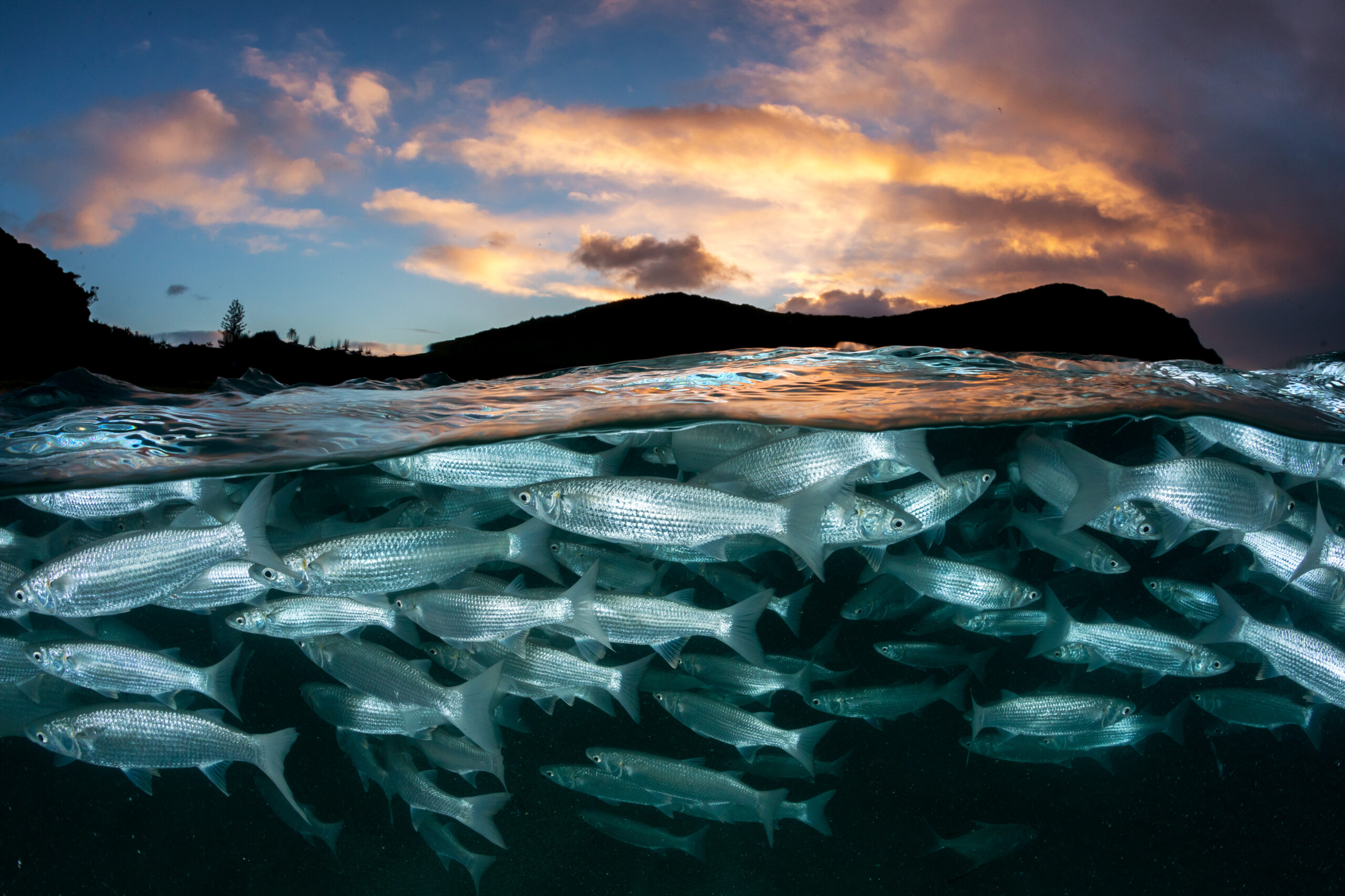
Photo thanks to Jordan RobinsThe Lorax spoke for the trees, but who will speak for the fish?Our shared ocean, its life and its vast resources are put in the hands of our government for all people. It is no one’s private property but rather a commons that the government, and all of us, need to steward responsibly. From the shoreline out to 200 nautical miles, the extent of our U.S. Exclusive Economic Zone or EEZ, which is the second largest in the world), we have jurisdiction over an ocean area larger than the combined land area of all 50 states.While most people don’t know much about the extent of our EEZ, public opinion is clear that Americans from across our country – both coastal and in the heartland and across the political spectrum – care deeply about the ocean and its life.To conserve fish populations, protect other wildlife, sustain fishing communities, and properly steward our children’s inheritance, the ocean and the coasts need to be well managed. Strong science-based policies are essential for abundant and productive ocean waters with healthy populations of fish and other wildlife, responsible commercial and recreational fishing, and other uses of this great public resource. One of the nation’s most important but least-known laws for conservation – both terrestrial and marine – is the Magnuson-Stevens Fishery Conservation and Management Act (MSA). It’s the primary law governing management of our nation’s fish populations and commercial fisheries, responsible for stewarding this vast area, bigger than all our states combined. First passed in 1976, the MSA has been hailed largely as a success in managing fisheries, and serves as a global model in many ways. It’s also a great example of how a non-partisan approach to conservation and management can work. The MSA is due for reauthorization by Congress and that would extend and revise its authorities. With the last reauthorization 15 years ago, it is time to continue to make more improvements in conservation of fish populations and fisheries management. As ocean waters warm, fish and other animals are migrating northward to survive and management needs to be nimble. Also, since changes are happening so quickly, taking a precautionary approach makes a lot of sense, for the health of not only the fish, but also the fisheries that depend on stable populations of a wide range of fish species. As part of that process, next week, the House of Representatives Subcommittee on Water, Oceans, and Wildlife will be holding a legislative hearing on MSA reauthorization. The hearing will cover:Congressman Huffman and Congressman Case’s H.R. 4690, the Sustaining America’s Fisheries for the Future ActCongressman Young’s H.R. 59, Strengthening Fishing Communities and Increasing Flexibility in Fisheries Management ActCongresswoman Dingell’s H.R. 5770, Forage Fish Conservation Act of 2021 (this bill is incorporated into H.R. 4690)The hearing is scheduled for Tuesday, November 16 at 2:00pm EST and should last around 2-3 hours. You can watch the livestream on the Natural Resources Committee’s website and YouTube page.A hallmark of MSA’s success has been its history of bipartisanship. We look forward to working closely with Chairman Huffman and other leaders on both sides of the aisle to ensure that our nation leads the world with strong, science-based fisheries conservation policies.Please “speak for the fish!” and submit comments about the importance of science-based fisheries policy. You can do so here. You can also access the bill text, a factsheet, section-by-section, and other materials here. For further thoughts on why this is important, you can read what some of the supporters are saying for the Sustaining America’s Fisheries for the Future Act.We look forward to continuing to collaborate with our network of youth leaders and hundreds of aquariums, zoos, and science museums across the country that we support for effective conservation communications including informing and activating their 200 million annual visitors about the important role that a sound, science-based approach can play in conserving our public resources – including fish. Indeed, improving the health of fish populations will lead to more productive fisheries around our nation and economically stronger coastal communities. More than most interested parties, aquariums, zoos and science museums understand the connection between the health of the environment and a stable and sustainable economic base at the local and regional level.For more on MSA from a previous blog post click here:Science-based fisheries for healthy, productive, and resilient marine ecosystems, now and for future generations
Continue reading -

World Ocean Day 2021 Annual Report recently released
World Ocean Day unites and rallies the world to protect and restore our blue planet. With thanks to all organizations from all sectors that got involved, our Supporting Partners,…
Continue reading -
Getting ready to celebrate World Ocean Day and Party for the Planet!
In the latest installment of the First Friday Webinar Series, we were joined by three speakers with insights and advice on how aquariums, zoos and museums can make…
Continue reading -
Self-Care Tips for Young Ocean Advocates
Baylee Ritter is the Youth Advisor for The Ocean Project, a former member of the World Ocean Day Youth Advisory Council and delegate for Sea Youth Rise Up, and a 2020 National Geographic Young Explorer. The future of our ocean is the future of humanity – which is why my work today centers on getting kids from rural, landlocked communities like mine involved in the leadership of this collective fight for a healthy blue planet! As my environmental work has evolved, self-care has gone through seasons of what it means to me, but at this point in my life, self-care means pausing. As a young person in the constantly moving wheel of change-making, there’s never going to be a point where you can say, “The earth is all good! Sit back and watch a movie, your work is done.” But just because you need to take a break doesn’t mean you won’t get opportunities to further your work or the world will crumble. I think of Atlas holding up the sky — self-care means understanding and knowing there are a lot of other cool young people who are going to continue to hold up the sky while you sit down and take a break. The world is still going to be there when you come back. So I wanted to share some tips of how I prioritize taking time for self-care and encourage you all to do the same! Turn off WiFi. It can be scary, but try to work while disconnected from the Internet and social media. While it can be a really beautiful and connective tool, it can also be a breeding ground for negativity and comparisons to others. It can be scary for me to think, “What if I don’t check Instagram today and miss this cool opportunity?” But there are always going to be opportunities. They will still be there when you come back. When discussing self-care, we often think of bubble baths and binging TV shows, but it’s removing the things that are bringing so much noise into our lives that is truly a hard but necessary thing in self-care. Do activities that are truly filling. Every morning as I’m getting dressed, I put on a song and I have to dance to that one song while I get ready. It’s the first song that comes to mind and I don’t judge it — lately, it’s been Miley Cyrus, the Bee Gees, or Mariah Carey. I’ve never done this before in my life; I don’t know why I thought dancing would be the fix during the pandemic, but it has brought me more joy starting my mornings. Get outside. The first weeks of the pandemic were really uncertain and scary. I remember the first time my partner suggested going on a hike after the local trails opened back up. We got out of our car and started on the trail and I had this moment I hadn’t felt since I was a kid: I reflected on how much I love this planet and my gratitude toward the physical earth for being there for me when I was scared. Nature was there in a way I hadn’t given gratitude for in a long time. It is fortunate to be able to go into these pristine, protected, safe spaces in nature, and that hike gave me the answer I had forgotten. It gave me that why again. Why I wake up every day and ask myself if I am doing what I can, with the energy, means, and time that I have to ensure this planet is abundant and safe for all. Even though it’s cold where I live, I’m still getting outside — I’m now trying to embrace the briskness and the changing of the seasons, and it gives me so much joy. Don’t get caught up in what society tells you is self-care. We are constantly being sold these different self-care and wellness opportunities. A spa. A fancy bath. But with what time, money, and access? For me, self-care looks like turning on a 2.5-minute song and dancing my butt off. Self-care literally looks like what makes sense to you. Taking the time to figure that out isn’t easy, but if it’s authentic to you, you’ll make time for it. You’re not going to be 100% every day. Something I’ve had to reconcile is the misconception that the moment in which you are taking care of yourself is the moment you feel 100%. But that’s an unachievable, lofty thing that puts pressure on you. Sometimes you might feel 85% but that doesn’t mean your self-care is failing. Given the realities of today, sometimes you can do all these self-care things and still feel 85%. That’s what you can give today and that’s okay. Self-care is a spectrum — there is no right way to do it. It is what it is for you and it ebbs and flows. At the beginning of 2020, I wrote a manifesto of the things I wanted to implement in my life. One of those things was to read 25 books this year, and guess what? I didn’t do it. Looking at my list at the end of 2020, I immediately felt this twinge of disappointment. But guess what wasn’t on that list? Dancing every morning. Originally posted on National Geographic Education Blog More about Baylee here.
Continue reading -
World Ocean Day 2021
Protecting 30% of our blue planet for a healthy ocean and climate World Ocean Day belongs to all groups, collectively everywhere. We look forward to collaborating with you in 2021,…
Continue reading -
Protecting 30% of our blue planet by 2030
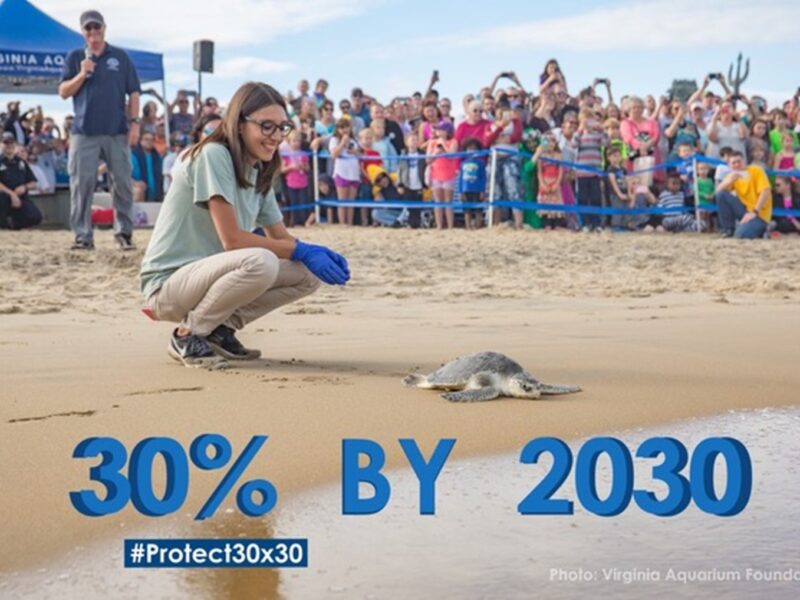
Efforts by aquariums, zoos, museums and others to help ocean animals like this sea turtle just got a big boost with today’s announcement of a new national goal to…
Continue reading -

Relive the Action! Youth-a-thon Videos are Live
We are excited to announce the release of the highly anticipated recorded Youth-a-thon sessions! While Youth-a-thon was a little over 4 months ago. for World Oceans Day month,…
Continue reading -
New Members of World Oceans Day Youth Advisory Council Announced
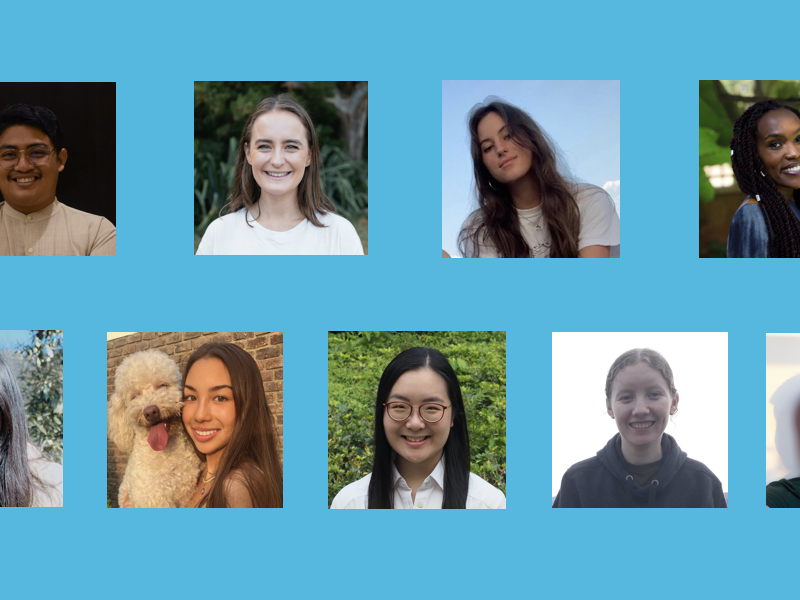
We are excited to introduce thirteen new members to the World Oceans Day Youth Advisory Council! Adam Zhou, Philippines Ariana Wanvig–Dot, Switzerland Arya Yurdacan, Turkey Belinda Tian-Wing Ng, Hong Kong Ee Jenn Lee, Malaysia Estefanía Aphang, Perú Jose Marie Eslopor, Philippines Lela DeVine, USA Mhairi McCann, Scotland Muskan Lamba, India Paul Eweola Ayomide, Nigeria Ruth Edma Mwizeere, Uganda Siobhan O’Connor, New Zealand Congratulations to these inspiring young leaders who represent diverse countries and backgrounds! Each will provide unique perspectives and ideas to help World Oceans Day grow in exciting ways. They will join the existing 12 members of the Council in informing and motivating their local communities and countries to take action through a variety of projects and inspire youth and others around the world. By working together, the Council will achieve real impact, in June and throughout the year, to protect and restore our blue planet. Thank you to all the hundreds of young people from over 40 countries who applied to join the Council! It was incredibly challenging to select the winners. We also want to extend special thanks the following members of the Selection Committee who helped select the winners this year: Angel Jasmin Akpak Senior Director of Herbal Essences and Responsible Beauty P&G Beauty, Switzerland Aldrin Aujero National Geographic Young Explorer Co-founder of Earthsavers Former World Oceans Day Youth Advisory Council member, Philippines Mia DeMazza Executive Director EarthEcho International, United States Olivia P. Livingstone Founder and Executive Director-Green Stewards Incorporated Former World Oceans Day Youth Advisory Council member, Liberia Presha Soogrim Manager, Informal Education South African Association for Marine Biological Research, South Africa Alan Yang Marketing Director iLab France Holding Sarl, China Eugénia Rocha Marine Biologist Portuguese-language Representative, Sustainable Ocean Alliance Former World Oceans Day Youth Advisory Council member, Portugal You can see the new Council here
Continue reading