-
ISG+ Final Report: Seattle Youth CAN works to combat climate change
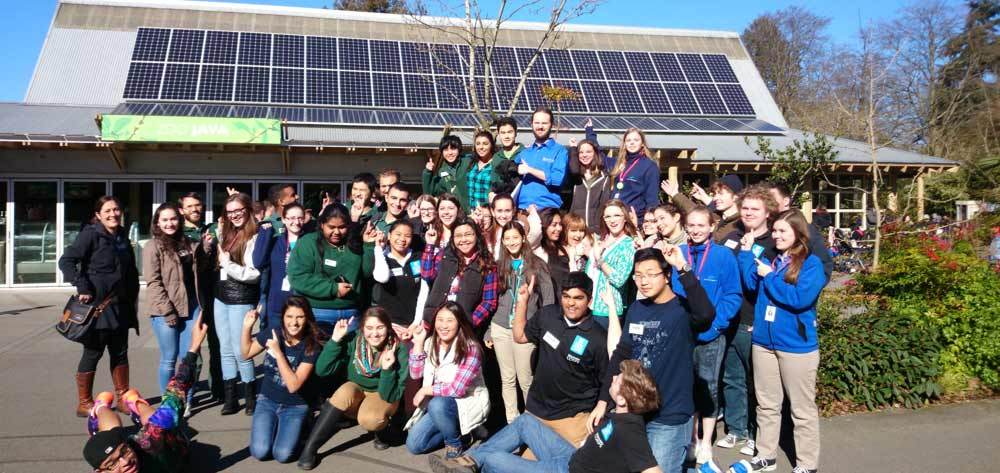
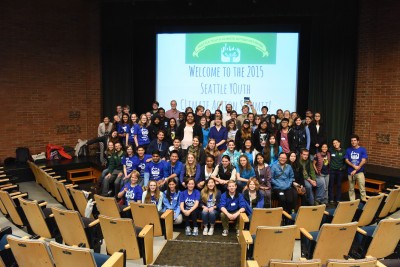
This guest post by Eli Weiss of Woodland Park Zoo is the third in a 3-part series on their Innovative Solutions Grants+ project, exploring how teens in the Seattle area can empower each other and their peers for action on climate change. What we have to celebrate As we wrap up our first year with reflection and planning sessions for both youth and staff stakeholders I feel grateful for all that everyone has contributed to making the pilot year for Seattle Youth CAN such a success in 2015. I am also excited we willl have even more to look forward to in 2016, thanks to a second year of funding from the Innovative Solutions Grants + Program! With the partnership and support from youth programs staff and teens from Woodland Park Zoo, Pacific Science Center and Seattle Aquarium it has been quite a year! We have also appreciated the support from a range of community collaborators including local non-profits, agencies and universities who have contributed to our first year. As planned, it was full year of programming with monthly opportunities for Seattle area teens to increase their climate literacy, take action and become leaders in this exciting new initiative. By the numbers, in 2015 we had: A committee of 11 teen leaders planned and launched a transportation focused climate action challenge that engaged 50+ teens during August and saved over 12,000 pounds of CO2 12 climate literacy and action events hosted at the three institutions which provided unique opportunities for more than 150 teen participants! 85 teens attended Seattle Youth Climate Action Summit held at Woodland Park Zoo 20+ local climate leaders contributed as guest speakers, presenters and project advisors 3 teen representatives traveled to the WILD Center in upstate New York to present and participate at the Adirondack Youth Climate Summit Over the past few months we are especially proud of… The Transportation Challenge The first teen led action campaign was a pilot designed by a cross institution leadership committee. The challenge focused on encouraging other teens to reduce their CO2 emissions by choosing to use public transit, carpool, bike or walk. During the month of August, there were 52 active participants who logged their commutes on an online platform hosted by King County Metro. In a post survey we found that just under half of these participants reported an increase in their use of the recommended transportation options as a result of the challenge. After the challenge, King County Metro staff discussed the agencies sustainability efforts with the teens and also led a workshop in which they brainstormed possible social media messages to make a stronger connection between public transit and reducing CO2 as well as encouraging more teens to ride the bus. There are already plans to revise and continue this messaging campaign as part of our efforts in 2016. The first annual Seattle Youth Climate Action Summit On October 10th, 2015 the Woodland Park Zoo and Seattle Youth CAN hosted the first annual Youth Climate Action Summit attended by 100+ teen and community participants from the Seattle area. The event was organized by a committee of 14 teen leaders from the three institutions along with the support of staff from Woodland Park Zoo. The summit included presentations and activities led by teen leaders, a climate careers panel, group action projects and plenary workshop sessions led by local climate leaders and scientists focused on climate science, innovation and ways to take action. This was the first Seattle Youth CAN event in which teens from outside of the founding three partner youth programs were invited to participate. The Summit was the culminating event of year one for Seattle Youth CAN and the also a shift toward a more inclusive model that we plan to expand next year, a model that will provide the opportunity for all interested youth in the Seattle area to get involved and take action! Our amazing Youth Climate Ambassadors Our youth ambassadors had many adventures and successes this year, including: • Three Seattle Youth CAN leaders traveled to the Adirondack Youth Climate Summit in upstate New York to share their experiences and learn from peers. • Niko, a teen volunteer spoke alongside county executives and climate policy leaders at the signing of the Strategic King County (WA) Climate Action Plan. • This past month NOAA’s climate.gov site featured our project as one of their case studies of national youth climate initiatives and our video was featured at the US Center during COP21 in Paris. What we have learned in 2015 1. Developing an authentic youth network takes time. A clear plan and willing partners is always a good start, but we found that for teens to start identifying with Seattle Youth CAN took ongoing communication and repeat participation in events. Teens live such busy lives and we don’t want Seattle Youth CAN to be just one more thing for them to do, rather a place that youth can get involved, meet new people, and take on authentic leadership in something that is of interest to them. We had great success with youth organized events and campaigns and are looking to increase the youth ownership of the project in 2016. 2. When communicating with teens in-person meetings still matter. We have found that some teens prefer Facebook while others will only respond to email, and with so many options for connecting these days, there is no one way to get in touch. Our Facebook group has been a great way to share updates, photos, events and ideas, and although it was used by youth leaders, the majority of the posts were made by staff. We now have a twitter handle https://twitter.com/seattleyouthcan which is followed by some supporters, but has not been a clear way to engage teens. We actually found that by far the most successful strategy for building community and creating connections has been in person events and meetings – that was where most of the magic happened. 3. Institutional support helps. Bringing together three of the most prominent informal science institutions in the city has allowed for us to leverage the expertise, resources and connections of our founding partner organizations. All three institutions have shown past commitment to climate change education and this partnership has allowed us to come together on an area of shared relevance. In addition, the community looks to zoos, aquariums and science museums for answers and through this project we have been able to help teens find their voice as climate change leaders and change makers and this action resonates with the millions of visitors that attend our institutions each year. Where we are headed I think that we are on to something with Seattle Youth CAN and are excited to develop new strategies that will allow broader participation and reach. We plan to do this through creating an opportunity for new partner programs to join the network and by opening up monthly events to teens that are not already affiliated with our partner programs, as well as by revising and expanding our teen led action campaigns. We also plan to strengthen and package our unique model so that we can share it with other regional and national groups that are looking to support youth in climate leadership initiatives. It is exciting to see the growing interest in our local initiative and I hope that through our efforts we can help the national youth climate action movement grow. --Guest post by Eli Weiss of Woodland Park Zoo
Continue reading -
ISG+ Update: Teens at Riverbanks Zoo and Garden get their hands dirty
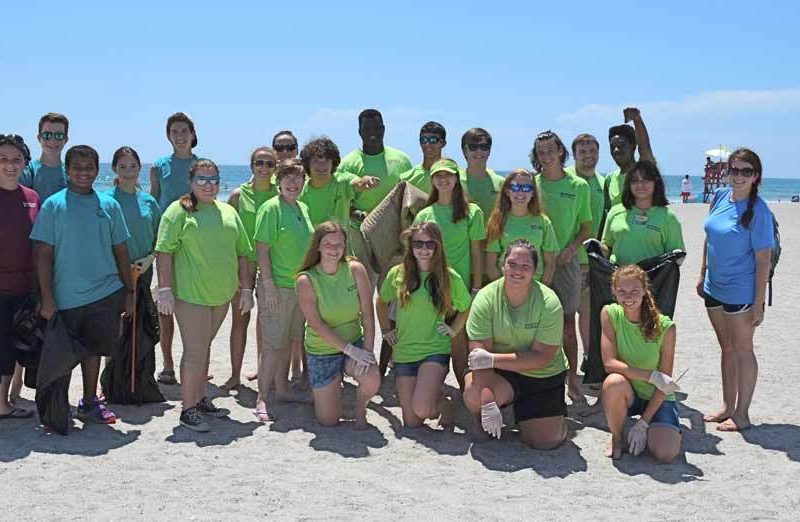
This guest post, by Director of Education Elizabeth Clemens and Coordinator of ZooTeens and Scout Programs Syndi Castelluccio, from Riverbanks Zoo and Garden is the second in a 3-part series on their Innovative Solutions Grants+ project, which investigates how engaging with teens and receiving incentives can impact zoo guest behavior. The Adventure Continues As reported in our initial blog post, the Riverbanks Zoo and Garden’s ZooTeen volunteers are on an exciting journey. They’re busy taking direct action and engaging our visitors in efforts to keep trash out of our ocean through an innovative initiative they’re calling Teen S.O.S. (Stewards of our Seas). You may have been wondering how far they have come in their efforts and, if so, here’s your answer! Getting Their Hands Dirty! Before giving them all the facts and figures about marine debris, we decided to have our ZooTeens roll up their sleeves and dig into the issue, litter-ally. They marked local storm drains, picked up trash along our very own river banks, and, after some sorting and scrubbing, even used some of it to create the “trash to treasure” artwork as part of the “inspiration stations” they’ve been developing. This “learning by doing” experience had a real impact on the ZooTeens. For starters, they were struck by the amount of plastic that they found during the waterway cleanups, and that, in turn, increased their interest in promoting reusable shopping bags as a solution step. In addition, several of our teens that have been with the program for 2-4 years commented that the zoo seems so much more productive now. “When I look at what we used to do in our monthly meeting and what we do now, it’s amazing how much we as teenagers can accomplish in our mass numbers” - Alyssa “The time goes so quickly, if we met more often we could get so much more done.” - Dillon This last comment was seconded by our Teen Volunteer of the Year, Samantha, who dedicated more than 300 hours this past year to the teen program and helping to spread our conservation messaging to our guests. We have seen a tremendous difference in the teens attitudes and dedication to the program since we changed our approach to getting them involved. They are more active, more engaged, and more confident – they are making a difference. Experiments in Outreach Staff is now working with the ZooTeens to test how effective they are in their efforts to encourage visitors to take action. To do this we decided to compare and contrast the experience of two groups, rather than three as we had initially proposed in our first blog post. 1. A “Control Group” that received the bag off site with no explanation other than, “please take the bag, use it and complete a follow-up survey” 2. An “Experimental Group” of zoo guests who while on site engaged with the ZooTeens and learned about the problem of marine debris before receiving the bag and agreeing to use it and take the follow up survey We had initially proposed comparing the above with a third group, guests who visited the zoo but did not engage with the ZooTeens, but decided not to include this group because it would have complicated the experiment, and we wanted to focus in on the influence of interactions with the teens at “Inspiration Stations.” With the “Experimental Group,” the ZooTeens also were interested in trying a couple of different ways to connect with our guests. While we wanted to encourage the ZooTeens’ creativity, we also made sure that the defining characteristics of our Experimental Group remained constant - all members of this group visited the zoo, interacted with a ZooTeen, were told about the problem with plastics, and then received a reusable bag. Inspiration Stations – As noted above, the ZooTeens set up an activity station or touch cart with biofacts in our Aquarium Reptile Complex, either by our sea turtle exhibit or at the exit away from any animal exhibit. The activities included: “It’s Not Easy Being a Green” – this activity allows a guest to do an endoscopy on a “stuffed” green sea turtle to determine what had made the turtle sick “Jelly Fishin’”– this fishing activity allowed guest to see how sea turtles could confuse plastic for food “All the Way to the Ocean” – demonstrated how debris from land makes it into our waterway “Washed Away” – shared the problems with microbeads in our common household products that we use daily The teens shared with us that they found it challenging to draw in guests to talk; however, when they had an activity, the guests flocked to the area. As one our teens, Abby, put it, “Having so many guests come to our activity allowed us to share the big issue at hand.” Information Booth – We also tried a stand-alone station near our guest relations center with our eye catching “bag monster ball” made of 500 bags tied together. We did give out a few of our reusable bags at this location, but it without the active engagement on the issues of plastics pollution, it didn’t seem to have the draw of the activities mentioned above. To date we have distributed 1500 reusable bags from a total of 2000, with 600 going to our “Control Group” and 900 going to our “Experimental Group,” and have begun requesting and collecting survey responses. Want our results? Stay tuned! -- Guest post by Elizabeth Clemens and Syndi Castelluccio
Continue reading -
ISG+ Update: Seattle youth CAN engage their peers on transportation
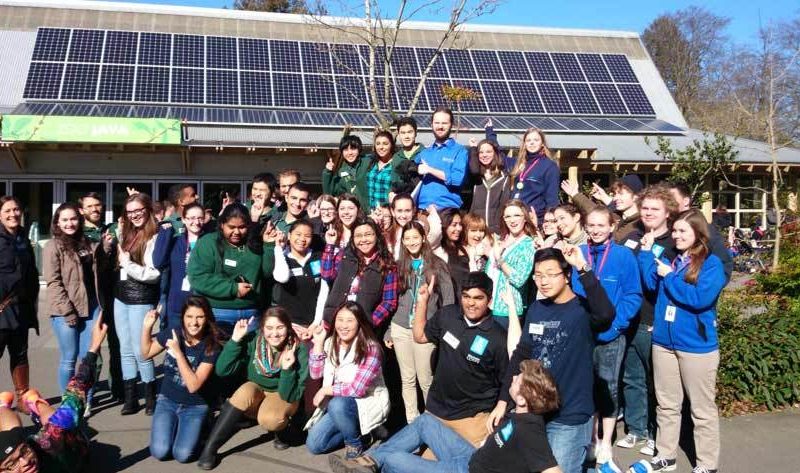
This guest post by Eli Weiss of Woodland Park Zoo is the second in a 3-part series on their Innovative Solutions Grants+ project, exploring how teens in the Seattle area can empower each other and their peers for action on climate change. Woodland Park Zoo, along with our partners the Seattle Aquarium and Pacific Science Center are working together to build the Seattle Youth Climate Action Network (CAN). The goal of this Innovative Solutions Grants+ project is to train and support teen leaders, helping them create a campaign that encourages their peers to take measurable action on the issue of climate change. Since our first post, I have been working closely with partner staff from each institution to keep this pilot year on course. In addition, I have continued outreach to local agencies and organizations to build local support and enthusiasm for the project. Seattle Youth CAN is picking up momentum - we have had a handful of successful events and have already learned a lot about starting a local youth network. Our training model for this effort has included engaging teen participants in hands-on action; a full day of instruction on climate science, communication strategies and local examples of climate action; and a campaign design workshop for the leadership group. Training Part 1: Leading with action We began our training with an inspirational day of action. In collaboration with Forterra and Green Seattle Partnership 30+ Seattle area teens planted over 200 trees and native plants along a high traffic bike path in North Seattle. The event was an energetic gathering, and participants enthusiastically planted trees to offset the Woodland Park Zoo’s carbon emissions through the Evergreen Carbon Capture Program. Training Part 2: Climate leadership workshop A month later, we brought 40+ teens from the three institutions to the Zoo for leadership training on climate change science, communication strategies, and action. To spark ideas for their own campaign, teens heard from local organizations and agencies and explored examples of climate action. Among the presenters were staff from Climate Solutions, Seattle City Light-Community Solar Program and Forterra. Each community partner shared their own work and pitched project ideas for how Seattle Youth CAN could partner with them. At the end of a full day of learning, participants shared which action campaign ideas they were interested in through a survey and small group discussions. Teens left the workshop energized and ready to get Seattle Youth CAN off the ground. Training Part 3: Campaign design workshop for youth leaders As the next step, a climate campaign design committee was formed with teen representatives from each institution. This committee met every other week to come up with a focus and plan for a summer action campaign. I facilitated this group process along with support from staff from our partner institutions. Rather than reinventing the wheel we used existing models for campaign design, including “Planning to Win”, and committee members participated in a workshop on ‘behavior change’ from our in-house audience research experts. The committee hosted teens and staff from the Oregon Coast Aquarium’s Unplug for an OA campaign, and participated in a King County community forum to gather their input to help inform an updated Climate Action Plan for the County. We received great feedback from teens and staff about starting the training with an action event, as well as the content of the full day training. One thing that we would do differently would be to make the “communicating climate change” piece its own, more in-depth, workshop. During this training we included it with the climate science overview and examples of local community action, so weren’t able to dig in as much as we wanted. Crafting the pilot campaign After several months of research, planning, and meetings, our campaign design committee chose a transportation action campaign to launch later this month. Their research and interaction with city and county experts found that over 45% of Seattle’s CO2 emissions comes from local transportation choices. The group felt that making smarter transportation choices would was something their peers could actually do to measurably reduce their carbon emissions. While they are still working out the details with the message and tactics, we know the teens will be inviting their peers to participate in a challenge to reduce their carbon footprint by increasing their use of public transit, biking, walking and carpooling. With the help of our evaluation staff, the group developed an evaluation plan using an online platform hosted by King County Metro’s Ride Share Online program to track participation in the challenge. At the start of the challenge, participants will complete a baseline survey to help the group to measure behavior change for participating teens over the course of the month. In addition, we will be working with local transportation agencies and organizations to increase teen awareness of how to make smart transportation choice through events and activities. Teen leaders at each institution will promote the challenge with their peers and they hope to engage 100+ participants in action. Expanding interest Since our action event and full day workshop earlier in the year, we have continued to organize monthly Seattle Youth CAN events. These events are designed to enable other teens from the three institutions to get involved and deepen their understanding of Seattle Youth CAN and related climate change issues. Last Thursday, for example, teens organized and hosted an event at Woodland Park Zoo, “The Impacts of Climate Change on Wildlife.” We had over 60 youth attend the full day event which included presentations from local climate scientists from NOAA and The University of Washington, as well as youth led climate focused tours of the zoo and community building activities. More than half of the teens who attended were new to Seattle Youth CAN and we were excited to see the continued enthusiasm for our growing network. Learning as we go We’re feeling good about our progress the identity that we are building through the network, the trainings and events that have been well attended by our teens, and the support we have received from our partner institutions and community supporters. Our teen leaders and other members of the network are eager to finally launch the action campaign and be able to share with their institutions and peers how they plan to take action to reduce CO2 emissions. A big challenge so far has been finding the balance between structured workshops and committee meetings to best provide the room for our cross-institution teen leadership group to innovate and take ownership of the campaign. Creating a structure for truly youth driven action and leadership, while providing participants with enough resources and support is at the core of our program model. Our teens live busy and complex lives and creating a leadership opportunity with the right mix of structure and space is something we continue to work on. After many months of supporting the group in moving their planning forward, we are proud to announce that the challenge officially launched this week! Next moves For teens in Seattle Youth CAN, August will be a month of action and learning as they work to engage their peers in behavior change, focused on making sustainable transportation choices. In September teens and staff will also focus their efforts on planning for the Youth Climate Summit that we will host on October 10th at Woodland Park Zoo. At this event our campaign leadership group will have the opportunity to share the results of their transportation challenge with a large audience of peers. We also see this event as the opportunity to expand our network beyond the current three institutions and invite other Seattle area teens to join Seattle Youth CAN. I believe that with continued support, we can expand this network to be inclusive of all youth in our area who want to get involved in climate action. I am also hopeful that, as we refine our model, it will be something that can be shared and used by groups around the country looking to engage youth in collective action. What gives me hope Skylar Widman, a high school intern at WPZ and active member of the climate campaign design committee, recently shared his experiences in Seattle Youth CAN with educators participating in our Advanced Inquiry Maters Program: “Before CAN I tried to make choices that helped the environment and now I realize that there are many other teens that what to take action and that as a group we can have a greater impact in fighting climate change.” -- Guest post by Eli Weiss of Woodland Park Zoo
Continue reading -

ISG+ Final Report: What we learned at the Oregon Coast Aquarium
This guest post by Teresa Mealy of Oregon Coast Aquarium is the final update on their Innovative Solutions Grants+ project, which put teens in the driver's seat of a peer-targeted conservation campaign! Thank you and congrats to Teresa, Kerry Carlin-Morgan, and everyone at the Aquarium for your great work. Letting youth lead the way The Oregon Coast Aquarium, with generous support from The Ocean Project, endeavored to understand how to connect teens to ocean issues and then propel them to action. The Aquarium selected four highly motivated Youth Volunteers to spearhead the project and, ultimately, devise a social marketing campaign that would connect local teens with community action. Throughout 2014 and into 2015, these youth, who called themselves the MOANA Group (Making Ocean Acidification Nationally Aware), researched, studied and shared the science of ocean acidification. They examined ocean acidification through the lens of community based social marketing, identified specific actions that local teens could do on their own to positively impact the marine ecosystem, and then looked to the opportunities available in classroom visits and social media. Taking the lead, they created #Unplug4OA to see if the could engage and inspire their peers. Over 750 students have heard their call, and the movement is just getting started! Advice for similar projects Here are a few key takeaways for other aquariums and zoos that might be considering something similar: Focus on action: A direct call to action proved very impactful when engaging a teen audience, especially when tied to a moderate introduction to the science. Too much science and issue information tended to be overwhelming, bogging down the presentation and taking the focus away from action. Youth are awesome: Youth volunteers who were already invested in the Aquarium’s mission provided a great resource, as that allows you to jump ahead and focus on empowering them to create a campaign that will engage their peers. Moreover, their peers were impressed to find out that high school students who volunteer at the Aquarium are confident in leadership roles and empowered to teach about ocean issues. Give youth a chance: Giving teens control of the design and implementation of a project can be risky (and intimidating) but is well worth it. Teens feel not only empowered, but take ownership of the project and are highly invested in its success. Read on for more details on this innovative project: Dreaming Big Here at the Aquarium, we wanted our youth volunteers to feel empowered to communicate to their peers about ocean acidification. We wanted these teens to be agents of change, and teach local youth about ocean acidification (OA), their connection to OA and its impact on their communities. Most importantly with this project, we wanted to ensure that every teenager the campaign reached recognized in turn that their actions can make a difference to help address OA. To empower these teens to act as confident advocates, we challenged them to spearhead the campaign’s research, creation and implementation. We gave them the freedom to direct the entire creative and design process of this social marketing project. Typically, a campaign like this - from the approach to the ask to the evaluation - would have been carefully crafted by staff for the teens just to implement, so turning control over to the teens from the start was exciting and innovative, yet also risky and somewhat daunting. Turning It Over to the Teens The MOANA Group already had the facts about OA, but we knew that it would take more than that for them to create a campaign, so we contracted with a social marketing consultant to teach them how to design a compelling, action-motivating campaign. Action Research’s President, Jennifer Tabinico, developed a course for the youth volunteers to learn about this specialized marketing process and coached the teens through the extensive process of developing their campaign. The teens polled their peers to understand what actions are feasible for the typical teenager to take to minimize their impact on OA, and what are the barriers and benefits to implementation of each action. The training this grant funded taught the MOANA Group that a key to the community based social marketing framework is that the "asks" must be as directly related to the audience as possible. Their research led the teens to conclude that asking their peers to unplug cell phone chargers, game consuls and other electronics would be the most relatable solution with the greatest potential impact. With a call to action identified, the MOANA Group started working through the creative process to identify engagement opportunities, and develop memorable slogans and reminder devices. They decided the best place to reach their target audience would be through outreach programs that would take them into middle and high school classrooms. The youth volunteers designed a flexible program that could adapt to discussion or presentation style formats, depending on each class’s needs. The teens again took the lead when it came time to implement their ideas. They arranged presentation times and presented portions of, or the entire program, to their peers. To assess their audiences’ prior understanding, they asked them to jot down what they knew about ocean acidification, and what they could do about it. At the end of each program, MOANA Group introduced their "ask" - asking their peers to unplug cell phone chargers, game consuls and other electronics as a step that helps address the issue - and shared their experience developing the campaign. They also called on the audience to spread the campaign’s influence by posting on social media, using #Unplug4OA. Following the program, the student audience was surveyed about what they could recall from the presentation and if they took action. Surveys were collected from the school either two weeks or two months after the presentation. Armed with these results, the MOANA Group was able to assess the impact their campaign made. Changes, challenges and connections The campaign’s target audience was high school students, but an early opportunity arose when a few teachers encouraged the group also to present to their middle school students. This provided an opportunity to broaden the audience, but it did require some changes to the dynamics of the presentation. Middle school students were more interested in participating in the presentation, and more inclined to ask questions than high school students. However when presenting to middle schools, we had to adapt our program to include some basic science concepts which high school students usually understand (E.g. what is pH, production of CO2, etc.). And when surveying students afterward, we found that the high school students were more likely to remember the targeted call to action, whereas the middle school students were more likely to remember general concepts from the presentation, but not the ask. After the first classroom presentations, the MOANA Group also began to see some small changes they would need to make to their campaign's approach. One immediately apparent concern was accessibility to social media. Some schools had firewall systems that blocked students from accessing social media on their phones while on school grounds. They had also assumed most students were using social media, but when the opportunity arose to speak to middle school students, they found a measurable distinction between middle and high school students, with a higher proportion of the latter promoting #Unplug4OA. These challenges proved to be some of the more difficult to overcome in the campaign; but these efforts were worthwhile incorporating social media into the program helped the campaign reach teens who did not see the MOANA Group’s presentation. When youth volunteers were not available to lead presentations, myself and other Aquarium staff filled their role. This provided us another variable to consider while assessing the impact of the campaign. We were a bit surprised that the adult led programs did seem to achieve the same response to calls to action and social media sharing. But we also couldn't help but notice that the youth volunteers engaged their peers in discussions about ocean acidification, their classmates appeared to connect more passionately with the issue. Both the adult and teen presenters proved impactful, but the messages and the ask seemed to resonate more strongly with middle and high school students when their peers presented the issue and campaign. For Aquarium staff, we were very comfortable with the idea of a campaign that would involve our teen volunteers asking others to join in taking action on an issue like OA, as that we'd done before. But it was quite new to hand the reins to the youth volunteers, giving them the leadership over the campaign and have staff play the support role. It also was a switch for the youth volunteers to go from an adult led programs to one they would lead, but with the right tools and time to communicate, they took to the challenge and made us all proud. They exuded enthusiasm and motivation, passion and drive while working on the campaign, but, that said, we learned that we needed to allocate more time for the development and implementation process, which took longer than originally estimated, largely due to conflicting schedules with the youth volunteers’ school and extracurricular activities. Yet even with the constantly changing timeline, the youth volunteers remained positive and committed to the campaign, which was encouraging to all the adults working to support them. These challenges provided lessons for the MOANA Group, and that, coupled with what they created, prepares them for the future. The campaign’s impact: youth are awesome! Despite the challenges and changes, the results gathered showed the campaign made an impact. While we are still sifting though all of the data we collected, our preliminary results shows that the students in the audience have been able to recall many aspects of the presentation. Even weeks later, the majority recalled the topic or theme, citing the impact of ocean acidification on sea life or repeating one of the campaign catch phrases. More impressively: Approximately 50% of the students recalled unplugging electronics as an action they can take to reduce CO2 absorbed by the ocean (and about 35% say that it is an action they now do!). Even more impactful, approximately 40% of students also reported that they shared information they learned from the MOANA Group with their friends or family. And the students’ anecdotes supported their survey responses. In keeping with the findings and recommendations from the public opinion research by The Ocean Project and others, the focus of the presentation was on the call to action, with just brief background on the science of OA, and this helped shape the results. Most of the survey responses included specific examples of behavior changes, like one student who said her mom unplugged her hair straightener after hearing about the MOANA Group presentation at dinner. The youth volunteers also demonstrated a measurable increase in confidence when talking about ocean acidification with their peers, as well as when asking their peers to change their behavior. One MOANA Group member said, “I've seen the OA swag all over my school and many of my peers have been very willing to learn. Many have told me they have begun unplugging their appliances and chargers.” Another said he felt, “Empower(ed). I also feel special that I can confidently talk about the topic and I have the tools to show others how they can help as well.” Empowerment seemed to echo through their final evaluations, another youth volunteer said, “I feel empowered. I love educating my peers and if I can alter their habits I will do my best to do so. This program has helped me get out of my comfort zone, and I'm very thankful for that.” So Bright, We Need to Wear Shades The Oregon Coast Aquarium is thankful for the opportunity this grant gave the youth volunteers. Thanks to their new found empowerment we already are planning for more projects just around the bend. In addition to continuing the outreach program in the schools, we plan to share our community based social marketing and ocean acidification experiences with other local and regional teen groups, and also are sharing more of our experience with the team from the Woodland Park Zoo as they embark on their own Innovative Solutions+ Grant. We also hope to continue to expand our program to the Hispanic community, another key audience identified in the public opinion research and a demographic which makes up 30% of students in our local high school. With so many future goals, the close of this project feels like we are just wrapping up stage one, and launching into for a bright future. Photo of Oregon Coast Aquarium
Continue reading -
ISG+ New Project: Florida Aquarium investigates a co-designed ‘ask’ for engagement
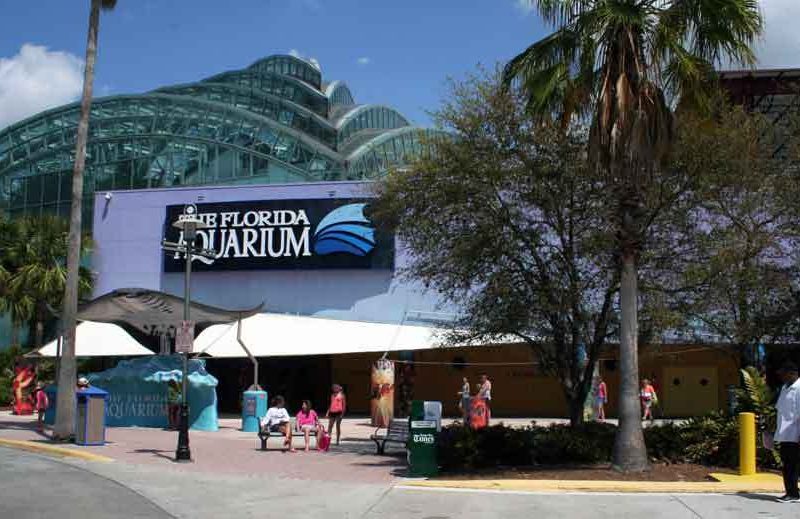
This guest post, by VP of Education Debbi Stone at Florida Aquarium is the first in a 3-part series on their Innovative Solutions Grants+ project. The Aquarium's project asks "Can we gain valuable insights about how to engage an underrepresented audience by working together to design the approach?" The Ask As a mission-based institution committed to learning as much as we can about “The Ask,” our shorthand phrase for promoting conservation action to our visitors, we have spent the last several years focusing on questions such as: What individual behaviors actually make a positive difference in ocean conservation? What actually motivates visitors to join us in taking these actions? How do we track the success of our efforts? How do we engage previously underrepresented audiences? Using resources and insights from The Ocean Project, Frameworks Institute, the National Network for Ocean and Climate Change Interpretation (NNOCCI), Climate Interpreter, and more, we have made strides on the above, yet we also recognize that we still have a lot to learn. Through our recently awarded Innovative Solutions Grant, we especially want to learn more about how to answer that last question about engaging underrepresented audiences. An Underserved/Untargeted Audience The fastest growing population segment in our region is Hispanic. Between the 2000 and 2010 censuses, the Hispanic population in our home county of Hillsborough grew by over 70%. Even with that knowledge, we had not been strategically focusing on how to align our goal of increasing visitor actions via The Ask with engaging the largest growing population with which to work. We hypothesize that if this population continues to grow with such robustness, it represents an audience with which we have a tremendous opportunity to collaborate and affect positive change on a large scale. We were therefore excited to receive awarded the Innovative Solutions Grant to explore deepening our connection with this important audience by working with a prominently Hispanic Title 1 elementary school to create a platform, and answer questions about how best to increase visitor actions. Why Youth as a Launch Point? As data summarized in The Ocean Project’s Special Youth Report in America, the Ocean, and Climate Change: New Research Insights for Conservation, Awareness, and Action, suggest that youth have a strong influence on household conservation behaviors, our project strives to equip students to be catalysts in their households. As the data further suggest that aquariums are trusted sources of information about ocean issues, we believe that we are in a powerful position to effect positive change. Furthermore, additional research by The Ocean Project and others underscores the way in which those in households where English is the second language also tend to have a strong, but often unmet, interest in conservation issues. Project Summary Through our Innovative Solutions project, we plan to work with approximately 200 elementary students at a predominantly Hispanic school to help us develop engagement ideas that include family involvement and participation. We are also, thanks to the grant, able to provide materials in Spanish, something that has been a challenge for us in the past. Throughout this school year, we will work with teachers and students to develop projects that directly connect the community to action…or again, what we call The Ask. We will work with grade level teachers to help students at various grade levels create action-based projects that they find meaningful to them and that we think are appropriate for the Aquarium. And the students will be encouraged involve their families along the way. In May, the students and their families will be invited to attend a Family Science Day at The Florida Aquarium, where they will share their ideas with our visitors, and we can all gauge the response. Reality Check? Are we trying to accomplish too much with this one school? We all - aquarium staff, teachers and students alike - are excited about the idea of working together but are already learning that it can be a challenge to fit a project like this into an increasingly busy school schedule. In our next blog, we’ll share more about barriers we're encountering (and working through) as well as where we are in our efforts and how we are proceeding. We will keep you posted as our work progresses!
Continue reading -
ISG+ New Project: Teens at Riverbanks Zoo and Garden take action “all the way to the ocean”
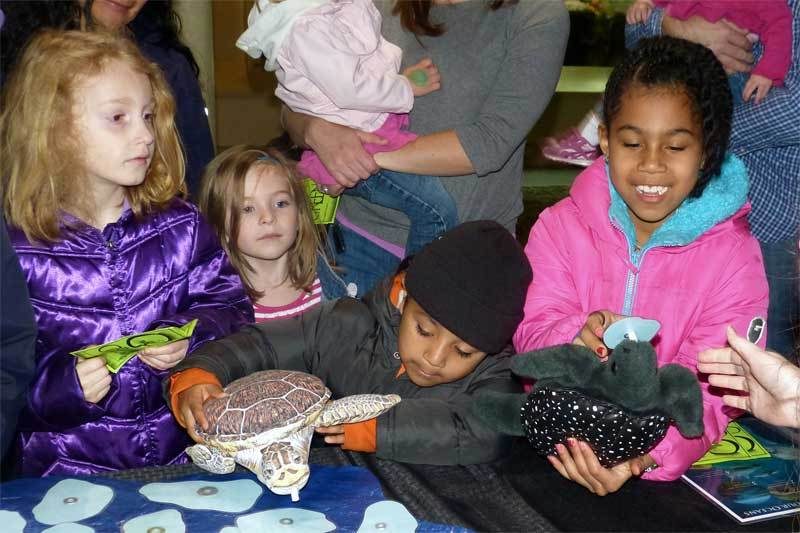
This guest post, by Director of Education Elizabeth Clemens and Coordinator of ZooTeens and Scout Programs Syndi Castelluccio, from Riverbanks Zoo and Garden is the first in a 3-part series on their Innovative Solutions Grants+ project, which investigates how engaging with teens and receiving incentives can impact zoo guest behavior. Teen S.O.S. The Riverbanks Zoo and Garden began connecting area teenagers to nature and building successful, caring members of the community more than a decade ago. Now with the support from The Ocean Project’s Innovative Solutions Grant+ we have tasked our current teens to take their love of nature one step further, to reach out and take action “all the way to the ocean.” Although not on the coast, Riverbanks Zoo and Garden has a unique setting nestled along the banks of the Saluda River, and a direct connection to the ocean. Over the years Riverbanks teens have felt strongly about the unsightly and potentially dangerous debris left on our very own riverbanks. Regardless of the source it is an ugly problem - in more ways than one! So this year, the teens will attempt to answer the distress call of our oceans through the Teen S.O.S (Stewards of Our Seas) initiative by tackling one of the biggest issues facing our oceans today – marine debris. As part of a yearlong immersive effort, Teen S.O.S will look to enlighten and inspire the teens to not only take action individually, but to become a true motivational force by inspiring the community to take action that will make an impact both locally and globally. Building on their past community actions, the teens will set up “Inspiration Stations” where they can connect with Zoo guests, and engage with them in a behavior change experiment. Setting Sail We began by educating our teens on the issue of Marine debris and provided them opportunities to be actively engaged in reaching a solution. The teens teamed up with the City of Columbia this past fall to mark all the storm drains in the Zoo that lead to local waterways with colorful medallions to educate the public about storm drains and watersheds. Partnering with Keep the Midlands Beautiful, ZooTeens have scheduled a number of local waterway clean ups through the Adopt-A-Waterway program. Joining forces with the Riverbanks Zoo Green Team, teens have been tasked to evaluate and identify at least one action item that would help to reduce our plastic footprint by making a permanent change in the Zoo’s daily operations. All Aboard Knowing that Columbia takes pride in its state, its parks, rivers, beaches and yes its Zoo, we felt the need inspire everyone to find these treasures beneath all of the trash! The teens are taking an innovative approach to reach the zoo’s one million guests. The group will be crafting “Trash to Treasure” artwork from the items collected during the waterway clean-ups. This art will be displayed in the Zoo as a way to attract the attention of our guests, introduce them to the issue of marine debris and, we hope, remind South Carolinians of their Palmetto pride. The teens will also create “Inspiration Stations," which will emphasize ways that zoo guests can be part of the solution, and inspire them to make changes in their daily lives to help address the problem of marine debris. Inspiration Stations will be showcased at the community-wide events - Go Green Day, Party for the Planet and World Oceans Day. Is Knowledge Power? Let the experiment begin! As part of inspiring change and community action, the teens will next test the theory, “Is an individual more likely to use a reusable shopping bag if they are engaged by teen leaders on the problem of marine debris?” This question will be tested using random samples of three test groups: Guests simply visiting the Zoo Guests engaged at an “Inspiration Station” Control group of the general public As part of this effort, we’ll be giving away reusable bags to guests. Each guest will be asked to sign a pledge that they will take the bag, use it, and complete a survey 1-2 months after receiving the bag. We’ll be looking at whether or not guests that visited the Inspiration Station are more likely than the others to report taking action to reduce their plastic footprint. Stay tuned!
Continue reading -
ISG+ New Project: Climate change action? Seattle youth CAN!
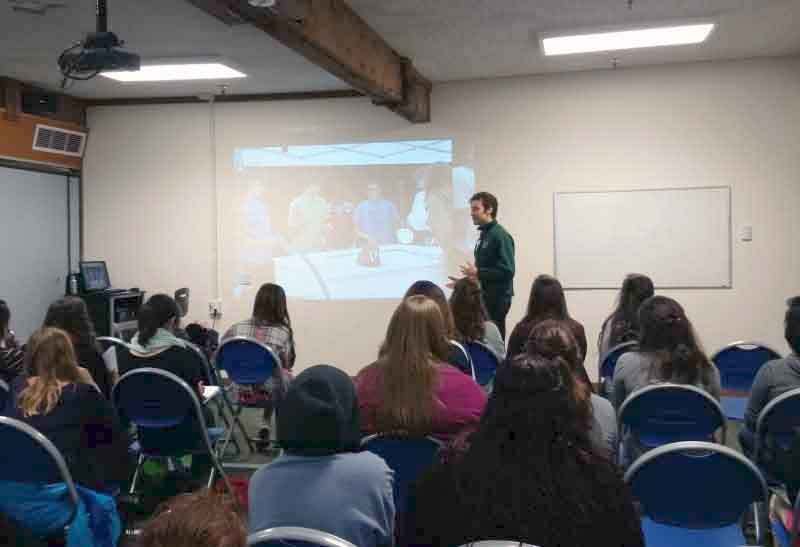
This guest post by Eli Weiss of Woodland Park Zoo is the first in a 3-part series on their Innovative Solutions Grants+ project, exploring how teens in the Seattle area can empower each other and their peers for action on climate change. The Path Forward At the Woodland Park Zoo, we have been working for the past several years to engage our teen volunteers and interns on the issue of climate change. These efforts have ranged from trainings on climate science and interpretation to involvement in our pilot of a variety of on-grounds climate focused activities and games, and have resulted in a group of teens that share a common interest in climate change. What we are still working on is getting our youth to the next stage of engagement, inspiring others to follow their example in taking action. This challenge is at the core of our current project, the Seattle Youth Climate Action Network (Seattle Youth CAN!), a project that we will be undertaking in partnership with the Seattle Aquarium and the Pacific Science Center thanks to support from The Ocean Project's Innovative Solutions Grants+ Program . Over the past couple months I have been meeting with climate leaders in Seattle and have been received with resounding enthusiasm for both supporting Seattle Youth CAN and for exploring new opportunities for our teen participants to engage other youth in community climate action efforts which may align with the city's recently adopted Climate Action Plan. This feedback on the model we have set in motion is encouraging and I am optimistic that when our teens feel connected to local climate efforts and leaders that they will be more engaged in the issues and feel more compelled to want to do something about it. Seattle Youth CAN! ACTION is the key to change, and through forming Seattle Youth CAN we will train and support youth leaders to deepen their understanding of climate science, feel confident in engaging others in dialogue about climate change, and develop and launch successful climate action campaigns. Over the past year with the latest IPCC report, UN Climate Summits, and the Peoples Climate March, the story has become even clearer. We need to take collective action and the change needs to be BIG and BOLD. Global and local leaders seem to agree that the days of just focusing on personal actions are behind us and this is why we believe our teens need to be engaged in supporting broader efforts and innovative solutions for change. We have designed Seattle Youth CAN with this in mind. Our aim is to train and support teen leaders to develop local campaigns which will engage their peers in measurable climate action. We believe that through creating dialogue and connection to existing community scale efforts and leaders we will help our teens to find their role in the growing movement to take clear action to reduce carbon emissions. What makes our model unique? A local network. We are bring together teens who have already expressed an interest in climate change and conservation through their involvement in teen programs at three leading informal science institutions in Seattle; Woodland Park Zoo, Seattle Aquarium and Pacific Science Center. Teens will have many touch points throughout the year including collective training, events, opportunities to take action, and a culminating summit at the end of year one. A focus on youth action. Our initial audience for this project are the teen leaders in our existing programs, and then, in turn, their peers in the community. Teens supported by community. Throughout the year teens will be working with local climate action leaders to learn, develop and launch campaigns and connect to city wide efforts. Ultimately our campaign will be designed and carried out by youth leaders in our network, but they will be supported by staff at each institution and our climate action partners in the community. With this project we are looking to explore if and how connecting youth to existing local climate action efforts enables them to create their own successful campaign and increases their ability to successfully engage their peers in action. In launching Seattle Youth CAN, we are hopeful that we will identify key elements needed to support a youth action network that brings teens and community stake holders together. We believe that if we are successful, this model will become a valuable example for other communities that are looking to engage youth in climate action. Recently, I was asked to lead a workshop on climate action at the Seattle Aquarium for their Youth Ocean Conservation Summit. I asked Xander Barber, of my teen climate leaders, to co-present with me. For us this was a great chance for us to share our Seattle Youth CAN model with a group of youth from around the Puget Sound. Based on the number for attendees that approached Xander and I after our session with interest in the network, I am hopeful that there will be broad support for the network. 2015 will be an exciting year as Seattle Youth CAN develops. We are encouraged by the enthusiasm of our teens that have helped us to build the vision for this project as well as our community partners and look forward to sharing our success with you in the months ahead! -- Eli Weiss, Youth Programs Supervisor at Woodland Park Zoo
Continue reading -
ISG+ Update: Oregon Coast Aquarium teens set out to slay vampires
This guest post by Teresa Mealy of Oregon Coast Aquarium is the second in a 3-part series on their Innovative Solutions Grants+ project, exploring the question “How do we fuel behavior changes in teens to decrease their impact on ocean acidification?” The Oregon Coast Aquarium’s youth volunteer group has been busy learning the ins and outs of social marketing in preparation for launching a campaign this fall. The group, which is calling itself the MOANA Group (Making Ocean Acidification Nationally Aware), is comprised of four highly motivated and enthusiastic youth. With a goal of promoting actions by their peers that would help address the issue of acidification, the teens, who already were informed on the issue, realized that their next step was to research the social marketing process, and challenge themselves to think outside the box. Social marketing skill building The Aquarium brought Action Research, a community based social marketing consulting firm, to fast-track the youth volunteers’ understanding of how social marketing can influence positive changes to their peers' behavior. After an overview of social marketing, the teens launched into formulating behavior “asks”. Each student developed and researched at least five behavior changes that would result in lower carbon dioxide emissions, reducing its absorption into the oceans. MOANA’s volunteers generated a list of over 20 behavior changes that could make a difference! The Group then gathered to determine which actions would best fit their audience and project’s mission. Narrowing down the “ask” To reduce the list from 20 to four, the teens collected input from friends and family on relevancy and ease of implementation. One of the key steps of social marketing is to minimize the barriers between the ask and its adoption. With that in mind, the group eliminated many of the potential asks, which were considered less relevant to their peers, such as when the teens themselves would not be the ones making the ultimate decision, or, too difficult to implement, such as when the ask required a very high investment of time or money. For example, asking teens to install solar panels on their homes was an original idea, but after consideration it was eliminated for these two reasons. To identify more promising asks, the youth volunteers conducted in-depth interviews with their peers. These interviews gave the group a better understanding of, not only the potential barriers to a behavior change, but also the impacts the change could have. The interview process was somewhat laborious, with some interviews lasting over an hour. However, the group gathered great insight into how to communicate with their peers and about potential opportunities teens have to impact their household. After discussing the results of the interviews, the teens narrowed their list of four behavior asks to one! MOANA’s ask will be to encourage teens to turn off and unplug computers and game consuls when not in use. Not only do their peers feel they have control over that action, but it is one with a surprising potential for impact, with one recent report noting that, “a typical family spends $120 dollars per year on the so-called 'vampire appliances,' from cable and DVR boxes to cordless phone chargers, microwave ovens and video game consoles. Next steps The final process before implementing the campaign is surveying the target demographic to develop a baseline understanding of what teens are currently doing with their game consuls and computers. Now that school is back in session, the teens will survey their classmates and Oregon Coast Aquarium visitors. While this data is collected, the teens will work with another consultant, and the team from The Ocean Project, to develop an evaluation process for their efforts, looking at questions such as: Did their peers take the action? And how did they feel about being asked to do so? With the surveys, campaign implementation and evaluation, the students look forward to a busy fall! Community-based social marketing was foreign to all of the teens in the spring. Now, they are not only much more comfortable with the method, they are ready to change the world!
Continue reading -
Environmental communications lessons: always relevant
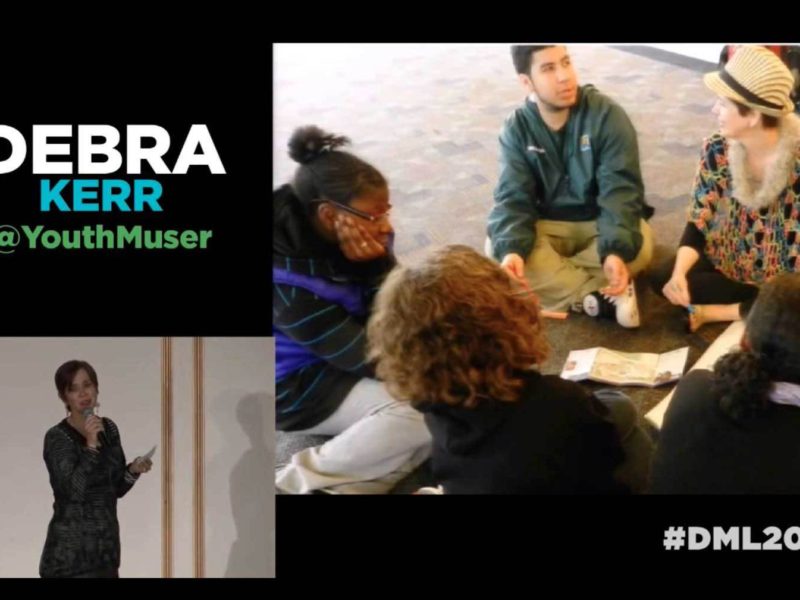
This is a guest post by Deb Kerr who has worked with The Ocean Project as consultant on youth engagement. Most of my talks lately have begun with a “Family Feud”-style question with an environmental twist. Relying on excellent research from The Ocean Project (TOP), I pose this question to the audience: “Americans said, ‘I live a green-friendly lifestyle.’ Then, when asked how they are supporting that lifestyle, what did they say?” The audience is always way savvier than the average American answer, and they get a kick out of the reveal of the top five answers, allowing me to grab listeners with some early laughs. Recently, I prepared an Ignite-style talk—my first—for the Digital Media and Learning Conference. With its focus on reimagining educational practice, DML is attended by academics, technologists, educators, funders and big thinkers. I wanted to do a really great job on this high-pressure presentation in front of the entire assembly (Ignite-style means 20 slides in five minutes—yikes!), and I wanted to stick to material I know well. But would the lessons learned from my environmental colleagues translate to this more broadly- and student-focused audience? I asked my opener, in a packed ballroom. They called out the typical guesses: “recycle,” “turn out the lights,” “Take public transportation.” I revealed three of the five real answers: replace lightbulbs, use organic products and drive a hybrid. Noises of surprise. Then I reveal the sad truth, which is also the laugh getter. “How are they supporting their green lifestyle? They said, ‘I don’t know’ and ‘nothing.’” To make this relevant for DML, I then explained why this audience should care. Americans see themselves as good guys, but they don’t know what to do. We DML folks—and our partners, youth—have an opportunity to recommend appropriate action. Let’s try recommending positive personal action in non-environmental realms as well. I used my favorite TOP data points and drew my own associations for the audience. Teens are seen as change agents: Easy. This audience is all about teens. The public trusts the museum sector and wants recommendations for action: About 10 percent of the audience raised hands when I asked who was from museums. Americans are America-centric: Keep your message local, focused on places, people or animals your audience cares about. Knowledge does not lead to action; knowledge and action are disconnected: Make action happen first. And, from work done back in my Shedd days: Focus on the congregation, not the choir (which already buys into your message), nor the non-believer (which may never buy into your message). Among the digital savvy, Twitter, of course, is a popular tool. When I sat down, I was thrilled to see the scrolling tweet screens carrying tweets repeating my main messages, especially “Knowledge isn’t connected to action. Make action happen first.” Whew! I made a connection to my audience. To top it off, Amy Storrow, the speaker after me, did a fun, improvisation exercise, trying to get everyone in the audience to work together to choose the same pantomime. It didn’t quite work the first time, and, in fine improv-style, she called out, “We have some non-believers in the audience!”
Continue reading -
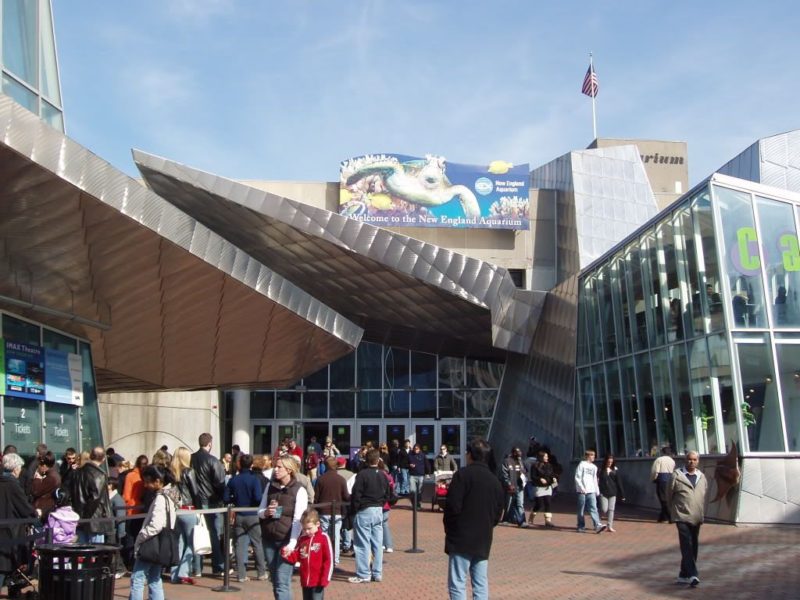
ISG+ New Project: NEAq ClimaTEENS creating a city-wide dialog for youth in Boston
This guest post by Heather Deschenes of New England Aquarium is the first in a 3-part series on their Innovative Solutions Grants+ project, which investigates how teen ambassadors can make a difference for their city's green future. With support from The Ocean Project’s Innovative Solutions Grants and Program, ClimaTEENS is a gathering of 15-18 year-olds that care about the ocean and who want to contribute to a healthy future. Teens in the program arrived with varied levels of knowledge about climate change, but are united by a desire to learn more about it as an issue of concern and are committed to learning ways to engage public audiences, particularly their peers. With guidance and support from aquarium staff and an introduction to strategic communication theory, participants will develop an in-person presentation to share at three youth oriented conferences annually, create blog posts for the Aquariums website and a video to share through social media. Their messages will be shaped with four themes in mind : Our lives are connected to the ocean Climate change is affecting the ocean Communities are already working to mitigate disruptive impacts of climate change. Youth voices matter Presentations, blog posts and videos will all encourage listeners or readers to join a citywide effort to reduce carbon emissions called Greenovate Boston. Greenovate Boston is a community-driven movement to get all Bostonians involved in reducing the city’s greenhouse gas emissions 25% by 2020 and 80% by 2050, as outlined in the City’s Climate Action Plan. By laying out the necessary steps to reduce the causes of and to prepare for climate change, the Climate Action Plan gives Greenovate Boston a framework for building a greener, healthier, and more prosperous city. The youth voice in the Greenovate effort is growing and we aim to support that growth. In addition, the Greenovate website will allow for ClimaTEENS audiences to: Pledge to take part in carbon emissions reducing activities Invite others to join them in those activities Provide feedback and ideas for future activities and initiatives Greenovate Boston also leverages a growing ambassador program that enables trained Greenovate Ambassadors to host public in-person meet ups where dialog is about climate change and how we can address it. ClimaTEENS will host a meet up for youth before August 2014. We anticipate being able to measure impacts of ClimaTEENS efforts from direct website hits based on our message because the Greenovate website is enabled with a number of built in evaluative properties. For example, in-person audiences of ClimaTEENS presentations will be asked to visit the website and leave a comment referencing the presentation and mentioning an activity the presentation inspired them to participate in. Blog readers and those who watch ClimaTEENS’ video will be asked to reference ClimaTEENS using hash tags as they interact with the Greenovate website. We’re enthusiastic about facilitating connections between youth and the ocean and hope to inspire them to contribute in meaningful ways to a growing community of ocean stewards. ClimaTEENS are helping to support and extend the New England Aquarium mission. -- Heather Deschenes, Manager of Youth Development Programs at New England Aquarium
Continue reading