-
Readying for a new round of concern and questions about climate change
A draft of the latest report from the United…
Continue reading -
Fun and easy: the key to making people excited to help the ocean
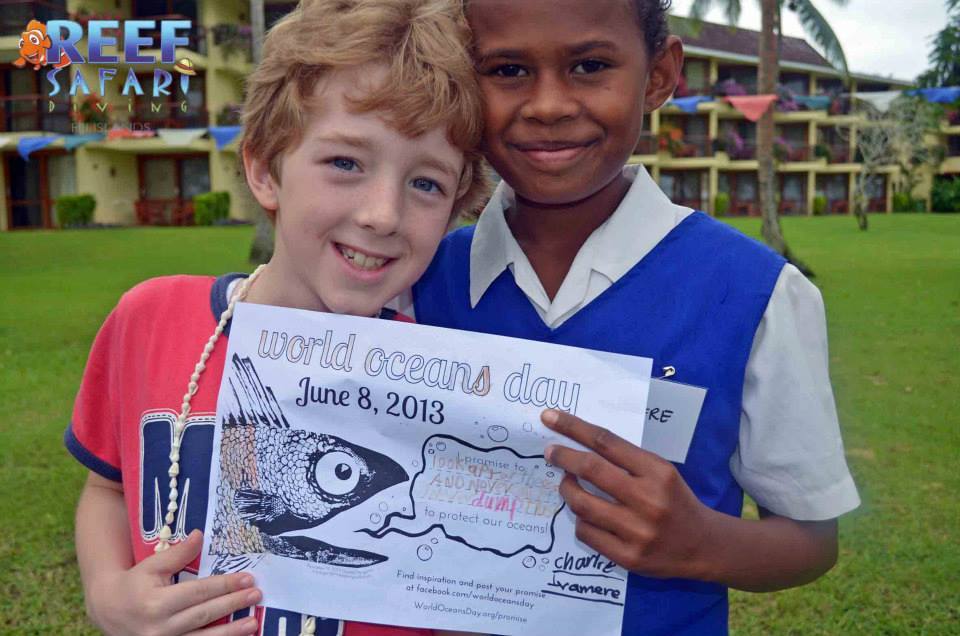
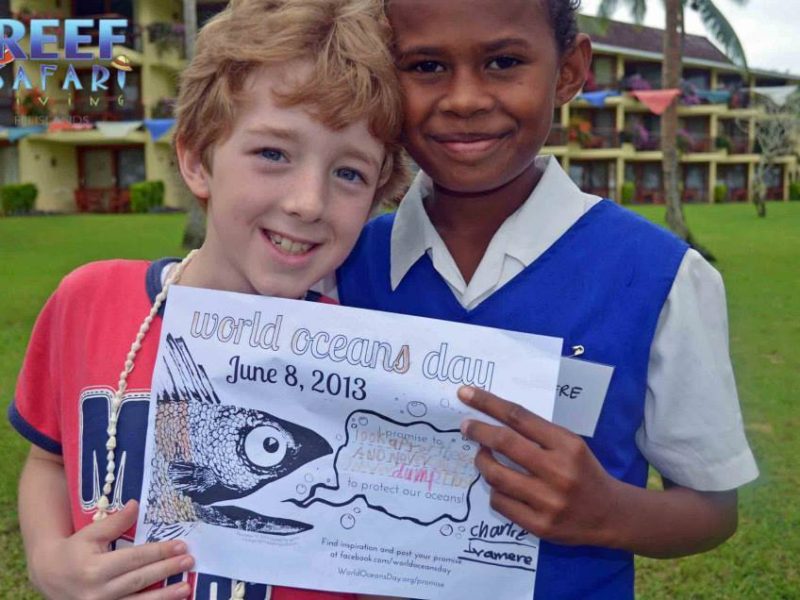
We were thrilled that so many of our zoo and aquarium partners joined us in promoting Ocean Promises encouraging visitors to pledge to do something to help the ocean. We had more than 300 promises sent to us with hundreds more collected at World Oceans Day events. Our partners were especially enthusiastic about this activity, which can serve as a great step onto a long-term journey for people interested in protecting the environment. I say “first step” because no small, one time action will immediately turn a person into a full-time environmental super hero! Low investment actions like the Ocean Promise are most effective when used in concert with a full suite of other community-based social marketing techniques. Of course, many institutions don’t have the resources, funds, or time to follow through with visitors after they make a promise. That’s not unusual and it doesn’t mean you shouldn’t ask for promises: we know that people who make public promises are more likely to change their behavior, and more likely to take bigger actions when approached either way. An easy, low investment campaign like Ocean Promises is a great way for staff at zoos, aquariums, and museums to achieve several aims. It emphasizes the institution as a conservation organization, and reminds the guest that the wild counterparts of the resident animals need our protection. It can give interpreters a chance to experiment with the most effective strategies to communicate with their visitors on issues, and offer insight as to which actions are resonating with visitors. As many educators and communicators have discovered, it’s very hard to find a one-size-fits-all action to suggest to visitors. Here are a few best practices that our partners have followed in order to overcome various challenges: Tip 1: Create the space for a conversation Identify a time and space when you'll be able to talk with guests about what promise is right for their family. Oregon Coast Aquarium A great option that several of our partner institutions chose was to make the Ocean Promise a crafty activity for kids. The kids are occupied with something fun, while staff has a chance to chat with the parents. Several institutions made Promise Bookmarks that kids hung up or took home or, like Oregon Coast Aquarium, made a Community Pledge mural that showed everyone’s promises together. Wendy Spaulding, Education Programs Coordinator for the Oregon Coast Aquarium said they plan to take it further next year. “We had an Ocean Pledge Mural craft activity, which had kids select a marine animal with a 'Ocean Pledge' written on it (or they could write their own pledge on a fish), that they could color, and then add to our Community Mural, which was erected specifically for the event to provide a visual representation of all the promises made… Next year, we would like to modify the activity to be even more interactive, with kids having to actually write their pledge, instead of just choosing an animal with one written on it.” MaryEllen Mateleska, Curator of Conservation Education at Mystic Aquarium added, “Although staff have a list of suggestions to share with families, we enjoy making the ‘ask’ into a conversation.” This will make it more likely that the change will actually fit into the family’s lifestyle, and they will feel like they chose it for themselves personally. MaryEllen further suggests talking to the whole family and guiding them through the process with questions: “These interactions would begin by directing questions to the younger members of the family that would open the discussion on conservation actions (e.g. ‘Did you know that today we are celebrating World Oceans Day?’ ‘What is your favorite ocean animal that lives at the aquarium?’ etc.). If a family was having difficulty brainstorming a promise, staff would prompt them with questions like: ‘Do you recycle at home?’ ‘Can you think of something else that could be done to reduce your trash even more?’ Or ‘Do you turn off the water while you’re brushing your teeth?’ ‘Can you think of something else that you can do to help conserve water at home?’” 2. Make it fun and easy for guests to capture their promises in a photo A few of our partner institutions experimented with taking photos of guests with their promises, and Georgia Aquarium even dared to take video. However, they learned there’s definitely a science to the art of guest photography! Cagney Smullin, Events Supervisor at Utah’s Hogle Zoo, found parents are more eager to take a photo pledge or do an activity with their kids than on their own. She said: “I think it was just uncomfortable for them to take the photo themselves...having a staff photographer or some sort of photo ‘booth’ would give it more of a fun element and more people would participate. You can then e-mail the photo to them from the app and also have the option of putting it on Facebook with the guests’ permission.” Sign at Hogle Zoo Making it fun was a point echoed by others. For example, New England Aquarium provided sea creature costumes for children and adults to wear when posing with their ocean pledge or statement about why they love the ocean. Not only is this a fun way to blow off steam, it’s also a family photo to remember the trip, and the promise to the ocean!
Continue reading -
Shark Week: ZAMs are taking a bite out of shark conservation projects
Many shark enthusiasts are taking advantage of the Shark…
Continue reading -
Weekly Round Up: Climate? Si se puede!
In the round up this week: diverse perspectives on environmental justice, zoos and aquariums making change, and new research. I've tried to keep descriptions brief this round up because there's so much good stuff! If you’re a science communicator or educator at an informal science center (such as a zoo, aquarium, or museum) trying to encourage conservation action – this is the round up for you! Every week we break down the most interesting recent news and best resources to help you frame the issues as effectively as possible. Americans: green, or greenbacks? A new study from the Yale Project on Climate Change Communication entitled Americans' Actions to Limit Global Warming (April 2013) has been released to much discussion. It takes a look at green consumer and civic behaviors and attitudes. Notably, half of Americans "occasionally" consider environmental impacts when making a purchase, and many plan to buy energy efficient appliances. Almost four out of ten (38%) of Americans said they would be willing to join a political campaign to advocate for climate change action! Chris Mooney, for Mother Jones, rains on the parade a little with a deeper dig into the data. Since 2008, fewer Americans believe their individual actions to save energy will reduce global warming, and there's been no real increase in their advocacy actions. Still - the potential is there if we can tap it! A diversity of opinions The environmental movement in America has traditionally been, unfortunately, rather homogenous (white and upper class), but the people most negatively affected by environmental degradation aren't. Here are some interesting articles about and from people fighting for a healthy environment and healthy underserved communities. Coal Pollution and the Fight For Environmental Justice Jacqueline Patterson, the Environmental and Climate Justice Director for NAACP, talks about how coal pollution (and seriously, ALL pollution in general) disproportionately impacts communities of color, and the difficulties environmental justice groups have faced trying to work with big green NGOs. Re-Made in the Shade OnEarth looks at two intersecting issues - the rising risk of heat deaths in cities, and the higher risk of minority populations to live in high heat risk areas. It's another less-than-obvious but deadly consequence of racial divisions and subsequent mistreatment in urban areas. Climate? Si se puede! Research by The Ocean Project and many, many, MANY(!) others continue to highlight the power of Latino voters and communities for environmental action. Sightline wraps up the background info in this blog post about a recent letter from national Latino organizations to President Obama, making the moral argument for action on climate change. Zoos and aquariums making change As always, our first priority is our zoo and aquarium partners working hard to communicate with their visitors for conservation action. Applying research, inspiring recycling Our recent blog post from Douglas Meyer reports on the successes and challenges of two of our aquarium partners - Virginia Aquarium and Texas State Aquarium - to reduce littering from their visitors, inspired by our research and work with them. Global climate change as seen by zoo and aquarium visitors This report from our partners at the Chicago Zoological Society is a must-read for those interested in informal science education/communication. The Climate Literacy Zoo Education Network (CliZEN) conducted this national survey with fifteen United States zoos and aquariums and reports on attitudes and behaviors.
Continue reading -
Applying research, inspiring recycling
Two of our partners recently reported on efforts to improve on-site recycling by applying some of the lessons learned from the communications research. Their efforts, each sparked by strategy sessions with The Ocean Project, brought impressive results as well as ideas for improvements. The Virginia Aquarium and Marine Science Center In the summer of 2012, staff at the Virginia Aquarium & Marine Science Center conducted a three part pilot project to see if they could help raise awareness and inspire action around the issue of marine debris, as measured in large part by less trash on the ground and more recyclables in the bins of their campus. To begin, they established a baseline by - you guessed it - counting trash and surveying visitors with thanks to a great team of volunteers. Next, they installed new cigarette butt bins and recycling containers and again counted trash and conducted surveys. And, finally, they installed inspirational signs with a focus on trash impacts on animals, and completed a third round of surveys. Based on The Ocean Project's research, the staff went into the project expecting visitors already to have high awareness of the problem of marine debris as a threat to the ocean. Their surveys confirmed this to be true. They also expected that visitors would welcome the new signs with information about how proper trash disposal and improved recycling could help conserve the ocean, especially as connected to the fate of the animals. This too proved to be true (And, not to be overlooked, the positive response extended beyond visitors to staff and volunteers as well). But did it work in terms of reducing trash and improving recycling? Yes, though perhaps not as much as they would have hoped. There was a notable and steady improvement, especially in terms of reducing the number of cigarette butts to be found on the ground, yet the counting of individual trash items may have affected their ability to effectively measure the remainder of their results. "The communications research from The Ocean Project helped us shape our effort, and we certainly confirmed that our visitors welcome our suggestions as to how they can help us conserve the ocean. We also learned that these efforts don't have to be high cost to be high impact." - Mark Swingle, the aquarium's director of research and conservation Texas State Aquarium Also during the summer of 2012, staff at the Texas State Aquarium was trying a similar experiment. They too had become frustrated at the way in which some of their visitors tossed trash on the ground, and failed to put bottles in recycling bins. Staff applied the major lessons of The Ocean Project's communications research, and also took advantage of the story they could tell about Tiki, a sea turtle, who was rescued after ingesting a plastic bag and becoming entangled in fishing line. Their approach emphasized augmenting existing signage by having their interpreters convey three simple, research-based messages, then counting the number of bottles being recycled and surveying guests for their opinions. The messages were as follows: Animals can get sick by eating plastic or get tangled in it(Based on the research finding that problems are more likely to be of concern when connected to their impact on specific species, such as species of sea turtles) Thanks for helping protect the animals by throwing away your trash and recycling plastic(Based on the research finding that guests tend to see themselves as part of the solution, not part of the problem --- even if they are both!) The Aquarium helps animals through its rehab program (To help reinforce the standing of the aquarium, and, as such the trust in its recommendations) The results? Guests left fewer items overall and 40% fewer plastic bottles in the stands after the Dolphin Bay and Wild Flight shows - wow! Staff, however, was somewhat disappointed by the way, albeit not unexpected way, in which increased action seemed unconnected to improved awareness. While more guests did cite plastics as a problem for turtles in the exit surveys, it was unclear if overall awareness of the problem of marine debris increased. Even then, the staff reported feeling that the effort was worthwhile and much was learned, and, of course, that 40% is not to be tossed away! The Ocean Project will continue to share stories from partner experiments in this blog. Have one for us? Please send it along!
Continue reading -
Inspiring the Next Generation of Ocean Advocates
“I want to tell you about how the Aquarium…
Continue reading -
Houston, we have impressive results to share
For the last several years, The Ocean…
Continue reading