-
Aquariums invite guests to meet sharks for fun and conservation
We're well into Shark Week 2014, and there's a huge need to represent TRUE shark facts on social media and our outreach. Last year, there were almost 3 million tweets about sharks during this event! You can see Upwell’s great coverage of how things went in 2013. All of this attention means it’s a great time to talk to people about sharks – and especially to demonstrate that sharks are more complex than the bloodthirsty monsters that get people in a frenzy. Let's take Shark Week to the next level, and turn it into a time to educate about and advocate for sharks. There’s nowhere better to talk with people about sharks than at an aquarium, a rare opportunity to get up close and personal with a shark… without the fear. Here are what some of our partners are already doing for sharks. Aquariums bringing sharks and people together Would you hug a shark? Nicky, senior aquarist at The Aquarium of the Pacific would! That’s because she and Fern the shark have developed a special relationship full of trust. Fern allows herself to be put into a state of paralysis called “tonic immobility.” This puts Fern in a vulnerable position, so it took a lot of training and relationship-building to reach this point. As husbandry volunteer Hugh writes: “In reality, our relationship with sharks is what we make of it.” Montery Bay Aquarium positions the “fearsome” great white sharks as ocean ambassadors along with other sharks and rays. Their Project White Shark helps guests look past the Great White’s scary reputation. Their research includes collecting juvenile great whites and studying them before safely releasing them back to the wild. Knowing more about these sharks can help us do an even better job of protecting them. Picture by flickr user noodlefish Whale sharks are some of the most intriguing fish in the ocean – huge and intimidating, yet gentle and docile. Despite their charm, there’s still much we don’t know about whale sharks. Georgia Aquarium, which houses several whale sharks, also studies them in the wild to discover new information - such as how the sharks find food in the open ocean. Their research has even contributed to the creation of a whale shark reserve. The Wildlife Conservation Society studies the movement of whale sharks and their relationship to the tourism industry. Both organizations understand that the more we know more about these spotted giants, the better we can protect them. The National Aquarium also works with sharks in the wild – and they’re inviting you to help out! Anyone age 10 and up can help the aquarium tag sharks on their annual trip. It’s a great opportunity to experience sharks in the wild, and help scientists gather vital information to protect them. Join in the sharky fun You can celebrate shark conversation at your own organization. Why not follow one of these partners' example and throw an event for Shark Week? For next year - how about staging fun events such as a Shark Week scavenger hunt (Texas State Aquarium), or having shark themed apparel for people to wear (The Florida Aquarium)? You can even let visitors interact directly with shark items such as shark egg cases (Cabrillo Marine Aquarium). It's great for young children to have positive associations with sharks and to be able to physically interact with the world around them. Picture by Willy Volk, flick user volk There are many conservation activities you can plan as well. Having speakers talk about sharks and shark conservation is a great idea. Invite anyone from a wildlife artist to a SCUBA team engage your audience about sharks (Oregon Coast Aquarium). You can even stage a sleepover where guests can learn about sharks in a less crowded setting (Newport Aquarium). Are you doing anything to help out sharks? Tell us in the comments! Cover Photo by flickr user Albert Kok
Continue reading -
Application now available for Innovative Solutions Grants+ Program
The application form for the next round of the Innovative Solutions Grants+ Program is now available; check out the RFP page for details and to download the application. The Grants+ opportunity is limited this year to US-based zoos and aquariums only. The deadline to submit your proposal is September 5, 2014. Click here to view the RFP and download the application form. Click here for last year's winners. The Grants+ program is an evolution of The Ocean Project’s efforts to help our partner organizations do more to effectively advance conservation action in measurable ways and create a healthier, more sustainable society. It allows us to invest in supporting innovators in the community by providing not only financial resources, but also free strategic communications services and evaluation help for stronger conservation impact. If you’ve got an innovative project or an idea for a twist on an existing project, program or activity that helps shift the paradigm on communicating to inspire conservation action, we want to hear from you! The Grants+ program was created so we can help you succeed in your role as trusted messengers for conservation solutions to ocean and climate issues.
Continue reading -
RFP for new Innovative Solutions Grants funding posted
We are pleased to share our new RFP for the second round of the Innovative Solutions Grants+ program! Click here to view the RFP, we'll be posting the application form shortly. Proposal deadline is September 5, 2014. With thanks to National Oceanic and Atmospheric Administration (NOAA) for helping us establish our Innovative Solutions Grants+ program, this second round of funding will provide $100,000 for AZA-accredited aquariums and zoos that are based in the US. (We are trying to raise funding to expand this opportunity to all our partner zoos, aquariums, and museums (ZAMs) in all parts of the world, so please let us know if you have any ideas for potential funding sponsors.) The Grants+ program is an evolution of The Ocean Project’s efforts to help our partner ZAMs do more to advance conservation action in measurable ways and create a healthier, more sustainable society. It allows us to invest in supporting innovators in the community by providing not only financial resources, but also free strategic communications services and evaluation help for stronger conservation impact. We’re referring to this program as the Grants+ Program because it involves much more than just financial resources. With each grant, The Ocean Project provides financial resources for our partner aquariums to develop innovative local and regional ocean conservation solutions and stewardship initiatives, specifically targeting youth and minorities. We plan to maximize the benefit of each grant by including strategic communications capacity building opportunities for the awardees, including strategic and technical resources and expertise to more effectively engage their visitors. We will also work with each grantee to help accelerate peer-to-peer learning and widely share resulting new strategies and successes with the wider community, especially our growing partner network of 2,000 ZAMs and other conservation and education organizations in all 50 states and worldwide. You can read here on our blog about what the current three Grants+ awardees — North Carolina Aquariums, New England Aquarium and Oregon Coast Aquarium — are doing to bring about positive change. If you’ve got an innovative project or an idea for a twist on an existing project, program or activity that helps shift the paradigm on communicating to inspire conservation action, we want to hear from you! The Grants+ program was created so we can help you succeed in your role as trusted messengers for conservation solutions to ocean and climate issues.
Continue reading -
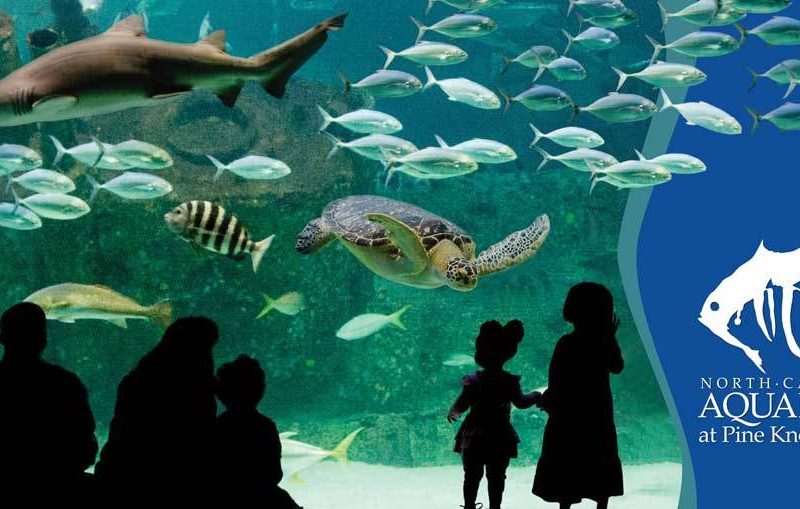
ISG+ New Project: NC Aquariums prepare a green power(ful) experiment
This guest post by Windy Arey-Kent of NC Aquarium at Pine Knoll Shores is the first in a 3-part series on their Innovative Solutions Grants+ project, aimed at testing different approaches to engaging guests for conservation action at aquariums. The North Carolina Aquariums are excited to be working with The Ocean Project on their Innovative Solutions Grant projects in 2014. There are four NC Aquarium sites that are each participating; the Aquarium at Fort Fisher, Aquarium at Pine Knoll Shores, Aquarium at Roanoke Island and Jennette’s Pier at Nags Head. Each of the sites, working in cooperation with Greenlight Energy, will be focusing our efforts to promote and market clean energy in the form of Renewable Energy Certificates (RECs) to our visitors during the peak visitation months of May – September, 2014. The three Aquarium facilities will be testing separate interpretive messages and approaches to see which approach is most effective in motivating our visitors to engage in a specific conservation ‘ask’, and to take personal action by purchasing REC’s for their homes. In turn, each site will receive a 1:1 match from Greenlight; for each REC purchased at a site, that facility will receive a REC to move each of us towards a goal of 100% green power. The pier site, offering a very different facility and path for visitors, will offer this opportunity for visitors through a stand-alone kiosk. There will be similarities at each site in our content, our ‘ask’, and the types of information given to visitors regarding the program and green power, in general. The approach at each site however, is the variable that we will be testing. At Fort Fisher, educators will be utilizing the NNOCCI model (National Network for Ocean and Climate Change Interpretation) of interpretation where emphasis is placed on framing and engaging audiences in a positive way to overcome barriers and think productively about solutions to climate change and ocean acidification. At Roanoke Island, a single conservation educator will be versed in promoting REC’s to visitors one-on-one, and will be able to engage in in-depth conversations about green power, REC’s, and the environmental consequences to living in a carbon-reliant society. A third model at Pine Knoll Shores, will take a community-based social marketing approach that utilizes the principles of conservation psychology to stress the benefits of purchasing REC’s for the Aquarium and its’ animals. The pier site, a LEED (Leadership in Energy and Environmental Design) certified facility with wind turbines and green power showcased on-site, will offer a kiosk where visitors are inspired to action, not through interpretation, but as a result of their visit to the site itself. To evaluate the effectiveness of each approach and method, we will utilize technology provided by Greenlight Energy that offers visitors an on-site ‘dashboard’ for sign-ups through tablets, cell phones or laptops. In addition, there will be a “text to” option for visitors onsite to gain more information on the program or directly sign up to purchase REC’s for their own homes. We will test each approach by measuring: the numbers of inquiries for additional information (texts sent or hits to each individual ‘landing page) how many visitors purchase REC’s visitor satisfaction in the program, using ipad surveys and visitor intercepts at each site. We will then compare the three approaches at the Aquariums to the kiosk at the pier, which relies on the visual inspiration and behavior modeling to inspire action. Progress and results will be disseminated widely amongst our colleagues in the aquarium, zoo and museum communities, both by way of this blog and using sites such as climate interpreter, as well as, we hope, at the AZA annual meeting. Send along a note if you want to know more. We welcome your feedback! - Windy Arey-Kent, Education Curator at North Carolina Aquarium at Pine Knoll Shores
Continue reading -
Young women are Monterey Bay Aquarium’s “Ocean Guardians”
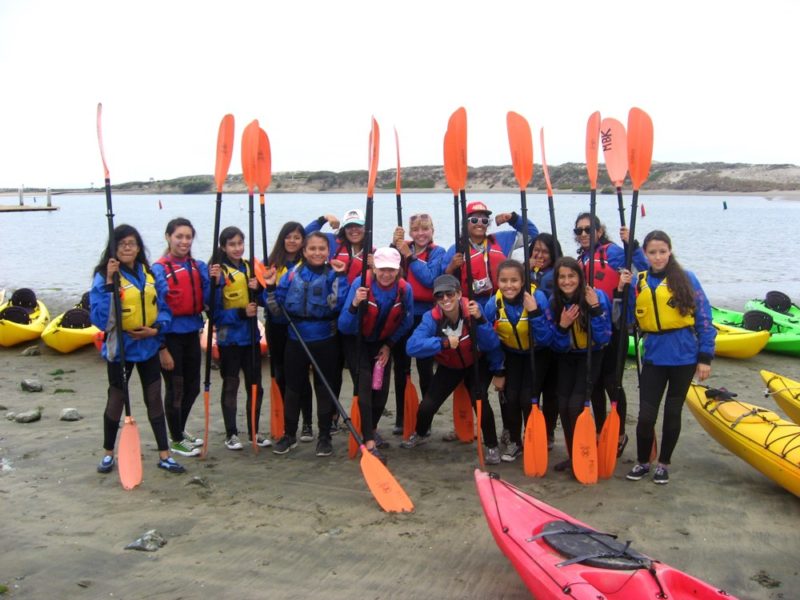
In part 3 of our blog series on past Small Grants projects at zoos and aquariums, Dolores Toledo of Monterey Bay Aquarium shares what they've learned about helping young women from diverse backgrounds become confident, science-capable, and personally active in conservation. Background Monterey Bay Aquarium’s Young Women in Science (YWS) program began in 1999. Each summer we offer three, week-long, bilingual YWS camps. The camps provide young women entering grades 7-8 with extracurricular, hands-on science experiences and introduce them to women in the science field. The goal is to provide these girls with opportunities that foster their curiosity and sense of wonder, as well as bolster their self-image of being science-capable. Young women who live in Monterey, Santa Cruz, and San Benito counties are eligible to apply. YWS was created to motivate more girls to pursue science careers and feel science savvy. Today, studies show that while more females are making their way in the science fields, minority women are still falling short. Over the years YWS has strengthened our recruitment of low income and Hispanic young women who typically do not visit the Aquarium or pursue careers in science. Now more than ever, we ensure the program is conducted bilingually in English and Spanish to reach the underrepresented local Hispanic audience. Every summer more than 70 middle school girls participate in the two first-year camps “Otter Mystery.” Through their experiences, participants identify and connect the factors that influence the health of the threatened Southern sea otter population. The girls have the opportunity to observe sea otters while kayaking in Elkhorn Slough, use telemetry to track wild sea otters, go sand crab monitoring and surface scuba diving, among other activities. Making conservation personal In addition, 40 girls have the opportunity to return for a second year of camp-- “Ocean Guardians.” In this camp, participants are challenged to rethink their ideas about single-use plastic and learn about threats plastic can cause to marine species and to the local community. At the end of the week students create a Public Service Announcement to encourage others to become Ocean Guardians. This year, we are increasing the science content by including activities on bioaccumulation and plastic toxicity and including a conservation action, where students will rally the community to sign a pledge to SAY NO to disposable plastics. The Monterey Bay Aquarium’s Young Women in Science program engages middle school girls in real, hands-on science in a friendly, supportive context. Female role models support their learning about the science process. Girls interact with science professionals, learn about the kinds of activities that scientists do, and the preparation they need in order to become a scientist. The ultimate vision is to give them positive science experiences that will keep them interested in science throughout their high school years. Goals of the program At the same time, we know not all girls will be attracted to science careers. We hope that they will feel self-empowered to pursue higher degrees and feel capable of making life and consumer decisions that may involve understanding science information. Our overall goals: Empower low income and Hispanic young women participants to engage in science. Help students feel inspired, confident, ocean literate and ready to act on behalf of the ocean. Increase their awareness of conservation and their personal role in conservation. Introduce participants to community partners and opportunities that support their involvement in science. Understand how events in nature can be explained by science. Throughout the camps, the young women discuss what they know about conservation practices and how they put those practices. Most are familiar with recycling and reusing, but this year, we are introducing them to the idea of refusing. The goal is that participants will continue practicing these actions at home, school and in their community after the program ends. In addition, all curriculum is woven with conservation themes of habitat conservation and ecosystem interconnectedness. The program is staffed by science educators from the Monterey Bay Aquarium. Women scientists from various fields share their work and mentor young women during the weeks. Middle school science teachers also participate as staff, serving to foster the student-teacher that relationship. Recently, some of our YWS alumni have been hired as paid Program Assistants for Young Women in Science. These college students are excellent and inspirational role models for our girls and for us. -- Dolores Toledo, Bilingual Education Specialist at Monterey Bay Aquarium
Continue reading -
Aquarium of the Bay: reframing climate change for action
In part 2 of our blog series on past Small Grants projects at zoos and aquariums, Quinn White of Aquarium of the Bay shares what they've learned about making climate change personal, and asking visitors to take action. Background and summary of project Aquarium of the Bay strives to improve the future of San Francisco Bay and its watershed by engaging a new generation of stewards and advancing real solutions for a healthier habitat. We reach a broad audience of residents as well as visitors from all over the world. Our goal was to help these guests commit to addressing climate change on a personal level. Updates on project Thanks to support from The Ocean Project, the Aquarium successfully trained our staff to frame climate change in a way that helps guests understand climate change and its impact on their own lives. Previous experiences frame how people see the world, so two people can look at a prop or an animal and understand it in two completely different ways. By connecting guests’ personal experiences to the topic at hand, we can expand their frame of reference to help them understand the problem of climate change—and its solutions. In addition to our improved messaging, we added an environmental action dimension to visitors’ experiences. Our Climate Change Action cards reinforce messages about taking local action, so Aquarium visitors understand specific ways they can personally make a difference in their own backyard. These tools have been combined to update all five of our climate change-focused daily visitor presentations. Our animal ambassadors and their associated call to action have successfully turned a moment of inspiration into an opportunity for visitors to make lifelong changes that lessen their environmental impact. We took our message online as well—you can find our climate action cards on our website. The online component was inspired by The Ocean Project’s recent research on the importance of online education. Our website now shares these printable cards as well as stories that highlight what our staff is doing to reduce their own carbon footprints. Lessons Learned The responses we’ve received regarding the updated visitor presentations from staff and guests have been very positive. Staff report that it is easier to talk to guests with a more hopeful message and it is easier to have a conversation when connecting to their universal values. The stay time for guests has also increased; in the past, guests would listen for a few minutes and then leave; now they stick around for the entire presentation. Guests are also more engaged and asking more questions, and the presentations have turned into productive conversations, sparking curiosity and inspiring further action. After learning about framing and universal messaging, one staff member said “Frankly, I’m blown away.” He mentioned that he had heard about universal framing but had never realized its effectiveness until the training. Staff have noticed that children especially are more excited when they participate in the visitor presentations. For example, in our ocean acidification presentation, children are excited to learn more about ocean chemistry and why it’s important to keep the ocean’s water healthy. Also, in our solar and wind power presentations where we focus on innovation for alternative energy, visitors leave inspired and children want to learn more so that when they grow up they can help innovate other forms of energy. In regards to putting their training into practice, staff often responded by simply saying, “It really works!” The training also resonated with staff by identifying ways to front load key messages. In other words, putting the conservation message at the beginning of the presentation grabs the audience’s attention and helps them be more invested in the issue. - Quinn White, Development Manager and Grant Writer at Aquarium of the Bay
Continue reading -
Climate communication: know thy audience, know thyself
Our friends over at EcoAmerica have published an insightful overview, “Communicating on Climate: 13 Steps and Guiding Principles,” that pairs nicely with the recent research by the Climate Literacy Zoo Education Network (CliZEN), as well as the ongoing research we’ve been doing here at The Ocean Project. "Communicating on Climate" offers a set of quick tips for audience engagement, offering a good review and food for thought for those of us who've been working on this issue for a while, or a good starting point for colleagues who may be not have been as focused on these concerns but are now getting involved. To what is covered in this report, we’d add that not only to do we need to know our audiences, but we need to know ourselves. In other words, we need to ask not only, "Where are our audiences on this issue?" but, "Where do our institutions have credibility?" and, "What works best in the context of a zoo or aquarium visit?" So as to be sure we are playing to our strengths and avoiding our weaknesses. On this last note, our research here at The Ocean Project suggests that aquariums and zoos, for example, are likely to do best when the discussing the problem in relation to its impact on the animals, and offering solutions that are centered in the sort of personal action steps that help people feel good about themselves, and their visit. For more on that, see our general advice on what the research says about "shaping a good ask" for visitors. Hoping this helps, and, as always, we welcome your feedback!
Continue reading -
One With Nature: Empowering Teens Through Environmentalism
Many of Chicago’s middle and high school students spent their Columbus Day holiday resting, sleeping or watching TV. However, a group of 12 students from across the Chicago area could be found in the Shedd Aquarium’s new Teen Lab—the site for this month’s One With Nature meeting—discussing climate change, environmentalism and what they can do to make a difference in an urban setting. As a senior at Northwestern University, and a new member of the YouthMuse team, I was thrilled to be able to participate in the October OWN meeting. Through this experience, I learned a lot about the passion and drive of this community of environmentally-conscious Chicago teens. Teenagers in the OWN campaign are not just participants but creators. The teens decide what they want to do, how they want to do it and who they want to be as a community of socially conscious young adults. The students craft all aspects of the campaign, down to the “One With Nature” name and branding. Because of their passion, drive and curiosity, as well as the support of Chicago cultural organizations such as the Lincoln Park Zoo, Chicago Botanic Garden and Shedd Aquarium, OWN campaign teens are focused on making real change. Past projects include coastal cleanups, meeting with other teens at city-wide events like the Chicago River Congress, teaching teens to upcycle used clothing and generating OWN’s social media campaigns. The same model of teen-led environmental campaigns has sprouted across the country with varying degrees of success; most notable is Puget Sound: We Love You at the Seattle Aquarium. The true beauty of these campaigns lies in the agency given to middle and high school students to create projects that are geared at real change in the community. Students are given mentoring, resources, tools and a platform for their campaigns. One With Nature meets at Lincoln Park Zoo or in the Shedd Aquarium Teen Lab. Adults in the campaign are not leaders but facilitators of the choices, visions and goals designed by the students. In the safety of this space, Chicago’s community of students is empowered. They are able to watch projects they design and implement come to fruition. They are able to interact with professionals who treat them as future leaders. They are able to push their limits, explore their interests and solidify their visions for the future. According to a 2011 Gallup poll, 77% of U.S. students in grades 5-12 want to be their own boss, 45% plan to start their own business and 42% aim to invent something that changes the world. Through teen-led efforts like One With Nature, zoos, aquariums, and museums give Millennials a place to start charging their power to change their world.
Continue reading -
Communications medley: the messenger makes the message meaningful
In this week's round up: the messenger makes the message meaningful, and Americans have energy highs and lows. If you’re a science communicator or educator at an informal science center (such as a zoo, aquarium, or museum) trying to encourage conservation action – this is the round up for you! Every week we break down the most interesting recent news and best resources to help you frame the issues as effectively as possible. Some of these resources will be practical communications and framing tips, and others are great starting points for brainstorming future strategies. Green, yes please! Environmentalism... no thanks. This article on perceptions of "activist" environmentalists emphasizes how important messengers like interpreters at zoos, aquariums, and museums are for encouraging green action. To sum it up: people are willing to change their behavior, but less if they suspect you're a 'stereotypical' environmentalist. As The Ocean Project's research has found, informal science centers are trusted sources of information about environmentally-friendly behavior for Americans. Furthermore, visitors actually want this information as part of a satisfying visit to a zoo, aquarium, or museum. So stay cool, friendly, and give visitors plenty of tips for how they can help the planet. They'll listen to you! Energy surge and slump Recent energy news in America has been a mixed bag - good and bad. Let's start with the bad so we can end on a positive note: U.S. stands out as among the least concerned about climate change Pew's new survey found 40% of Americans and 39% of Chinese (two of the biggest carbon polluters on Earth) say climate change is a major threat to their nation. For comparison, a median of 54% of people in the surveyed 39 countries identify climate change as a major threat, and in some countries like Greece and Korea over 80% of people are concerned. U.S. Carbon Dioxide Emissions Down 11 Percent Since 2007 Despite that previous distressing bit of news, there are still good things happening. Since 2007 US emissions have fallen by 11%, the equivalent of taking 77 million cars off the road. Why? People are driving less, and cars are getting more efficient with gas. Also - emissions from burning coal have fallen 20% since 2005. Obtaining 25% Of Energy From Renewables Would Save Billions More wind and solar, even if it would only account for 25% of the electricity in the Western US, would save $7 billion and reduce carbon pollution by 34%. This study is one of the first to use real-world hourly emissions data from power plants in the Western US, with serious implications for economically minded folks.
Continue reading -
New Grant Program+ Launched
As part of The Ocean Project's efforts to help our partner zoos, aquariums, museums (ZAMs) develop into the most effective centers for conservation leadership and advance conservation action, we are pleased to announce a new grants program for our partners. With thanks to the National Oceanic and Atmospheric Administration (NOAA) who has funded the first of a three-year project that will allow The Ocean Project to invest in supporting innovators in the aquarium community, yesterday we launched our "Innovative Solutions Grants Program." This program will provide financial resources for our partner aquariums to develop innovative local and regional ocean conservation solutions and stewardship initiatives, specifically targeting youth and minorities. Click here for the RFP. Applications are due November 15th, 2013. We're referring to it as a grants program+ because it will involve much more than just financial resources. The Ocean Project plans to maximize the benefit of the grants by including strategic and technical resources and expertise for awardees to more effectively engage their visitors, including strategic communications capacity building opportunities. We will help accelerate peer-to-peer learning and widely sharing the resulting new strategies and successes with our growing partner network of 2,000 ZAMs and other conservation and education organizations in all 50 states and worldwide. Furthermore, we're also seeking to leverage this funding to expand the program and will work on joint fundraising opportunities with interested partners. America's ZAMs are community anchors. Ongoing research conducted by The Ocean Project and others shows that ZAMs are among the most trusted sources of conservation information and that the public increasingly looks to these institutions for guidance on what they can do to help protect and conserve our environment. Indeed, ZAMs and their professional staffs – the primary audience for all our activities – are "gatekeepers" to the American public. With millions of visitors, ZAMs play an essential role in educating and engaging audiences. We hope that this grants program+ will provide our partner ZAMs with the resources and strategic communications services to do more for ocean and climate conservation and will empower them to succeed in their role as trusted messengers for conservation solutions.
Continue reading


