-
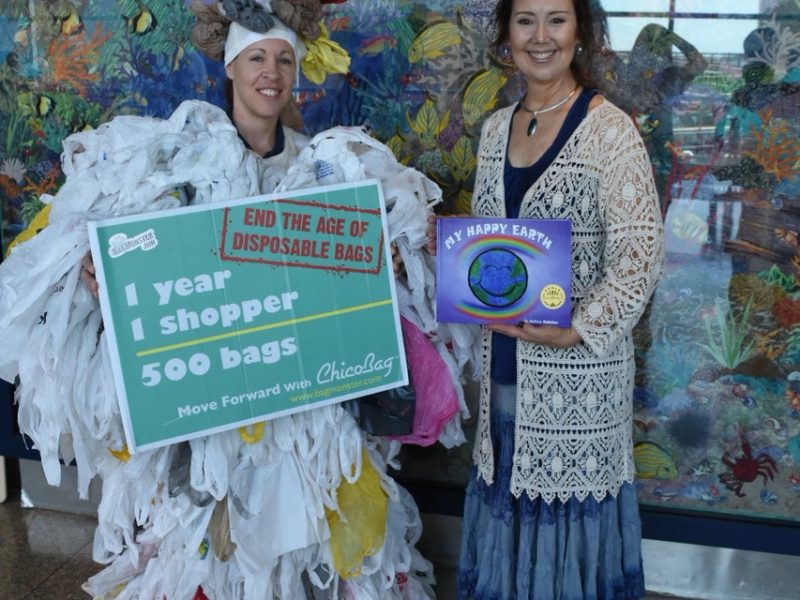
Pilot project shows that engaging visitors in conservation efforts can inspire commitments and enhance experience!
During the week surrounding World Oceans Day, 12 zoos, aquariums and museums (ZAMs) participated in a pilot project that had them asking their visitors about helping to address the…
Continue reading -
ISG+ Final Report: Tasting Success at the Arizona-Sonora Desert Museum
This guest post is submitted by Debbie Colodner, Director of Conservation Education and Science from the Arizona-Sonora Desert Museum, and is the last in a 3-part series on their Innovative Solutions Grants+ project where they partnered with Leading for Good to see if they can move the needle on sustainable seafood in Tucson, Arizona. With Tasting Sustainability, our effort under the Innovative Solutions Grants + Program, we wanted to go beyond Desert Museum business as usual. We understood that in order to make a difference for sustainable seafood in our desert city, we needed to go beyond efforts to raise awareness and get closer to the point of sale, particularly at restaurants. And we hypothesized that there could be a win-win in promoting sustainable seafood by reaching out to local restaurants and engaging millennial audiences. We were right! Moreover, this effort has built our confidence and capacity to go outside of our comfort zone and begin a social marketing initiative. Working with our partner in this effort, Lead Local and their Leading for Good program, our Museum staff and interns alike had opportunities to learn about how to research an audience’s interests (In this case, local restaurants’ needs, wants and constraints), as well as inexpensive and rapid methods to prototype engagement ideas. SINCE OUR LAST POST As described in our last blog post, the strategy we chose for further testing was to co-host events with local restaurants, and we were able to test three different types of events last Spring. The first was at a downtown restaurant, in concert with “Agave Week,” which is focused on agave-derived and other native and local food products. The event attracted a large, diverse crowd, and our project interns encouraged people to take a seafood watch guide, take a pledge (using a photoframe cutout) and post it to social media. Our major lesson learned was that without food/beverage samples to offer it was hard to get this audience’s attention, especially at an event with a different theme, and interns were able to distribute 30+ guides, and only 6 people took a pledge. Nonetheless, the interns enjoyed the chance to raise awareness and participate in this locally grown and growing festival, and felt like they made an impact (awareness) on the people with whom they spoke. The second event was at a more “suburban” beach-themed restaurant which is already a Seafood Watch partner. The restaurant owner acknowledged an “aha” moment when he realized that there is value in promoting that partnership to attract younger customers. He bought all new uniforms for his wait staff – t-shirts promoting sustainable seafood. The event drew more customers than usual for a Friday night in the slow season, making it a success for the restaurant. And at this event, staff from the Museum and Monterey Bay’s Seafood Watch program staffed an educational table with interactive displays outside of the restaurant. Everyone entering the restaurant saw the display materials, and most stopped to talk - in contrast to the Agave Fest, the sustainable seafood messaging was the focus in event advertising, and that helped engagement. But most of the diners were older adults, many from the Museum’s docent and volunteer corps, so still an ongoing challenge in reaching younger adults. Karin Stratton from Monterey Bay's Seafood Watch Program with participants at Fini's World Oceans Day Event, demonstrating Fini's new tee shirts for wait staff and for purchase. The third event was “World Oceans Night” at the Desert Museum. Based on the connections forged by our Interns, two new restaurants were able to attend and promote their sustainable choices, along with several non-restaurant community partners – a trend we hope to continue. Restaurant participants were pleased, indicating that with a crowd filled with many millennial-aged adults among the 900 people who attended, they would like to come again next year and that they would like to continue to partner on sustainable seafood issues, including moving toward becoming a Seafood Watch partner (for two of them). Anecdotally, we can say again that developing a seafood themed event was helpful, and with a push we did better in terms of attracting a millennial audience; however, next time we will look to have better systems in place to track engagement and the ages of those attending. Throughout this effort we’ve had great response from the local restaurants – nearly all we asked were interested in working with us on this issue, including in developing these events. And our experience suggested that the chefs were the key people with whom to work. However, our research with the restaurants and our experience at these events revealed that local awareness of sustainable seafood has not yet reached the threshold above which it would be valuable for the restaurants to tout their commitments. Somewhat ironic given that we started this project with the proposition that we needed to do more than awareness-raising! And, again, we now know that there are several restaurants in the Tucson area who see benefit in helping the Museum build this awareness, even if they are not ready to become full Seafood Watch partners. The other major goal of the project was to enhance the Museum’s engagement with younger adults (millennials), and to empower young adults to make positive change in their communities. At the start of the project, 3 of the 7 interns involved reported that they were unsure they could do anything to impact ocean health and fish populations. In the final survey, 100% of responding interns were sure they knew what they could do to make a difference! And while initial surveys revealed that most interns viewed the museum as a beautiful place to see desert wildlife, at the conclusion, one participant called the Desert Museum “a leader in conservation and collaboration to connect the community with the natural world.” We also learned that college students can be persuasive and engaging spokespeople for more sustainable seafood promotion at restaurants, and that projects like this help them develop skills for making positive change in their communities. OUR ADVICE TO OTHERS So in summary, here are some lessons for other zoos and aquariums that may want to advance sustainable seafood: Engage the power of young professionals or university students to help make the case that millennial customers care about where their food comes from Reach out to local restaurants, interview chefs and owners to gauge their awareness and interest Work with interested chefs/owners to partner on strategies to build the local sustainable seafood brand Recognize their interest and steps toward seafood sustainability, even if they may be short of full Seafood Watch partnership Encourage restaurants to promote their sustainable seafood choices more boldly, and explore opportunities for mutually beneficial events (noting that the public may not yet be aware!) Help create a network of local chefs/restaurant owners Next steps for Tasting Sustainability THIS IS NOT THE END! The Museum’s next steps in Tasting Sustainability are to further connect local Seafood Watch partners and potential partners with additional coordinated events at restaurants, and by making the network visible through the ASDM website and at our new Stingray Touch exhibit. And continue to focus on collaborating with the millennials! We will continue our efforts to put Tucson on the map as a fish friendly city and establish a model for other cities to follow.
Continue reading -
ISG + Update: Philadelphia Zoo’s energy study goes live!
This guest post by Wei Ying Wong of Philadelphia Zoo is a follow up to the previous blog on Philadelphia Zoo’s Innovative Solutions Grants+ project. They’re exploring a new way of evaluating long-term conservation behavior change, specifically home energy use, in visitors to the zoo’s KidZooU exhibit. We’re live! As a quick addition, we are pleased to announce that we have figured out the logistical and legal details for tracking the efficacy of our onsite messaging in changing offsite behavior, and are “live” with our collaboration with PECO. We officially launched the last weekend of January, incorporating all the lessons learned from the previous segments of the study, while adding to the pledge a permission slip that will allow us to collect information about a participating guest’s energy use and compare it with similar households (all data will be anonymous - we will not receive any personal or identifying information but we will see if energy use goes down as promised!). With our revised approach, we changed the order of our script to foreground the “ask.” And we added a second researcher so we now have one to engage the younger audience and solicit their fingerprinted pledges to “Save Energy to Save Wildlife”, while the other recruits the adults (parents/guardians) to sign the official permission slip for our study. As we are currently in our low season (not helped by some very cold weekends!), our engagement and recruitment activity has been slow. However, both engagement AND recruitment rates have been really promising since we made the changes: More than two thirds (83%) of our visitors whom we engaged are now staying through the entire interpretation (up from 48%), More than three quarters (78.6%) of the groups have someone pledge to take action (up from 42%) And half of the groups who had someone pledge to “Save Energy to Save Wildlife” were willing to sign the permission slip to participate in our study. Unfortunately only half of them lived in PECO service areas and therefore eligible to participate. Nevertheless, that still is a 30% recruitment rate! We will keep doing more of this for the next few months! For our final report under this grant, we will have good data on how willing our guests are to participate. But by the end of summer, however, we will be able to tell you even more about whether we managed to make a difference.
Continue reading -
ISG+ Update: Oregon Coast Aquarium teens set out to slay vampires
This guest post by Teresa Mealy of Oregon Coast Aquarium is the second in a 3-part series on their Innovative Solutions Grants+ project, exploring the question “How do we fuel behavior changes in teens to decrease their impact on ocean acidification?” The Oregon Coast Aquarium’s youth volunteer group has been busy learning the ins and outs of social marketing in preparation for launching a campaign this fall. The group, which is calling itself the MOANA Group (Making Ocean Acidification Nationally Aware), is comprised of four highly motivated and enthusiastic youth. With a goal of promoting actions by their peers that would help address the issue of acidification, the teens, who already were informed on the issue, realized that their next step was to research the social marketing process, and challenge themselves to think outside the box. Social marketing skill building The Aquarium brought Action Research, a community based social marketing consulting firm, to fast-track the youth volunteers’ understanding of how social marketing can influence positive changes to their peers' behavior. After an overview of social marketing, the teens launched into formulating behavior “asks”. Each student developed and researched at least five behavior changes that would result in lower carbon dioxide emissions, reducing its absorption into the oceans. MOANA’s volunteers generated a list of over 20 behavior changes that could make a difference! The Group then gathered to determine which actions would best fit their audience and project’s mission. Narrowing down the “ask” To reduce the list from 20 to four, the teens collected input from friends and family on relevancy and ease of implementation. One of the key steps of social marketing is to minimize the barriers between the ask and its adoption. With that in mind, the group eliminated many of the potential asks, which were considered less relevant to their peers, such as when the teens themselves would not be the ones making the ultimate decision, or, too difficult to implement, such as when the ask required a very high investment of time or money. For example, asking teens to install solar panels on their homes was an original idea, but after consideration it was eliminated for these two reasons. To identify more promising asks, the youth volunteers conducted in-depth interviews with their peers. These interviews gave the group a better understanding of, not only the potential barriers to a behavior change, but also the impacts the change could have. The interview process was somewhat laborious, with some interviews lasting over an hour. However, the group gathered great insight into how to communicate with their peers and about potential opportunities teens have to impact their household. After discussing the results of the interviews, the teens narrowed their list of four behavior asks to one! MOANA’s ask will be to encourage teens to turn off and unplug computers and game consuls when not in use. Not only do their peers feel they have control over that action, but it is one with a surprising potential for impact, with one recent report noting that, “a typical family spends $120 dollars per year on the so-called 'vampire appliances,' from cable and DVR boxes to cordless phone chargers, microwave ovens and video game consoles. Next steps The final process before implementing the campaign is surveying the target demographic to develop a baseline understanding of what teens are currently doing with their game consuls and computers. Now that school is back in session, the teens will survey their classmates and Oregon Coast Aquarium visitors. While this data is collected, the teens will work with another consultant, and the team from The Ocean Project, to develop an evaluation process for their efforts, looking at questions such as: Did their peers take the action? And how did they feel about being asked to do so? With the surveys, campaign implementation and evaluation, the students look forward to a busy fall! Community-based social marketing was foreign to all of the teens in the spring. Now, they are not only much more comfortable with the method, they are ready to change the world!
Continue reading -
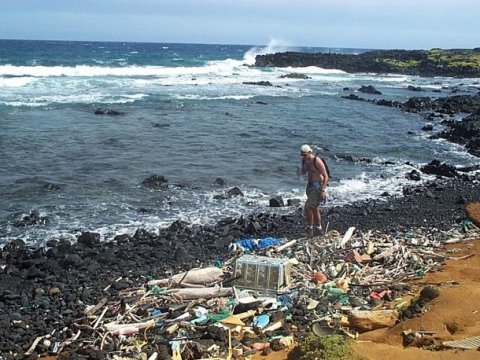
Seas the Day in November – Rethink your Habits: Reduce, Reuse, and Recycle
The Seas the Day initiative encourages and empowers people to take ocean…
Continue reading -
Seas the Day in August – Be Water Wise
The Seas the Day initiative encourages and empowers people to take ocean…
Continue reading -
Weekly Round Up: tis the season for energy polls
If you’re a science communicator or educator at an…
Continue reading -
Could Online Advertising be the Key to Shifting Conservation Attitudes? Data Suggests YES! (Case Study)
Substantial data indicate the power of an online advertising campaign…
Continue reading

- 1
- 2