-
ISG+ Update: A Collaborative Approach to Community Engagement at the Florida Aquarium
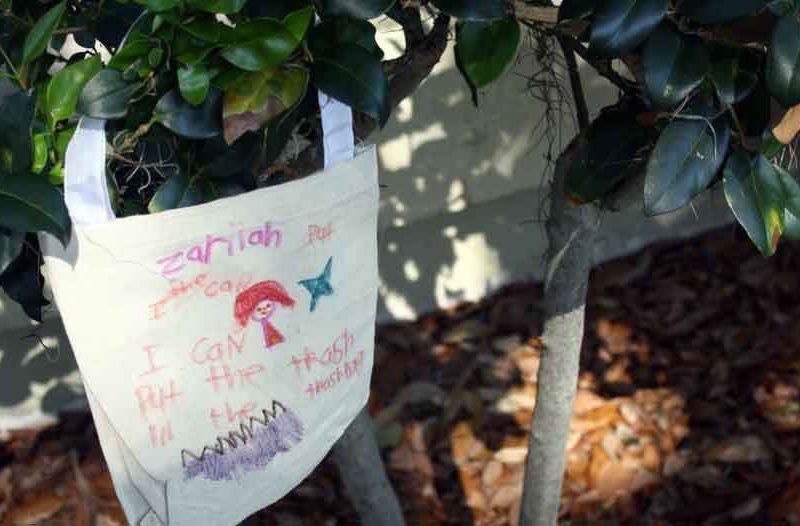
This guest post, by VP of Education Debbi Stone at Florida Aquarium, is the second in a 3-part series on their Innovative Solutions Grants+ project. The Aquarium’s project asks “Can we gain valuable insights about how to engage an underrepresented audience by working together to design the approach?” Click here to read the previous post in this series. What We Set Out to Accomplish The key components of the project so far have included: Work with DeSoto Elementary School’s teachers to plan the best way to design, schedule, and complete the project over the school year Provide the necessary materials and resources to complete projects Engage approximately 200 students in grades K-5 to identify ocean issues and actions that are relevant and meaningful to THEM Help students and teachers create an idea for a conservation ask Share these ideas back with the community and Aquarium visitors Choose one or more of the student-designed asks for staff to refine test over the summer with Aquarium visitors Working with the students was rewarding, and has included visits to the school as well as field trips to the Aquarium. To begin, we reviewed the age-level requirements from the school district and structured our content and activities to align with what the students were already scheduled to learn at key points in the year. This allowed teachers to include this project seamlessly into their classrooms, which was essential, as we had heard from them that it is often challenging to “add something new” or otherwise modify their plans for the year. What Are the Outcomes…So Far? The benefits of the partnership to date have been numerous. The teachers were excited to receive science and environmental education support from Florida Aquarium staff, and the project brought resources to the school that would not otherwise have been possible. From science supplies to consumables, books to posters, the students and teachers were delighted to have access to science materials in both English and Spanish. From the Aquarium’s perspective, it was rewarding to experience the enthusiasm of the school community as they utilized the materials throughout the year while completing their projects. It was also fascinating to hear about topics of interest to the students, as those they selected were diverse and included focus areas such as watersheds, sustainable seafood, “keeping wild areas wild” (responsible wildlife viewing and interaction), pollution, and opting for reusable bags over paper or plastic. An initial challenge was the way in which the concept of advancing conservation through an “ask” or call to action was new to all grade levels. Students were already comfortable with learning the science content and environmental information, yet the next level of how they might use that knowledge to help inspire others was a new venture. Aquarium staff worked diligently with the teachers and students to help them move from “building knowledge of a watershed,” for example, to what a call to action for “helping to conserve a watershed” might be. A great deal more time than expected was spent on this, yet we knew from The Ocean Project’s research that it was needed. From our perspective, we now recognize that “diving into a discussion of a call to action” is likely a greater leap for most than we had realized. This helps us to rethink our strategies in working with our partners, as many of them may be unfamiliar with the application of knowledge as a means of moving an audience to the next level of engagement. An a-ha moment came with the recognition that the students and families involved had similar interests to what we tend to discover with other audiences. Notably, we found that the connection to wildlife and the animals was as important to the Hispanic families from DeSoto as it is for other audiences with whom we work. So a key learning point from this project is that the key to our success may be less about changing or translating our message and more about rethinking our methods. Traditional marketing approaches may fall short, yet working with specific schools can be a successful model. And through this project, we connected with a representative from the Mayor of Tampa’s Hispanic Heritage Council, and she has eagerly agreed to work with us on those methods for better engaging the Hispanic community. The initial phase of our project culminated in a win-win for all involved - Family Day at the Aquarium on May 9th, 2015. The students and their families were proud to act as experts, sharing what they had learned with our diverse visitors, while also encouraging them to consider the calls to action, the ways visitors could help with some simple behavior changes in their own lives. The content was enjoyable to our visitors, who clearly enjoyed engaging with the students, and both the students and our visitors likely learned a great deal in the process. The “asks” they presented included choices around the issues of paper/plastic/reusable bags, organic versus non-organic food, pets/exotics, litter and debris, ocean-friendly seafood, and more. And the approaches to these asks were creative and fun, from making art with “trash” rather than adding it to landfills, keeping a personally-decorated bag in one’s car to collect roadside litter, to becoming a better wildlife photographer rather than striving to “touch” or interact with wildlife. While the asks were not specifically targeted to Hispanic audiences (Family Day was held on a Saturday that reflected our typical diversity of audiences), the recognition previously cited that the student’s interests and enthusiasm mirrored other audiences likely contributed to their asks resonating well with our daily visitors. How Are We Moving Forward? At this stage of the project, we are working on adding some “professional polish” to one of the student-designed calls to action so that we can continue to use it on a regular basis with Aquarium visitors. While we had anticipated going with a unique or otherwise unexpected “ask,” the one that seemed to resonate most with our visitors was the reusable bag call to action as a way to help the animals and address the problem of marine debris. The information presented by the students on this topic seemed to generate the most conversations, the highest number of “surprised” responses (“I never knew that…”), and also the one that visitors felt could be easily accomplished by all ages and backgrounds, yet also make a huge impact. We are now working on strategies to help illuminate the impact of choosing of a reusable bag over a disposable one, including more animal “stories” beyond the problem of accidental ingestion. We also need to develop an evaluation plan, as the students were not able to include that in their ideas. We had already incorporated a reusable bag message into our pathway, doing so even before this project to a sporadic degree, so our work now includes a more formal and organized approach that also includes visitor follow-up. The follow-up component challenges us in this project, as it has with others, as we’ve found that our visitors can be hesitant to provide contact information, but we will look to the successes and lessons learned from the recent “Better Bag Challenge,” and continue to make headway on strategies that incentivize follow-up with our audiences, including our Hispanic audiences. We also plan to gather with the teachers again this fall, as almost all of them are returning to the same school, to discuss the elements of the project that are likely to have the most long-term impact on the school and its students. We will also share with the entire school how their work with us this past year will have long-term impact! Furthermore, we intend to expand our efforts to better reach the Hispanic community by identifying key engagement contacts and organizations, such as the aforementioned Mayor’s Hispanic Heritage Council. In our next blog, we will share information about our continued efforts to motivate our visitors to opt for reusable bags over disposable paper or plastic bags. We will also address our successes and challenges in following up with our visitors after we engage them with this call to action. Are they doing it? And how do we know? About the Author Debbi is VP of Education at the Florida Aquarium and has been challenging herself and others to move beyond information… and onto action! She enjoys living in harmony with all things furry, scaly, feathery, and slimy, whether on land or under the water. She is always eager to work with The Ocean Project and its partners and considerations collaborations key to making a positive difference in the world.
Continue reading -
Research: Our green practices can inspire guests to make change
For zoos, aquariums, and other informal science education centers, the message should be "Don't do as I say, do as I do!" Read the full article from Douglas Meyer in AZA's Connect magazine. If you want to help your guests be more environmentally-friendly, you can start by telling them what your institution is doing. It should come as no surprise that many institutions are already taking major steps to be green: diverse actions that range from eliminating plastic bags from gift shops, to making their facilities more sustainable, and even conducting staff-wide campaigns to develop better eco-habits. The Johnson Ohana Charitable Foundation is supporting zoo and aquarium efforts to reduce plastic pollution New research by The Ocean Project suggests that institutions can better leverage these positive actions as inspiring stories and motivate guests to change their behavior. Invite your guests to go green with you, leading the way by example. “We know from our 16 years of public opinion research that visitors not only expect zoos and aquariums to provide them with information about conservation issues, but also that when they are on site they are inspired to act for conservation and truly trust and appreciate suggestions as to the ways they can join their local aquarium and zoo in going green,” says The Ocean Project Director Bill Mott. “We always understood that the emotional connection to live animals was a big part of that inspiration; yet, what we’ve learned most recently is that guests also can be inspired by what the zoo or aquarium is doing to help solve the problem, especially when these efforts are positioned in a ‘together-we-can’ way that implies taking solutions to scale.” Click here to read the full article (PDF). Interested in trying this out at your institution for World Oceans Day? Organize a trash-free event, or give away reusable bags or bottles to replace disposable plastic trash. Read the Better Bag Challenge Organizer's Guide for details. Image Shutterstock.
Continue reading -
ISG+ Update: NEAq ClimaTeens in the public spotlight for a green future
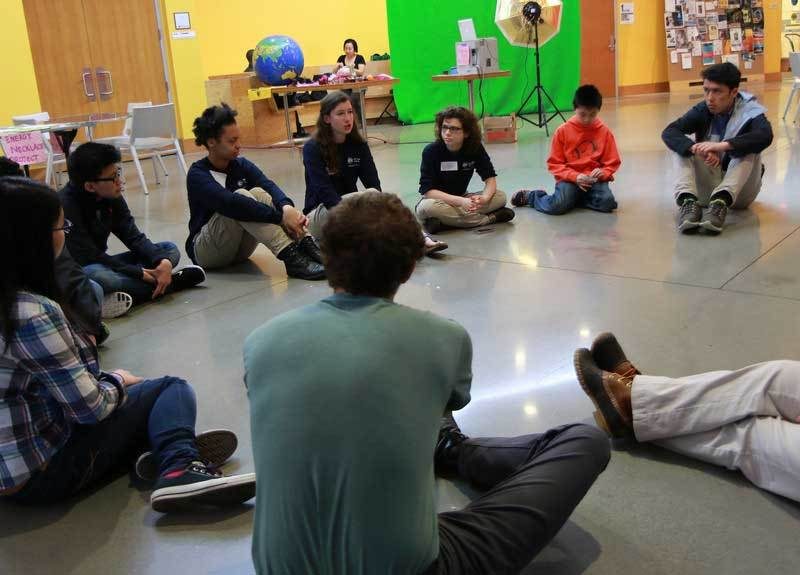
This guest post by Sylvia Scharf of New England Aquarium is the second in a 3-part series on their Innovative Solutions Grants+ project, which investigates how teen ambassadors can make a difference for their city’s green future. The previous post presented the project, this is an update on what's happened since. How do we engage youth in talking about big topics that really matter in ways that are empowering and interesting? This year, the New England Aquarium’s ClimaTeens took on the challenge of talking about climate change. The group was formed from interested teens who already had been involved in Aquarium programs as volunteers, interns, and members of our service-learning program. The initial goal was for the teens to lead a training day for their peers. But given the energy of participants and staff members, and with support from The Ocean Project’s Innovative Solutions Grants + Program, we ramped up our plans and set a new goal of empowering the teens to inspire others to take action. Our first step was to ensure that the teens felt confident when communicating about climate change. During the fall and early winter, the group spent many hours building their understanding of core climate science content and communication theory. Early this spring they began developing presentations to share. ClimaTeens in action When a surprise call came from the office of EPA Administrator, the ClimaTeens were ready. They presented as part of an Earth Day press event with EPA Administrator Gina McCarthy and Energy Secretary Ernest Moniz, as well as Massachusetts Senator Ed Markey, and Boston Mayor Marty Walsh. From that high note, ClimaTeens engaged audiences at several meetings and conferences including the Youth Climate Action Summit at MIT, the Massachusetts Environmental Education Society annual conference, a Career Pathways workshop at the Aquarium, and the Aquarium’s World Oceans Day celebration. Each presentation featured different ClimaTeen presenters, bringing individual voices to the fore. At the end of the school year, we asked the ClimaTeens to reflect back on their growth, and what they might look for in the future. Here are some of their reflections, showing that they had become much more confident. “Before, I was under the impression that climate change was too “big and scary” to tackle on my own, or even with a group. However, now after having been through the ClimaTEENs program, I can say with confidence climate change is a solvable problem (if we do take action).” (Grace C., 17) “I feel like the reason teens are valuable in the fight against human caused climate change is that we lack the limits that adults do in the terms of problem solving.” (Grace L., 15) “My whole family has changed because of my relationship with the aquarium. All of our decisions on purchases and transportation have definitely changed.” (Vida, 17) These reflections also indicate how important the community has become to participants. In working with teens in this kind of setting, social bonding is as important as the science learning. Even though our meetings were only two hours, once a month, the first 15-30 minutes of each meeting was devoted to pizza, chatting, checking in, and joking around. As an educator, the temptation to ‘make every second count’ can work against the importance of teens as social learners. Meetings were sometimes chaotic and full of chatter – but we managed to get amazing things done through it all. As one of the ClimaTeens said, “We could be a really big deal.” Looking forward - asking for action With that success, we’re gearing up for our second step, and we’re upping the ante with a goal of inspiring action! This session’s ClimaTeens - which will include some veterans as well as some new recruits - will have multiple opportunities to put the strategic framing and communication skills they gain into practice – through Blue Discovery Family Days at the Aquarium. And to test their impact, the teens this fall will survey visitors to see if those who heard them were indeed more likely to get the connection between climate change and ocean health, feel empowered to make a difference, and express a willingness to take one or more of the following actions: Wash clothing in cold water and/or let it air dry Have an energy expert conduct a free home energy audit for their house or apartment (through an already established city program) Join a community-based effort, such as Greenovate Boston or the New England Aquarium's live blue Ambassadors Stay tuned for the results! -- Sylvia Scharf, Senior Program Educator at New England Aquarium
Continue reading -
Aquariums invite guests to meet sharks for fun and conservation
We're well into Shark Week 2014, and there's a huge need to represent TRUE shark facts on social media and our outreach. Last year, there were almost 3 million tweets about sharks during this event! You can see Upwell’s great coverage of how things went in 2013. All of this attention means it’s a great time to talk to people about sharks – and especially to demonstrate that sharks are more complex than the bloodthirsty monsters that get people in a frenzy. Let's take Shark Week to the next level, and turn it into a time to educate about and advocate for sharks. There’s nowhere better to talk with people about sharks than at an aquarium, a rare opportunity to get up close and personal with a shark… without the fear. Here are what some of our partners are already doing for sharks. Aquariums bringing sharks and people together Would you hug a shark? Nicky, senior aquarist at The Aquarium of the Pacific would! That’s because she and Fern the shark have developed a special relationship full of trust. Fern allows herself to be put into a state of paralysis called “tonic immobility.” This puts Fern in a vulnerable position, so it took a lot of training and relationship-building to reach this point. As husbandry volunteer Hugh writes: “In reality, our relationship with sharks is what we make of it.” Montery Bay Aquarium positions the “fearsome” great white sharks as ocean ambassadors along with other sharks and rays. Their Project White Shark helps guests look past the Great White’s scary reputation. Their research includes collecting juvenile great whites and studying them before safely releasing them back to the wild. Knowing more about these sharks can help us do an even better job of protecting them. Picture by flickr user noodlefish Whale sharks are some of the most intriguing fish in the ocean – huge and intimidating, yet gentle and docile. Despite their charm, there’s still much we don’t know about whale sharks. Georgia Aquarium, which houses several whale sharks, also studies them in the wild to discover new information - such as how the sharks find food in the open ocean. Their research has even contributed to the creation of a whale shark reserve. The Wildlife Conservation Society studies the movement of whale sharks and their relationship to the tourism industry. Both organizations understand that the more we know more about these spotted giants, the better we can protect them. The National Aquarium also works with sharks in the wild – and they’re inviting you to help out! Anyone age 10 and up can help the aquarium tag sharks on their annual trip. It’s a great opportunity to experience sharks in the wild, and help scientists gather vital information to protect them. Join in the sharky fun You can celebrate shark conversation at your own organization. Why not follow one of these partners' example and throw an event for Shark Week? For next year - how about staging fun events such as a Shark Week scavenger hunt (Texas State Aquarium), or having shark themed apparel for people to wear (The Florida Aquarium)? You can even let visitors interact directly with shark items such as shark egg cases (Cabrillo Marine Aquarium). It's great for young children to have positive associations with sharks and to be able to physically interact with the world around them. Picture by Willy Volk, flick user volk There are many conservation activities you can plan as well. Having speakers talk about sharks and shark conservation is a great idea. Invite anyone from a wildlife artist to a SCUBA team engage your audience about sharks (Oregon Coast Aquarium). You can even stage a sleepover where guests can learn about sharks in a less crowded setting (Newport Aquarium). Are you doing anything to help out sharks? Tell us in the comments! Cover Photo by flickr user Albert Kok
Continue reading -
Communications medley: Survey roundup and framing tips
In this week’s round up: How millennials are thinking about transportation, Americans view environment more important than growth, and the impacts of recent weather events on public perception of climate change. If you’re a science communicator or educator at an informal science center (such as a zoo, aquarium, or museum) trying to understand the perspectives of your audience and find ways to promote conservation action – this is the round up for you! Every week we break down the most interesting recent news and best resources to help you frame the issues as effectively as possible. Some of these resources will be practical communications and framing tips, and others are great starting points for brainstorming future strategies. Jump to… Survey roundup: Protecting our environment and climate change threats Communicating climate change: What to say and what not to! Today's surveys: Protecting our environment and climate change threats Many around the world see climate change as a major threat - This 39-nation survey conducted by Pew Research Center dives into the question of whether or not individuals view climate change as a threat to their country. Did they survey your country? If so, what are the results and what can you do to make a difference? Americans want government action to protect the environment - According to a recent survey by Yale, American's do want their government to protect the environment. But, depending on what they want you to protect the environment from, well, that depends. Check out the link for additional info. Communicating climate change: What to say and what not to! Climate change communication: Key psychological research findings - This two-part report takes an interesting exploration into some of the psychological barriers we face when trying to engage the public in climate change discussions. The results are fascinating. 13 useful tips for climate action from the IPCC Report - More than likely you're aware that the IPCC has released another climate change report. Just as likely, you probably haven't read the massive document. This summary shares 13 important, actionable tips that you can incorporate into your programs today. Can empathy help stop climate change? - Ever wonder why it doesn't work very effectively to tell people that climate change is a major threat to humans? Well, this article takes a look at some alternative ways to get the public to acknowledge climate change is indeed a threat not only to our lives, but to wildlife as well. Don't give up on engaging conservatives - Have you ever experienced the difficulties of communicating climate change to conservative? I know I have! This article takes an interesting look at different ways to engage conservatives in climate change discourse.
Continue reading -
ISG+ New Project: Oregon Coast Aquarium sets out to explore empowering youth for change
This guest post by Teresa Mealy of Oregon Coast Aquarium is the first in a 3-part series on their Innovative Solutions Grants+ project, exploring the question “How do we fuel behavior changes in teens to decrease their impact on ocean acidification?” Drive, enthusiasm and passion for change; these are three qualities that fuel the teen members of the MOANA group (Making Ocean Acidification Nationally Aware). Moana, the Hawaiian word for ocean, represents the underlying interest that connects these teens, but also stands for something more. Making Ocean Acidification Nationally Aware, is not just a name or a connection, it is the ultimate goal for this group of driven, enthusiastic and impassioned youth. With support from the Ocean Project’s Innovative Solutions Grants Program, five youth volunteers will examine a single question: “How do we fuel behavior changes in teens to decrease their impact on ocean acidification?” Using social marketing as a foundation, the teens will explore how to create a campaign to encourage positive behavior changes by their peers. For these volunteers to share their campaign with the world, they need to become informed advocates. Their training will include: Training with a community based social marketing guru, with hands-on activities to develop and practice messaging strategies. Webinars with evaluation consultants to zone in on the behavior asks for their peers, and how they’ll measure the success of their efforts. Workshops and field trips to meet with ocean acidification researchers and experts. The youth volunteers will be involved in every step, from creating the messages, to testing the audiences, and evaluating their techniques. In fact, these teens will not only participate, they will lead the process. Their role as decision makers in this project provides a unique set of challenges and rewards for these young volunteers and Aquarium staff alike. The first task the MOANA Group will tackle, after learning some of the basics of community based social marketing, is deciding on the messages they want to test in addition to the campaign’s delivery mechanisms. Ultimately, the goal is for the volunteers to develop and test a campaign that helps them connect with their peers in a way that compels their peers to learn about ocean acidification and change their behavior. With five minds contributing perspectives to the process, reigning in the collective genius to pick and focus on a limited number of messages may prove challenging. Another challenge is the distance and schedules of the youth volunteers. Most of the participants live on the coast, but a few commute from as much as one-and-a-half hours away. To facilitate communication between in-person meetings, the students are familiarizing themselves with Google Hangouts. This technology allows them to meet face to face from miles away to interact and share ideas in a quick, informal setting without taking precious time away from homework or extracurricular activities. The goal of this project is ambitious, and there are undoubtedly many more unforeseen challenges on the horizon, but one thing is certain, it is a goal these teens whole heartedly accept. Their love for the ocean is inspiring and that is a quality they will count on. They hope their passion, enthusiasm and drive will inspire others to care for the oceans, and in turn, help MOANA. -- Teresa Mealy, Youth Programs Coordinator at Oregon Coast Aquarium
Continue reading -
Aquarium of the Bay: reframing climate change for action
In part 2 of our blog series on past Small Grants projects at zoos and aquariums, Quinn White of Aquarium of the Bay shares what they've learned about making climate change personal, and asking visitors to take action. Background and summary of project Aquarium of the Bay strives to improve the future of San Francisco Bay and its watershed by engaging a new generation of stewards and advancing real solutions for a healthier habitat. We reach a broad audience of residents as well as visitors from all over the world. Our goal was to help these guests commit to addressing climate change on a personal level. Updates on project Thanks to support from The Ocean Project, the Aquarium successfully trained our staff to frame climate change in a way that helps guests understand climate change and its impact on their own lives. Previous experiences frame how people see the world, so two people can look at a prop or an animal and understand it in two completely different ways. By connecting guests’ personal experiences to the topic at hand, we can expand their frame of reference to help them understand the problem of climate change—and its solutions. In addition to our improved messaging, we added an environmental action dimension to visitors’ experiences. Our Climate Change Action cards reinforce messages about taking local action, so Aquarium visitors understand specific ways they can personally make a difference in their own backyard. These tools have been combined to update all five of our climate change-focused daily visitor presentations. Our animal ambassadors and their associated call to action have successfully turned a moment of inspiration into an opportunity for visitors to make lifelong changes that lessen their environmental impact. We took our message online as well—you can find our climate action cards on our website. The online component was inspired by The Ocean Project’s recent research on the importance of online education. Our website now shares these printable cards as well as stories that highlight what our staff is doing to reduce their own carbon footprints. Lessons Learned The responses we’ve received regarding the updated visitor presentations from staff and guests have been very positive. Staff report that it is easier to talk to guests with a more hopeful message and it is easier to have a conversation when connecting to their universal values. The stay time for guests has also increased; in the past, guests would listen for a few minutes and then leave; now they stick around for the entire presentation. Guests are also more engaged and asking more questions, and the presentations have turned into productive conversations, sparking curiosity and inspiring further action. After learning about framing and universal messaging, one staff member said “Frankly, I’m blown away.” He mentioned that he had heard about universal framing but had never realized its effectiveness until the training. Staff have noticed that children especially are more excited when they participate in the visitor presentations. For example, in our ocean acidification presentation, children are excited to learn more about ocean chemistry and why it’s important to keep the ocean’s water healthy. Also, in our solar and wind power presentations where we focus on innovation for alternative energy, visitors leave inspired and children want to learn more so that when they grow up they can help innovate other forms of energy. In regards to putting their training into practice, staff often responded by simply saying, “It really works!” The training also resonated with staff by identifying ways to front load key messages. In other words, putting the conservation message at the beginning of the presentation grabs the audience’s attention and helps them be more invested in the issue. - Quinn White, Development Manager and Grant Writer at Aquarium of the Bay
Continue reading -
One With Nature: Empowering Teens Through Environmentalism
Many of Chicago’s middle and high school students spent their Columbus Day holiday resting, sleeping or watching TV. However, a group of 12 students from across the Chicago area could be found in the Shedd Aquarium’s new Teen Lab—the site for this month’s One With Nature meeting—discussing climate change, environmentalism and what they can do to make a difference in an urban setting. As a senior at Northwestern University, and a new member of the YouthMuse team, I was thrilled to be able to participate in the October OWN meeting. Through this experience, I learned a lot about the passion and drive of this community of environmentally-conscious Chicago teens. Teenagers in the OWN campaign are not just participants but creators. The teens decide what they want to do, how they want to do it and who they want to be as a community of socially conscious young adults. The students craft all aspects of the campaign, down to the “One With Nature” name and branding. Because of their passion, drive and curiosity, as well as the support of Chicago cultural organizations such as the Lincoln Park Zoo, Chicago Botanic Garden and Shedd Aquarium, OWN campaign teens are focused on making real change. Past projects include coastal cleanups, meeting with other teens at city-wide events like the Chicago River Congress, teaching teens to upcycle used clothing and generating OWN’s social media campaigns. The same model of teen-led environmental campaigns has sprouted across the country with varying degrees of success; most notable is Puget Sound: We Love You at the Seattle Aquarium. The true beauty of these campaigns lies in the agency given to middle and high school students to create projects that are geared at real change in the community. Students are given mentoring, resources, tools and a platform for their campaigns. One With Nature meets at Lincoln Park Zoo or in the Shedd Aquarium Teen Lab. Adults in the campaign are not leaders but facilitators of the choices, visions and goals designed by the students. In the safety of this space, Chicago’s community of students is empowered. They are able to watch projects they design and implement come to fruition. They are able to interact with professionals who treat them as future leaders. They are able to push their limits, explore their interests and solidify their visions for the future. According to a 2011 Gallup poll, 77% of U.S. students in grades 5-12 want to be their own boss, 45% plan to start their own business and 42% aim to invent something that changes the world. Through teen-led efforts like One With Nature, zoos, aquariums, and museums give Millennials a place to start charging their power to change their world.
Continue reading -
New Grant Program+ Launched
As part of The Ocean Project's efforts to help our partner zoos, aquariums, museums (ZAMs) develop into the most effective centers for conservation leadership and advance conservation action, we are pleased to announce a new grants program for our partners. With thanks to the National Oceanic and Atmospheric Administration (NOAA) who has funded the first of a three-year project that will allow The Ocean Project to invest in supporting innovators in the aquarium community, yesterday we launched our "Innovative Solutions Grants Program." This program will provide financial resources for our partner aquariums to develop innovative local and regional ocean conservation solutions and stewardship initiatives, specifically targeting youth and minorities. Click here for the RFP. Applications are due November 15th, 2013. We're referring to it as a grants program+ because it will involve much more than just financial resources. The Ocean Project plans to maximize the benefit of the grants by including strategic and technical resources and expertise for awardees to more effectively engage their visitors, including strategic communications capacity building opportunities. We will help accelerate peer-to-peer learning and widely sharing the resulting new strategies and successes with our growing partner network of 2,000 ZAMs and other conservation and education organizations in all 50 states and worldwide. Furthermore, we're also seeking to leverage this funding to expand the program and will work on joint fundraising opportunities with interested partners. America's ZAMs are community anchors. Ongoing research conducted by The Ocean Project and others shows that ZAMs are among the most trusted sources of conservation information and that the public increasingly looks to these institutions for guidance on what they can do to help protect and conserve our environment. Indeed, ZAMs and their professional staffs – the primary audience for all our activities – are "gatekeepers" to the American public. With millions of visitors, ZAMs play an essential role in educating and engaging audiences. We hope that this grants program+ will provide our partner ZAMs with the resources and strategic communications services to do more for ocean and climate conservation and will empower them to succeed in their role as trusted messengers for conservation solutions.
Continue reading -
Fun and easy: the key to making people excited to help the ocean
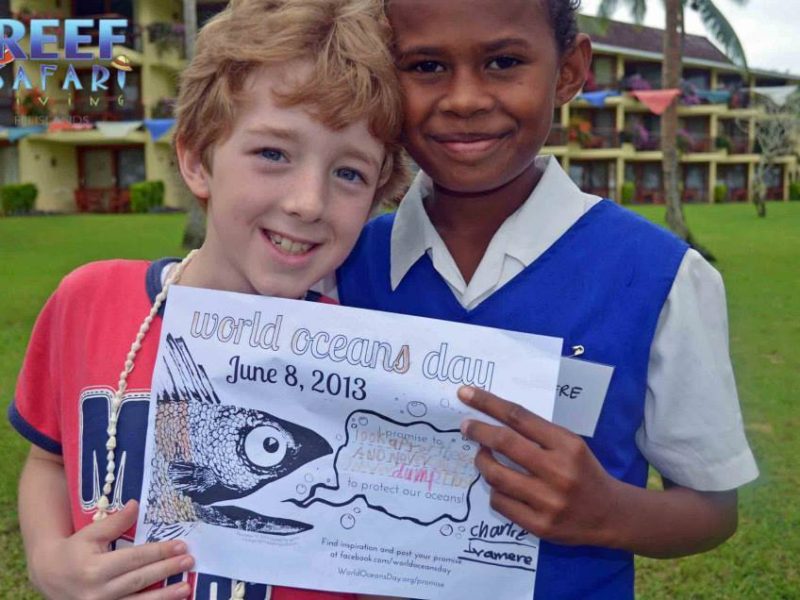
We were thrilled that so many of our zoo and aquarium partners joined us in promoting Ocean Promises encouraging visitors to pledge to do something to help the ocean. We had more than 300 promises sent to us with hundreds more collected at World Oceans Day events. Our partners were especially enthusiastic about this activity, which can serve as a great step onto a long-term journey for people interested in protecting the environment. I say “first step” because no small, one time action will immediately turn a person into a full-time environmental super hero! Low investment actions like the Ocean Promise are most effective when used in concert with a full suite of other community-based social marketing techniques. Of course, many institutions don’t have the resources, funds, or time to follow through with visitors after they make a promise. That’s not unusual and it doesn’t mean you shouldn’t ask for promises: we know that people who make public promises are more likely to change their behavior, and more likely to take bigger actions when approached either way. An easy, low investment campaign like Ocean Promises is a great way for staff at zoos, aquariums, and museums to achieve several aims. It emphasizes the institution as a conservation organization, and reminds the guest that the wild counterparts of the resident animals need our protection. It can give interpreters a chance to experiment with the most effective strategies to communicate with their visitors on issues, and offer insight as to which actions are resonating with visitors. As many educators and communicators have discovered, it’s very hard to find a one-size-fits-all action to suggest to visitors. Here are a few best practices that our partners have followed in order to overcome various challenges: Tip 1: Create the space for a conversation Identify a time and space when you'll be able to talk with guests about what promise is right for their family. Oregon Coast Aquarium A great option that several of our partner institutions chose was to make the Ocean Promise a crafty activity for kids. The kids are occupied with something fun, while staff has a chance to chat with the parents. Several institutions made Promise Bookmarks that kids hung up or took home or, like Oregon Coast Aquarium, made a Community Pledge mural that showed everyone’s promises together. Wendy Spaulding, Education Programs Coordinator for the Oregon Coast Aquarium said they plan to take it further next year. “We had an Ocean Pledge Mural craft activity, which had kids select a marine animal with a 'Ocean Pledge' written on it (or they could write their own pledge on a fish), that they could color, and then add to our Community Mural, which was erected specifically for the event to provide a visual representation of all the promises made… Next year, we would like to modify the activity to be even more interactive, with kids having to actually write their pledge, instead of just choosing an animal with one written on it.” MaryEllen Mateleska, Curator of Conservation Education at Mystic Aquarium added, “Although staff have a list of suggestions to share with families, we enjoy making the ‘ask’ into a conversation.” This will make it more likely that the change will actually fit into the family’s lifestyle, and they will feel like they chose it for themselves personally. MaryEllen further suggests talking to the whole family and guiding them through the process with questions: “These interactions would begin by directing questions to the younger members of the family that would open the discussion on conservation actions (e.g. ‘Did you know that today we are celebrating World Oceans Day?’ ‘What is your favorite ocean animal that lives at the aquarium?’ etc.). If a family was having difficulty brainstorming a promise, staff would prompt them with questions like: ‘Do you recycle at home?’ ‘Can you think of something else that could be done to reduce your trash even more?’ Or ‘Do you turn off the water while you’re brushing your teeth?’ ‘Can you think of something else that you can do to help conserve water at home?’” 2. Make it fun and easy for guests to capture their promises in a photo A few of our partner institutions experimented with taking photos of guests with their promises, and Georgia Aquarium even dared to take video. However, they learned there’s definitely a science to the art of guest photography! Cagney Smullin, Events Supervisor at Utah’s Hogle Zoo, found parents are more eager to take a photo pledge or do an activity with their kids than on their own. She said: “I think it was just uncomfortable for them to take the photo themselves...having a staff photographer or some sort of photo ‘booth’ would give it more of a fun element and more people would participate. You can then e-mail the photo to them from the app and also have the option of putting it on Facebook with the guests’ permission.” Sign at Hogle Zoo Making it fun was a point echoed by others. For example, New England Aquarium provided sea creature costumes for children and adults to wear when posing with their ocean pledge or statement about why they love the ocean. Not only is this a fun way to blow off steam, it’s also a family photo to remember the trip, and the promise to the ocean!
Continue reading