-
Seas the Day March – Green Transportation Choices
The Seas the Day initiative encourages and empowers people…
Continue reading -
Communications medley: Baby it’s cold outside
In this week's round up: audience insights from new polls, behavior change thoughts, weather's impact on climate belief, and why your taste for seafood makes whales cry. Welcome to the first round up of the year! I've tried to keep things short since there's a lot of good stuff to cover. If you’re a science communicator or educator at an informal science center (such as a zoo, aquarium, or museum) trying to encourage conservation action – this is the round up for you! Every week we break down the most interesting recent news and best resources to help you frame the issues as effectively as possible. Some of these resources will be practical communications and framing tips, and others are great starting points for brainstorming future strategies. Jump to... Audience insights Behavior change Weather and climate Other thoughts Audience insights Americans: Sure, climate change is happening. So what? A few new polls (USA Today, Yale Project on Climate Change Communication) have come out recently with similar results. Around 2/3 of Americans believe that the Earth is warming, but only around 1/3 think it will affect them. However - 65% think it will harm future generations of people and wildlife. Latino Voters Oppose Coal Exports A new poll supports what we already know - Latina/o voters are greener than other Americans. This poll found 64% of Latinos say coal exports to China should be decreased. Behavior change From Behavior Change to Transforming Everyday Practices: The Latest in Behavioral Science This is an interesting article that takes a mile-high view of how we can best encourage sustainable behavior change. Baby it's cold outside... so how about that global warming? Belief in climate change often changes with the seasons, but why? A new study may have the answer - humans tend to use the information most readily accessible. That's why people are less likely to believe in climate change when it's cold out, and more likely to believe on a very hot day. Sadly, the solution to this issue isn't readily accessible. Here's another take, with notes on how UK residents view this issue. Other thoughts Insights from Brevard Zoo’s youth-led environmental summit Check out this great guest post on the TOP blog from our partners at Brevard Zoo. They leveraged a small grant from our program and held an environmental summit for-teens, by-teens. Check out the post for some great tips both on how to plan a summit as an adult, and how to promote it as a teen. Whales, Dolphins Are Collateral Damage In Our Taste For Seafood It's a tough fact to face, but show some mammal solidarity! Our taste for seafood negatively impacts these charismatic megafauna and it's time to face facts. "Biologists have estimated that 650,000 are killed or injured each year. Of that, 300,000 are dolphins and related cetaceans, and 350,000 more are seals and sea lions." These facts could be a great jumping off point to share sea life-friendly seafood tips with the public. A Dose Of Nature Helps City Dwellers Fight Their Need For Instant Gratification In today's edition of "stuff I totally knew already but had no proof..." getting outside is good for your brain! More than that, you don't even have to get your body outside. There's evidence that even looking at a photo of nature can be good for the brain. This info could be handy for organizations such as zoos, aquariums, museums, nature centers, etc. You may not know why you think what you think Last but not least is a great article on motivated reasoning, framed from a political perspective. It discusses how political affiliation - or "tribe" - can seriously impact the way we form opinions about neutral information. Certainly worth a read.
Continue reading -
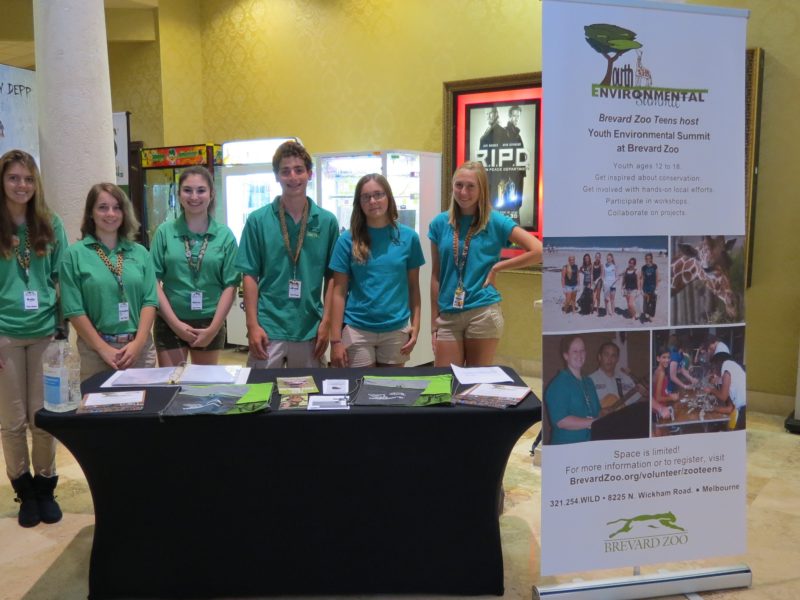
Insights from Brevard Zoo’s youth-led environmental summit
In part 1 of our blog series…
Continue reading -
Seas the Day December – Give Back to the Environment
The Seas the Day initiative encourages and empowers people to take ocean…
Continue reading -

Communications medley: consumption v. population and choosing words
In this week’s round up: group consensus and you,…
Continue reading -
Communications medley: Audience insights from a proliferation of polls
In this week’s round up: masses of info about…
Continue reading -
Communications medley: climate change is… awkward?
In this week's round up: making the link between healthy ecosystems and 'green' actions, the basics on communicating climate and extreme weather, and audience insights. We're reorganizing our communications round ups to be more useful - please give us your feedback! If you’re a science communicator or educator at an informal science center (such as a zoo, aquarium, or museum) trying to encourage conservation action – this is the round up for you! Every week we break down the most interesting recent news and best resources to help you frame the issues as effectively as possible. Some of these resources will be practical communications and framing tips, and others are great starting points for brainstorming future strategies. Jump to... Green actions and wildlife Climate change is... awkward Boo! Behave! Audience updates Linking green actions with wildlife Animals are more than great entertainment - they're great motivation to live an environmentally-friendly lifestyle (check out CLiZEN and others for more on that). But, it's important to explicitly make the link between healthy animals, ecosystems, and the actions of humans. Here are a few articles that may help: Overfishing of sharks trashing coral reefs Actions can have unforeseen consequences. One study found that overfishing sharks off Australia's coast resulted in more mid-level predators, and fewer herbivores. One such herbivore, the parrotfish, is vital to a healthy coral reef. This is a great example of a story that gives an opportunity to educate about food chains, as well as make a point about the effects of human actions. Marine Protected Area Increased Fish and Didn’t Hurt Fishers: Study This win-win scenario is a winning storytelling opportunity. We want to make sure fish populations are healthy, but we don't want to hurt fishers who depend on catching wild stocks for their livelihood. The perfect solution is a marine protected area! If you are near an MPA or national marine sanctuary in the US, talking about this success is a great way to make the local link. So... climate... um... awkward. Talking about climate doesn't have to be an awkward situation if you go in prepared. Here are some tips and food for thought. Tip Sheet: Readying the Ground for Climate Conversations Some situations make it tougher to talk about climate than others, but you don't need to go in blind. This tip sheet from ClimateAccess gives great ideas for prepping a difficult environment for environmental discourse. The Basics: Climate and crazy weather With droughts, wildfires, and floods, everything is not coming up aces for weather in the US - and climate change may be one cause of the bad luck. This is a really complicated issue, where to even begin? With the basics, as this flashcard from Sightline breaks it down. Finding a Better Message on The Risks of Climate Change This interview with Dan Kahan is more food for thought than practical tips. Kahan studies the science of science communication, and argues that "It’s not the lack of scientific understanding that has led to conflict over climate change, but rather the need to adhere to the philosophy and values of one’s 'cultural' group." Well worth a read, as is his blog if you have time on your hands. Boo! Please behave! Can we scare people into changing their behavior for the better? We can sure try, and we have been for years in the public health sphere. But research shows it can be an iffy strategy, and there are four key ingredients that are vital to a "fear appeal" being successful. This overview has important lessons for climate and conservation communicators, particularly you need to sell the solution as well as the problem. Audience updates Have you ever said to yourself "My audience is so conservative, no way will they care about doing hippie dippy greeny environmental stuff!"? Maybe think again. Check out this ClimateAccess tip post about how to communicate with conservative-leaning outdoorsmen, and this study showing evangelicals are willing to take action on global warming.
Continue reading -
Seas the Day in August – Be Water Wise
The Seas the Day initiative encourages and empowers people to take ocean…
Continue reading -
Shark Week: Sink your teeth into these Shark Conservation Tips
In light of Shark Week, many of our
Continue reading -
Weekly Round Up: ecosystems at our service
In the round up this week: ecosystems at our service, bag the nag if you want shoppers to be green, and keeping up with the Joneses lawn. If you’re a science communicator or educator at an informal science center (such as a zoo, aquarium, or museum) trying to encourage conservation action – this is the round up for you! Every week we break down the most interesting recent news and best resources to help you frame the issues as effectively as possible. Ecosystems: at your service! A new study by Stanford researchers published in Nature shows just how important healthy coastal ecosystems - oysters, reefs, swamps, dunes, etc - are to healthy coastal communities. The study mapped existing such systems in the US and found that without them "twice as much coastline and 1.4 million more people will be highly exposed to climate risks." Try using the concept of free ecosystem services (in plain language) to communicate with audiences and visitors about the value of conservation. "Nature" isn't just important to protect because of abstract, distal reasons (it's beautiful! biodiversity!); it has an immediate effect on the health and economies of coastal communities. Putting it in terms of recent events is even more impactful: healthy coastal ecosystems help protect people from extreme weather like Hurricane Sandy, they do it for for free! Oh, behave If you read last week's round up, you know that motivated reasoning can make it hard to get through to people about their beliefs and habits. Here are a few interesting studies that get at why people behave the way they do, and insights for how communicators may be able to nudge them in an eco-friendly direction. Study: Remind people to make green decisions, don't make them feel guilty French and Italian researchers experimented with two community-based social marketing techniques: public declarations and prompts. They asked shoppers entering a supermarket to sign a poster that said “Stop using plastic bags. If I can do it, so can you.” Then - half were forced to admit they sometimes used plastic bags, and the other half were left alone. Researchers then observed how the two groups behaved at the checkout line: people who only signed the poster were more likely to buy a reusable bag (rather than take a free plastic bag) than the people who were forced to admit they sometimes used plastic. The takeaway? Asking someone to make a public pledge or publicly identify themselves as "green" will motivate them to act accordingly - it's uncomfortable to feel like your actions don't match up with your identity. However, if you guilt and nag them about it they might be more likely to rationalize and justify their bad behavior, making them care less about acting green in the future. Study: Homeowners Use Lawn Chemicals Mostly Because Neighbors Do It Ohio Sate University recently investigated why people use chemicals on their lawns - 62% of respondents to their survey said their lawns are important to their "sense of social status and acceptance in their neighborhoods." A quote from one of the researchers: "Based on the study, the main factor influencing a homeowner's decision to use lawn chemicals is whether neighbors or other people in the neighborhood use them," Blaine said. "Homeowners crave acceptance from their neighbors and generally want their lawns to fit in with their surrounding community, so they adopt their neighbors' practices. It's not that they feel pressured to treat their lawns. Rather, they genuinely want to fit in." You don't have to be actively pressured to be motivated to keep up with the Joneses. The study concluded those hoping to encourage responsible environmental lawn care would be more successful targeting their campaigns at neighborhoods rather than individuals. This study is a great example of why it's important to know your audience's motivations when planning a campaign to change behavior.
Continue reading