-
The Foxes are Guarding the Henhouse: An unprecedented need to protect the policies that protect our environment
At a watch party for President Trump’s inauguration ceremony in January 2017, I had a conversation with a friend who’s a lawyer at one of DC’s biggest law and…
Continue reading -
Collaborating for Conservation in 2018
Happy holiday season! Thank you to all the organizations from around the world that are involved in our partner network and working to advance conservation….
Continue reading -
ISG+ Final Report: Tasting Success at the Arizona-Sonora Desert Museum
This guest post is submitted by Debbie Colodner, Director of Conservation Education and Science from the Arizona-Sonora Desert Museum, and is the last in a 3-part series on their Innovative Solutions Grants+ project where they partnered with Leading for Good to see if they can move the needle on sustainable seafood in Tucson, Arizona. With Tasting Sustainability, our effort under the Innovative Solutions Grants + Program, we wanted to go beyond Desert Museum business as usual. We understood that in order to make a difference for sustainable seafood in our desert city, we needed to go beyond efforts to raise awareness and get closer to the point of sale, particularly at restaurants. And we hypothesized that there could be a win-win in promoting sustainable seafood by reaching out to local restaurants and engaging millennial audiences. We were right! Moreover, this effort has built our confidence and capacity to go outside of our comfort zone and begin a social marketing initiative. Working with our partner in this effort, Lead Local and their Leading for Good program, our Museum staff and interns alike had opportunities to learn about how to research an audience’s interests (In this case, local restaurants’ needs, wants and constraints), as well as inexpensive and rapid methods to prototype engagement ideas. SINCE OUR LAST POST As described in our last blog post, the strategy we chose for further testing was to co-host events with local restaurants, and we were able to test three different types of events last Spring. The first was at a downtown restaurant, in concert with “Agave Week,” which is focused on agave-derived and other native and local food products. The event attracted a large, diverse crowd, and our project interns encouraged people to take a seafood watch guide, take a pledge (using a photoframe cutout) and post it to social media. Our major lesson learned was that without food/beverage samples to offer it was hard to get this audience’s attention, especially at an event with a different theme, and interns were able to distribute 30+ guides, and only 6 people took a pledge. Nonetheless, the interns enjoyed the chance to raise awareness and participate in this locally grown and growing festival, and felt like they made an impact (awareness) on the people with whom they spoke. The second event was at a more “suburban” beach-themed restaurant which is already a Seafood Watch partner. The restaurant owner acknowledged an “aha” moment when he realized that there is value in promoting that partnership to attract younger customers. He bought all new uniforms for his wait staff – t-shirts promoting sustainable seafood. The event drew more customers than usual for a Friday night in the slow season, making it a success for the restaurant. And at this event, staff from the Museum and Monterey Bay’s Seafood Watch program staffed an educational table with interactive displays outside of the restaurant. Everyone entering the restaurant saw the display materials, and most stopped to talk - in contrast to the Agave Fest, the sustainable seafood messaging was the focus in event advertising, and that helped engagement. But most of the diners were older adults, many from the Museum’s docent and volunteer corps, so still an ongoing challenge in reaching younger adults. Karin Stratton from Monterey Bay's Seafood Watch Program with participants at Fini's World Oceans Day Event, demonstrating Fini's new tee shirts for wait staff and for purchase. The third event was “World Oceans Night” at the Desert Museum. Based on the connections forged by our Interns, two new restaurants were able to attend and promote their sustainable choices, along with several non-restaurant community partners – a trend we hope to continue. Restaurant participants were pleased, indicating that with a crowd filled with many millennial-aged adults among the 900 people who attended, they would like to come again next year and that they would like to continue to partner on sustainable seafood issues, including moving toward becoming a Seafood Watch partner (for two of them). Anecdotally, we can say again that developing a seafood themed event was helpful, and with a push we did better in terms of attracting a millennial audience; however, next time we will look to have better systems in place to track engagement and the ages of those attending. Throughout this effort we’ve had great response from the local restaurants – nearly all we asked were interested in working with us on this issue, including in developing these events. And our experience suggested that the chefs were the key people with whom to work. However, our research with the restaurants and our experience at these events revealed that local awareness of sustainable seafood has not yet reached the threshold above which it would be valuable for the restaurants to tout their commitments. Somewhat ironic given that we started this project with the proposition that we needed to do more than awareness-raising! And, again, we now know that there are several restaurants in the Tucson area who see benefit in helping the Museum build this awareness, even if they are not ready to become full Seafood Watch partners. The other major goal of the project was to enhance the Museum’s engagement with younger adults (millennials), and to empower young adults to make positive change in their communities. At the start of the project, 3 of the 7 interns involved reported that they were unsure they could do anything to impact ocean health and fish populations. In the final survey, 100% of responding interns were sure they knew what they could do to make a difference! And while initial surveys revealed that most interns viewed the museum as a beautiful place to see desert wildlife, at the conclusion, one participant called the Desert Museum “a leader in conservation and collaboration to connect the community with the natural world.” We also learned that college students can be persuasive and engaging spokespeople for more sustainable seafood promotion at restaurants, and that projects like this help them develop skills for making positive change in their communities. OUR ADVICE TO OTHERS So in summary, here are some lessons for other zoos and aquariums that may want to advance sustainable seafood: Engage the power of young professionals or university students to help make the case that millennial customers care about where their food comes from Reach out to local restaurants, interview chefs and owners to gauge their awareness and interest Work with interested chefs/owners to partner on strategies to build the local sustainable seafood brand Recognize their interest and steps toward seafood sustainability, even if they may be short of full Seafood Watch partnership Encourage restaurants to promote their sustainable seafood choices more boldly, and explore opportunities for mutually beneficial events (noting that the public may not yet be aware!) Help create a network of local chefs/restaurant owners Next steps for Tasting Sustainability THIS IS NOT THE END! The Museum’s next steps in Tasting Sustainability are to further connect local Seafood Watch partners and potential partners with additional coordinated events at restaurants, and by making the network visible through the ASDM website and at our new Stingray Touch exhibit. And continue to focus on collaborating with the millennials! We will continue our efforts to put Tucson on the map as a fish friendly city and establish a model for other cities to follow.
Continue reading -

ISG+ Update: Tasting Sustainability at the Arizona-Sonora Desert Museum
This guest post is submitted by Debbie Colodner, Director of Conservation Education and Science from the Arizona-Sonora Desert Museum, and is the second in a 3-part series on their Innovative Solutions Grants+ project where they are partnered with Leading for Good to see if they can move the needle on sustainable seafood in Tucson, Arizona. As described previously, the Tasting Sustainability Project partners the Arizona-Sonora Desert Museum with the Leading for Good Internship Program in Tucson, Arizona to test strategies for engaging local restaurants on sustainable seafood issues, and encouraging changes in their sourcing. As a secondary goal, the Museum is testing strategies for engaging young adults (millennials) in its mission and programs. We are happy to report progress on both fronts. Identifying restaurants and understanding their interests Based on their interviews, the team divided restaurants into four types (upscale, tavern, family/cultural and hip/urban), finding that at least in this small sample the upscale and hip/urban tended to be more interested in the issue. They then developed and presented customized strategies for raising awareness and engaging customers, specifically young adult customers. The four strategies included in-restaurant signage (table tents, posters, menus), social media campaigns, training for wait staff, and co-hosting partner events with the Desert Museum. The team prototyped each of the strategies with “mini experiments” at four of the restaurants, learning lessons on the first three before deciding to go forward with the fourth. Signage - The feedback on the table tents/signage was that restaurant owners didn’t feel like it was their role to “educate” their customers on this issue, but rather respond to customer questions. Social media campaign – The group proposed having customers post pictures of themselves and their sustainable dishes and tagging the restaurant, but that was thought to take too much time to explain and compile into useful advertising for the restaurant. Training – The group also tried offering training for wait staff during a staff meeting, but time was very limited. The restaurant where this was prototyped, as well as one other continue to be interested in this as part of an ongoing partnership with ASDM, however. Events – The feedback was much more positive on the possibility of co-hosting events at restaurants and/or at the Museum, so the group determined that this would be the strategy they would like to test further, including social media and marketing for the events. Restaurants value the potential for increased exposure from this strategy. Next we will be testing two restaurant events and featuring sustainable seafood at World Ocean Night at the Museum (We’re compiling those results now!) Some promising results so far on our primary goal of engaging local restaurants on sustainable seafood issues: 8 of the 13 already have said they are interested in going forward and partnering in the Museum’s sustainable seafood efforts! One is already a Seafood Watch partner and 6 are interested in learning more about this possibility. Another has already explored this, but their parent company is not ready to pursue it. (The Museum is also exploring the interns’ recommendations to develop a local seafood sustainability partnership program that might be a steppingstone to a full partnership with Monterey Bay.) Two new restaurants have been recruited to offer sustainable seafood tastings at World Oceans Night, and will join two that have participated before. With respect to our secondary goal of young-adult engagement with the Museum, this project has been extremely successful with the interns themselves. The college interns showed positive change in measures of self-efficacy, became confident and competent educators around sustainable seafood issues, developed a much greater affinity for the Desert Museum, and were much more likely to recommend the Museum to their friends. What we’ve learned from this program also has helped us recruit many more “millennials” to our interpretive volunteer corps as well, with 30 of the 46 new stingray interpreters coming from this younger demographic. Our next steps: We will try to answer the following questions related to co-hosted Sustainable Seafood events: Do they increase the likelihood of action on sustainable seafood issues? Do they drive more customers to restaurants that serve sustainable seafood? Do they increase the Museum’s engagement with younger audiences? More soon! In the meantime, have a look at our power point presentation on our project: [pdf-embedder url="https://theoceanproject.org/wp-content/uploads/2016/07/ASDM-Tasting-Sustainability-Final-Presentation-May-2016-1.pdf"]
Continue reading -
ISG+ New Project: Tasting Sustainability at the Arizona-Sonora Desert Museum
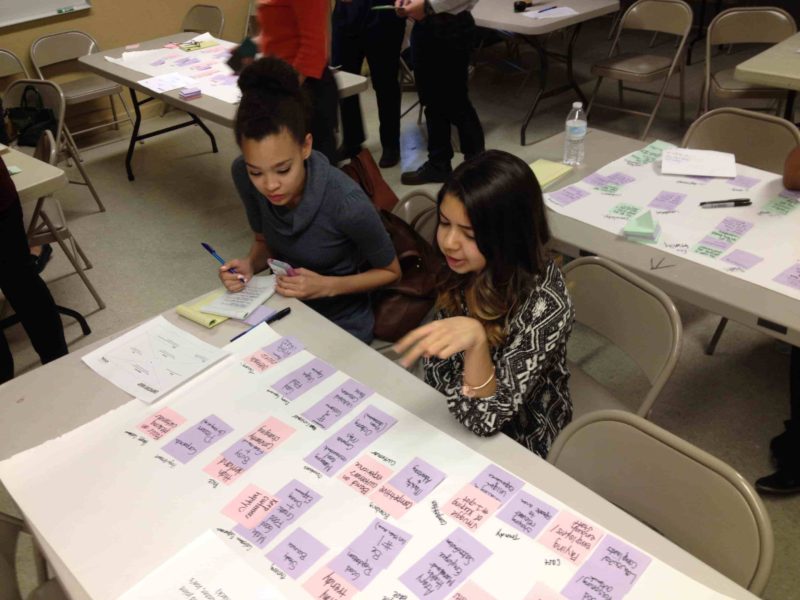
This guest post is submitted by Debbie Colodner, Director of Conservation Education and Science from the Arizona-Sonora Desert Museum, and is the first in a 3-part series on their Innovative Solutions Grants+ project where they are partnered with Leading for Good to see if they can move the needle on sustainable seafood in Tucson, Arizona. Some might think sustainable seafood an unlikely conservation focus for a desert city. However, Tucson was just designated the first UNESCO “World City of Gastronomy” in the United States, so there is a strong community focus on food, including seafood. For more than a decade, The Desert Museum has partnered with Monterey Bay’s Seafood Watch program to educate its audiences about declining fisheries and marine habitats, with particular attention to the unique sea at the heart of the Sonoran Desert, the Gulf of California. In previous efforts here at the Desert Museum, we found visitors not very willing to download the Seafood Watch app, but quite willing to take a printed card, and very positive about the idea of using it. Yet we also have heard that using the cards or app has been problematic (e.g. too confusing, too much time, sellers don’t know the answers) and we weren’t seeing any evidence that our efforts had led to larger changes in local restaurants and markets. So we wondered, what else can we do? Perhaps we could work with some of what research by The Ocean Project and others tells us are the most innovative change makers and consumers on the planet – millennials? Perhaps with some enthusiastic millennials we could work closer to the supply side – with not just changing their own buying habits, but also reaching out to restaurants? Asking these questions led us to apply for an Innovative Solutions Grant! Getting started Leading for Good interns in an "ideation" lab. We decided to begin by connecting with some local millennials who are interns in the Leading for Good Program. These interns are college students who want to make a difference in the local community, and, as such, joined this 16-week program for 10 hours each week. Together we’ve created the “Tasting Sustainability” project. As a primary goal, the interns are aiming to engage and persuade local restaurants to take action by altering their menus, and, ideally, becoming Seafood Watch partners, with the hope of recruiting six new restaurant partners by the end of the project. As a secondary goal, the Museum hopes to deepen its engagement with our local millennials, and learn how to work more effectively with millennials to move the needle on this and other conservation issues as well. To help get the interns off to a quick start, Desert Museum staff previously surveyed some students at the University of Arizona. We know our sampling was biased toward students already tuned into environmental issues, based on the classes surveyed, but we found the results nonetheless encouraging. Out of 116 students, 73% reported that they were already generally aware of sustainable seafood efforts, and, important for our project, they also indicated that they would be more likely to eat at restaurants that serve sustainable seafood, whether or not they eat seafood! Armed with this survey data, and with some additional training by LeadLocal’s Kristin Wisneski, and a Sustainable Seafood “bootcamp” by Desert Museum Education Specialist Julie Xelowski-Brooker, the interns now have started their research by talking with local restaurant owners. Here’s an excerpt from their blog, which can be found in full here. Our collaboration with the Arizona-Sonora Desert Museum and Monterey Bay Aquarium’s (MBA) Seafood Watch is now in full swing and we are excited to be part of something that is not your normal approach to creating change… We are the Leading for Good interns and…we plan on measuring the success of (our) project in a few different ways. Increase the number of Tucson restaurants serving and promoting sustainable seafood on their menus. Ideally, increase the number certified by MBA’s Seafood Watch. Understand what truly motivates or inhibits vendors from becoming certified. Reflect on our own journey to becoming changemakers in the community. Leading for Good interns present to community members and restaurant owners. In the next weeks, the interns will be summarizing and using the research they are doing with restaurant owners to finalize their restaurant outreach and recruitment plan. Meanwhile at the Museum we are also exploring what incentives and partnerships we might be able to offer to restaurants, and how we might encourage more millennials to engage in this effort, and others like it. Stay tuned for a view from the “test kitchen” next time.
Continue reading -
Seas the Day in July – Eating for a Better World
“After a good dinner one can forgive…
Continue reading -
Severe Weather Alert for This Week:
The Internet Will be Flooded with Virtual Sharks Shark Week…
Continue reading -
Seas the Day in July – Eating for a Better World
"After a good dinner one can forgive anybody, even one's own relations." -Oscar Wilde "If more of us valued food and cheer and song above hoarded gold, it would be a merrier world." -J.R.R. Tolkin “Seas” the days of July by thinking about what you eat. Your well-traveled food comes from all over the world, and is grown with many different techniques, often in ways that aren't sustainable. The decisions you make about what goes on your plate affect much more than just your dinner table. Your choices can help craft a healthy future. Find out where your fish is from. Seafood can be a very safe and healthy dish for you, but you have to check out where it comes from. Certain forms of seafood are high in toxins and mercury, while others aren't fished sustainably. Some scientists worry that if our current rate of fishing continues, the world's fisheries can collapse. We can help through the decisions we make at home. Curious what fish are ocean-friendly? You can download the seafood watch app right onto your phone. This app will help you find seafood that's good for you, and the sea! By Natalie Maynor, flickr user NatalieMaynor Minimize meat. If you're a meat eater, think about participating in Meatless Mondays. This may not only improve your health but it also has great environmental benefits. The meat industry generates a large carbon footprint which contributes to climate change. You can help prevent this by minimizing meat consumption. Chow down close to home. You don't want your food to be more well-traveled than you are. On average, our food has traveled 1,500 miles to reach us and consumes a lot of energy to make it that far. The great amounts of fossil fuels used in this trip harms our oceans. In comparison, local food doesn't have to go on a long journey to reach our plates. Local food has tons of benefits. It helps the local economy and preserves the farms near your home. Since it's fresher and hasn't had to travel far, it usually tastes better than the alternatives. This food also has more nutrients and is generally healthier for you. Farmers' Markets are a good place to pick up delicious food directly from farmers. To find a location, you can search using the USDA's directory. Feed yourself. Growing food can be a fun (and tasty!) alternative to picking it up at a store. Why not celebrate this Fourth of July by staging your own food mini-revolution? If you have a garden, why not grow some tomatoes? By: Marju Randmer, flickr user isutekitaja Or if you want to grow something indoors, herbs like basil and oregano will do well if they are put in a window with lots of sun. You can even use some of your home-grown food to make your Fourth of July meal even tastier! Cover Photo by Ian Sheddan, flickr user imsvsims The Seas the Day initiative encourages and empowers people to take ocean conservation personally. Each month, we feature a new conservation theme with ways to help so come back regularly for more ocean-helping ideas and tips! Created mainly to support our partner ZAMs (Zoos, Aquariums, and Museums and other visitor-serving organizations involved in our growing network) in motivating conservation action, Seas the Day is for you to tailor for your own purposes. Please use any or all of the content verbatim and re-post on your own blog, social media channels, website, newsletter, etc. We have a large database of action tips and related content for you to use so let us know what’s most helpful and what other action-able types of information and resources we can provide to enhance your conservation efforts.
Continue reading -
Communications medley: Baby it’s cold outside
In this week's round up: audience insights from new polls, behavior change thoughts, weather's impact on climate belief, and why your taste for seafood makes whales cry. Welcome to the first round up of the year! I've tried to keep things short since there's a lot of good stuff to cover. If you’re a science communicator or educator at an informal science center (such as a zoo, aquarium, or museum) trying to encourage conservation action – this is the round up for you! Every week we break down the most interesting recent news and best resources to help you frame the issues as effectively as possible. Some of these resources will be practical communications and framing tips, and others are great starting points for brainstorming future strategies. Jump to... Audience insights Behavior change Weather and climate Other thoughts Audience insights Americans: Sure, climate change is happening. So what? A few new polls (USA Today, Yale Project on Climate Change Communication) have come out recently with similar results. Around 2/3 of Americans believe that the Earth is warming, but only around 1/3 think it will affect them. However - 65% think it will harm future generations of people and wildlife. Latino Voters Oppose Coal Exports A new poll supports what we already know - Latina/o voters are greener than other Americans. This poll found 64% of Latinos say coal exports to China should be decreased. Behavior change From Behavior Change to Transforming Everyday Practices: The Latest in Behavioral Science This is an interesting article that takes a mile-high view of how we can best encourage sustainable behavior change. Baby it's cold outside... so how about that global warming? Belief in climate change often changes with the seasons, but why? A new study may have the answer - humans tend to use the information most readily accessible. That's why people are less likely to believe in climate change when it's cold out, and more likely to believe on a very hot day. Sadly, the solution to this issue isn't readily accessible. Here's another take, with notes on how UK residents view this issue. Other thoughts Insights from Brevard Zoo’s youth-led environmental summit Check out this great guest post on the TOP blog from our partners at Brevard Zoo. They leveraged a small grant from our program and held an environmental summit for-teens, by-teens. Check out the post for some great tips both on how to plan a summit as an adult, and how to promote it as a teen. Whales, Dolphins Are Collateral Damage In Our Taste For Seafood It's a tough fact to face, but show some mammal solidarity! Our taste for seafood negatively impacts these charismatic megafauna and it's time to face facts. "Biologists have estimated that 650,000 are killed or injured each year. Of that, 300,000 are dolphins and related cetaceans, and 350,000 more are seals and sea lions." These facts could be a great jumping off point to share sea life-friendly seafood tips with the public. A Dose Of Nature Helps City Dwellers Fight Their Need For Instant Gratification In today's edition of "stuff I totally knew already but had no proof..." getting outside is good for your brain! More than that, you don't even have to get your body outside. There's evidence that even looking at a photo of nature can be good for the brain. This info could be handy for organizations such as zoos, aquariums, museums, nature centers, etc. You may not know why you think what you think Last but not least is a great article on motivated reasoning, framed from a political perspective. It discusses how political affiliation - or "tribe" - can seriously impact the way we form opinions about neutral information. Certainly worth a read.
Continue reading -
Shark Week: Sink your teeth into these Shark Conservation Tips
In light of Shark Week, many of our
Continue reading