-
Reaching our Full Potential
As referenced in this blog post, The Ocean Project recently launched “Making Conservation Happen,” a new webinar series aimed at helping aquariums and zoos engage strategically, safely, and effectively…
Continue reading -

Youth for the Ocean Launches!
This month we officially launch the Youth for the Ocean initiative to collaboratively accelerate youth engagement and develop youth leaders for a healthy ocean. We’re excited to partner with you! Our youth initiative will…
Continue reading -
Building Mutually Beneficial Relationships with Elected Officials
To help you better understand the public policy space and what role aquariums and zoos can play at the comfort level that works for you, The Ocean Project is…
Continue reading -
Nothing fishy about engaging visitors on fisheries issues
In his recent post The Ocean Project’s policy advisor, Tom Adams, underscored the importance of protecting the policies that protect our ocean, and referred to the need for…
Continue reading -
The Foxes are Guarding the Henhouse: An unprecedented need to protect the policies that protect our environment
At a watch party for President Trump’s inauguration ceremony in January 2017, I had a conversation with a friend who’s a lawyer at one of DC’s biggest law and…
Continue reading -
Americans Are Heartwired to Love the Ocean
In a deeply divided country, here’s how advocates can put that to work to protect the ocean for future generations By Robert Pérez & Amy Simon “The ocean does something…
Continue reading -
The Ocean Project launches new initiative to promote science-based federal fisheries policy and healthy, sustainable marine ecosystems
Healthy and productive marine ecosystems are critical to sustaining food, jobs, and recreation for millions of people, as well as producing other intrinsic quality of life benefits. To have…
Continue reading -
The Trump Administration: The Opportunity for Aquariums and Zoos
The optimist in me always looks for new opportunities that are presented with the changes that come after an election – and that is no different following the election of Donald Trump. Based on comments made before and after the election, I expect a rancorous debate between industry and conservative think tanks, and environmental groups and liberal think tanks on environmental laws and regulations. The new administration’s likely agenda will include reducing environmental regulations under the Clean Air and Clean Water Acts; increasing fishing, mining, logging, ranching and oil and gas exploration in public waters and on public and private lands; repealing the Antiquities Act, which every President since Teddy Roosevelt has used to protect America’s treasures; and reversing commitments made by President Obama to address climate change. It will likely impact the reauthorization or renewal of existing laws such as the Magnuson-Stevens Fishery Conservation and Management Act, or the Farm Bill. So…what role can aquariums and zoos play? An important one! Many of the same people will be making the same arguments about the same issues. Now more than ever there is a need for new voices, specifically sources of information that base their opinions on an objective analysis of available scientific information. This type of science-based work is exactly what aquariums and zoos do every day to care for animals, advance their survival in the wild, and engage visitors and the public for conservation. And it is exactly why you are so respected by your guests and neighbors. Additionally, your audience is likely more like America than any other conservation constituency. You can break through the social media silos and mainstream media silos and speak directly to people who trust you as a non-partisan, objective, and rational voice. The data is clear that when visiting an aquarium or a zoo, your visitors expect, trust, and appreciate information about conservation and how to help with solutions. In addition, “walking the talk” as an institution resonates with audiences, especially when visitors and members are positioned as part of the effort in a “together we can” approach that also helps get to the scale necessary to effect change. I began my career on Capitol Hill in 1987 and have been engaged in conservation ever since. What drew me to work with zoos and aquariums in 2004 is the incredible platform you have to inform the discussion and advance conservation in meaningful ways -- a dozen years later that opportunity still exists and is needed now more than ever. And as you do so, know that The Ocean Project continues to grow its policy advocacy capacity, and we stand ready to help you craft messages and develop approaches that are both strategic and effective. The space in these debates for aquariums and zoos includes translating the best available science into an objective recommendation versus using political science to shape natural science to achieve a policy objective. Your guests and neighbors trust you and look to your guidance on how to help with conservation issues. You have real opportunities to communicate at the local level through your platforms and channels while engaging in timely and coordinated actions on national policy issues. How you do it without a political backlash is simple – stick to the facts and use the data. For example, institutions engaged in conservation programs to protect endangered or threatened species, such as the SAFE campaign, can objectively analyze the available science to make informed decisions. That skill set can be transferred to policy debates with the simple preface such as: “As a science-based institution we’ve reviewed the available science and data and have concluded…” Much of the media coverage will be of the horse race regarding who is winning and losing, but what will fly under the radar of this coverage is that the science each side cites to support their cause will be cherry-picked, biased, or both. The two sides and many of their supporters in Washington will talk past and over each other, people near you will wonder what has changed and be open to objective information from sources they can trust. Since becoming The Ocean Project’s Policy Advisor just over two years ago, we’ve worked on several projects allowing aquariums and zoos to voice support for appropriations related to environmental education at NOAA and EPA and also the creation and expansion of marine protected areas in the Atlantic and Pacific Oceans. What I learned from these advocacy actions (from simple letter sign-ons to youth initiatives like Sea Youth Rise Up to fully implemented onsite visitor engagement campaign) was that aquariums and zoos want to be active in visible ways – and that may be needed now more than ever. You have an opportunity to leverage your unique position as a valuable community asset and valued community institution. As The Ocean Project builds out our policy program in support of and in partnership with aquariums and zoos, we hope you consider joining us, as we collaborate with others such as AZA and ACP, in future actions. If you are interested in doing so, please contact us. Learn more about Tom Adams and our team here.
Continue reading -

The results are in! SEA LIFE Trust and SEA LIFE Aquariums vote for Marine Protected Areas
Based on a successful pilot, the SEA LIFE Trust and SEA LIFE Aquariums in partnership with The Ocean Project rolled out an effort to engage visitors at all of our American aquariums on the issue of marine protected areas. The pilot gave us confidence! It confirmed that our visitors expect, trust and appreciate information from aquariums about how to help the ocean and its animals, and that they especially liked the opportunity to “vote” in favor of expanding our nation’s network of marine protected areas. Marine Protected Area Ballot The pilot identified an opportunity. We realized that by engaging our visitors and documenting their opinions on this issue, we could give every-day Americans a voice in a discussion that otherwise might be dominated by special interests. This was a role that among all the conservation organizations working on this issue, we were best equipped to do. So we took our initial idea as piloted, and revised it slightly. Rather than asking our visitors a simple yes/no question about their support for marine protected areas, we asked them to choose among four sites we knew to be currently under consideration, while also providing an opportunity to answer with all or none of the above. And we developed a web site to reach those beyond our gates: Our Blue Backyard. Thank you President Obama! Our eight sites collected nearly 30,000 votes in six weeks and diligently counted them all! Yet again our visitors showed that they were strongly supportive of expanding our nation’s network of marine protected areas, with 97% voting in favor of adding one or more sites, and “all of the above” receiving the highest number of votes. And while we did not do another set of exit surveys, the anecdotal feedback from the visitors was also overwhelmingly positive. Most important, we were able to share these views with national leaders at a critical time, right as President Obama was deciding to expand the Papahānaumokuākea Marine National Monument off the coast of Hawaii, and create the Northeast Canyons and Seamounts Marine National Monument. If you would have told me just a few months ago that by the end of our effort two of the four areas would be protected, I’m not sure I would have believed it, but yet that is exactly what happened! We were able to thank our visitors for joining us in support, and then on behalf of our visitors reach out to thank the President. Engaging our visitors, asking them to participate, and documenting their opinons is certainly an approach that worked well! We also, however, learned some valuable lessons along the way about how best to do so. We were reminded of the power of the on-site visit, and the way that inspires guests to want to help animals. We just need to provide them with an easy way to turn that inspiration into action! We saw the benefits of having a relatively simple and straightforward engagement strategy best exemplified by the initial yes/no voting exercise. While some of our visitors wanted to know more about the specific sites being considered, many more simply wanted to express their support for conservation. While many of us “old timers” at aquariums and zoos think about our impact on the indiviudual visitor, we found here a great example of what can be done when taking a more systemic view about how we could help bring the collective opinion of our vistiors to the attention of our national leaders. And we noted that it was best to be flexible in our approaches. For example, we began thinking it would be more efficient and effective to engage guests at ticketing, but most of our aquariums, including the one with the best results (SEA LIFE Arizona Aquairum) found that it was far better to create a separate space. Although it would have required additonal effort, looking back it would have been nice to have done the exit surveys not just for the pilot but for the full campaign, as those exit surveys so strongly suggested that by engaging visitors and aksing them to participate, we also helped increase their sense that together we can solve these problems, as well as their understanding of the improtant role aquariums and zoos can play in advancing conservation. The biggest takeaway of all was that we can, and in my view should be doing more together with our visitors to help advance conservation – it truly is a win-win. And with that, I am already excited about our next effort. This guest post was submitted by Chris Andrews, Head of Animal Welfare and Development at SEA LIFE Aquariums in the US.
Continue reading -
Thank you, President Obama, for Designating the Northeast Canyons and Seamounts Marine National Monument!
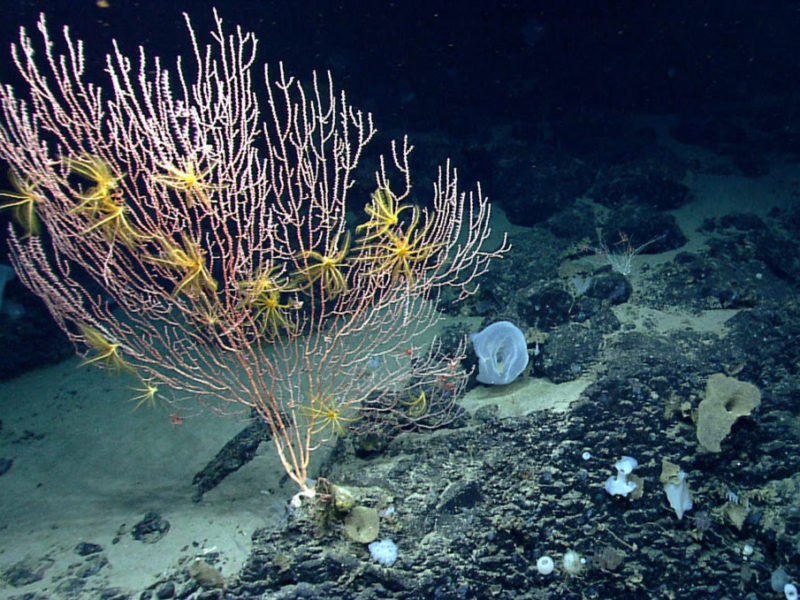
On behalf of its network of 2,000 aquariums, zoos, museums, youth groups, and conservation organizations across all 50 states and 100 countries, The Ocean Project thanks President Obama for designating the Northeast Canyons and Seamounts Marine National Monument, and creating a lasting legacy for current and future generations of Americans. During this 100th anniversary year of the National Park Service, we thank President Obama particularly for his leadership in protecting more of our nation’s ocean than any administration in history. Using science-based decision-making, and with the input from across the country – including aquariums and zoos along with an unprecedented involvement of our youth – President Obama has become a true world leader for marine conservation, especially by creating and expanding “blue parks” that will enrich all of our lives. During his time at the helm, the President has comprehensively addressed fisheries issues, opened a new public process for establishing marine sanctuaries, established the National Ocean Policy, and promoted ocean stewardship. Notably, this designation comes following the August expansion by the President of the Papahānaumokuākea Marine National Monument (PMNM) in Hawaii. Credit: NOAA Oceans Explorer Program, 2013 Northeast US Canyons Expedition Science Team President Obama has added a significant victory for the health of our ocean and our planet by designating the Northeast Canyons and Seamounts Marine National Monument. The first such monument designated in the Atlantic Ocean, this spectacular area contains extinct underwater volcanoes, or seamounts, that rise higher than every other mountain east of the Rockies, and canyons that are deeper than the Grand Canyon. Nearly 200 miles off the coast of Cape Cod and Rhode Island, these seamounts and canyons are teeming with ocean life, from deep-diving sperm whales and beaked whales, to dolphins, sea turtles, and also many seabirds, such as the Atlantic puffin. This most recent designation also protects the most abundant and diverse communities of deep sea corals known to exist on the Atlantic seaboard, some hundreds if not thousands of years old. Sperm whales traveling in a unit. Credit: Kelsey Stone, New England Aquarium This designation of the first marine national monument in the Atlantic adds to President Obama’s legacy of having protected more land and water than any other president, and is an action strongly supported by recent surveys. According to recent surveys conducted at a number of aquariums across the country – as part of a special partnership with SEA LIFE Trust and the 8 SEA LIFE Aquariums in North America, 97% of visitors were in favor of expanding our nation’s network of marine protected areas. Protecting our blue backyard is important to people, no matter where they live. With the growing impact of climate change and ocean acidification threatening our ocean’s – and our planet’s health – setting aside special areas in the ocean will provide some resiliency to these increasing stresses. As ocean temperatures rise and acidity threatens marine life, providing sanctuary through habitat protection from other threats helps to preserve genetic diversity, which will be vital for the ocean's inhabitants to be able to withstand more acidic and warmer conditions in the future. This designation is also supported by a growing coalition of young leaders, who have come together in Sea Youth Rise Up, a collaborative campaign between The Ocean Project, the World Oceans Day network, Big Blue & You and the Youth Ocean Conservation Summit. The effort recently brought together seven young ocean conservationists from across the United States, as well as Canada and the Bahamas, to meet with leaders in New York and Washington D.C. and share their message of the importance of protecting our ocean. Credit: NOAA Oceans Explorer Program
Continue reading


