-
Weekly Round Up: Communicating in Wide shots and Close Ups
In the round up this week: looking at the big picture gives us an idea of the issues at hand - but it's the close up, the personal stories, that motivate us to take action. It's all well and good to share the cold hard facts but if your goal is to change behaviors: a story with no emotional heart has got no legs. Here I've gathered a few good examples, from the past week's news, of how taking a look at the micro can make the macro seem more urgent than big numbers alone. If you’re a science communicator or educator at an informal science center (such as a zoo, aquarium, or museum) trying to encourage conservation action – this is the round up for you! Every Friday we break down the week’s most interesting news and best resources to help you frame the issues as effectively as possible. Climate change and human displacement Big picture: Climate change 'will make hundreds of millions homeless' Scientists predict that rapid warming of the planet will massively disrupt weather patterns and spread deserts - "hundreds of millions of people" will be displaced from their homes due to crop failure and other stressors. Obviously this is a huge concern for both governments and social justice advocates. How will nations manage the influx of 'climate refugees' and make sure that they're treated humanely? How will health and feelings of social unrest be dealt with? Related: The Global Estimates report revealed 32.4 million people were forced to flee their homes in 2012 by disasters; 98% of these displacements were related to climate- and weather-related events. Close-up: America's first climate refugees The Guardian talks to residents of Newtok, Alaska, mostly Yup'ik Eskimos. They face a choice that more than 180 native communities in Alaska are facing... do they stay in their ancestral homes? Or do they flee due to the climate-related flooding and erosion and risk their lives? Sabrina Warner keeps having the same nightmare: a huge wave rearing up out of the water and crashing over her home, forcing her to swim for her life with her toddler son. "I dream about the water coming in," she said. It's an impactful story of real people being affected by climate change here, now. The cost of environmental disasters Big picture: Climate-related disasters cost American taxpayers $96 billion last year This figure comes from a new analysis by the National Resources Defense Council - it works out to a shocking $1,100 per taxpayer. The reason? Climate-related disasters like Superstorm Sandy, droughts, floods, and forest fires. What could we do with that $96 billion to prevent climate change rather than use it to clean up the mess after the fact? Close-up: Psychological scars run deep after BP oil spill Beyond the money it costs to clean up environmental disasters, the human pain and suffering is immense. Relief efforts tend to be one-size-fits-all, but the huge number of people involved and wide variety of needs, make this an ineffective strategy. In particular, the coastal communities of Louisiana suffered greatly from a disrupted environment - loss of livelihoods and lack of appropriate help after the oil spill led to residents' stress levels rising in the year following the spill. There are real, long term impacts on people's physical and emotional well being after these events. Related: New Study: The Economic Benefits of EPA Regulations Massively Outweigh The Costs. What more needs to be said? The study found regulations imposed as much as $45 billion in costs on the economy, but then drove as much as $640 billion in benefits. The Deepwater Horizon oil spill was much more of a "job killer" than the regulations that would have kept the rig safe to operate - or keep it out of the Gulf of Mexico altogether. How do you communicate with your audiences about the big picture and the close ups of environmental issues? When you talk about an issue - do you always include a real personal story as well, or do you keep it more general? Further than that, do you feel like you're overstepping your bounds if you go further than just presenting the facts?
Continue reading -
Weekly Round Up: watching words on climate
In this week's round up: watch your words, the kids are alright, and smart design saves trees (happy Arbor day!). If you’re a science communicator or educator at an informal science center (such as a zoo, aquarium, or museum) trying to encourage conservation action – this is the round up for you! Every Friday we break down the week’s most interesting news and best resources to help you frame the issues as effectively as possible. Watching our words on climate Is ‘global warming’ the right term to use? This has been a particularly tricky issue, and there's no firm answer as of yet. 'Global warming' doesn't quite jive with humans' daily experiences ("Another blizzard... some global warming am I right?!") but the popular 'climate change' doesn't capture the urgency of the situation. I'm partial to 'climate disruption' though it's hard to get away from the habit and current popularity of 'climate change.' This great article from the Yale Forum on Climate Change & the Media has a useful overview of the many terms. A morally healthy frame A new article on the moral dimensions of climate disruption from Climate Access, and one addressing public health from Talking Climate are representative of recent trends in climate framing. Neither of these angles are particularly new, but both are extremely promising and definitely gaining attention from communicators. An aside to our partners at informal science education centers, such as zoos or aquariums: do you ever communicate with your visitors about environmental issues and human health? Or does that seem like too much of a departure from wildlife conservation? Other thoughts Face of Climate Change: A napkin dispenser? Can the design of a napkin dispenser change human behavior? Would we be asking this question if the answer was no?! I love the idea that smart design can save a lot of trouble before it even starts - like increasing energy efficiency, this is one of those low-hanging fruit situations I think we'd be crazy not to take advantage of. Also - happy Arbor Day! The kids are alright The Ocean Project's research, along with others', has found that Millenials and youth in general are an extremely important audience to connect with on environmental issues. But, every once in a while, a new article or trend piece will come out bemoaning teens these days and how much worse they are than boomers. Lloyd Alter of Treehugger counters a recent such piece; the short version: boomers recycle more, but Millennials live smaller, and don't drive.
Continue reading -
Weeky Round Up: speaking to people’s values has worth
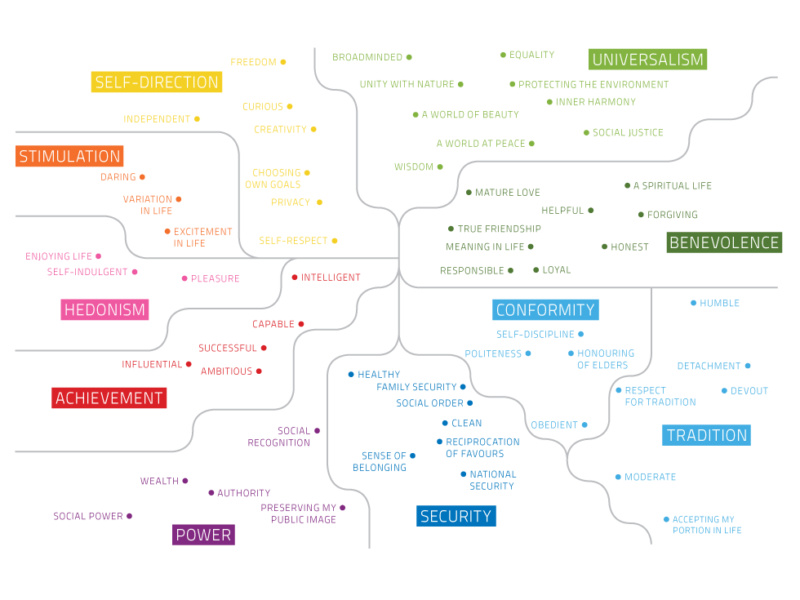
If you’re a science communicator or educator at an informal science center (such as a zoo, aquarium, or museum) trying to encourage conservation action – this is the round up for you! Every Friday we break down the week’s most interesting news and best resources to help you frame the issues as effectively as possible. Values are valuble for reaching people Values help campaigns reach new audiences We may think that we make our decisions based on rational thinking, but that is obviously not always true. If that were the case then information-based behavior change campaigns would be wildly successful and, yeah, they super aren't. One promising way to connect with people for change is a values-based approach. The aforementioned article gives a quick overview of some of the work Greenpeace is doing based on Cultural Dynamics Strategy and Marketing in the United Kingdom - targeting audiences based on their identified underlying values. Common Cause: the Case for Working with Values and Frames For a simple - and visually beautiful - intro to these ideas, check out WWF's Common Cause. Sparked by their 2010 report, this website lays things out in an online Handbook, collects some reports, and occasionally blogs on the issues. Just how many climate skeptics are there? Just how many climate skeptics are there? There are a lot of climate opinion polls, and the answers may change depending on how the questions are asked, and what the weather's like. So - just how many people actually believe there is no climate disruption happening? The short answer is: probably 10% or less depending. However, one study found that the "skeptic" group, when asked their estimate of how many people doubted climate science, guessed about 50%. So why the discrepancy? The article is well worth a read though it doesn't necessarily come to strong conclusions. 75% of U.K. kids worried about climate change This poll is especially poignant considering last month's draft of new UK curriculum guidelines which removes all discussion of climate change for students under 14 years.
Continue reading -
One of these things is not like the other: Comms. Round up
If you're a science communicator or educator at an informal science center (such as a zoo, aquarium, or museum) trying to encourage conservation action - this is the round up for you! Every Friday we break down the week's most interesting news and best resources to help you frame the issues as effectively as possible. Skip to diversity section Skip to news section Skip to resources section One of these things is not like the other We'd like to kick off this week with a puzzling confluence of events. See if you can pick the odd one out! First, studies concluding "climate change is just awful" were big in the news this week. Scientists have found that global warming will intensify already extreme rainfalls, double the wildfire risk in US forests, and give people more diarrhea. So far so bad. But there's good news! A new Gallup poll found that almost half of Americans think the government is doing too little to protect the environment, and consumers care more about buying from socially responsible brands more than ever. Citigroup released an enlightening new report predicting that renewables will come out on top of the energy mix, with support from natural gas (as opposed to being pushed out by it), and German researchers have devised a way to link their renewable energy sources such that there's no worry of black outs. Sounds better, what's next? Gallup and Pew have come out with some interesting poll numbers. Turns out the more Americans still prioritize the economy over environment and climate change is at the bottom of the nation's policy priorities for 2013. Wait, what? Oh, and 66% of Americans support building the Keystone XL pipeline. Sorry this story didn't have a happy ending, but that's where communicators come in! Some more food for thought on polls, though: how you ask the question can skew the result. An analysis of hundred of polls has found the American public mostly agrees on the reality of climate change. I would also suggest reading this short and sweet article "One Weird Trick for Getting Republicans to Care About Climate" which is basically music to a communicator's ears. It's a peek at how smart framing aimed at your audience (in this case a toughie, Republicans) can help them see things a different way. Mainstream green is still too white A few articles to follow up on last week's discussion of the lack of diversity in the mainstream environmental movement. Brentin Mock of Colorlines has a great round up of the issues and current events. The Sierra Club also released a new report on the state of Detroit's environment - particularly how ridiculously bad it is in communities of color. Anyone who thinks the pollution problem is "largely solved" should probably take a look at that last article. Environmental issues of this sort are a matter of life and death for many Americans, particularly those who are already at risk. News and thoughts The World Bank has a novel idea for why we should save the ocean: billions of people rely on it to live. Not only that, but new research finds that marine reserves can stoke local economies. Win win! Grist has a great, depressing overview about what's happening in Arkansas, where an old pipeline has ruptured. This really adds insult to injury as far as the previously linked poll about Americans' support of the Keystone XL pipeline. Resources Communicating sustainability: lessons from public health - a great, brief overview of great lessons for environmental communicators. Even if it's stuff you already know, worth reading. Visual Story Lab - a project of Resource Media has released a new report on best practices for visual storytelling.
Continue reading -
Special Round Up: risk as a climate change frame
Since we did our Weekly Communications Round Up on…
Continue reading