-
Thank you, President Obama, for Designating the Northeast Canyons and Seamounts Marine National Monument!
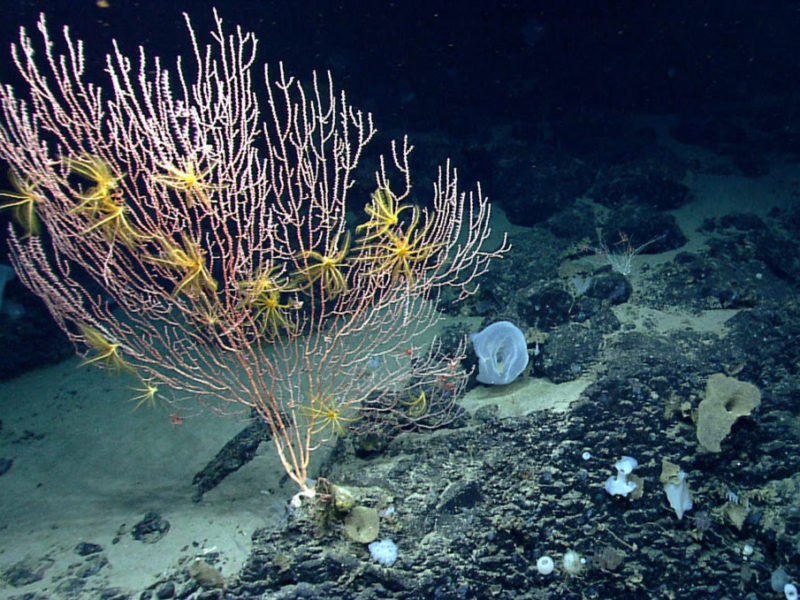
On behalf of its network of 2,000 aquariums, zoos, museums, youth groups, and conservation organizations across all 50 states and 100 countries, The Ocean Project thanks President Obama for designating the Northeast Canyons and Seamounts Marine National Monument, and creating a lasting legacy for current and future generations of Americans. During this 100th anniversary year of the National Park Service, we thank President Obama particularly for his leadership in protecting more of our nation’s ocean than any administration in history. Using science-based decision-making, and with the input from across the country – including aquariums and zoos along with an unprecedented involvement of our youth – President Obama has become a true world leader for marine conservation, especially by creating and expanding “blue parks” that will enrich all of our lives. During his time at the helm, the President has comprehensively addressed fisheries issues, opened a new public process for establishing marine sanctuaries, established the National Ocean Policy, and promoted ocean stewardship. Notably, this designation comes following the August expansion by the President of the Papahānaumokuākea Marine National Monument (PMNM) in Hawaii. Credit: NOAA Oceans Explorer Program, 2013 Northeast US Canyons Expedition Science Team President Obama has added a significant victory for the health of our ocean and our planet by designating the Northeast Canyons and Seamounts Marine National Monument. The first such monument designated in the Atlantic Ocean, this spectacular area contains extinct underwater volcanoes, or seamounts, that rise higher than every other mountain east of the Rockies, and canyons that are deeper than the Grand Canyon. Nearly 200 miles off the coast of Cape Cod and Rhode Island, these seamounts and canyons are teeming with ocean life, from deep-diving sperm whales and beaked whales, to dolphins, sea turtles, and also many seabirds, such as the Atlantic puffin. This most recent designation also protects the most abundant and diverse communities of deep sea corals known to exist on the Atlantic seaboard, some hundreds if not thousands of years old. Sperm whales traveling in a unit. Credit: Kelsey Stone, New England Aquarium This designation of the first marine national monument in the Atlantic adds to President Obama’s legacy of having protected more land and water than any other president, and is an action strongly supported by recent surveys. According to recent surveys conducted at a number of aquariums across the country – as part of a special partnership with SEA LIFE Trust and the 8 SEA LIFE Aquariums in North America, 97% of visitors were in favor of expanding our nation’s network of marine protected areas. Protecting our blue backyard is important to people, no matter where they live. With the growing impact of climate change and ocean acidification threatening our ocean’s – and our planet’s health – setting aside special areas in the ocean will provide some resiliency to these increasing stresses. As ocean temperatures rise and acidity threatens marine life, providing sanctuary through habitat protection from other threats helps to preserve genetic diversity, which will be vital for the ocean's inhabitants to be able to withstand more acidic and warmer conditions in the future. This designation is also supported by a growing coalition of young leaders, who have come together in Sea Youth Rise Up, a collaborative campaign between The Ocean Project, the World Oceans Day network, Big Blue & You and the Youth Ocean Conservation Summit. The effort recently brought together seven young ocean conservationists from across the United States, as well as Canada and the Bahamas, to meet with leaders in New York and Washington D.C. and share their message of the importance of protecting our ocean. Credit: NOAA Oceans Explorer Program
Continue reading -

Rising Up for the Ocean
Growing up on the coast of Florida, I had the chance to connect to unique marine environments and their inhabitants at an early age. Experiences with my family exploring Florida’s water resources, and learning more about these habitats through summer camps and education programs prompted my first interest in the wonder of the ocean. As I got older, my interest in marine science grew into an interest in ocean conservation – working with my friends and family to take action to protect the priceless marine resources of my home state. Through these early experiences I learned the importance of the ocean, how it connects people from all backgrounds on a global scale, and how it plays a key role in the existence of life on earth. At a young age I also learned the ocean is in trouble. From plastic pollution and climate change, to overfishing and habitat destruction, this priceless natural resource is threatened by the actions we take on a daily basis. Now through my work directing the Youth Ocean Conservation Summit, and work with aquariums and conservation organizations on a global scale, I’ve seen the urgent need for action to address these challenges now. I’ve also seen the importance of engaging young people as leaders in the ocean conservation field, building on their passion, new ideas, and energy to build a movement to protect our blue planet. The Sea Youth Rise Up campaign, launched in the spring of 2016 as a collaborative effort between The Ocean Project, World Oceans Day network, the Big Blue & You and the Youth Ocean Conservation Summit, is designed as a platform for young people to rise up for our ocean, share the important work of young conservation leaders, and inspire a global audience of young people to understand the important leadership role they play in protecting the ocean. Utilizing World Oceans Day as a rallying point, the campaign brought together seven young ocean conservationists from the United States, Canada, and the Bahamas: Ben May, Laura Johnson, Dazja Dorsey, Baylee Ritter, Simeon Bethel, Lindsy Myers, and Gabriella Schauber, for three days in New York City and Washington D.C. – allowing these incredible students to share their message of the importance of protecting our ocean with world leaders and their peers. Selected through a global video contest, as well as nominations from our Sea Youth Rise Up partner organizations, our 2016 Sea Youth Rise Up delegates arrived in New York City on June 7, 2016 and prepared for an exciting lineup of events and activities to celebrate World Oceans Day 2016. During our time in New York, Sea Youth Rise Up co-creator, Danni Washington and I joined our delegates for a Live World Oceans Day Google Hangout on Air, hosted from the New York Aquarium, where delegates had the opportunity to share their ocean conservation work and interests, the importance of youth leadership in the field of ocean conservation, and advice for other young people interested in ocean conservation who watched the broadcast from around the world in the United States, New Zealand, India, Curacao, Pakistan, Germany, Somalia, Greece, the Bahamas and Canada. A #SeaYouthRiseUp social media and Thunderclap campaign further highlighted the importance of youth leadership in ocean conservation to a global audience. Delegates also had the exciting opportunity to meet with ocean conservationist and singer/songwriter Jack Johnson, and attend the United Nations World Oceans Day reception. After a whirlwind tour through New York City, our Sea Youth Rise Up team headed out early on June 9 for our nation’s Capital where they participated in a White House Roundtable with members of the White House Council on Environmental Quality. Through this unique experience, delegates had a chance to share their support for the creation of additional marine protected areas, and discuss the administration’s ocean conservation priorities. Our D.C. adventures continued with a stop at the Newseum for Capitol Hill Oceans Week, where our team members took part in a live broadcast with the National Marine Sanctuary Foundation, and visits with staff members from Youth Service America and EarthEcho International during a wrap up picnic on national mall. We are incredibly proud and inspired by the young people who stepped up and raised their voices for the protection of our ocean through this special event. We’re also excited to continue to share their stories through the upcoming Sea Youth Rise Up short film, tracing their ocean conservation journeys and Sea Youth Rise Up experience, further calling on a global movement of young people to rise up and take on the challenges facing our planet’s marine ecosystems. A special thanks to the partners and sponsors who made this program possible – The Ocean Project, World Oceans Day network, Big Blue & You, Youth Ocean Conservation Summit, NOAA, the National Marine Sanctuary Foundation, the Coastal Ecosystem Learning Center network, jetBlue, the Wildlife Conservation Society’s New York Aquarium, Youth Service America, and EarthEcho International. We are incredibly grateful for your support and belief in the power of young people to positively impact our planet. If you’d like to learn more about Sea Youth Rise Up, and the inspiring work of our 2016 delegates, be sure to check out www.seayouthriseup.com or connect with us on Facebook, Twitter, or Instagram. Sean Russell is the co-creator of Sea Youth Rise Up. He is the founder and director of the Youth Ocean Conservation Summit, and works with SeaWorld, Mote Marine Laboratory, and conservation organizations on a global scale on youth leadership initiatives. You can follow him on twitter at @seandrussell.
Continue reading -

SEA LIFE Centers find public support for Marine Protected Areas
SEA LIFE Aquariums and SEA LIFE Trust wanted to know if visitors shared our interest in expanding our nation’s network of Marine Protected Areas (MPAs). With this in mind, we initiated in partnership with The Ocean Project a pilot project at two of our sites, Carlsbad and Orlando. We developed an exit survey with a program called iSurvey that allows for offline collection on iPads, and then site staff randomly sampled our guests about their opinions of marine protected areas, as well as their feedback on our being involved in this effort. Guests responded well to the iPads, and we were able to collect a sample large enough to have a high degree of confidence in the results. We looked at the overall results, as well as the results for a subset of guests who participated in a voting activity (I’ll explain in more detail below), and another subset of guests who received additional interpretation. The overall response on the exit survey was overwhelmingly positive, with yet more evidence for the earlier research findings that visitors to aquariums and zoos truly do expect, trust and appreciate information about how they can help the ocean and its animals. If anyone is still asking whether or not we as aquariums and zoos “inspire” the public’s interest in addressing environmental issues, look no further than the following chart, which shows that while on site a full two-thirds indicated that they believed their actions could have a great deal of impact on environmental problems. Moreover, we had more than 98%, yes, more than 98% of our guests agreed with the statements that “SEA LIFE Aquariums are a good source of information about ocean conservation” and “Learning how to help conserve the ocean and its animals makes for a better visit to a SEA LIFE Aquarium.” In sum, we have access to the public when they are inspired to act, and they’re telling us that they trust our guidance and appreciate learning how to help – so let’s be bold! On the particular issue of MPAs, our guests were just as positive, with again strong agreement both for the idea of expanding our nation’s network of protected areas and for the involvement of our aquariums in that effort. So if picking an issue on which to be bold, MPAs certainly seem like a good choice! And notably this was not a hypothetical question. During his presidency, President Obama already has shown a willingness to support marine protection by significantly expanding the Pacific Remote Islands Marine National Monument in 2014 and then announcing two completely new marine sanctuaries in October 2015 . At the same time, the National Oceanic and Atmospheric Administration (NOAA) has been soliciting nominations for new protected areas. This is why at Sea Life we’ve come to see now as the right time to invite the public into this issue, document their interest, and bring it back to our policy leaders. In an interesting twist to our pilot we also aimed to test the impact of an activity, and the impact of interpretation on guest response. A subset of guests at both sites participated in a simple voting activity, where they were handed a paper ballot, which gave basic background on the sanctuary nomination process and asked if they supported the idea, yes or no. The voting activity was low cost and easy to implement, and guests liked it. And they certainly liked the idea of expanding the sanctuary system, with a full 94% voting in favor, and based on a related question, primarily out of concern for the animals. Meanwhile, a separate subset of guests at our Carlsbad site received interpretation, talking with one of our educators about MPAs. The interpretation was more resource intensive, taking up a lot of staff time, but again guests liked the interactions. But did either experience impact their response on the exit survey? We didn’t have as much confidence in these findings due to the relatively small sample sizes, but indications were that even though the baseline of ‘visit alone’ was quite high, the response from those who participated in the voting activity or received interpretation was even higher. Moreover, the voting exercise had the benefit of documenting public interest in the issue in a way that could be easily relayed. What’s next? Based on the promising results of the pilot, and some timely advice from policy experts, we’re revising the approach to focus on a revamped version of the voting activity. Our goal is now to invite as many guests as possible to tell us which of four areas currently under they’d like to see protected as #blueparks. And we’ll also be reaching out online with a presence at http://bluebackyard.org, where, in fact, you should go now to cast your vote! ~This guest post was submitted by Chris Andrews from Sea Life
Continue reading -
Protecting our Blue Backyard
The Ocean Project has been supporting our partner aquariums and zoos for institutional involvement and for effective visitor engagement on Marine Protected Areas (MPAs) for a number of years. Among other activities, we conducted market research on MPAs several years ago to serve as a baseline moving forward. We have also used World Oceans Day as a platform to inform and engage people about MPAs, including protecting the Southern Ocean and Antarctica, as well as coordinated partnerships and activities with our American zoo and aquarium partners and the nation's marine sanctuaries. On behalf of our partners, we delivered a poster-sized thank you card in December to the White House Council on Environmental Quality and the NOAA Chief of Staff, and now hangs on their respective walls. Photo: Gabriel Barathieu In 2014 and 2015, thanks to a grant from the National Marine Sanctuary Foundation and contributions from our supporters we were able to develop the groundwork for a broad public awareness campaign on MPAs, and especially national marine sanctuaries with a newly-announced public nomination process for the first time in 20 years. For 2016, we’ve developed a microsite (and complementary social media campaign) as a platform that our partners can use as they wish, including branding opportunities, to best engage their audiences. It has been developed in a way to update or change quickly, as opportunities arise. A collaborative national campaign has been evolving and the plan is to launch with key partners this year, in time for the busy summer season. The campaign will build on, enhance, and highlight what zoos and aquariums, and our other partners, are doing through related conservation education and outreach activities. With the campaign and complementary activities, including a promising effort we’re developing with SEA LIFE Trust and SEA LIFE Aquariums, we plan to demonstrate strong public support for further ocean conservation action. We will be working closely with aquariums, zoos, museums, and other partners, to help inform and mobilize visitors and the public to “vote” this election year (and coinciding with the National Park Service’s 100th anniversary) for better protection of our ocean and its natural treasures. Like Yosemite and the Grand Canyon were protected long ago by those who saw the importance of setting aside special places to enjoy in perpetuity, the ocean is filled with amazing habitats and animal life that needs stronger protection this year, so that 100 years from now future generations will look back and be thankful that people in the early 21st century had the foresight to protect some of our ocean’s amazing places. If your aquarium, zoos, museum, or other organization would like to get involved, please contact us.
Continue reading -
Vision for our National Ocean Policy Part II
Update as of 2/29/12: The National Ocean Council is…
Continue reading

