-

People want to help! Using your existing resources to help your visitors do even more for conservation action
Recently, I was spending a couple of days by myself at the Southern Delaware shore that advertises itself as “low and slow,” and this time of year it’s more…
Continue reading -

Reaching our Full Potential
As referenced in this blog post, The Ocean Project recently launched “Making Conservation Happen,” a new webinar series aimed at helping aquariums and zoos engage strategically, safely, and effectively…
Continue reading -
The Ocean Project launches new initiative to promote science-based federal fisheries policy and healthy, sustainable marine ecosystems
Healthy and productive marine ecosystems are critical to sustaining food, jobs, and recreation for millions of people, as well as producing other intrinsic quality of life benefits. To have…
Continue reading -
ISG+ New Project: Tasting Sustainability at the Arizona-Sonora Desert Museum
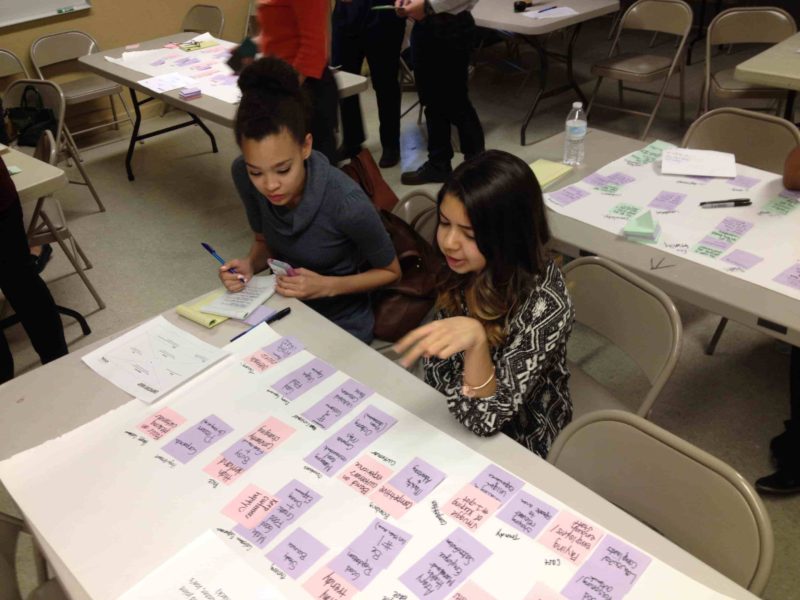
This guest post is submitted by Debbie Colodner, Director of Conservation Education and Science from the Arizona-Sonora Desert Museum, and is the first in a 3-part series on their Innovative Solutions Grants+ project where they are partnered with Leading for Good to see if they can move the needle on sustainable seafood in Tucson, Arizona. Some might think sustainable seafood an unlikely conservation focus for a desert city. However, Tucson was just designated the first UNESCO “World City of Gastronomy” in the United States, so there is a strong community focus on food, including seafood. For more than a decade, The Desert Museum has partnered with Monterey Bay’s Seafood Watch program to educate its audiences about declining fisheries and marine habitats, with particular attention to the unique sea at the heart of the Sonoran Desert, the Gulf of California. In previous efforts here at the Desert Museum, we found visitors not very willing to download the Seafood Watch app, but quite willing to take a printed card, and very positive about the idea of using it. Yet we also have heard that using the cards or app has been problematic (e.g. too confusing, too much time, sellers don’t know the answers) and we weren’t seeing any evidence that our efforts had led to larger changes in local restaurants and markets. So we wondered, what else can we do? Perhaps we could work with some of what research by The Ocean Project and others tells us are the most innovative change makers and consumers on the planet – millennials? Perhaps with some enthusiastic millennials we could work closer to the supply side – with not just changing their own buying habits, but also reaching out to restaurants? Asking these questions led us to apply for an Innovative Solutions Grant! Getting started Leading for Good interns in an "ideation" lab. We decided to begin by connecting with some local millennials who are interns in the Leading for Good Program. These interns are college students who want to make a difference in the local community, and, as such, joined this 16-week program for 10 hours each week. Together we’ve created the “Tasting Sustainability” project. As a primary goal, the interns are aiming to engage and persuade local restaurants to take action by altering their menus, and, ideally, becoming Seafood Watch partners, with the hope of recruiting six new restaurant partners by the end of the project. As a secondary goal, the Museum hopes to deepen its engagement with our local millennials, and learn how to work more effectively with millennials to move the needle on this and other conservation issues as well. To help get the interns off to a quick start, Desert Museum staff previously surveyed some students at the University of Arizona. We know our sampling was biased toward students already tuned into environmental issues, based on the classes surveyed, but we found the results nonetheless encouraging. Out of 116 students, 73% reported that they were already generally aware of sustainable seafood efforts, and, important for our project, they also indicated that they would be more likely to eat at restaurants that serve sustainable seafood, whether or not they eat seafood! Armed with this survey data, and with some additional training by LeadLocal’s Kristin Wisneski, and a Sustainable Seafood “bootcamp” by Desert Museum Education Specialist Julie Xelowski-Brooker, the interns now have started their research by talking with local restaurant owners. Here’s an excerpt from their blog, which can be found in full here. Our collaboration with the Arizona-Sonora Desert Museum and Monterey Bay Aquarium’s (MBA) Seafood Watch is now in full swing and we are excited to be part of something that is not your normal approach to creating change… We are the Leading for Good interns and…we plan on measuring the success of (our) project in a few different ways. Increase the number of Tucson restaurants serving and promoting sustainable seafood on their menus. Ideally, increase the number certified by MBA’s Seafood Watch. Understand what truly motivates or inhibits vendors from becoming certified. Reflect on our own journey to becoming changemakers in the community. Leading for Good interns present to community members and restaurant owners. In the next weeks, the interns will be summarizing and using the research they are doing with restaurant owners to finalize their restaurant outreach and recruitment plan. Meanwhile at the Museum we are also exploring what incentives and partnerships we might be able to offer to restaurants, and how we might encourage more millennials to engage in this effort, and others like it. Stay tuned for a view from the “test kitchen” next time.
Continue reading -

Zoos and aquariums: Highlighting your mission is good for business
More evidence from our friends at IMPACTS that doing well by your mission helps you do well at the gate. As those who know me may have heard me say one too many times already, but here it is once more: visitors expect, trust and appreciate when aquariums, zoos, museums and other visitor serving organizations are active in advancing their missions. For environmental issues, we've found this is especially true when organizations provide their visitors with specific ways to be part of the solutions to the problems facing our planet. Let visitors know how they can join with you to help protect specific animals and particular places, and ideally give them something to do then and there. Here’s Colleen’s video overview of their findings. For more on how to do so, and the lessons we’ve learned with our partners, check out our other blog posts such as the lessons learned from the first year of our Innovative Solutions Grants Plus Program or our initial round of the Better Bag Challenge. Why not take those lessons and give the Better Bag Challenge a go next Word Oceans Day? Now you can do so with even more confidence that visitors will thank you for it!
Continue reading -

10 ways your zoo or aquarium can reduce plastic use
There is growing public awareness about the troubling accumulation of plastics in the environment, particularly in the oceans. Luckily, we are in a unique position to turn the tides on plastic use and disposal. Association of Zoos and Aquariums accredited institutions are trusted conservation organizations with millions of visitors annually. We can lead by example through the way we operate our businesses, and as The Ocean Project has reported, our institutional actions can help inspire our visitors, staff, and volunteers to make greener choices too. Reducing disposable plastics is critical for the health of our ecosystems and ourselves. And we know that our institutions want to take action, but where to begin? The AZA Green Scientific Advisory Group (GSAG) is here to help, supporting AZA institutions to make greener business operation choices and offering information on latest sustainability research and trends. The AZA Green Guide was created to help AZA institutions create their sustainability roadmaps, while allowing enough flexibility for individual institutions to identify their operational priorities. And in that spirit, here is a top ten list created by the GSAG, steps to help your operations be less reliant on disposable plastic products. Conduct a purchasing inventory, AND implement 'greener' purchasing practices (e.g. screen products for recyclability, promote bulk purchasing with minimal packaging, and avoid disposable items as much as possible). Purchase for the Planet. With durable plastic items, consider a switch from purchasing new plastic products to products made from recycled plastic. This action helps create a competitive market for products made from recycled materials. Old is New Again. Conduct a waste/recycling audit, AND implement a waste reduction and recycling improvement plan. Be Lean and Green! In food sales, reduce or eliminate single-use plastic bags, beverage bottles, straws, utensils, plates Don’t know where to start? Consider implementing a policy of providing these items only upon request, or stock your break rooms with reusable dishes, mugs and silverware. Bag It! Water station at Detroit Zoo Consider compostable service-ware, and you can largely replace plastic items with paper, cardboard, and bio-based items which can break down in a commercial scale composting facility or in a biodigester. Close the loop by composting the material to keep it out of the landfill. A Toast to Compost! If disposable plastics can’t be avoided, make sure they are recyclable plastics with plenty of bins throughout the campus to make recycling easy. Plastics Numbers 1 and 2 are the easiest to recycle. Styrofoam is very difficult to recycle, so eliminating that material is best. It’s a Numbers Game. In operations, avoid soaps, cleaners and other products with microbeads! Some cosmetics and cleaning products contain tiny pieces of plastic, which are also known as microbeads. These bits of plastic are too small to be captured by water treatment plants and they end up in our waterways where they can be ingested by animals and they accumulate in the oceans. Banish the Bead. Throughout the campus, install water fountains and bottle filling stations- this can help visitors make the better choice to utilize reusable bottles instead of buying bottled water. Provide Free Refills! Gift Shop Ops - Look at the items stocked in your shops and identify ways that plastic gift items can be swapped out with alternative options. Last but not least, work with your education and marketing teams to implement a program or competition to encourage your visitors, as well as staff and volunteers, to follow your lead. The lessons from the Better Bag Challenge offer some good insights here! Be a Muse for Reuse! -- Guest post from Wanda Evans at Saint Louis Zoo and Jennifer Hale at Denver Zoo Banner image credit to Saint Louis Zoo
Continue reading -
Research: Our green practices can inspire guests to make change
For zoos, aquariums, and other informal science education centers, the message should be "Don't do as I say, do as I do!" Read the full article from Douglas Meyer in AZA's Connect magazine. If you want to help your guests be more environmentally-friendly, you can start by telling them what your institution is doing. It should come as no surprise that many institutions are already taking major steps to be green: diverse actions that range from eliminating plastic bags from gift shops, to making their facilities more sustainable, and even conducting staff-wide campaigns to develop better eco-habits. The Johnson Ohana Charitable Foundation is supporting zoo and aquarium efforts to reduce plastic pollution New research by The Ocean Project suggests that institutions can better leverage these positive actions as inspiring stories and motivate guests to change their behavior. Invite your guests to go green with you, leading the way by example. “We know from our 16 years of public opinion research that visitors not only expect zoos and aquariums to provide them with information about conservation issues, but also that when they are on site they are inspired to act for conservation and truly trust and appreciate suggestions as to the ways they can join their local aquarium and zoo in going green,” says The Ocean Project Director Bill Mott. “We always understood that the emotional connection to live animals was a big part of that inspiration; yet, what we’ve learned most recently is that guests also can be inspired by what the zoo or aquarium is doing to help solve the problem, especially when these efforts are positioned in a ‘together-we-can’ way that implies taking solutions to scale.” Click here to read the full article (PDF). Interested in trying this out at your institution for World Oceans Day? Organize a trash-free event, or give away reusable bags or bottles to replace disposable plastic trash. Read the Better Bag Challenge Organizer's Guide for details. Image Shutterstock.
Continue reading -
NEW: Special Report on the Public Awareness of Ocean Acidification
Back in 2008 The Ocean Project tested the term “ocean…
Continue reading -
Small Grants Applications are due September 1st!
Have a project that you’ve always wanted to try…
Continue reading -
Last call for feedback!
We’ve been sending out emails to our partners regarding The…
Continue reading