-
Rising Up for the Ocean
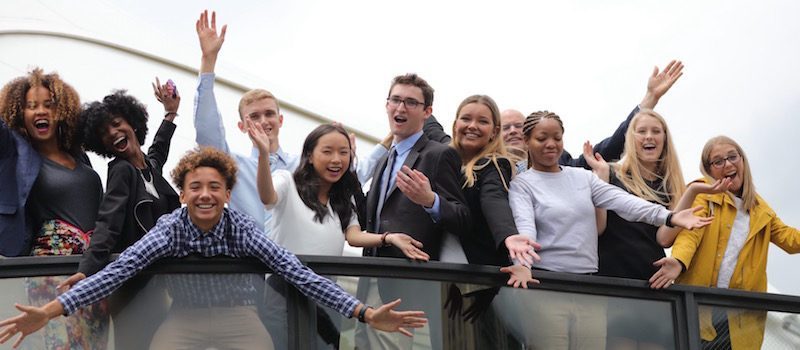
Growing up on the coast of Florida, I had the chance to connect to unique marine environments and their inhabitants at an early age. Experiences with my family exploring Florida’s water resources, and learning more about these habitats through summer camps and education programs prompted my first interest in the wonder of the ocean. As I got older, my interest in marine science grew into an interest in ocean conservation – working with my friends and family to take action to protect the priceless marine resources of my home state. Through these early experiences I learned the importance of the ocean, how it connects people from all backgrounds on a global scale, and how it plays a key role in the existence of life on earth. At a young age I also learned the ocean is in trouble. From plastic pollution and climate change, to overfishing and habitat destruction, this priceless natural resource is threatened by the actions we take on a daily basis. Now through my work directing the Youth Ocean Conservation Summit, and work with aquariums and conservation organizations on a global scale, I’ve seen the urgent need for action to address these challenges now. I’ve also seen the importance of engaging young people as leaders in the ocean conservation field, building on their passion, new ideas, and energy to build a movement to protect our blue planet. The Sea Youth Rise Up campaign, launched in the spring of 2016 as a collaborative effort between The Ocean Project, World Oceans Day network, the Big Blue & You and the Youth Ocean Conservation Summit, is designed as a platform for young people to rise up for our ocean, share the important work of young conservation leaders, and inspire a global audience of young people to understand the important leadership role they play in protecting the ocean. Utilizing World Oceans Day as a rallying point, the campaign brought together seven young ocean conservationists from the United States, Canada, and the Bahamas: Ben May, Laura Johnson, Dazja Dorsey, Baylee Ritter, Simeon Bethel, Lindsy Myers, and Gabriella Schauber, for three days in New York City and Washington D.C. – allowing these incredible students to share their message of the importance of protecting our ocean with world leaders and their peers. Selected through a global video contest, as well as nominations from our Sea Youth Rise Up partner organizations, our 2016 Sea Youth Rise Up delegates arrived in New York City on June 7, 2016 and prepared for an exciting lineup of events and activities to celebrate World Oceans Day 2016. During our time in New York, Sea Youth Rise Up co-creator, Danni Washington and I joined our delegates for a Live World Oceans Day Google Hangout on Air, hosted from the New York Aquarium, where delegates had the opportunity to share their ocean conservation work and interests, the importance of youth leadership in the field of ocean conservation, and advice for other young people interested in ocean conservation who watched the broadcast from around the world in the United States, New Zealand, India, Curacao, Pakistan, Germany, Somalia, Greece, the Bahamas and Canada. A #SeaYouthRiseUp social media and Thunderclap campaign further highlighted the importance of youth leadership in ocean conservation to a global audience. Delegates also had the exciting opportunity to meet with ocean conservationist and singer/songwriter Jack Johnson, and attend the United Nations World Oceans Day reception. After a whirlwind tour through New York City, our Sea Youth Rise Up team headed out early on June 9 for our nation’s Capital where they participated in a White House Roundtable with members of the White House Council on Environmental Quality. Through this unique experience, delegates had a chance to share their support for the creation of additional marine protected areas, and discuss the administration’s ocean conservation priorities. Our D.C. adventures continued with a stop at the Newseum for Capitol Hill Oceans Week, where our team members took part in a live broadcast with the National Marine Sanctuary Foundation, and visits with staff members from Youth Service America and EarthEcho International during a wrap up picnic on national mall. We are incredibly proud and inspired by the young people who stepped up and raised their voices for the protection of our ocean through this special event. We’re also excited to continue to share their stories through the upcoming Sea Youth Rise Up short film, tracing their ocean conservation journeys and Sea Youth Rise Up experience, further calling on a global movement of young people to rise up and take on the challenges facing our planet’s marine ecosystems. A special thanks to the partners and sponsors who made this program possible – The Ocean Project, World Oceans Day network, Big Blue & You, Youth Ocean Conservation Summit, NOAA, the National Marine Sanctuary Foundation, the Coastal Ecosystem Learning Center network, jetBlue, the Wildlife Conservation Society’s New York Aquarium, Youth Service America, and EarthEcho International. We are incredibly grateful for your support and belief in the power of young people to positively impact our planet. If you’d like to learn more about Sea Youth Rise Up, and the inspiring work of our 2016 delegates, be sure to check out www.seayouthriseup.com or connect with us on Facebook, Twitter, or Instagram. Sean Russell is the co-creator of Sea Youth Rise Up. He is the founder and director of the Youth Ocean Conservation Summit, and works with SeaWorld, Mote Marine Laboratory, and conservation organizations on a global scale on youth leadership initiatives. You can follow him on twitter at @seandrussell.
Continue reading -

Congrats! New Innovative Solutions Grants+ awardees announced
For over 18 years, The Ocean Project has been advancing conservation in partnership with zoos, aquariums, museums, and other visitor-serving organizations around the country and the world. We’ve provided strategic resources and tools to help our network of partners effectively engage visitors, both onsite and online so that together we can solve issues in our backyards and around our blue planet. Thank you to our partner aquariums and zoos for all you are doing to involve your visitors and the public in conservation awareness and action! Together, we are making a real difference, as the movement is continues to gain traction. A few years ago – with great thanks to the National Oceanic and Atmospheric Administration (NOAA) – we launched an Innovative Solutions Grants+ Program (ISG+) to test different ways to engage aquarium and zoo visitors. ISG+ has focused especially on reaching teens and minorities, empowering them to help with solutions to ocean and climate issues. Through this program, we award grants to innovative zoo and aquarium leaders; the “+” in ISG+ refers to pro-bono strategic communications coaching we provide throughout the grant period and the catalyzing work we do to enhance peer-to-peer sharing. ISG+ is helping to accelerate individual and societal actions, with lessons learned benefiting the aquarium and zoo community as a whole. Thank you to all who applied for a grant this year. This is the third year of ISG+, and each time we receive stronger proposals from zoos and aquariums around the country. It’s not easy for our Advisory Panel to select the winners. Ideally, we’d fund many more of your excellent proposals, and we’re trying to raise the funding to expand this program (see below). We are pleased to announce the following ISG+ recipients for 2015-2016 support: Arizona-Sonora Desert Museum: Awarded $20,000 to engage university students in Tasting Sustainability, a community-based conservation initiative to increase awareness of seafood sustainability and decrease consumption of unsustainably caught or farmed seafood. Working with Tucson-based group, Lead Local, activities will engage the community, as well as enhance opportunities on the Museum grounds for visitors to help with seafood-related solutions. National Aquarium: Awarded $25,000 for a project that engages the Hispanic community in a small Baltimore watershed. Through on-the-ground education and leadership training, they will create a network of community members who will spread plastic pollution and marine debris prevention messaging through their neighborhoods and networks. This project will also connect to the Aquarium’s Living Seashore exhibit, which features five Shore Heroes – individuals and groups who have taken action to protect aquatic resources. They plan to develop a sixth Shore Hero, their first with an urban focus, who will make clear the connection between urban waters and the ocean, and as well as set an example for plastic pollution and marine debris prevention. Saint Louis Zoo: Awarded $15,000 to launch a project directed predominantly by teen volunteers via social media in high school peer networks and with Zoo visitors to tackle the growing issue of plastic pollution and marine debris (100 billion plastic bags are used annually in the United States, with less than 1% recycled). To address these issues in a relevant, actionable manner, staff and Zoo teens will develop a project to reduce plastic bags at Zoo retail locations, within teen volunteer peer networks, and among Zoo visitors. This project has the potential to impact the local community and beyond. Teens at Woodland Park Zoo Woodland Park Zoo: Awarded a second year of funding, at $30,000 to expand their leadership role with Seattle Youth Climate Action Network (CAN). CAN was established with ISG+ support in 2014 as an evolution of Woodland Park Zoo, Seattle Aquarium and Pacific Science Center youth programs. Through collective action, these organizations aim engage local teens in effective climate change leadership opportunities. Achieving their vision for Seattle Youth CAN as a replicable model depends upon their ability to continue to integrate new voices, relationships and resources. In 2015-2016, they plan to build upon the existing structure, by expanding the Network and its efficacy through various activities. Congratulations to the grantees! With all our partners, The Ocean Project looks forward to working with you in 2016 and beyond, to help effectively engage your visitors for conservation outcomes and impact. This round of support is the third year of a three-year grant from NOAA. In total, with NOAA funding, we have provided approximately $260,000 to 10 AZA-accredited zoos and aquariums. We're seeking partners to continue to expand this program for aquariums and zoos. We’re hoping to secure additional support in 2016 from NOAA, and/or other funding sources. The Ocean Project is also looking to partner with key aquariums and zoos to target joint fundraising opportunities through collaborative grant applications. If interested, please contact us!
Continue reading -
RFP for new Innovative Solutions Grants funding posted
We are pleased to share our new RFP for the second round of the Innovative Solutions Grants+ program! Click here to view the RFP, we'll be posting the application form shortly. Proposal deadline is September 5, 2014. With thanks to National Oceanic and Atmospheric Administration (NOAA) for helping us establish our Innovative Solutions Grants+ program, this second round of funding will provide $100,000 for AZA-accredited aquariums and zoos that are based in the US. (We are trying to raise funding to expand this opportunity to all our partner zoos, aquariums, and museums (ZAMs) in all parts of the world, so please let us know if you have any ideas for potential funding sponsors.) The Grants+ program is an evolution of The Ocean Project’s efforts to help our partner ZAMs do more to advance conservation action in measurable ways and create a healthier, more sustainable society. It allows us to invest in supporting innovators in the community by providing not only financial resources, but also free strategic communications services and evaluation help for stronger conservation impact. We’re referring to this program as the Grants+ Program because it involves much more than just financial resources. With each grant, The Ocean Project provides financial resources for our partner aquariums to develop innovative local and regional ocean conservation solutions and stewardship initiatives, specifically targeting youth and minorities. We plan to maximize the benefit of each grant by including strategic communications capacity building opportunities for the awardees, including strategic and technical resources and expertise to more effectively engage their visitors. We will also work with each grantee to help accelerate peer-to-peer learning and widely share resulting new strategies and successes with the wider community, especially our growing partner network of 2,000 ZAMs and other conservation and education organizations in all 50 states and worldwide. You can read here on our blog about what the current three Grants+ awardees — North Carolina Aquariums, New England Aquarium and Oregon Coast Aquarium — are doing to bring about positive change. If you’ve got an innovative project or an idea for a twist on an existing project, program or activity that helps shift the paradigm on communicating to inspire conservation action, we want to hear from you! The Grants+ program was created so we can help you succeed in your role as trusted messengers for conservation solutions to ocean and climate issues.
Continue reading -
RFP coming in June for innovative ideas from aquariums and zoos!
With thanks to National Oceanic and Atmospheric Administration…
Continue reading -
The Ocean Project Innovative Solutions grant winners announced!
With thanks to National Oceanic and Atmospheric Administration (NOAA) over the last several years, The Ocean Project has been helping our partner zoos, aquariums, and museums (ZAMs) advance conservation action. Most recently, NOAA Education has funded the first year of a three-year project that will allow The Ocean Project to invest in supporting innovators in the community (the grant this year stipulated that Innovative Solutions grants only be given to AZA-accredited aquariums; our hope in the future is that this grants program will become open to our other institutional partners - e.g. zoos and museums). The plan is for this Grants+ Program to build on what we learned from our small grants program over the last few years and provide our partners with the resources and strategic communications services to do more for ocean and climate conservation and will empower them to succeed in their role as trusted messengers for conservation solutions. We’re referring to this program as the Grants+ Program because it involves much more than just financial resources. With each grant, The Ocean Project provides financial resources for our partner aquariums to develop innovative local and regional ocean conservation solutions and stewardship initiatives, specifically targeting youth and minorities. We plan to maximize the benefit of each grant by including strategic communications capacity building opportunities for the awardees, including strategic and technical resources and expertise to more effectively engage their visitors. We will also work with each grantee to help accelerate peer-to-peer learning and widely share resulting new strategies and successes with the wider community, especially our growing partner network of 2,000 ZAMs and other conservation and education organizations in all 50 states and worldwide. Additionally, we’re also seeking to leverage this funding to expand the program and happy to work on joint fundraising opportunities with interested partners, including awardees to expand on their innovative projects and/or runner-ups for awards. Thank you to all who applied for a grant from The Ocean Project’s Innovative Solutions Grants+ Program. For this first round of the Innovative Solutions Grants+ Program, we had a very competitive pool of applicants from the aquarium community. Our Advisory Panel had a challenging time deciding on the award winners. We are pleased to announce the following grant recipients: New England Aquarium: Awarded $17,500 for "New England Aquarium ClimaTEENS Community-wide Solutions." The ClimaTEENS project will help 40 teens provide climate change workshops and presentations for peers focusing on community-wide solutions. The teens will complete in-depth training and develop materials with help from staff experts in climate science and interpretation. North Carolina Aquarium Society: Awarded $16,000 for "Promoting Renewable Energy Certificates at the NC Aquariums." Their three aquariums and an educational pier facility will develop, deliver, and evaluate new and effective conservation messages that will encourage their visitors to take immediate conservation action by purchasing renewable energy credits (RECs) for their homes. In turn, for each REC purchased by a visitor, the respective site will receive a REC matched by Greenlight Energy. Each site will take an individual approach to messaging and delivery so that they can evaluate the methods and messages that are most effective based on how many visitors sign up at each location. Oregon Coast Aquarium: Awarded $20,000 for “Empowering Youth to Inspire Social Change: An Ocean Acidification Social Marketing Campaign.” Their youth volunteers will create and implement a pilot social marketing campaign targeting youth. The campaign will raise awareness in communities being impacted by ocean acidification; identify and then ask youth to adopt a new behavior to minimize ocean acidification; and provide incentives to encourage and measure the adoption of the identified behavior. The Ocean Project looks forward to working with all our partners in 2014 and beyond, to help our partner ZAMs communicate strategically for conservation action, outcomes, and impact. Also, we will be releasing another RFP at some point in 2014 so watch the blog and our website for further information.
Continue reading -
New Grant Program+ Launched
As part of The Ocean Project's efforts to help our partner zoos, aquariums, museums (ZAMs) develop into the most effective centers for conservation leadership and advance conservation action, we are pleased to announce a new grants program for our partners. With thanks to the National Oceanic and Atmospheric Administration (NOAA) who has funded the first of a three-year project that will allow The Ocean Project to invest in supporting innovators in the aquarium community, yesterday we launched our "Innovative Solutions Grants Program." This program will provide financial resources for our partner aquariums to develop innovative local and regional ocean conservation solutions and stewardship initiatives, specifically targeting youth and minorities. Click here for the RFP. Applications are due November 15th, 2013. We're referring to it as a grants program+ because it will involve much more than just financial resources. The Ocean Project plans to maximize the benefit of the grants by including strategic and technical resources and expertise for awardees to more effectively engage their visitors, including strategic communications capacity building opportunities. We will help accelerate peer-to-peer learning and widely sharing the resulting new strategies and successes with our growing partner network of 2,000 ZAMs and other conservation and education organizations in all 50 states and worldwide. Furthermore, we're also seeking to leverage this funding to expand the program and will work on joint fundraising opportunities with interested partners. America's ZAMs are community anchors. Ongoing research conducted by The Ocean Project and others shows that ZAMs are among the most trusted sources of conservation information and that the public increasingly looks to these institutions for guidance on what they can do to help protect and conserve our environment. Indeed, ZAMs and their professional staffs – the primary audience for all our activities – are "gatekeepers" to the American public. With millions of visitors, ZAMs play an essential role in educating and engaging audiences. We hope that this grants program+ will provide our partner ZAMs with the resources and strategic communications services to do more for ocean and climate conservation and will empower them to succeed in their role as trusted messengers for conservation solutions.
Continue reading -
Insights and Updates from The Ocean Project: Summer 2013
The Ocean Project is pleased to present this latest update on our collaborative communications initiative for our zoo, aquarium and museum (ZAM) partners, and others in the wider ocean conservation community. In this issue we highlight the attention the initiative's research will be receiving at the annual AZA conference, progress with the green power pilot project, successful efforts surrounding this year's World Oceans Day, and an op-ed by Deb Kerr of YouthMuse. As always, we welcome your feedback! In this update: See you in Kansas City Obtaining & promoting green energy Looking back at World Oceans Day Op-ed: New model for teen engagement AZA Sessions to shine a spot light on effective communications Monday, September 9 4:00-5:00 PM in Room 2503B Making the "Ask" for Conservation Action - This open brainstorming session with representatives from zoos, aquariums, The Ocean Project and NOAA will focus on four ways in which institutions have asked, are asking or are planning to ask visitors to do something for conservation, based on how the research tells us that visitors want to help. Please come with examples and ideas to share, and, in return, we'll supply the refreshments! Tuesday, September 10 12:00-2:00 PM in the Exhibit Hall More Power to You: When Teens Make Decisions - Want to achieve your mission and meet your goals for conservation action? The research tells us that a good place to begin is with a focus on teenagers. With tools in their hands and your support at their backs, they will develop messages, build programs and get guests to commit to taking conservation action. And then they’ll post it online to multiply the effort. Come to this roundtable to learn from existing examples and share new ideas. Tuesday, September 10 12:00-2:00 PM in the Exhibit Hall World Oceans Day, an Ocean of Opportunities for Action – Special events at zoos and aquariums provide amazing opportunities for fun, learning, and action. Join World Oceans Day coordinator Alyssa Isakower and other zoo and aquarium staff at the World Oceans Day roundtable to share experiences and lessons learned from past events, and brainstorm for next year. Come to chat, express your institutions’ needs and preferences, share tips and tricks, and get excited for World Oceans Day 2014. Please be sure also to check the poster session, which will feature information on some of the above topics! And be sure to see the full schedule for many other excellent opportunities. New pilot program helps partners obtain and promote green energy Building upon our successful session at last year's annual meeting, The Ocean Project has been collaborating with the Green Power Partnership of the US Environmental Protection Agency (EPA) in an initiative that aims to help accelerate our nation's shift to a clean-energy economy. Structured as a two-part pilot project, the initiative is focused on helping 12 zoos and aquariums in efforts to attain and promote renewable energy, creating an example others could follow. Phase one is well underway, with the pilot sites currently assessing which green power options make the most sense for them. With assistance from the initiative, they have been looking at three primary possibilities: on-site solar, utility programs, and renewable energy certificates (RECs). For on-site solar, many have explored the option of working with Melink, the preferred partner of AZA and the same company responsible for the solar array at the Cincinnati Zoo (see photo). With utility programs, an institution in essence asks that its utility purchase a percentage of its total power usage from renewable sources, something that has been proven to work well for sites such as the Indy Zoo, which is 100% green-powered. Additionally, relatively little-known RECs have proven to be one of the most cost effective options, as they essentially allow a site to purchase the "green" value separate from the power itself. (Click here for more information on RECs) Thanks to an emerging relationship with Greenlight Energy Group, the initiative will be able to offer partners excellent pricing. Phase two will build upon the above, helping the pilot site partners as they encourage their visitors to follow in their footsteps. "We know from the research that visitors want zoos and aquariums to suggest personal action steps, and signing up for a utility program or purchasing a REC is both meaningful and measurable as we can talk about that not only in terms of the number of people reached but the amount of carbon kept out of the atmosphere," explained Douglas Meyer, who is heading up the initiative for The Ocean Project. "And with RECs, we see an additional benefit as Greenlight Energy, for example, will be offering a 10% referral bonus back to the zoos and aquariums on any certificate purchased by a visitor, resources that can be used to support the institution's conservation and sustainability efforts." The Ocean Project also hopes to offer small grants that will help institutions develop and test different approaches. Why is The Ocean Project focusing on this initiative? Because cleaner energy means a cleaner, healthier, and more productive ocean. Furthermore, our national market and communications research clearly shows that Americans want to be seen as 'green' and are looking to ZAMs not only for information about the environmental issues we face, but also how they can become more personally involved in helping with the solutions. We're excited to be working with these pilot sites, and ready to fully leverage our growing partner network of nearly 2,000 ZAMs and other education and conservation organizations in all 50 States and 80 other countries that we've built over the last 12 years. If you'd like to know more, please don't hesitate to reach out to Douglas at dmeyer@TheOceanProject.org. Action and Celebration for World Oceans Day 2013 ZAMs, individuals, businesses, local governments, and more came together this June 8th to celebrate World Oceans Day with over 600 events around the globe. The variety of events and people celebrating was inspiring; the community really honored the theme of Together we have the power to protect the ocean. Check out the highlight blog to see just a few of these great events. Keeping with that theme, we were excited to see that many event organizers went beyond celebration and also incorporated conservation action into their event. Our ZAM partners – who held almost a third of the events - were especially bold this year, and many experimented with asking their guests to take conservation action. In our recent blog series Taking the Dive, we talked with staff at institutions such as Seattle Aquarium, California Academy of Sciences, and others about how they approach talking with guests about doing something for the ocean. We look forward to continuing this exciting conversation at the AZA conference! Op-Ed: Engaging teens as leaders: Shared experiences and best practices By Deb Kerr, Executive Director of YouthMuse With insight from the ongoing communications research by The Ocean Project and support from the National Oceanic and Atmospheric Administration , five organizations have worked with me to launch four teen-led and action-oriented outreach campaigns. What we've done together to date has led to the development of a set of best practices, the foundation of what we believe could be a new model for youth engagement. Our community of ZAMs traditionally have focused our teen programs on an education model, based on an assumption that, "If they knew more, they'd care more, and if they cared more, they'd do more." The new model, which at its core is an action model, builds instead on what the communications research tells us to be true: Teens may not yet be issue experts, but they are well aware, already care, they're ready to act, and they're seen by adults as society's "green" leaders." To date, four youth-led campaigns have been launched: P.S. (Puget Sound): We Love You at Seattle Aquarium Beach Reach at North Carolina Aquarium at Fort Fisher Project Ripple at New York Aquarium OWN: One With Nature a joint effort of Lincoln Park Zoo and Chicago Botanic Garden. In each instance, teens are excited by the idea of applying their existing skills, such as their technological savvy and their knowledge of social networks, in a way that has a positive impact on the environment and their community. With help from adults and peer mentors, we've seen them build 21st century skills, such as teamwork, persuasion skills, confidence, maturity and leadership, while gaining knowledge about the issues. Not all of the results are in yet, but we've already seen some best practices emerge. Essential above all else is the provision of a “safe space”—not just physically, but intellectually, psychologically and emotionally—where teens feel free to be geeky and value-driven, in a circle of peers and adults who share their passion. Adult mentors who model respect for and genuine interest in teens are essential to creating safe learning environments. Other tips include ensuring structured time to accomplish the work, meeting social interaction needs (fun), ongoing communications, helping with transportation (such as providing transit cards or stipends), and employing reward systems, which can be as simple as awarding service learning hours, online badges and peer recognition. These campaigns serve as living case studies for understanding what works and what doesn’t when engaging teens as leaders. With each teen interaction, I learn more, and I look forward to sharing those experiences with our community as these efforts continue. Editor's Note: Thanks Deb, and The Ocean Project will continue to work closely with our partners on engaging teens for conservation action, and, on that note, we soon hope to offer some additional small grant opportunities - Stay tuned!
Continue reading -
Inspiring the Next Generation of Ocean Advocates
“I want to tell you about how the Aquarium…
Continue reading -
Houston, we have impressive results to share
For the last several years, The Ocean…
Continue reading
