-
ISG+ Update: Seattle youth CAN engage their peers on transportation
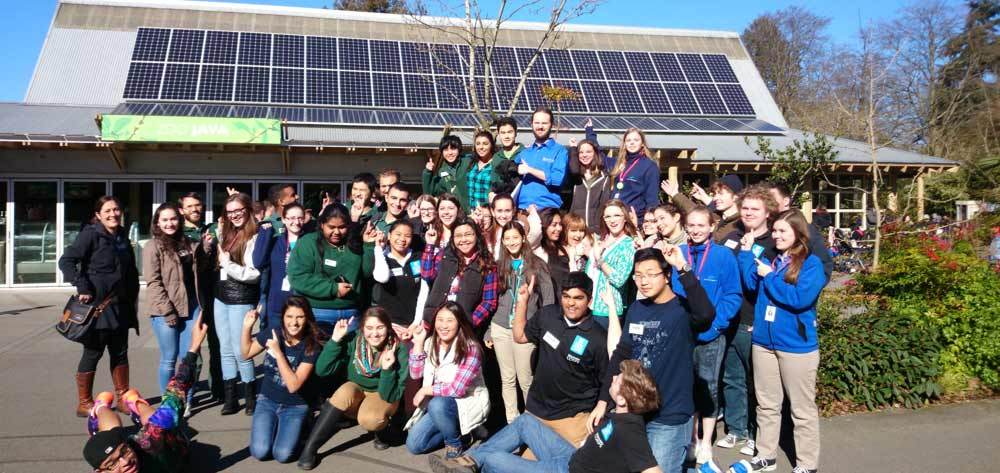
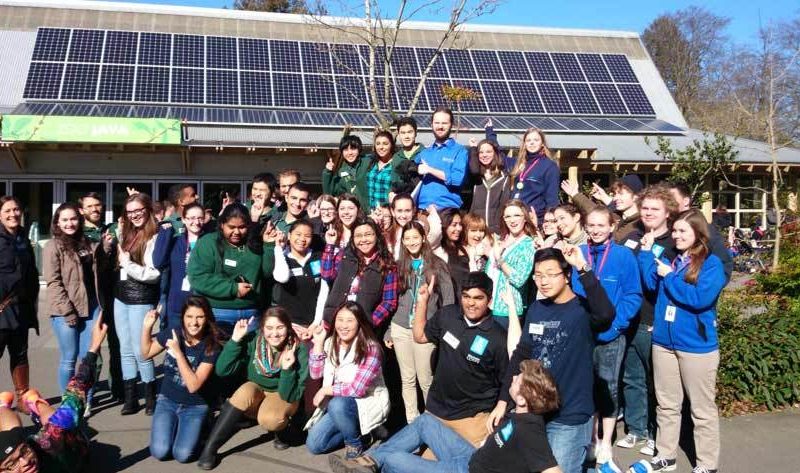
This guest post by Eli Weiss of Woodland Park Zoo is the second in a 3-part series on their Innovative Solutions Grants+ project, exploring how teens in the Seattle area can empower each other and their peers for action on climate change. Woodland Park Zoo, along with our partners the Seattle Aquarium and Pacific Science Center are working together to build the Seattle Youth Climate Action Network (CAN). The goal of this Innovative Solutions Grants+ project is to train and support teen leaders, helping them create a campaign that encourages their peers to take measurable action on the issue of climate change. Since our first post, I have been working closely with partner staff from each institution to keep this pilot year on course. In addition, I have continued outreach to local agencies and organizations to build local support and enthusiasm for the project. Seattle Youth CAN is picking up momentum - we have had a handful of successful events and have already learned a lot about starting a local youth network. Our training model for this effort has included engaging teen participants in hands-on action; a full day of instruction on climate science, communication strategies and local examples of climate action; and a campaign design workshop for the leadership group. Training Part 1: Leading with action We began our training with an inspirational day of action. In collaboration with Forterra and Green Seattle Partnership 30+ Seattle area teens planted over 200 trees and native plants along a high traffic bike path in North Seattle. The event was an energetic gathering, and participants enthusiastically planted trees to offset the Woodland Park Zoo’s carbon emissions through the Evergreen Carbon Capture Program. Training Part 2: Climate leadership workshop A month later, we brought 40+ teens from the three institutions to the Zoo for leadership training on climate change science, communication strategies, and action. To spark ideas for their own campaign, teens heard from local organizations and agencies and explored examples of climate action. Among the presenters were staff from Climate Solutions, Seattle City Light-Community Solar Program and Forterra. Each community partner shared their own work and pitched project ideas for how Seattle Youth CAN could partner with them. At the end of a full day of learning, participants shared which action campaign ideas they were interested in through a survey and small group discussions. Teens left the workshop energized and ready to get Seattle Youth CAN off the ground. Training Part 3: Campaign design workshop for youth leaders As the next step, a climate campaign design committee was formed with teen representatives from each institution. This committee met every other week to come up with a focus and plan for a summer action campaign. I facilitated this group process along with support from staff from our partner institutions. Rather than reinventing the wheel we used existing models for campaign design, including “Planning to Win”, and committee members participated in a workshop on ‘behavior change’ from our in-house audience research experts. The committee hosted teens and staff from the Oregon Coast Aquarium’s Unplug for an OA campaign, and participated in a King County community forum to gather their input to help inform an updated Climate Action Plan for the County. We received great feedback from teens and staff about starting the training with an action event, as well as the content of the full day training. One thing that we would do differently would be to make the “communicating climate change” piece its own, more in-depth, workshop. During this training we included it with the climate science overview and examples of local community action, so weren’t able to dig in as much as we wanted. Crafting the pilot campaign After several months of research, planning, and meetings, our campaign design committee chose a transportation action campaign to launch later this month. Their research and interaction with city and county experts found that over 45% of Seattle’s CO2 emissions comes from local transportation choices. The group felt that making smarter transportation choices would was something their peers could actually do to measurably reduce their carbon emissions. While they are still working out the details with the message and tactics, we know the teens will be inviting their peers to participate in a challenge to reduce their carbon footprint by increasing their use of public transit, biking, walking and carpooling. With the help of our evaluation staff, the group developed an evaluation plan using an online platform hosted by King County Metro’s Ride Share Online program to track participation in the challenge. At the start of the challenge, participants will complete a baseline survey to help the group to measure behavior change for participating teens over the course of the month. In addition, we will be working with local transportation agencies and organizations to increase teen awareness of how to make smart transportation choice through events and activities. Teen leaders at each institution will promote the challenge with their peers and they hope to engage 100+ participants in action. Expanding interest Since our action event and full day workshop earlier in the year, we have continued to organize monthly Seattle Youth CAN events. These events are designed to enable other teens from the three institutions to get involved and deepen their understanding of Seattle Youth CAN and related climate change issues. Last Thursday, for example, teens organized and hosted an event at Woodland Park Zoo, “The Impacts of Climate Change on Wildlife.” We had over 60 youth attend the full day event which included presentations from local climate scientists from NOAA and The University of Washington, as well as youth led climate focused tours of the zoo and community building activities. More than half of the teens who attended were new to Seattle Youth CAN and we were excited to see the continued enthusiasm for our growing network. Learning as we go We’re feeling good about our progress the identity that we are building through the network, the trainings and events that have been well attended by our teens, and the support we have received from our partner institutions and community supporters. Our teen leaders and other members of the network are eager to finally launch the action campaign and be able to share with their institutions and peers how they plan to take action to reduce CO2 emissions. A big challenge so far has been finding the balance between structured workshops and committee meetings to best provide the room for our cross-institution teen leadership group to innovate and take ownership of the campaign. Creating a structure for truly youth driven action and leadership, while providing participants with enough resources and support is at the core of our program model. Our teens live busy and complex lives and creating a leadership opportunity with the right mix of structure and space is something we continue to work on. After many months of supporting the group in moving their planning forward, we are proud to announce that the challenge officially launched this week! Next moves For teens in Seattle Youth CAN, August will be a month of action and learning as they work to engage their peers in behavior change, focused on making sustainable transportation choices. In September teens and staff will also focus their efforts on planning for the Youth Climate Summit that we will host on October 10th at Woodland Park Zoo. At this event our campaign leadership group will have the opportunity to share the results of their transportation challenge with a large audience of peers. We also see this event as the opportunity to expand our network beyond the current three institutions and invite other Seattle area teens to join Seattle Youth CAN. I believe that with continued support, we can expand this network to be inclusive of all youth in our area who want to get involved in climate action. I am also hopeful that, as we refine our model, it will be something that can be shared and used by groups around the country looking to engage youth in collective action. What gives me hope Skylar Widman, a high school intern at WPZ and active member of the climate campaign design committee, recently shared his experiences in Seattle Youth CAN with educators participating in our Advanced Inquiry Maters Program: “Before CAN I tried to make choices that helped the environment and now I realize that there are many other teens that what to take action and that as a group we can have a greater impact in fighting climate change.” -- Guest post by Eli Weiss of Woodland Park Zoo
Continue reading -
Research: Our green practices can inspire guests to make change
For zoos, aquariums, and other informal science education centers, the message should be "Don't do as I say, do as I do!" Read the full article from Douglas Meyer in AZA's Connect magazine. If you want to help your guests be more environmentally-friendly, you can start by telling them what your institution is doing. It should come as no surprise that many institutions are already taking major steps to be green: diverse actions that range from eliminating plastic bags from gift shops, to making their facilities more sustainable, and even conducting staff-wide campaigns to develop better eco-habits. The Johnson Ohana Charitable Foundation is supporting zoo and aquarium efforts to reduce plastic pollution New research by The Ocean Project suggests that institutions can better leverage these positive actions as inspiring stories and motivate guests to change their behavior. Invite your guests to go green with you, leading the way by example. “We know from our 16 years of public opinion research that visitors not only expect zoos and aquariums to provide them with information about conservation issues, but also that when they are on site they are inspired to act for conservation and truly trust and appreciate suggestions as to the ways they can join their local aquarium and zoo in going green,” says The Ocean Project Director Bill Mott. “We always understood that the emotional connection to live animals was a big part of that inspiration; yet, what we’ve learned most recently is that guests also can be inspired by what the zoo or aquarium is doing to help solve the problem, especially when these efforts are positioned in a ‘together-we-can’ way that implies taking solutions to scale.” Click here to read the full article (PDF). Interested in trying this out at your institution for World Oceans Day? Organize a trash-free event, or give away reusable bags or bottles to replace disposable plastic trash. Read the Better Bag Challenge Organizer's Guide for details. Image Shutterstock.
Continue reading -
ISG+ New Project: Philadelphia Zoo asks, “Can an exhibit change visitor behavior at home?”
This guest post by Wei Ying Wong of
Continue reading -
Fun and easy: the key to making people excited to help the ocean
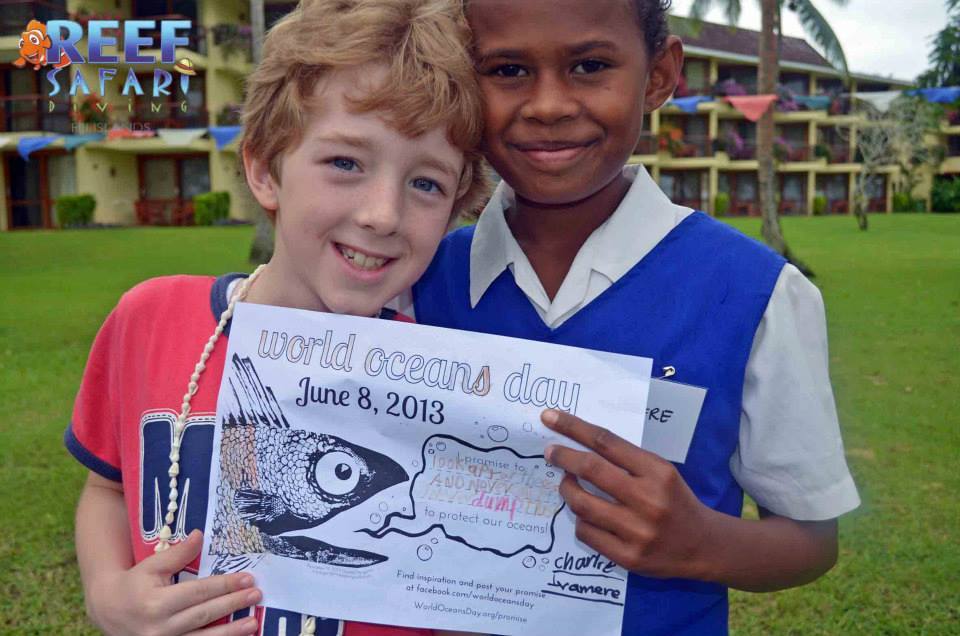
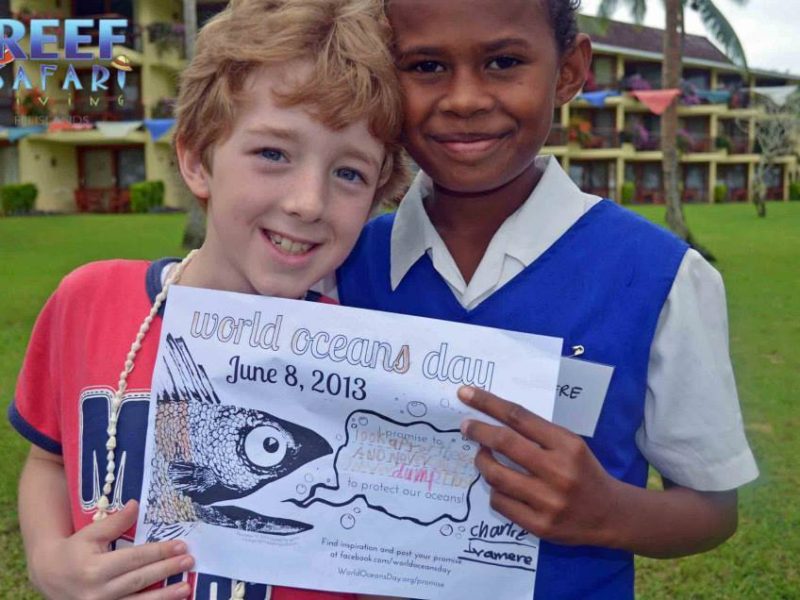
We were thrilled that so many of our zoo and aquarium partners joined us in promoting Ocean Promises encouraging visitors to pledge to do something to help the ocean. We had more than 300 promises sent to us with hundreds more collected at World Oceans Day events. Our partners were especially enthusiastic about this activity, which can serve as a great step onto a long-term journey for people interested in protecting the environment. I say “first step” because no small, one time action will immediately turn a person into a full-time environmental super hero! Low investment actions like the Ocean Promise are most effective when used in concert with a full suite of other community-based social marketing techniques. Of course, many institutions don’t have the resources, funds, or time to follow through with visitors after they make a promise. That’s not unusual and it doesn’t mean you shouldn’t ask for promises: we know that people who make public promises are more likely to change their behavior, and more likely to take bigger actions when approached either way. An easy, low investment campaign like Ocean Promises is a great way for staff at zoos, aquariums, and museums to achieve several aims. It emphasizes the institution as a conservation organization, and reminds the guest that the wild counterparts of the resident animals need our protection. It can give interpreters a chance to experiment with the most effective strategies to communicate with their visitors on issues, and offer insight as to which actions are resonating with visitors. As many educators and communicators have discovered, it’s very hard to find a one-size-fits-all action to suggest to visitors. Here are a few best practices that our partners have followed in order to overcome various challenges: Tip 1: Create the space for a conversation Identify a time and space when you'll be able to talk with guests about what promise is right for their family. Oregon Coast Aquarium A great option that several of our partner institutions chose was to make the Ocean Promise a crafty activity for kids. The kids are occupied with something fun, while staff has a chance to chat with the parents. Several institutions made Promise Bookmarks that kids hung up or took home or, like Oregon Coast Aquarium, made a Community Pledge mural that showed everyone’s promises together. Wendy Spaulding, Education Programs Coordinator for the Oregon Coast Aquarium said they plan to take it further next year. “We had an Ocean Pledge Mural craft activity, which had kids select a marine animal with a 'Ocean Pledge' written on it (or they could write their own pledge on a fish), that they could color, and then add to our Community Mural, which was erected specifically for the event to provide a visual representation of all the promises made… Next year, we would like to modify the activity to be even more interactive, with kids having to actually write their pledge, instead of just choosing an animal with one written on it.” MaryEllen Mateleska, Curator of Conservation Education at Mystic Aquarium added, “Although staff have a list of suggestions to share with families, we enjoy making the ‘ask’ into a conversation.” This will make it more likely that the change will actually fit into the family’s lifestyle, and they will feel like they chose it for themselves personally. MaryEllen further suggests talking to the whole family and guiding them through the process with questions: “These interactions would begin by directing questions to the younger members of the family that would open the discussion on conservation actions (e.g. ‘Did you know that today we are celebrating World Oceans Day?’ ‘What is your favorite ocean animal that lives at the aquarium?’ etc.). If a family was having difficulty brainstorming a promise, staff would prompt them with questions like: ‘Do you recycle at home?’ ‘Can you think of something else that could be done to reduce your trash even more?’ Or ‘Do you turn off the water while you’re brushing your teeth?’ ‘Can you think of something else that you can do to help conserve water at home?’” 2. Make it fun and easy for guests to capture their promises in a photo A few of our partner institutions experimented with taking photos of guests with their promises, and Georgia Aquarium even dared to take video. However, they learned there’s definitely a science to the art of guest photography! Cagney Smullin, Events Supervisor at Utah’s Hogle Zoo, found parents are more eager to take a photo pledge or do an activity with their kids than on their own. She said: “I think it was just uncomfortable for them to take the photo themselves...having a staff photographer or some sort of photo ‘booth’ would give it more of a fun element and more people would participate. You can then e-mail the photo to them from the app and also have the option of putting it on Facebook with the guests’ permission.” Sign at Hogle Zoo Making it fun was a point echoed by others. For example, New England Aquarium provided sea creature costumes for children and adults to wear when posing with their ocean pledge or statement about why they love the ocean. Not only is this a fun way to blow off steam, it’s also a family photo to remember the trip, and the promise to the ocean!
Continue reading -
NEW: Special Report on the Public Awareness of Ocean Acidification
Back in 2008 The Ocean Project tested the term “ocean…
Continue reading -
Communicating Conservation: Weekly Resources and News
The Ocean Project will be posting weekly roundups of the…
Continue reading -
Join us at AZA and IAC!
We’re looking forward to catching up with our Partners who…
Continue reading -
Small Grants Applications are due September 1st!
Have a project that you’ve always wanted to try…
Continue reading -
Last call for feedback!
We’ve been sending out emails to our partners regarding The…
Continue reading