-

Tell a wildly emotional story
Climate change is a big story. It’s such a big story in fact, it sometimes seems larger than life – and WAY too big to do anything about. As we’ve talked about before, it’s important to keep climate change real and tangible. One way to do that is to narrow the frame and tell a smaller story. By showing how the small or individual story is part of the big picture, you can help people make the emotional connection to the larger issue. This is a cross-post from ClimateInterpreter.org. Please visit for more resources and articles about communicating climate change for interpreters! Tell a “wildly” emotional story to connect people to wildlife Most humans have an interest and emotional connection with animals. How strong that connection is depends on a lot of factors (the individuals’ demographic and the species of the animal they’re engaged with) – but it’s safe to assume anyone visiting your institution is there to get better acquainted with wildlife. Research strongly suggests that just engaging with these animals inspires an intent to take some conservation action to help them, but there are steps you can take to translate this intent into action. Tell a story about how your visitors are connected with the animal Learning facts about an animal can help visitors feel more connected with it, but you can take things a step further. Also explain how – using techniques like casual chains and analogies – human activities can positively or negatively impact the animal. Watch this: tell a story about how the animal’s survival is linked with humans. Not sure how you can connect a particular animal with an environmental threat? See if there’s an entry for the species in question on PARIS – the Program Animal Rating Information System! Check out the “Potential Messaging” section for how other institutions have approached things. Give visitors a way to get involved, immediately if possible Your audience needs to know that there are solutions for problems, or they can become overwhelmed. If you focus just on problems, people can shut down and give up. It’s too much of a downer, especially when many don’t see themselves as able to help. Like I mentioned, people come away from encounters with animals intending to do something for that animal’s conservation and survival. However, this intention isn’t necessarily long-lasting. Research is scarce, but there’s evidence that most don’t follow through. Why not? They don’t know what to do, their attention is directed elsewhere, etc. There are many barriers to behavioral change. Give your audience something to do – right now! Provide an action when interpreting environmental threats. The ideal situation is to provide visitors with an action they can take during their visit, and to follow up with them afterwards. It can be extremely encouraging to feel like you’re part of a bigger effort, so emphasize that the action is something members of your community and/or institution are doing together. Have you tried giving an immediate action to visitors while or directly after interpreting about how animals are impacted by human activities? For one example, see NC Aquariums' green power push. This is the first part in a 3-part miniseries about “small” stories for big impact: Tell a “wildly” emotional story; Tell a story that’s close-to-home; Tell YOUR story Image from Shutterstock.
Continue reading -
Partners for ocean conservation
Thank you to all our partner organizations for your…
Continue reading -
Round 2: Innovative Solutions Grants+ winners announced!
Thank you to our partner organizations for your involvement in advancing aquatic and ocean awareness and conservation! For over 16 years, The Ocean Project has been supporting our partner zoos, aquariums, and museums (ZAMs) and other organizations do more for conservation action with visitors, both onsite and online, by providing strategic resources and tools to more effectively educate and communicate with your visitors for conservation outcomes. Most recently we developed an Innovative Solutions Grants+ Program to help engage visitors with solutions to ocean and climate issues. Thanks to funding from the National Oceanic and Atmospheric Administration (NOAA), we award grants to innovation leaders (currently $100,000/year for a few zoos and aquariums) that also come with pro bono strategic communications coaching throughout the grant period and technical expertise to catalyze peer-to-peer sharing and learning. The lessons learned benefit the aquarium and zoo community as a whole. Thank you to all who applied for a grant from the Innovative Solutions Grants+ Program. For this second round of support, we had very strong proposals from zoos and aquariums around the country, and our Advisory Panel had a challenging time selecting the winners. We are pleased to announce the following grant recipients: Philadelphia Zoo: Awarded $30,000 to measure the connection between onsite messaging and offsite behavioral change. To quantify the impact of the Zoo's mission-related conservation-education messaging on visitors, and to link Zoo visitors with ocean issues, they will develop a pilot project that will message ocean acidification (OA) at their Coral Reef Tank exhibit in their new KidZooU: The Hamilton Family Children's Zoo & Faris Family Education Center. The Zoo will leverage their partnership with PECO – the energy supplier for the Greater Philadelphia region – and Opower, to measure and compare the energy consumption behavior of Zoo visitors who have been exposed to OA messaging and asked to "save energy to save wildlife" with that of non-Zoo visitors, as well as visitors who have not received Zoo interpretation about OA. Riverbanks Zoo and Garden: Awarded $12,000 to create a year-long immersive program for its ZooTeens. The program, dubbed Teen S.O.S. (Stewards of Our Seas), will feature three main elements: 1.)Teen Action; 2.) Community Action; and 3.) TeenMD (marine debris), the first in a series of S.O.S. action kits. Teens will create innovative art from waterway cleanups and engage in peer-to-peer teaching as they weave the topic of marine debris into interactive programming for guests of all ages and inspire action through a teen-developed "Plastic Pledge - Take Back the Bag" campaign. The Florida Aquarium: Awarded $28,400 to work with the entire school community of a local Title 1 elementary school where many children are not getting a lot of hands-on science programming and where approximately 50% of the student population report English as a second language. This project will strive to increase participation of students' families in climate change-related activities and will include development of curricula and related materials in Spanish, that will be shared broadly. Woodland Park Zoo: Awarded $28,000 to engage their community in climate change, sustainability and conservation action by leveraging the collective energy and enthusiasm of their youth participants. Teens will develop their own carbon reduction action campaign that they will participate in and encourage participation in from their peers. Their project will focus on three primary areas: 1) Training: Develop and implement a comprehensive training/workshop for teens on climate science, interpretive practices, and strategies in developing social marketing/action campaigns and projects; 2) Action: Create the Seattle Youth Climate Action Network made up of teens from WPZ, Seattle Aquarium and the Pacific Science Center. Teen leaders from each will develop and implement their own action campaigns/projects; and 3) Communication: Support teen participants through engaging in a collaborative process that enriches teen experiences within each institution while providing opportunities for them to come together to learn and share throughout the year. Congratulations to the winners and The Ocean Project looks forward to working with all our partners in 2015 and beyond, to help communicate strategically for conservation action outcomes and impact. We will be releasing another RFP at some point in 2015 so watch the blog and our website for further information. Image via Shutterstock.
Continue reading -
Application now available for Innovative Solutions Grants+ Program
The application form for the next round of the Innovative Solutions Grants+ Program is now available; check out the RFP page for details and to download the application. The Grants+ opportunity is limited this year to US-based zoos and aquariums only. The deadline to submit your proposal is September 5, 2014. Click here to view the RFP and download the application form. Click here for last year's winners. The Grants+ program is an evolution of The Ocean Project’s efforts to help our partner organizations do more to effectively advance conservation action in measurable ways and create a healthier, more sustainable society. It allows us to invest in supporting innovators in the community by providing not only financial resources, but also free strategic communications services and evaluation help for stronger conservation impact. If you’ve got an innovative project or an idea for a twist on an existing project, program or activity that helps shift the paradigm on communicating to inspire conservation action, we want to hear from you! The Grants+ program was created so we can help you succeed in your role as trusted messengers for conservation solutions to ocean and climate issues.
Continue reading -
RFP for new Innovative Solutions Grants funding posted
We are pleased to share our new RFP for the second round of the Innovative Solutions Grants+ program! Click here to view the RFP, we'll be posting the application form shortly. Proposal deadline is September 5, 2014. With thanks to National Oceanic and Atmospheric Administration (NOAA) for helping us establish our Innovative Solutions Grants+ program, this second round of funding will provide $100,000 for AZA-accredited aquariums and zoos that are based in the US. (We are trying to raise funding to expand this opportunity to all our partner zoos, aquariums, and museums (ZAMs) in all parts of the world, so please let us know if you have any ideas for potential funding sponsors.) The Grants+ program is an evolution of The Ocean Project’s efforts to help our partner ZAMs do more to advance conservation action in measurable ways and create a healthier, more sustainable society. It allows us to invest in supporting innovators in the community by providing not only financial resources, but also free strategic communications services and evaluation help for stronger conservation impact. We’re referring to this program as the Grants+ Program because it involves much more than just financial resources. With each grant, The Ocean Project provides financial resources for our partner aquariums to develop innovative local and regional ocean conservation solutions and stewardship initiatives, specifically targeting youth and minorities. We plan to maximize the benefit of each grant by including strategic communications capacity building opportunities for the awardees, including strategic and technical resources and expertise to more effectively engage their visitors. We will also work with each grantee to help accelerate peer-to-peer learning and widely share resulting new strategies and successes with the wider community, especially our growing partner network of 2,000 ZAMs and other conservation and education organizations in all 50 states and worldwide. You can read here on our blog about what the current three Grants+ awardees — North Carolina Aquariums, New England Aquarium and Oregon Coast Aquarium — are doing to bring about positive change. If you’ve got an innovative project or an idea for a twist on an existing project, program or activity that helps shift the paradigm on communicating to inspire conservation action, we want to hear from you! The Grants+ program was created so we can help you succeed in your role as trusted messengers for conservation solutions to ocean and climate issues.
Continue reading -
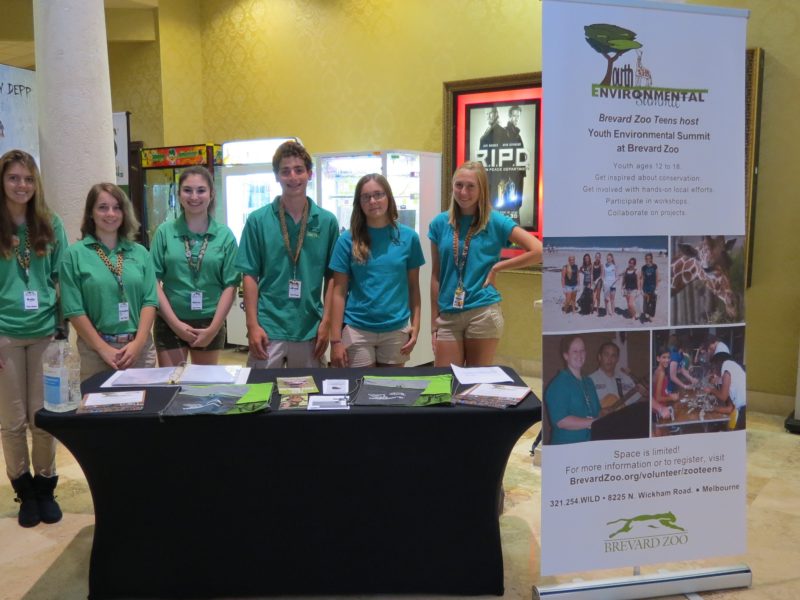
Insights from Brevard Zoo’s youth-led environmental summit
In part 1 of our blog series…
Continue reading -
Climate communication: know thy audience, know thyself
Our friends over at EcoAmerica have published an insightful overview, “Communicating on Climate: 13 Steps and Guiding Principles,” that pairs nicely with the recent research by the Climate Literacy Zoo Education Network (CliZEN), as well as the ongoing research we’ve been doing here at The Ocean Project. "Communicating on Climate" offers a set of quick tips for audience engagement, offering a good review and food for thought for those of us who've been working on this issue for a while, or a good starting point for colleagues who may be not have been as focused on these concerns but are now getting involved. To what is covered in this report, we’d add that not only to do we need to know our audiences, but we need to know ourselves. In other words, we need to ask not only, "Where are our audiences on this issue?" but, "Where do our institutions have credibility?" and, "What works best in the context of a zoo or aquarium visit?" So as to be sure we are playing to our strengths and avoiding our weaknesses. On this last note, our research here at The Ocean Project suggests that aquariums and zoos, for example, are likely to do best when the discussing the problem in relation to its impact on the animals, and offering solutions that are centered in the sort of personal action steps that help people feel good about themselves, and their visit. For more on that, see our general advice on what the research says about "shaping a good ask" for visitors. Hoping this helps, and, as always, we welcome your feedback!
Continue reading -
Communications medley: the messenger makes the message meaningful
In this week's round up: the messenger makes the message meaningful, and Americans have energy highs and lows. If you’re a science communicator or educator at an informal science center (such as a zoo, aquarium, or museum) trying to encourage conservation action – this is the round up for you! Every week we break down the most interesting recent news and best resources to help you frame the issues as effectively as possible. Some of these resources will be practical communications and framing tips, and others are great starting points for brainstorming future strategies. Green, yes please! Environmentalism... no thanks. This article on perceptions of "activist" environmentalists emphasizes how important messengers like interpreters at zoos, aquariums, and museums are for encouraging green action. To sum it up: people are willing to change their behavior, but less if they suspect you're a 'stereotypical' environmentalist. As The Ocean Project's research has found, informal science centers are trusted sources of information about environmentally-friendly behavior for Americans. Furthermore, visitors actually want this information as part of a satisfying visit to a zoo, aquarium, or museum. So stay cool, friendly, and give visitors plenty of tips for how they can help the planet. They'll listen to you! Energy surge and slump Recent energy news in America has been a mixed bag - good and bad. Let's start with the bad so we can end on a positive note: U.S. stands out as among the least concerned about climate change Pew's new survey found 40% of Americans and 39% of Chinese (two of the biggest carbon polluters on Earth) say climate change is a major threat to their nation. For comparison, a median of 54% of people in the surveyed 39 countries identify climate change as a major threat, and in some countries like Greece and Korea over 80% of people are concerned. U.S. Carbon Dioxide Emissions Down 11 Percent Since 2007 Despite that previous distressing bit of news, there are still good things happening. Since 2007 US emissions have fallen by 11%, the equivalent of taking 77 million cars off the road. Why? People are driving less, and cars are getting more efficient with gas. Also - emissions from burning coal have fallen 20% since 2005. Obtaining 25% Of Energy From Renewables Would Save Billions More wind and solar, even if it would only account for 25% of the electricity in the Western US, would save $7 billion and reduce carbon pollution by 34%. This study is one of the first to use real-world hourly emissions data from power plants in the Western US, with serious implications for economically minded folks.
Continue reading -
Readying for a new round of concern and questions about climate change
A draft of the latest report from the United…
Continue reading

