-
Seas the Day January- Resolve to do Great
The Seas the Day initiative encourages and empowers people to take ocean conservation personally. Each month, we feature a new conservation theme with ways to help so come back regularly for more ocean-friendly ideas and tips! Created mainly to support our partner ZAMs (Zoos, Aquariums, and Museums and other visitor-serving organizations involved in our growing network) in their efforts to motivate conservation action with their visitors, Seas the Day is for you to tailor for your own purposes. Please use any of the content verbatim and re-post on your own blog, social media channels, website, newsletter, etc. We have a large database of action tips and related content for you to use. Let us know what’s most helpful and what other types of information and resources we can provide to enhance your efforts to motivate action for the ocean. Resolve to do Great! Did you know that the health of the ocean directly contributes to the health of the human race? From the type of food that we consume to the quality of the air we breathe, a healthy ocean means healthy people. By adding “Ocean Fitness” to a list of New Year’s Resolutions, you can be part of sustaining the beauties of beaches, the communities in coral reefs, and the playtimes of porpoises. Create The Ocean is a beautiful place that has provided the inspiration for many excellent pieces of art. You can be a part of that wonderful tradition by making something beautiful inspired by it. Write, draw, or paint and share your creations. Art, after all, has long given important topics emotional weight necessary to create change. Meditate It can be hard to want to go outside while Old Man Winter has you in his grip. Fortunately, most people feel this way. Pile on some layers, grab a hot beverage and go outside! For those by beaches there are the myriad benefits: the ocean looks wilder, is emptier, and the air more crisp. Grab your camera and enjoy the fresh, salty breaths. Not near the ocean? There are unique natural beauties everywhere, all with their own perks. Go get surprised how the noise of nature can silence the bustle in your brain. Participate After celebrating Dr. Martin Luther King Day on the 17th, do honor to his memory by taking action. Many towns and states have their own Adopt-A-Spot program and a group can make a great difference. Want to do more? June 8th and World Oceans Day is coming up quickly! Visit the World Oceans Day website for event ideas and put one together in your community. WOD events are a great way to celebrate this wet planet and take small steps toward keeping it healthy. - Arianna Baker, Conservation Associate
Continue reading -

Support World Oceans Day for a healthy ocean
We're excited to announce our end-of-year crowdfunding campaign to support World Oceans Day! Our goal is make World Oceans Day bigger and better - in 2014 and beyond. Whether you're able to contribute $1 or $1,000, every donation will help us increase the reach and impact of this annual day of celebration. Join us in our mission to create a healthy, thriving ocean that continues to connect people everywhere – from every country, culture, and creed across the planet. World Oceans Day is a community-driven grassroots effort June 8th is World Oceans Day - when thousands of people around the world celebrate and take action to create a healthier ocean for everyone. Last year's World Oceans Day again was an inspiring experience. People around the world came together and took action for the ocean’s healthy future in a big way, with over 600 events in 70 different countries, held by aquariums, zoos, schools, businesses, local governments, moms, surfers, and so many more. These are people are reaching out in their own communities to do something to help protect the ocean and what it does for each one of us. How will my contribution help? Even though many of us don’t see the ocean daily, the ocean affects us and we affect the ocean. Our actions help protect it and the animals that call the ocean home. World Oceans Day is an opportunity to create widespread action and discussion about what we each can DO to keep it healthy. Your personal contribution will help support our community of event organizers, and build World Oceans Day into a bigger global rallying point for celebration and action; it will be an even better day to unify organizations and capture people's imaginations around the world to create important changes, locally, nationally and internationally. By supporting us with a gift for the ocean, we'll be able to: Greatly improve the World Oceans Day online engagement platforms Provide free educational materials and tools to event organizers Work tirelessly to promote this event and empower our partners to be the best ocean ambassadors to their communities And much more. With your help, we can collectively grow this event into a real force for change. Thank you!
Continue reading -
Fun and easy: the key to making people excited to help the ocean
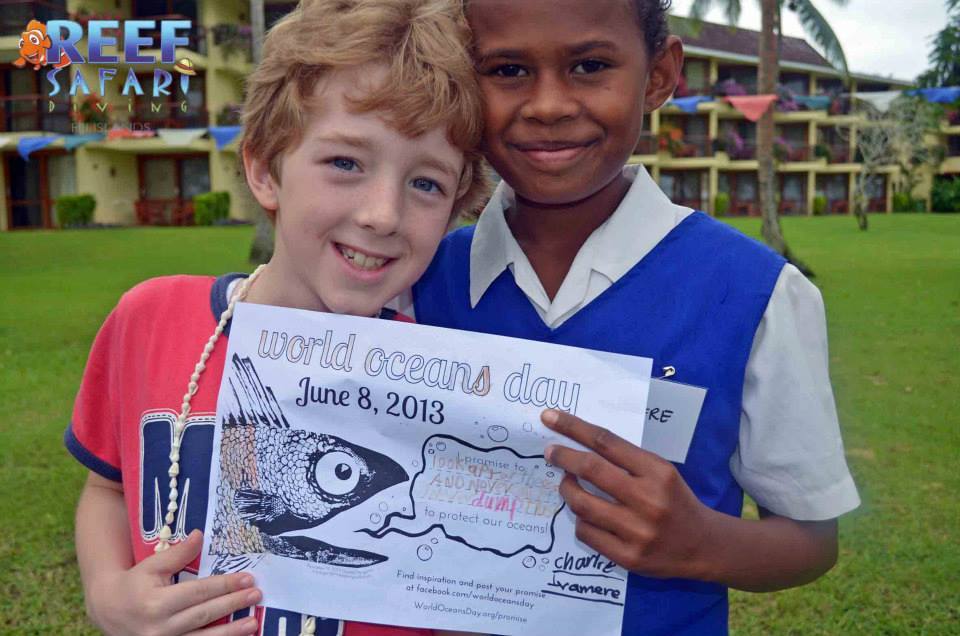
We were thrilled that so many of our zoo and aquarium partners joined us in promoting Ocean Promises encouraging visitors to pledge to do something to help the ocean. We had more than 300 promises sent to us with hundreds more collected at World Oceans Day events. Our partners were especially enthusiastic about this activity, which can serve as a great step onto a long-term journey for people interested in protecting the environment. I say “first step” because no small, one time action will immediately turn a person into a full-time environmental super hero! Low investment actions like the Ocean Promise are most effective when used in concert with a full suite of other community-based social marketing techniques. Of course, many institutions don’t have the resources, funds, or time to follow through with visitors after they make a promise. That’s not unusual and it doesn’t mean you shouldn’t ask for promises: we know that people who make public promises are more likely to change their behavior, and more likely to take bigger actions when approached either way. An easy, low investment campaign like Ocean Promises is a great way for staff at zoos, aquariums, and museums to achieve several aims. It emphasizes the institution as a conservation organization, and reminds the guest that the wild counterparts of the resident animals need our protection. It can give interpreters a chance to experiment with the most effective strategies to communicate with their visitors on issues, and offer insight as to which actions are resonating with visitors. As many educators and communicators have discovered, it’s very hard to find a one-size-fits-all action to suggest to visitors. Here are a few best practices that our partners have followed in order to overcome various challenges: Tip 1: Create the space for a conversation Identify a time and space when you'll be able to talk with guests about what promise is right for their family. Oregon Coast Aquarium A great option that several of our partner institutions chose was to make the Ocean Promise a crafty activity for kids. The kids are occupied with something fun, while staff has a chance to chat with the parents. Several institutions made Promise Bookmarks that kids hung up or took home or, like Oregon Coast Aquarium, made a Community Pledge mural that showed everyone’s promises together. Wendy Spaulding, Education Programs Coordinator for the Oregon Coast Aquarium said they plan to take it further next year. “We had an Ocean Pledge Mural craft activity, which had kids select a marine animal with a 'Ocean Pledge' written on it (or they could write their own pledge on a fish), that they could color, and then add to our Community Mural, which was erected specifically for the event to provide a visual representation of all the promises made… Next year, we would like to modify the activity to be even more interactive, with kids having to actually write their pledge, instead of just choosing an animal with one written on it.” MaryEllen Mateleska, Curator of Conservation Education at Mystic Aquarium added, “Although staff have a list of suggestions to share with families, we enjoy making the ‘ask’ into a conversation.” This will make it more likely that the change will actually fit into the family’s lifestyle, and they will feel like they chose it for themselves personally. MaryEllen further suggests talking to the whole family and guiding them through the process with questions: “These interactions would begin by directing questions to the younger members of the family that would open the discussion on conservation actions (e.g. ‘Did you know that today we are celebrating World Oceans Day?’ ‘What is your favorite ocean animal that lives at the aquarium?’ etc.). If a family was having difficulty brainstorming a promise, staff would prompt them with questions like: ‘Do you recycle at home?’ ‘Can you think of something else that could be done to reduce your trash even more?’ Or ‘Do you turn off the water while you’re brushing your teeth?’ ‘Can you think of something else that you can do to help conserve water at home?’” 2. Make it fun and easy for guests to capture their promises in a photo A few of our partner institutions experimented with taking photos of guests with their promises, and Georgia Aquarium even dared to take video. However, they learned there’s definitely a science to the art of guest photography! Cagney Smullin, Events Supervisor at Utah’s Hogle Zoo, found parents are more eager to take a photo pledge or do an activity with their kids than on their own. She said: “I think it was just uncomfortable for them to take the photo themselves...having a staff photographer or some sort of photo ‘booth’ would give it more of a fun element and more people would participate. You can then e-mail the photo to them from the app and also have the option of putting it on Facebook with the guests’ permission.” Sign at Hogle Zoo Making it fun was a point echoed by others. For example, New England Aquarium provided sea creature costumes for children and adults to wear when posing with their ocean pledge or statement about why they love the ocean. Not only is this a fun way to blow off steam, it’s also a family photo to remember the trip, and the promise to the ocean!
Continue reading -
Taking the dive part III – Seattle Aquarium takes action for World Oceans Day
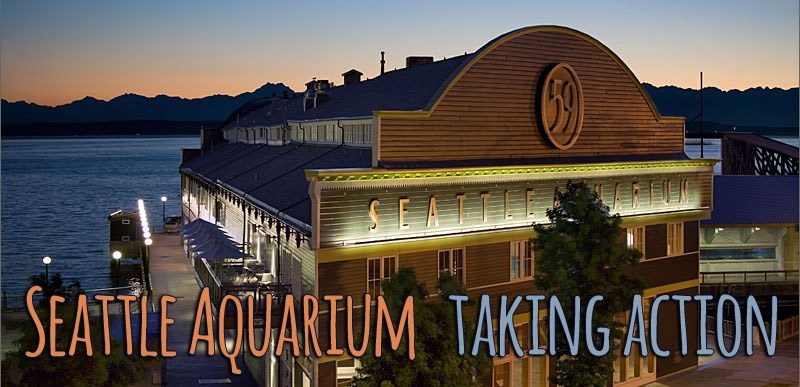
In Part I of our series on conservation asks at World Oceans Day events, we explained the concept of seizing these unique opportunities to encourage your visitors to take environmentally-friendly actions (conservation ‘asks.’) In Part II of the series, we introduced you to how an innovative pilot program at California Academy of Sciences is exploring how to best make conservation ‘asks’ by interpreters through a collaborative professional learning program. In this installment, Part III, we’ll take a look at how Seattle Aquarium has made conservation ‘asks’ an integral part of their World Oceans Day celebrations in 2012 and 2013 – and what they’ve learned from the experience. Seattle Aquarium takes action Seattle Aquarium’s 2012 and 2013 celebrations had a strong conservation orientation – the institution definitely doesn’t shy away from civic engagement. In 2012 they focused on messaging about ocean acidification, marine debris, and MPAs. For 2013 they narrowed the focus more by encouraging action on ocean acidification and marine debris. To help in these efforts, the Seattle Aquarium has turned to their youth advocacy volunteer group, Puget Sound: We Love You. The group has run the ‘Hour for the Ocean’ campaign , leading to hundreds of people in the Seattle area taking one hour on June 8th to do something clean up their local watershed. For 2013 the aquarium experimented taking it to the next level with the ‘Be an Ocean Hero’ campaign. Each station at their World Oceans Day event presented three actions visitors could take to protect the ocean: on an individual, community, and civic level. They supported these recommendations by giving examples of what the aquarium was doing as well. The aquarium implemented consistent messaging on multiple levels: they presented the same action tips in a blog post prior to the event, pushed them out via several social media posts prior and during, and had docents repeat them during interpretation with guests at various stations. Lessons Learned So what did Seattle Aquarium learn from their experience which could help other institutions encourage their visitors to take action for environmental health? Focus on fewer issues. This provides a consistent narrative and doesn’t leave guests overwhelmed. The Seattle Aquarium, for its part, plans to continue to use effective story telling and strategic metaphors to emphasize one or two of the most prominent issues for their local marine environment. Emphasize local impact. A local narrative helps visitors see why the actions - whether individual, community or civic actions - are relevant to them personally, and encourages local pride. It also is much easier for visitors to understand, accept and appreciate than impact on "the ocean." Use animal ambassadors. Visitors care about the animals and want to help. With this in mind, the aquarium incorporated conservation action into their harbor seal presentation. Nicole Killebrew, Marine Science Interpreter shared the following example: “One of our primary themes this year was marine debris. Using our harbor seals as ambassadors for the local wild population, we facilitated a series of enrichment presentations to demonstrate the impact that marine debris has on marine mammals... At the end of the presentation, we received streams of visitors encouraging us to do this type of presentation every day because of the messages’ relevance and importance.” Encourage the sharing of stories. Certain activities can also give visitors a chance to talk to other guests about what they themselves are doing, spreading the knowledge and normalizing ocean protection as a part of responsible citizenship. Nicole recalls: “A guest responded to our ‘Oceans of the World’ activity by sharing their involvement in donating to various organizations that promote coral reef conservation and ocean health...The conversation was rich with ideas about ways people can get involved in supporting grassroots organizations that are making a difference.” Thanks to Nicole Killebrew, Dave Glenn, and Becky Bingham at Seattle Aquarium for their great help, insight, and willingness to share their experiences. If you’d like to share how your institution is inspiring visitors to help the environment, please don’t hesitate to email us.
Continue reading -
Two fish with one hook: Conservation action at World Oceans Day Events
Many zoos, aquariums, and museums (ZAMs) consider inspiring conservation one of their major goals for interacting with their visitors and the public. Recently, many of our partner ZAMs helped their visitors take a first step for ocean conservation by getting them involved at World Oceans Day celebrations. Smart staff "caught two fish with one hook" by explaining to guests how they can adopt long-term environmentally friendly habits, and then supported their sense of personal efficacy and identity as "green" ocean protectors by having them take real conservation action in their communities on that day. It's exciting to see more and more partner ZAMs' commitment to encouraging environmental stewardship among their visitors. Here are a few examples of what our partner ZAMs did for World Oceans Day this year. Plastic bag pollution: Provide a solution Utah’s Hogle Zoo addressed plastic bag pollution by encouraging guests to recycle their trash and stop it at the source. The Zoo kept it local by collaborating with a community recycler, Rocky Mountain Recycling, to collect and recycle plastic bags, and joined forces with a local grocer, Fresh Market, to donate a free reusable bag to guests who brought 10 or more plastic bags to recycle. According to Hogle Zoo’s Events Coordinator, Cagney Smullin, “It was very popular and we had hundreds of plastic bags turned in. We put out messaging and tried to educate guests that it's best not to use plastic bags.” Hogle Zoo was smart about addressing this problem because stopping a harmful behavior (using plastic bags) isn’t enough; it's important to replace it with a positive behavior (using a reusable bag). This successful collaboration informed visitors about the negative effects plastics have on the oceans and its wildlife while providing them with a way to help as part of the solution to this issue. Visitors to Utah’s Hogle Zoo exchange plastic shopping bags for reusable ones. Interactive games for conservation win over kids... and adults Many of our ZAM partners found it helpful to embed information and appeals for environmentally friendly actions into fun activities, which reinforced the environmental conversation message and gave visitors opportunities to practice taking on such actions. For example, at their World Oceans Day event, the Santa Barbara Zoo created a fun, interactive game for visitors to learn more about sustainable seafood. “The fishing game for Seafood Watch, where kids 'fished' out laminated fish and then consulted a large manual to see if they should eat them was really successful… It was very successful to have a game where we could engage people and keep them around longer. Even adults would fish out laminated fish and check to see if they should eat them” explains Ria Boner, Conservation and Research Coordinator at the Santa Barbara Zoo. Visitors also were excited to learn about the Seafood Watch phone application because it “would be harder to lose” than a paper pocket guide. Seafood Watch has a new downloadable app to help users learn up-to-date sustainable seafood info. Coastal cleanups: Threats from marine debris taught through action Around the globe, one of the most popular World Oceans Day activities was a coastal cleanup. Volunteers of all ages helped to clean up their local shores, some collecting hundreds of pounds of trash. This type of event is a great opportunity to teach people about the threats of marine debris, which can be reinforced with first-hand accounts of coastal pollution. The cleanup event held by Museo Sang Bata Sa Negros, an interactive marine museum for children found in Sagay City, Philippines, was particularly exciting. The museum’s director Elizabeth Cordova-laO' explains, “Since our museum is located right beside the sea, during World Oceans Day, we had a coastal cleanup activity with 60 kids participating and some of their parents.” Not only did they hold a cleanup, but they engaged the kids about what they had learned with a lot of fun and excitement: drawing contests, freeing an entangled sea turtle, talking about why their local mangroves were important to their community, a dance performance, and more. Researchers have noted the benefits of volunteering in actions like these, especially with children. Some of the benefits include the potential to promote healthy lifestyles and choices, improve one’s sense of community, and encourage civic responsibility. Coastal Cleanup at Museo Sang bata Sa Negros in Sagay City, Philippines. Look out next week for our next blog posting, which will talk about ZAM partners who asked visitors to make an Ocean Promise in honor of World Oceans Day.
Continue reading -
Taking the dive II – Conservation ‘asks’ as a collaborative learning process
This is a cross-post from the World Oceans Day blog; part II in our series of posts about World Oceans Day events at zoos, aquariums, museums, and other visitor-serving organizations. Thanks to Lindzy Bivings of California Academy of Sciences for her insight and time editing this post. One of our partners provides a great example of a daring – but informed – charge into making "asks." California Academy of Sciences' Institute on Conservation Education & Sustainability (ICES) program, led by Lindzy Bivings, has taken an exciting approach to experimenting with developing and deploying conservation asks. ICES recently completed a 12-week pilot of their professional learning program, which is exploratory and collaborative. Educators at the facility focused on learning what they could from the literature on best practices in the field, then worked together to develop conservation education goals, and entered a rapid prototyping process where they quickly evaluated and altered on-the-ground tactics in response to interactions with guests. By working together, and being undeterred by the lack of a concrete framework, the participants made some great discoveries about what contributes to an effective ask. Lessons Learned Here are some tips shared by Lindzy Bivings which may assist you in making your own asks: 1. Do separate formative assessments to get a sense of visitors’ current knowledge and engagement. This will help identify what the visitors already know about an issue, and what they perceive as barriers and benefits to an action. 2. One-on-one or small group asks work best. A one-size-fits-all approach often doesn’t work, so have a few ways for people to quickly take action few asks up your sleeves so you can customize the solution as much as possible. 3.) Focus special events and asks on specific populations. Lindzy says: “For example, if we’re working with residents from San Francisco, we very rarely talk about plastic bag issues, because we have a plastic bag ban in the city. Likewise, if its folks from our Bayview District, we don’t spend too much time on how to use the city’s composting system because the housing projects in that area don’t get composting bins.” 4.) Allow visitors to participate in developing the ask, and making the commitment that’s right for their level of engagement/ability. When visitors partially persuade themselves, they are more likely to follow through. The ICES program was fairly large, about 20 educators participated in their pilot program, but the lessons they’ve learned are also applicable on a smaller scale. By treating making asks as an experimental learning process, institutions can begin a low-investment exploration into making high-impact asks in the future. 5.) Use cardboard and duct tape. Don’t be a perfectionist at first. There’s nothing more disappointing than spending hours upon hours on something only to discover that it doesn’t work. Exhibit developers know this, and so should educators. For help, check out Office Supply Ninja. Further reading: Be sure to check out The Ocean Project’s series on asking visitors to act for conservation by Douglas Meyer, and feel free to contact us for more information.
Continue reading