-
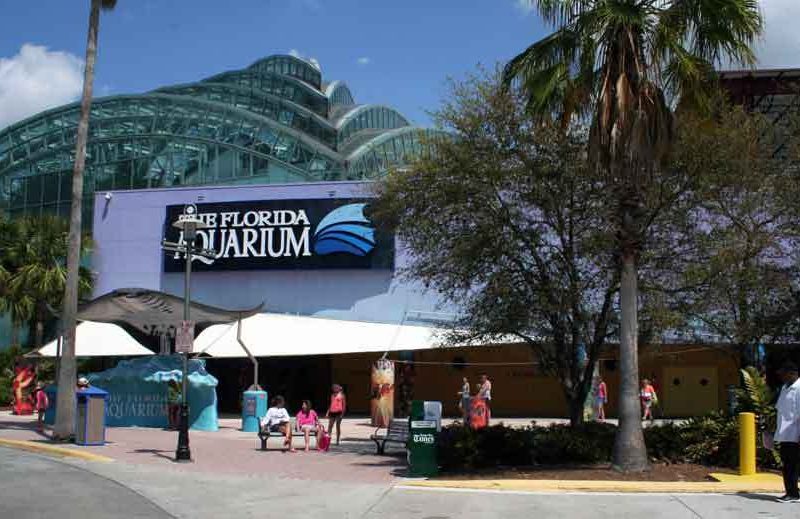
ISG+ New Project: Florida Aquarium investigates a co-designed ‘ask’ for engagement
This guest post, by VP of Education Debbi Stone at Florida Aquarium is the first in a 3-part series on their Innovative Solutions Grants+ project. The Aquarium's project asks "Can we gain valuable insights about how to engage an underrepresented audience by working together to design the approach?" The Ask As a mission-based institution committed to learning as much as we can about “The Ask,” our shorthand phrase for promoting conservation action to our visitors, we have spent the last several years focusing on questions such as: What individual behaviors actually make a positive difference in ocean conservation? What actually motivates visitors to join us in taking these actions? How do we track the success of our efforts? How do we engage previously underrepresented audiences? Using resources and insights from The Ocean Project, Frameworks Institute, the National Network for Ocean and Climate Change Interpretation (NNOCCI), Climate Interpreter, and more, we have made strides on the above, yet we also recognize that we still have a lot to learn. Through our recently awarded Innovative Solutions Grant, we especially want to learn more about how to answer that last question about engaging underrepresented audiences. An Underserved/Untargeted Audience The fastest growing population segment in our region is Hispanic. Between the 2000 and 2010 censuses, the Hispanic population in our home county of Hillsborough grew by over 70%. Even with that knowledge, we had not been strategically focusing on how to align our goal of increasing visitor actions via The Ask with engaging the largest growing population with which to work. We hypothesize that if this population continues to grow with such robustness, it represents an audience with which we have a tremendous opportunity to collaborate and affect positive change on a large scale. We were therefore excited to receive awarded the Innovative Solutions Grant to explore deepening our connection with this important audience by working with a prominently Hispanic Title 1 elementary school to create a platform, and answer questions about how best to increase visitor actions. Why Youth as a Launch Point? As data summarized in The Ocean Project’s Special Youth Report in America, the Ocean, and Climate Change: New Research Insights for Conservation, Awareness, and Action, suggest that youth have a strong influence on household conservation behaviors, our project strives to equip students to be catalysts in their households. As the data further suggest that aquariums are trusted sources of information about ocean issues, we believe that we are in a powerful position to effect positive change. Furthermore, additional research by The Ocean Project and others underscores the way in which those in households where English is the second language also tend to have a strong, but often unmet, interest in conservation issues. Project Summary Through our Innovative Solutions project, we plan to work with approximately 200 elementary students at a predominantly Hispanic school to help us develop engagement ideas that include family involvement and participation. We are also, thanks to the grant, able to provide materials in Spanish, something that has been a challenge for us in the past. Throughout this school year, we will work with teachers and students to develop projects that directly connect the community to action…or again, what we call The Ask. We will work with grade level teachers to help students at various grade levels create action-based projects that they find meaningful to them and that we think are appropriate for the Aquarium. And the students will be encouraged involve their families along the way. In May, the students and their families will be invited to attend a Family Science Day at The Florida Aquarium, where they will share their ideas with our visitors, and we can all gauge the response. Reality Check? Are we trying to accomplish too much with this one school? We all - aquarium staff, teachers and students alike - are excited about the idea of working together but are already learning that it can be a challenge to fit a project like this into an increasingly busy school schedule. In our next blog, we’ll share more about barriers we're encountering (and working through) as well as where we are in our efforts and how we are proceeding. We will keep you posted as our work progresses!
Continue reading -
RFP for new Innovative Solutions Grants funding posted
We are pleased to share our new RFP for the second round of the Innovative Solutions Grants+ program! Click here to view the RFP, we'll be posting the application form shortly. Proposal deadline is September 5, 2014. With thanks to National Oceanic and Atmospheric Administration (NOAA) for helping us establish our Innovative Solutions Grants+ program, this second round of funding will provide $100,000 for AZA-accredited aquariums and zoos that are based in the US. (We are trying to raise funding to expand this opportunity to all our partner zoos, aquariums, and museums (ZAMs) in all parts of the world, so please let us know if you have any ideas for potential funding sponsors.) The Grants+ program is an evolution of The Ocean Project’s efforts to help our partner ZAMs do more to advance conservation action in measurable ways and create a healthier, more sustainable society. It allows us to invest in supporting innovators in the community by providing not only financial resources, but also free strategic communications services and evaluation help for stronger conservation impact. We’re referring to this program as the Grants+ Program because it involves much more than just financial resources. With each grant, The Ocean Project provides financial resources for our partner aquariums to develop innovative local and regional ocean conservation solutions and stewardship initiatives, specifically targeting youth and minorities. We plan to maximize the benefit of each grant by including strategic communications capacity building opportunities for the awardees, including strategic and technical resources and expertise to more effectively engage their visitors. We will also work with each grantee to help accelerate peer-to-peer learning and widely share resulting new strategies and successes with the wider community, especially our growing partner network of 2,000 ZAMs and other conservation and education organizations in all 50 states and worldwide. You can read here on our blog about what the current three Grants+ awardees — North Carolina Aquariums, New England Aquarium and Oregon Coast Aquarium — are doing to bring about positive change. If you’ve got an innovative project or an idea for a twist on an existing project, program or activity that helps shift the paradigm on communicating to inspire conservation action, we want to hear from you! The Grants+ program was created so we can help you succeed in your role as trusted messengers for conservation solutions to ocean and climate issues.
Continue reading -
RFP coming in June for innovative ideas from aquariums and zoos!
With thanks to National Oceanic and Atmospheric Administration…
Continue reading -
Young women are Monterey Bay Aquarium’s “Ocean Guardians”
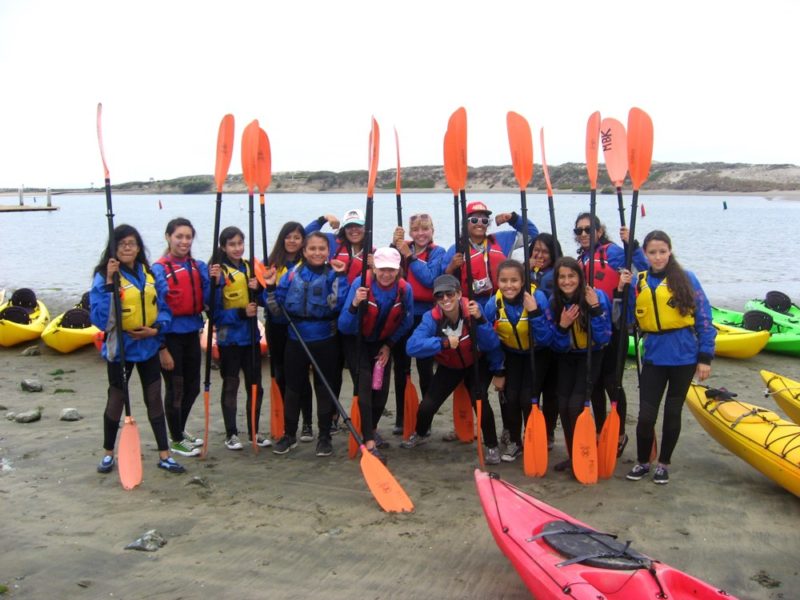
In part 3 of our blog series on past Small Grants projects at zoos and aquariums, Dolores Toledo of Monterey Bay Aquarium shares what they've learned about helping young women from diverse backgrounds become confident, science-capable, and personally active in conservation. Background Monterey Bay Aquarium’s Young Women in Science (YWS) program began in 1999. Each summer we offer three, week-long, bilingual YWS camps. The camps provide young women entering grades 7-8 with extracurricular, hands-on science experiences and introduce them to women in the science field. The goal is to provide these girls with opportunities that foster their curiosity and sense of wonder, as well as bolster their self-image of being science-capable. Young women who live in Monterey, Santa Cruz, and San Benito counties are eligible to apply. YWS was created to motivate more girls to pursue science careers and feel science savvy. Today, studies show that while more females are making their way in the science fields, minority women are still falling short. Over the years YWS has strengthened our recruitment of low income and Hispanic young women who typically do not visit the Aquarium or pursue careers in science. Now more than ever, we ensure the program is conducted bilingually in English and Spanish to reach the underrepresented local Hispanic audience. Every summer more than 70 middle school girls participate in the two first-year camps “Otter Mystery.” Through their experiences, participants identify and connect the factors that influence the health of the threatened Southern sea otter population. The girls have the opportunity to observe sea otters while kayaking in Elkhorn Slough, use telemetry to track wild sea otters, go sand crab monitoring and surface scuba diving, among other activities. Making conservation personal In addition, 40 girls have the opportunity to return for a second year of camp-- “Ocean Guardians.” In this camp, participants are challenged to rethink their ideas about single-use plastic and learn about threats plastic can cause to marine species and to the local community. At the end of the week students create a Public Service Announcement to encourage others to become Ocean Guardians. This year, we are increasing the science content by including activities on bioaccumulation and plastic toxicity and including a conservation action, where students will rally the community to sign a pledge to SAY NO to disposable plastics. The Monterey Bay Aquarium’s Young Women in Science program engages middle school girls in real, hands-on science in a friendly, supportive context. Female role models support their learning about the science process. Girls interact with science professionals, learn about the kinds of activities that scientists do, and the preparation they need in order to become a scientist. The ultimate vision is to give them positive science experiences that will keep them interested in science throughout their high school years. Goals of the program At the same time, we know not all girls will be attracted to science careers. We hope that they will feel self-empowered to pursue higher degrees and feel capable of making life and consumer decisions that may involve understanding science information. Our overall goals: Empower low income and Hispanic young women participants to engage in science. Help students feel inspired, confident, ocean literate and ready to act on behalf of the ocean. Increase their awareness of conservation and their personal role in conservation. Introduce participants to community partners and opportunities that support their involvement in science. Understand how events in nature can be explained by science. Throughout the camps, the young women discuss what they know about conservation practices and how they put those practices. Most are familiar with recycling and reusing, but this year, we are introducing them to the idea of refusing. The goal is that participants will continue practicing these actions at home, school and in their community after the program ends. In addition, all curriculum is woven with conservation themes of habitat conservation and ecosystem interconnectedness. The program is staffed by science educators from the Monterey Bay Aquarium. Women scientists from various fields share their work and mentor young women during the weeks. Middle school science teachers also participate as staff, serving to foster the student-teacher that relationship. Recently, some of our YWS alumni have been hired as paid Program Assistants for Young Women in Science. These college students are excellent and inspirational role models for our girls and for us. -- Dolores Toledo, Bilingual Education Specialist at Monterey Bay Aquarium
Continue reading -
The Ocean Project Innovative Solutions grant winners announced!
With thanks to National Oceanic and Atmospheric Administration (NOAA) over the last several years, The Ocean Project has been helping our partner zoos, aquariums, and museums (ZAMs) advance conservation action. Most recently, NOAA Education has funded the first year of a three-year project that will allow The Ocean Project to invest in supporting innovators in the community (the grant this year stipulated that Innovative Solutions grants only be given to AZA-accredited aquariums; our hope in the future is that this grants program will become open to our other institutional partners - e.g. zoos and museums). The plan is for this Grants+ Program to build on what we learned from our small grants program over the last few years and provide our partners with the resources and strategic communications services to do more for ocean and climate conservation and will empower them to succeed in their role as trusted messengers for conservation solutions. We’re referring to this program as the Grants+ Program because it involves much more than just financial resources. With each grant, The Ocean Project provides financial resources for our partner aquariums to develop innovative local and regional ocean conservation solutions and stewardship initiatives, specifically targeting youth and minorities. We plan to maximize the benefit of each grant by including strategic communications capacity building opportunities for the awardees, including strategic and technical resources and expertise to more effectively engage their visitors. We will also work with each grantee to help accelerate peer-to-peer learning and widely share resulting new strategies and successes with the wider community, especially our growing partner network of 2,000 ZAMs and other conservation and education organizations in all 50 states and worldwide. Additionally, we’re also seeking to leverage this funding to expand the program and happy to work on joint fundraising opportunities with interested partners, including awardees to expand on their innovative projects and/or runner-ups for awards. Thank you to all who applied for a grant from The Ocean Project’s Innovative Solutions Grants+ Program. For this first round of the Innovative Solutions Grants+ Program, we had a very competitive pool of applicants from the aquarium community. Our Advisory Panel had a challenging time deciding on the award winners. We are pleased to announce the following grant recipients: New England Aquarium: Awarded $17,500 for "New England Aquarium ClimaTEENS Community-wide Solutions." The ClimaTEENS project will help 40 teens provide climate change workshops and presentations for peers focusing on community-wide solutions. The teens will complete in-depth training and develop materials with help from staff experts in climate science and interpretation. North Carolina Aquarium Society: Awarded $16,000 for "Promoting Renewable Energy Certificates at the NC Aquariums." Their three aquariums and an educational pier facility will develop, deliver, and evaluate new and effective conservation messages that will encourage their visitors to take immediate conservation action by purchasing renewable energy credits (RECs) for their homes. In turn, for each REC purchased by a visitor, the respective site will receive a REC matched by Greenlight Energy. Each site will take an individual approach to messaging and delivery so that they can evaluate the methods and messages that are most effective based on how many visitors sign up at each location. Oregon Coast Aquarium: Awarded $20,000 for “Empowering Youth to Inspire Social Change: An Ocean Acidification Social Marketing Campaign.” Their youth volunteers will create and implement a pilot social marketing campaign targeting youth. The campaign will raise awareness in communities being impacted by ocean acidification; identify and then ask youth to adopt a new behavior to minimize ocean acidification; and provide incentives to encourage and measure the adoption of the identified behavior. The Ocean Project looks forward to working with all our partners in 2014 and beyond, to help our partner ZAMs communicate strategically for conservation action, outcomes, and impact. Also, we will be releasing another RFP at some point in 2014 so watch the blog and our website for further information.
Continue reading -
Communication medley: lessons from Lady Gaga
In this week's round up: complicated polling on climate opinions, the so-called 'climate pause' is actually a success story, lessons for communicators from Lady Gaga, indigenous leaders abandon faith in the UN, PLUS - can museums advance action AND enhance experience? If you’re a science communicator or educator at an informal science center (such as a zoo, aquarium, or museum) trying to encourage conservation action – this is the round up for you! Every week we break down the most interesting recent news and best resources to help you frame the issues as effectively as possible. Some of these resources will be practical communications and framing tips, and others are great starting points for brainstorming future strategies. Jump to... US opinion on climate is complicated We can advocate and facilitate at museums Making change - personally and politically Good news on US opinion - sort of A few new polls were released this week that show just how complex the state of climate opinion is in the US. A study by Stanford University social psychologist Jon Krosnick found 75% of Americans acknowledge the existence of climate change and at least two-thirds of the population believes greenhouse gas emissions from U.S. businesses should be regulated. Even in Republican majority states! However a Pew survey shows that, comparatively, the US lags behind the rest of the world in our approach to climate. Some numbers from that survey: 67% of Americans believe there is solid evidence of global warming 44% of them blame it on human activity a median of 54% or more of publics in Canada, Europe, the Asia Pacific, Latin America and Africa saw global warming as a major threat to their countries The only region in the spring survey where public concern about climate change as a danger was as low as in the U.S. was the Middle East (42%) Facilitator or advocate? BOTH! Center for the Future of Museums: Choosing Roles: Can we advance action AND enhance experience? "Would you rather be loved, or would you rather save the world?" Douglas Myer says "no need to choose!" Our communications research shows that not only do informal science center visitors want information on how they can help the environment, they expect and appreciate it. What Can Climate Scientists Learn from Lady Gaga? Sightline gives the short and sweet version of Joe Romm's handbook for communicators. The book is about rhetoric, and I highly recommend it for those who write on the web. Lots of good, age-old but evergreen tips on sticky messages. More thoughts A mixed bag of interesting reading. Look What's Slowing Down Global Warming This cool story is an antidote for that helpless feeling that can come from thinking about the vast challenge of climate change. Remember that global warming "hiatus" that had people abuzz recently? Turns out it was probably because 40 countries signed the Montreal Protocol back in 1988 - agreeing to phase out ozone killing gases like chlorofluorocarbons. CFCs also trap heat in the atmosphere, so getting rid of them resulted in a little less warming than there would have been otherwise. Worlds apart: Indigenous leaders abandon faith in UN to find climate solution I really enjoyed reading this story about indigenous leaders who are fed up with UN climate talks. They have an interesting message of personal action and responsibility that I think will resonate with a lot of people.
Continue reading -
Communications medley: the grandkids won’t be alright
In this week's round up: the grandkids won't be alright (if we have anything to say about it), making ocean connections, and a bit of good news. If you’re a science communicator or educator at an informal science center (such as a zoo, aquarium, or museum) trying to encourage conservation action – this is the round up for you! Every week we break down the most interesting recent news and best resources to help you frame the issues as effectively as possible. Some of these resources will be practical communications and framing tips, and others are great starting points for brainstorming future strategies. Sorry grandkids, we don't care! A new study has come out that spawned a variety of eye-catching headlines. "Delayed gratification hurts climate change cooperation!" "People don't put a high value on climate protection!" And my favorite "Why We Don’t Care About Saving Our Grandchildren From Climate Change." These are all articles worth reading. The short version is that American and German researchers conducted a "collective-risk group experiment," the results of which support something you may already suspect: groups of people are unlikely to sacrifice much themselves to benefit future generations. We need short-term incentives to act. Of course, assuming this study was done on WEIRD (Western, Educated, Industrialized, Rich, and Democratic) people... here's another argument for diversity in the environmental movement. Making connections Conservation and environmental actions can be hard to communicate; here are some stories that may help make the connection. Latinos Lead the Way in the Green Economy Speaking of diversity, here are some numbers: by 2050, 33% of American workers will be Latino. Almost 90% of Latinos polled "said they'd prefer to work in clean energy industries than fossil fuels." Warmer oceans put Northwest streams at risk Making the connection between ocean health and the local community can be a toughie for communicators who work inland. This article describes how warmer oceans affect animal life in rivers; a local story like this can provide an opportunity to talk about animals, local habitats, and actions people can take to help turn things around. More Americans die from car pollution than car accidents This is a bit morbid but definitely a "sticky" message. In the US, pollution from cars kills more people than traffic accidents. Which do we fear more? And finally... some good news CHARTS: US Carbon Emissions Are Dropping US carbon emissions from energy use dropped almost 4% between 2011 - 2012! Not only that, but the GDP grew during this time. Reducing energy consumption doesn't mean the economy will suffer. What's more? HALF of the cuts came from reductions in household energy use!
Continue reading -
New Grant Program+ Launched
As part of The Ocean Project's efforts to help our partner zoos, aquariums, museums (ZAMs) develop into the most effective centers for conservation leadership and advance conservation action, we are pleased to announce a new grants program for our partners. With thanks to the National Oceanic and Atmospheric Administration (NOAA) who has funded the first of a three-year project that will allow The Ocean Project to invest in supporting innovators in the aquarium community, yesterday we launched our "Innovative Solutions Grants Program." This program will provide financial resources for our partner aquariums to develop innovative local and regional ocean conservation solutions and stewardship initiatives, specifically targeting youth and minorities. Click here for the RFP. Applications are due November 15th, 2013. We're referring to it as a grants program+ because it will involve much more than just financial resources. The Ocean Project plans to maximize the benefit of the grants by including strategic and technical resources and expertise for awardees to more effectively engage their visitors, including strategic communications capacity building opportunities. We will help accelerate peer-to-peer learning and widely sharing the resulting new strategies and successes with our growing partner network of 2,000 ZAMs and other conservation and education organizations in all 50 states and worldwide. Furthermore, we're also seeking to leverage this funding to expand the program and will work on joint fundraising opportunities with interested partners. America's ZAMs are community anchors. Ongoing research conducted by The Ocean Project and others shows that ZAMs are among the most trusted sources of conservation information and that the public increasingly looks to these institutions for guidance on what they can do to help protect and conserve our environment. Indeed, ZAMs and their professional staffs – the primary audience for all our activities – are "gatekeepers" to the American public. With millions of visitors, ZAMs play an essential role in educating and engaging audiences. We hope that this grants program+ will provide our partner ZAMs with the resources and strategic communications services to do more for ocean and climate conservation and will empower them to succeed in their role as trusted messengers for conservation solutions.
Continue reading -
Insights and Updates from The Ocean Project: Summer 2013
The Ocean Project is pleased to present this latest update on our collaborative communications initiative for our zoo, aquarium and museum (ZAM) partners, and others in the wider ocean conservation community. In this issue we highlight the attention the initiative's research will be receiving at the annual AZA conference, progress with the green power pilot project, successful efforts surrounding this year's World Oceans Day, and an op-ed by Deb Kerr of YouthMuse. As always, we welcome your feedback! In this update: See you in Kansas City Obtaining & promoting green energy Looking back at World Oceans Day Op-ed: New model for teen engagement AZA Sessions to shine a spot light on effective communications Monday, September 9 4:00-5:00 PM in Room 2503B Making the "Ask" for Conservation Action - This open brainstorming session with representatives from zoos, aquariums, The Ocean Project and NOAA will focus on four ways in which institutions have asked, are asking or are planning to ask visitors to do something for conservation, based on how the research tells us that visitors want to help. Please come with examples and ideas to share, and, in return, we'll supply the refreshments! Tuesday, September 10 12:00-2:00 PM in the Exhibit Hall More Power to You: When Teens Make Decisions - Want to achieve your mission and meet your goals for conservation action? The research tells us that a good place to begin is with a focus on teenagers. With tools in their hands and your support at their backs, they will develop messages, build programs and get guests to commit to taking conservation action. And then they’ll post it online to multiply the effort. Come to this roundtable to learn from existing examples and share new ideas. Tuesday, September 10 12:00-2:00 PM in the Exhibit Hall World Oceans Day, an Ocean of Opportunities for Action – Special events at zoos and aquariums provide amazing opportunities for fun, learning, and action. Join World Oceans Day coordinator Alyssa Isakower and other zoo and aquarium staff at the World Oceans Day roundtable to share experiences and lessons learned from past events, and brainstorm for next year. Come to chat, express your institutions’ needs and preferences, share tips and tricks, and get excited for World Oceans Day 2014. Please be sure also to check the poster session, which will feature information on some of the above topics! And be sure to see the full schedule for many other excellent opportunities. New pilot program helps partners obtain and promote green energy Building upon our successful session at last year's annual meeting, The Ocean Project has been collaborating with the Green Power Partnership of the US Environmental Protection Agency (EPA) in an initiative that aims to help accelerate our nation's shift to a clean-energy economy. Structured as a two-part pilot project, the initiative is focused on helping 12 zoos and aquariums in efforts to attain and promote renewable energy, creating an example others could follow. Phase one is well underway, with the pilot sites currently assessing which green power options make the most sense for them. With assistance from the initiative, they have been looking at three primary possibilities: on-site solar, utility programs, and renewable energy certificates (RECs). For on-site solar, many have explored the option of working with Melink, the preferred partner of AZA and the same company responsible for the solar array at the Cincinnati Zoo (see photo). With utility programs, an institution in essence asks that its utility purchase a percentage of its total power usage from renewable sources, something that has been proven to work well for sites such as the Indy Zoo, which is 100% green-powered. Additionally, relatively little-known RECs have proven to be one of the most cost effective options, as they essentially allow a site to purchase the "green" value separate from the power itself. (Click here for more information on RECs) Thanks to an emerging relationship with Greenlight Energy Group, the initiative will be able to offer partners excellent pricing. Phase two will build upon the above, helping the pilot site partners as they encourage their visitors to follow in their footsteps. "We know from the research that visitors want zoos and aquariums to suggest personal action steps, and signing up for a utility program or purchasing a REC is both meaningful and measurable as we can talk about that not only in terms of the number of people reached but the amount of carbon kept out of the atmosphere," explained Douglas Meyer, who is heading up the initiative for The Ocean Project. "And with RECs, we see an additional benefit as Greenlight Energy, for example, will be offering a 10% referral bonus back to the zoos and aquariums on any certificate purchased by a visitor, resources that can be used to support the institution's conservation and sustainability efforts." The Ocean Project also hopes to offer small grants that will help institutions develop and test different approaches. Why is The Ocean Project focusing on this initiative? Because cleaner energy means a cleaner, healthier, and more productive ocean. Furthermore, our national market and communications research clearly shows that Americans want to be seen as 'green' and are looking to ZAMs not only for information about the environmental issues we face, but also how they can become more personally involved in helping with the solutions. We're excited to be working with these pilot sites, and ready to fully leverage our growing partner network of nearly 2,000 ZAMs and other education and conservation organizations in all 50 States and 80 other countries that we've built over the last 12 years. If you'd like to know more, please don't hesitate to reach out to Douglas at dmeyer@TheOceanProject.org. Action and Celebration for World Oceans Day 2013 ZAMs, individuals, businesses, local governments, and more came together this June 8th to celebrate World Oceans Day with over 600 events around the globe. The variety of events and people celebrating was inspiring; the community really honored the theme of Together we have the power to protect the ocean. Check out the highlight blog to see just a few of these great events. Keeping with that theme, we were excited to see that many event organizers went beyond celebration and also incorporated conservation action into their event. Our ZAM partners – who held almost a third of the events - were especially bold this year, and many experimented with asking their guests to take conservation action. In our recent blog series Taking the Dive, we talked with staff at institutions such as Seattle Aquarium, California Academy of Sciences, and others about how they approach talking with guests about doing something for the ocean. We look forward to continuing this exciting conversation at the AZA conference! Op-Ed: Engaging teens as leaders: Shared experiences and best practices By Deb Kerr, Executive Director of YouthMuse With insight from the ongoing communications research by The Ocean Project and support from the National Oceanic and Atmospheric Administration , five organizations have worked with me to launch four teen-led and action-oriented outreach campaigns. What we've done together to date has led to the development of a set of best practices, the foundation of what we believe could be a new model for youth engagement. Our community of ZAMs traditionally have focused our teen programs on an education model, based on an assumption that, "If they knew more, they'd care more, and if they cared more, they'd do more." The new model, which at its core is an action model, builds instead on what the communications research tells us to be true: Teens may not yet be issue experts, but they are well aware, already care, they're ready to act, and they're seen by adults as society's "green" leaders." To date, four youth-led campaigns have been launched: P.S. (Puget Sound): We Love You at Seattle Aquarium Beach Reach at North Carolina Aquarium at Fort Fisher Project Ripple at New York Aquarium OWN: One With Nature a joint effort of Lincoln Park Zoo and Chicago Botanic Garden. In each instance, teens are excited by the idea of applying their existing skills, such as their technological savvy and their knowledge of social networks, in a way that has a positive impact on the environment and their community. With help from adults and peer mentors, we've seen them build 21st century skills, such as teamwork, persuasion skills, confidence, maturity and leadership, while gaining knowledge about the issues. Not all of the results are in yet, but we've already seen some best practices emerge. Essential above all else is the provision of a “safe space”—not just physically, but intellectually, psychologically and emotionally—where teens feel free to be geeky and value-driven, in a circle of peers and adults who share their passion. Adult mentors who model respect for and genuine interest in teens are essential to creating safe learning environments. Other tips include ensuring structured time to accomplish the work, meeting social interaction needs (fun), ongoing communications, helping with transportation (such as providing transit cards or stipends), and employing reward systems, which can be as simple as awarding service learning hours, online badges and peer recognition. These campaigns serve as living case studies for understanding what works and what doesn’t when engaging teens as leaders. With each teen interaction, I learn more, and I look forward to sharing those experiences with our community as these efforts continue. Editor's Note: Thanks Deb, and The Ocean Project will continue to work closely with our partners on engaging teens for conservation action, and, on that note, we soon hope to offer some additional small grant opportunities - Stay tuned!
Continue reading -
Weekly Round Up: Climate? Si se puede!
In the round up this week: diverse perspectives on environmental justice, zoos and aquariums making change, and new research. I've tried to keep descriptions brief this round up because there's so much good stuff! If you’re a science communicator or educator at an informal science center (such as a zoo, aquarium, or museum) trying to encourage conservation action – this is the round up for you! Every week we break down the most interesting recent news and best resources to help you frame the issues as effectively as possible. Americans: green, or greenbacks? A new study from the Yale Project on Climate Change Communication entitled Americans' Actions to Limit Global Warming (April 2013) has been released to much discussion. It takes a look at green consumer and civic behaviors and attitudes. Notably, half of Americans "occasionally" consider environmental impacts when making a purchase, and many plan to buy energy efficient appliances. Almost four out of ten (38%) of Americans said they would be willing to join a political campaign to advocate for climate change action! Chris Mooney, for Mother Jones, rains on the parade a little with a deeper dig into the data. Since 2008, fewer Americans believe their individual actions to save energy will reduce global warming, and there's been no real increase in their advocacy actions. Still - the potential is there if we can tap it! A diversity of opinions The environmental movement in America has traditionally been, unfortunately, rather homogenous (white and upper class), but the people most negatively affected by environmental degradation aren't. Here are some interesting articles about and from people fighting for a healthy environment and healthy underserved communities. Coal Pollution and the Fight For Environmental Justice Jacqueline Patterson, the Environmental and Climate Justice Director for NAACP, talks about how coal pollution (and seriously, ALL pollution in general) disproportionately impacts communities of color, and the difficulties environmental justice groups have faced trying to work with big green NGOs. Re-Made in the Shade OnEarth looks at two intersecting issues - the rising risk of heat deaths in cities, and the higher risk of minority populations to live in high heat risk areas. It's another less-than-obvious but deadly consequence of racial divisions and subsequent mistreatment in urban areas. Climate? Si se puede! Research by The Ocean Project and many, many, MANY(!) others continue to highlight the power of Latino voters and communities for environmental action. Sightline wraps up the background info in this blog post about a recent letter from national Latino organizations to President Obama, making the moral argument for action on climate change. Zoos and aquariums making change As always, our first priority is our zoo and aquarium partners working hard to communicate with their visitors for conservation action. Applying research, inspiring recycling Our recent blog post from Douglas Meyer reports on the successes and challenges of two of our aquarium partners - Virginia Aquarium and Texas State Aquarium - to reduce littering from their visitors, inspired by our research and work with them. Global climate change as seen by zoo and aquarium visitors This report from our partners at the Chicago Zoological Society is a must-read for those interested in informal science education/communication. The Climate Literacy Zoo Education Network (CliZEN) conducted this national survey with fifteen United States zoos and aquariums and reports on attitudes and behaviors.
Continue reading

