-
Happy World Oceans Day!
Feliz Día Mundial de los Océanos! ハッピー世界海洋デー سعيد اليوم العالمي للمحيطات Vrolijk Wereld Oceanen Dag! Bonne Journée Mondiale de l’Océan! ਧੰਨ ਵਿਸ਼ਵ ਸਮੁੰਦਰ ਦਿਵਸ! 世界海洋日快樂 Feliz Dia Mundial dos Oceanos! Fröhlichen Tag des Meeres! हैप्पी विश्व महासागर दिवस के अवसर! Счастливый Всемирный день океанов! Chúc mừng Ngày Đại dương Thế giới শুভ বিশ্ব মহাসাগর দিবস! 행복한 세계 해양의 날 Felice Giornata Mondiale degli Oceani! Felis Dia Mundial di Océano World Oceans Day is a global day of ocean celebration and collaboration for a better future. From the entire team at World Oceans Day headquarters, we hope you will celebrate your connection to our shared ocean on June 8th, and get involved in helping with solutions to the many challenges we face in creating a healthier ocean and a more sustainable society. No matter where you live – each of us affects the ocean and is affected by the ocean. This year, individuals and organizations across our blue planet are celebrating with the theme “Healthy Oceans, Healthy Planet” and are promoting prevention of plastic ocean pollution with events in their communities, with special announcements and everything in between! You, too, can get involved in a fun and easy way! Participate in the Wave for Change by joining singer Jack Johnson who started The Wave, asking people to make a commitment to the ocean on World Oceans Day, reduce their plastic usage, and spread the message that the oceans need our help. As Jack Johnson says in his video, youth are the key for a better future. We are particularly excited by our long-term commitment to involve youth: this week we announced the creation of a World Oceans Day Youth Advisory Council, which will be instrumental in shaping the development of World Oceans Day into the future, providing new ideas and unique perspectives. Together, with the Youth Advisory Council, our growing global network of partners from all sectors in dozens of countries, and our Supporters, we will grow the reach and impact of World Oceans Day on June 8 and also expand opportunities for ocean conservation throughout the year. With the enthusiasm and involvement of people around the world, World Oceans Day has grown tremendously each year since The Ocean Project started promoting and coordinating it in 2002. With hundreds of partner organizations and networks involved, and especially since the United Nations officially recognized June 8 as World Oceans Day in late 2008, we have collectively reached millions worldwide. This global celebration is growing fast and provides a special day once a year to reflect on the importance of a healthy ocean, our ocean connections, and how each of us can make a positive difference in our lifetimes. We hope you will become more involved!
Continue reading -
Last minute World Oceans Day event ideas!
Last minute ways to mark this special day! World Oceans Day is just around the corner, but it's never too late to plan a great activity or event to celebrate World Oceans Day on June 8th! Here are some last-minute, quick n’ easy ways to do something to celebrate World Oceans Day and help out our ocean. First and foremost - join the #waveforchange! This World Oceans Day we invite you to commit to reduce the amount of plastic you use with a video pledge, and challenge your friends to do the same! Plastic pollution is a huge problem for the ocean. On May 25th, singer Jack Johnson started The Wave, asking people to reduce their plastic usage on World Oceans Day, and spread the message that the oceans need our help. Share your video commitment online with the tags #WaveForChange and #WorldOceansDay. Don’t forget to tag World Oceans Day on Facebook & Instagram, and @CelebrateOceans on Twitter. With social media, we can turn individual ripples into a wave of support for the ocean. Together we can help this movement grow and swell! Let’s get everyone to make a wave for ocean conservation! The Better Bag Challenge Take the Better Bag Challenge: promise not use any disposable plastic bags for a whole year. Take a better bag instead! Challenge your friends, family, coworkers, or club members to join you. Petition to Recognize World Oceans Day in Your Community Is World Oceans Day officially observed in your town or city, state, district, province, or nation? If not, follow our easy 5 step Community Proclamation & Petition Step By Step Guide to help your community join the growing list of those around the world who are making this unique celebration on June 8th an officially recognized annual event. Create a community art piece Getting your visitors, neighborhood, or any group of friendly folks together is a wonderful opportunity to make some art! Create a mural somewhere public – depict ocean animals, or display your community’s ocean promises. An even easier option is to do a sidewalk mural or art piece. You can even make eco-friendly sidewalk chalk at home! Clean up your favorite spot It’s great to get hundreds of community members out cleaning the beach or river, but it’s not the only kind of cleanup that makes a difference! Grab a few friends or family members and make an outing of it. Go visit your favorite beach, river, lake, or park for a picnic and bring some bags for trash. Go a step further and host a beach, river, lake, wetland, or underwater cleanup. Try contacting local outdoor, dive and water sport shops to help organize and spread the word. You can recruit volunteers through the media, community posters, or local youth groups. Follow the cleanup with a celebratory dinner featuring sustainable seafood! Check out all of our free online resources, and see our latest news for further last minute ideas.
Continue reading -

Celebrate the World’s Oceans this Earth Day!
Credit: Ocean Conservancy Every April 22, events are held worldwide to celebrate our planet and raise awareness about threats to environmental health, like climate change and pollution. Many of these efforts tend to have a terrestrial focus. While addressing terrestrial issues and taking action on land are crucial in working towards a sustainable future, don’t overlook the importance of the ocean and its interconnectedness with life on land! Visit the World Oceans Day Blog to learn more about what you can do this Earth Day and beyond as we lead up to World Oceans Day on June 8!
Continue reading -

June 8th is World Oceans Day – It’s time to take action for the ocean!
World Oceans Day is the annual day of ocean celebration and action around the world. As people all over our blue planet prepare to celebrate under the theme “Healthy Oceans, Healthy Planet,” we get a lot of questions. Here are some answers to those FAQ's, and, of course, don’t forget to promote your celebration plans by registering your event, and adding it to the worldwide map so we can share it with the world! What is World Oceans Day? It is the official UN-designated international day of ocean celebration. On June 8th each year, we celebrate the ocean, its importance in our lives, and how we can protect it. The theme for World Oceans Day 2016 is Healthy Oceans, Healthy Planet. We are encouraging our partners and friends to focus on what actions each of us can take to protect the ocean and safeguard vulnerable communities and places, with a lot of attention to the problem of plastic pollution in particular. By joining in the celebration and sharing ideas, we can work together to achieve a healthy ocean that provides for the billions of humans, plants and animals that depend on it every day of the year. Do you have any suggestions for how best to celebrate it? The website, www.WorldOceansDay.org has plenty of free resources and tools to help you plan an event, large or small, or mark the day in some other special way. Check out these great ideas, and promote your event widely with these hints and tips. Aquarium and zoo-specific ideas from World Oceans Day 2015 can be found here. And you may wish to consider a variation based on the successful pilot of a "Better Bag Challenge” based on the lessons learned last year. Promote the Third Annual World Oceans Day Photo Contest. Use free World Oceans Day Octonauts activity kit to engage your youngest visitors. What is the new "Youth Advisory Council?" We are seeking ten young leaders (ages 16-21) from around the world to serve on a new Advisory Council to help expand the reach and impact of World Oceans Day. Applications are being accepted through April 20th. More details can be found on our blog. Join us in exploring and learning how to organize an event for World Oceans Day, mark the day in a special way, and take action for the ocean year round!
Continue reading -
Research: Our green practices can inspire guests to make change
For zoos, aquariums, and other informal science education centers, the message should be "Don't do as I say, do as I do!" Read the full article from Douglas Meyer in AZA's Connect magazine. If you want to help your guests be more environmentally-friendly, you can start by telling them what your institution is doing. It should come as no surprise that many institutions are already taking major steps to be green: diverse actions that range from eliminating plastic bags from gift shops, to making their facilities more sustainable, and even conducting staff-wide campaigns to develop better eco-habits. The Johnson Ohana Charitable Foundation is supporting zoo and aquarium efforts to reduce plastic pollution New research by The Ocean Project suggests that institutions can better leverage these positive actions as inspiring stories and motivate guests to change their behavior. Invite your guests to go green with you, leading the way by example. “We know from our 16 years of public opinion research that visitors not only expect zoos and aquariums to provide them with information about conservation issues, but also that when they are on site they are inspired to act for conservation and truly trust and appreciate suggestions as to the ways they can join their local aquarium and zoo in going green,” says The Ocean Project Director Bill Mott. “We always understood that the emotional connection to live animals was a big part of that inspiration; yet, what we’ve learned most recently is that guests also can be inspired by what the zoo or aquarium is doing to help solve the problem, especially when these efforts are positioned in a ‘together-we-can’ way that implies taking solutions to scale.” Click here to read the full article (PDF). Interested in trying this out at your institution for World Oceans Day? Organize a trash-free event, or give away reusable bags or bottles to replace disposable plastic trash. Read the Better Bag Challenge Organizer's Guide for details. Image Shutterstock.
Continue reading -
Partners and friends: join us and make a difference for the ocean
The Ocean Project’s partner network of around 2,000 organizations has grown from a handful of founding North American aquariums into the world’s most extensive network for advancing ocean education and action. For 16 years we’ve worked to help our partners become as effective as possible at communicating about and for conservation. One of the most exciting ways we help our partners celebrate is through coordinating World Oceans Day – held every June 8th. Last year, 700 events were held in 70 different countries and, in addition to the tens of thousands of people who attended World Oceans Day events in their communities, millions of people learned about the celebration on social media. World Oceans Day 2015 can be an even better celebration for the ocean, which is why we’re asking all partner organizations of The Ocean Project to commit to celebrating World Oceans Day this year. What does celebrating mean? World Oceans Day can be celebrated in a number of ways, some big, some small. Not all organizations have the resources to organize an event every year and if you can't, you can still celebrate in so many ways! Here are just a few ideas: Mention World Oceans Day in your email newsletter and social media posts Organize fundraising, membership drives, or send out a press release on World Oceans Day Announce something new for World Oceans Day If you sign up to celebrate, we’ll provide you with guidelines, free content and language to use, images, and more that will make it easier than ever to include World Oceans Day as part of your activities. Help us reach 70% 70% of the Earth is ocean, so most of us should celebrate it! We're seeking commitment from 70% of all The Ocean Project partners to celebrating World Oceans Day 2015. By doing so in advance, we can work with you more closely and provide better services to you in the weeks and months ahead. Also, you'll be the first to know about news and resources. Sign up now We want to stay in touch and make this celebration great! Fill out this form to commit to celebrating on or around June 8th, 2015. You’ll get periodic resources and news for you to use for World Oceans Day.
Continue reading -
First Annual World Oceans Day Photo Contest Launched
World Oceans Day helps you make a difference in your life, community, and world by taking action to protect our ocean—for present and future generations. Despite the huge challenges facing the world’s ocean, by working together we can achieve a healthy ocean that provides for the billions of humans, plants and animals which depend on it every day. This year you can share the beauty and importance of the ocean, through your photographs! This inaugural World Oceans Day Photo Contest allows people from around the world to contribute their favorite photos under five themes: Underwater seascapes Underwater life Above water seascapes Humans’ positive interaction/experience with the ocean Youth: open category, any image of the ocean – below or above the surface – photographed by a young person, age 16 and under Winning images will be recognized at the United Nations on Monday, 9 June 2014 during the United Nations event marking World Oceans Day 2014. Click here to learn more about the contest, and to submit your photos!
Continue reading -
Shaping a conservation “ask”
For World Oceans Day this year, we’re encouraging all participating organizations to create celebrations that go beyond raising awareness to inspiring action under the theme, “Together we have the power to protect the ocean!” We want to make real change for the ocean, so we need to ask people to do something to keep the ocean healthy. To our zoo, aquarium, and museum partners: our own extensive public opinion research tells us that the public not only expects and trusts, but also appreciates suggestions from aquariums, zoos and museums for ways they can help the ocean and its animals. Plus – institutions that highlight their mission could benefit financially! The Action Guides we've posted focus on marine debris, clean energy, and sustainable seafood. But what do you do if those actions don't fit into your celebration? This post by Douglas Meyer lays out four key steps for designing an inspiring "ask." Click here to download this guide as a PDF Organizational decisions Pick a problem Among the various problems facing our ocean and its animals, which one would you like to address with reference to World Oceans Day? Establish a connection Is there a specific species or a particular place that is relevant to your organization and your visitors, and can be used as an example? Decide on a solution step What are the various ways you could ask visitors to help? Which of these are a good "fit" for you and your visitors? Some considerations based on research and experience: Are you suggesting something that is both meaningful and measurable? Is this above and beyond what most visitors already are doing, but not too much of a stretch? Is there a logical "next step on the ladder" for those who already have done, or are doing what you are suggesting? Will visitors trust and appreciate this suggestion coming from you? Can visitors start, if not complete the action while on site? Is there another organization with which you could partner? Hint: Your success may lie in referring visitors to an existing program rather than in trying to create your own! Which of these are easy for visitors to share with others? Set a goal In one sentence, what do you hope to accomplish? Is this goal "SMART" (Specific, measurable, attainable, relevant and time-bound)? Audience considerations Determine the decision makers Is there a specific subset of visitors who will be your decision makers? Reminder from the research that teens and young adults often have not only the highest interest in ocean issues, but the highest belief in their own ability to make a difference. Understand their current position Do you need to frame, fortify or reframe the issue as part of your ask? Is your ask one step beyond what your audience is already doing on this issue, but not too much of a stretch? Can you connect your ask to a clear benefit for a specific species or particular place? Can you provide them with an initial, if not the final step to take during their visit, whether on site or online? Based on your answers to the above, do you think this ask has a high likelihood of success? If yes, proceed. If not, pick another! Shape your message to your audience What core concerns or beliefs can you tap to increase their willingness to act? What barriers to action might you need to overcome? Can you start with the solution, and position your audience within it? Tactics Explore the possibilities What are the best ways to deliver this ask to this visitor audience? Consider the realities Which of those are possible within the limits of time and budget? Advice from our partners: Keep it simple! It is often better to focus your team on one tactic for World Oceans Day, and do it well, than to try to coordinate three or four different approaches. Remember, imitation is the sincerest form of flattery! Is there an approach that you've seen work elsewhere? Measures of success Beyond outputs to outcomes and impact! How might you measure the number of visitors taking action, and, ideally, the collective impact of those actions? In light of how public opinion research tells us that visitors expect, trust and appreciate advice on how they can help conserve the ocean and its animals, how might you track this?
Continue reading -
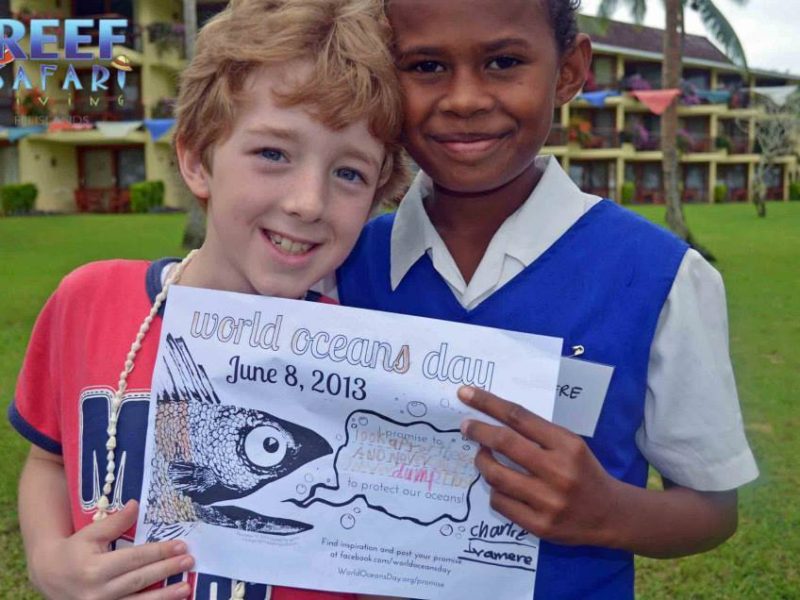
Fun and easy: the key to making people excited to help the ocean
We were thrilled that so many of our zoo and aquarium partners joined us in promoting Ocean Promises encouraging visitors to pledge to do something to help the ocean. We had more than 300 promises sent to us with hundreds more collected at World Oceans Day events. Our partners were especially enthusiastic about this activity, which can serve as a great step onto a long-term journey for people interested in protecting the environment. I say “first step” because no small, one time action will immediately turn a person into a full-time environmental super hero! Low investment actions like the Ocean Promise are most effective when used in concert with a full suite of other community-based social marketing techniques. Of course, many institutions don’t have the resources, funds, or time to follow through with visitors after they make a promise. That’s not unusual and it doesn’t mean you shouldn’t ask for promises: we know that people who make public promises are more likely to change their behavior, and more likely to take bigger actions when approached either way. An easy, low investment campaign like Ocean Promises is a great way for staff at zoos, aquariums, and museums to achieve several aims. It emphasizes the institution as a conservation organization, and reminds the guest that the wild counterparts of the resident animals need our protection. It can give interpreters a chance to experiment with the most effective strategies to communicate with their visitors on issues, and offer insight as to which actions are resonating with visitors. As many educators and communicators have discovered, it’s very hard to find a one-size-fits-all action to suggest to visitors. Here are a few best practices that our partners have followed in order to overcome various challenges: Tip 1: Create the space for a conversation Identify a time and space when you'll be able to talk with guests about what promise is right for their family. Oregon Coast Aquarium A great option that several of our partner institutions chose was to make the Ocean Promise a crafty activity for kids. The kids are occupied with something fun, while staff has a chance to chat with the parents. Several institutions made Promise Bookmarks that kids hung up or took home or, like Oregon Coast Aquarium, made a Community Pledge mural that showed everyone’s promises together. Wendy Spaulding, Education Programs Coordinator for the Oregon Coast Aquarium said they plan to take it further next year. “We had an Ocean Pledge Mural craft activity, which had kids select a marine animal with a 'Ocean Pledge' written on it (or they could write their own pledge on a fish), that they could color, and then add to our Community Mural, which was erected specifically for the event to provide a visual representation of all the promises made… Next year, we would like to modify the activity to be even more interactive, with kids having to actually write their pledge, instead of just choosing an animal with one written on it.” MaryEllen Mateleska, Curator of Conservation Education at Mystic Aquarium added, “Although staff have a list of suggestions to share with families, we enjoy making the ‘ask’ into a conversation.” This will make it more likely that the change will actually fit into the family’s lifestyle, and they will feel like they chose it for themselves personally. MaryEllen further suggests talking to the whole family and guiding them through the process with questions: “These interactions would begin by directing questions to the younger members of the family that would open the discussion on conservation actions (e.g. ‘Did you know that today we are celebrating World Oceans Day?’ ‘What is your favorite ocean animal that lives at the aquarium?’ etc.). If a family was having difficulty brainstorming a promise, staff would prompt them with questions like: ‘Do you recycle at home?’ ‘Can you think of something else that could be done to reduce your trash even more?’ Or ‘Do you turn off the water while you’re brushing your teeth?’ ‘Can you think of something else that you can do to help conserve water at home?’” 2. Make it fun and easy for guests to capture their promises in a photo A few of our partner institutions experimented with taking photos of guests with their promises, and Georgia Aquarium even dared to take video. However, they learned there’s definitely a science to the art of guest photography! Cagney Smullin, Events Supervisor at Utah’s Hogle Zoo, found parents are more eager to take a photo pledge or do an activity with their kids than on their own. She said: “I think it was just uncomfortable for them to take the photo themselves...having a staff photographer or some sort of photo ‘booth’ would give it more of a fun element and more people would participate. You can then e-mail the photo to them from the app and also have the option of putting it on Facebook with the guests’ permission.” Sign at Hogle Zoo Making it fun was a point echoed by others. For example, New England Aquarium provided sea creature costumes for children and adults to wear when posing with their ocean pledge or statement about why they love the ocean. Not only is this a fun way to blow off steam, it’s also a family photo to remember the trip, and the promise to the ocean!
Continue reading -
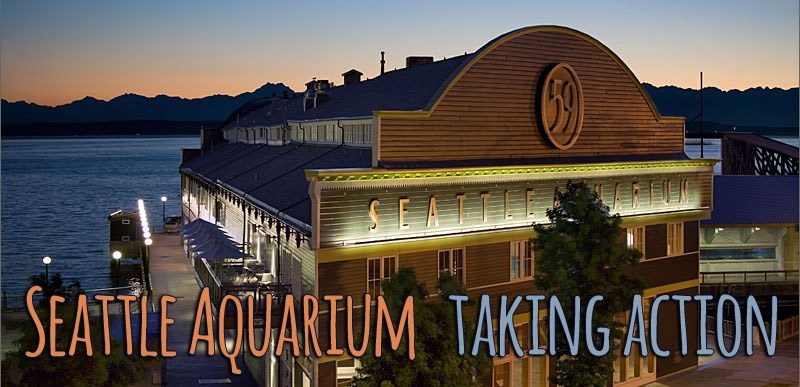
Taking the dive part III – Seattle Aquarium takes action for World Oceans Day
In Part I of our series on conservation asks at World Oceans Day events, we explained the concept of seizing these unique opportunities to encourage your visitors to take environmentally-friendly actions (conservation ‘asks.’) In Part II of the series, we introduced you to how an innovative pilot program at California Academy of Sciences is exploring how to best make conservation ‘asks’ by interpreters through a collaborative professional learning program. In this installment, Part III, we’ll take a look at how Seattle Aquarium has made conservation ‘asks’ an integral part of their World Oceans Day celebrations in 2012 and 2013 – and what they’ve learned from the experience. Seattle Aquarium takes action Seattle Aquarium’s 2012 and 2013 celebrations had a strong conservation orientation – the institution definitely doesn’t shy away from civic engagement. In 2012 they focused on messaging about ocean acidification, marine debris, and MPAs. For 2013 they narrowed the focus more by encouraging action on ocean acidification and marine debris. To help in these efforts, the Seattle Aquarium has turned to their youth advocacy volunteer group, Puget Sound: We Love You. The group has run the ‘Hour for the Ocean’ campaign , leading to hundreds of people in the Seattle area taking one hour on June 8th to do something clean up their local watershed. For 2013 the aquarium experimented taking it to the next level with the ‘Be an Ocean Hero’ campaign. Each station at their World Oceans Day event presented three actions visitors could take to protect the ocean: on an individual, community, and civic level. They supported these recommendations by giving examples of what the aquarium was doing as well. The aquarium implemented consistent messaging on multiple levels: they presented the same action tips in a blog post prior to the event, pushed them out via several social media posts prior and during, and had docents repeat them during interpretation with guests at various stations. Lessons Learned So what did Seattle Aquarium learn from their experience which could help other institutions encourage their visitors to take action for environmental health? Focus on fewer issues. This provides a consistent narrative and doesn’t leave guests overwhelmed. The Seattle Aquarium, for its part, plans to continue to use effective story telling and strategic metaphors to emphasize one or two of the most prominent issues for their local marine environment. Emphasize local impact. A local narrative helps visitors see why the actions - whether individual, community or civic actions - are relevant to them personally, and encourages local pride. It also is much easier for visitors to understand, accept and appreciate than impact on "the ocean." Use animal ambassadors. Visitors care about the animals and want to help. With this in mind, the aquarium incorporated conservation action into their harbor seal presentation. Nicole Killebrew, Marine Science Interpreter shared the following example: “One of our primary themes this year was marine debris. Using our harbor seals as ambassadors for the local wild population, we facilitated a series of enrichment presentations to demonstrate the impact that marine debris has on marine mammals... At the end of the presentation, we received streams of visitors encouraging us to do this type of presentation every day because of the messages’ relevance and importance.” Encourage the sharing of stories. Certain activities can also give visitors a chance to talk to other guests about what they themselves are doing, spreading the knowledge and normalizing ocean protection as a part of responsible citizenship. Nicole recalls: “A guest responded to our ‘Oceans of the World’ activity by sharing their involvement in donating to various organizations that promote coral reef conservation and ocean health...The conversation was rich with ideas about ways people can get involved in supporting grassroots organizations that are making a difference.” Thanks to Nicole Killebrew, Dave Glenn, and Becky Bingham at Seattle Aquarium for their great help, insight, and willingness to share their experiences. If you’d like to share how your institution is inspiring visitors to help the environment, please don’t hesitate to email us.
Continue reading