-
Shedd Aquarium Pledges to Protect our Blue Planet Year-Round
This guest blog comes from Aislinn Gauchay, Assistant Director of Great Lakes and Sustainability at Shedd Aquarium. Shedd Aquarium is a Supporting Partner of The Ocean Project. Earth. The third rock from the sun. Our humble planet has many names, but what makes our Blue Planet truly unique is what covers 71 percent of our surface and without which life would not exist: water. Oceans are the heart of our planet: they shape weather and wind, are home to one million animal and plant species and are the primary source of protein for more than 2.6 billion people. Oceans serve as the foundation for a delicately balanced food web that supports all life, from the Marianas Trench to the top of Mount Everest. Our oceans and the animals that call them home are critical to sustaining life on earth, human life included. However, our relationship to and dependence upon healthy, abundant oceans is not universally acknowledged. The most critical threats to our oceans are produced by human activity, such as overfishing, habitat degradation and pollution. More than 8 million tons of plastic trash end up in the ocean every year, including millions of disposable plastic bags and bottles. Though our oceans are often uncelebrated, there is one day out of the year where a plethora of organizations like the Ocean Project and Shedd Aquarium team up to celebrate what makes our planet blue on World Ocean’s Day. For this year’s celebration, the Ocean Project and singer Jack Johnson ignited the #WaveForChange challenge, asking people to do something to help our oceans. Shedd Aquarium’s President and CEO Dr. Bridget Coughlin took the #WaveForChange challenge on behalf of our organization and pledged to continue to reduce our plastic usage, spread the message, and encourage others to join us in making a difference. Shedd Aquarium is taking action on the issue of plastic pollution in our ocean and is constantly looking for ways to reduce our use of this seemingly omnipresent commodity in innovative ways. We started small, by providing reusable bags instead of disposable plastic bags, installing reusable water bottle refilling stations, and eliminating plastic straws onsite. Our goal is to continue this initiative at Shedd, in our community, and throughout the country. For example, during this year’s Louis Vuitton America’s Cup World Series event in Chicago, we worked with race organizers and sustainability partner organizations 11th Hour Racing and America’s Cup Endeavor Chicago to inform event attendees and thousands of guests visiting Chicago’s landmark Navy Pier about the impact of plastic pollution on our lakes and oceans, offering them an opportunity to pledge to reduce their household plastic use. In 2015, we extended our commitment to freshwater and marine conservation at a higher level by joining forces with two other aquariums, Monterey Bay Aquarium and National Aquarium, to form the Aquarium Conservation Partnership (ACP). As a co-founder, and thus an executive committee member, Shedd works with fellow industry leaders to advance ocean and freshwater conservation policy goals. This includes advocating for the expansion of marine protected areas and increasing protection for exploited species. At Shedd, conservation is critical to everything we do. Whether it be sourcing only sustainable, restaurant quality seafood for our animals or pledging to reduce our use of plastic, Shedd believes we can all take steps and make a big difference toward protecting and preserving our oceans. We can do more together than alone. You can learn more about Shedd’s conservation initiatives on our website.
Continue reading -
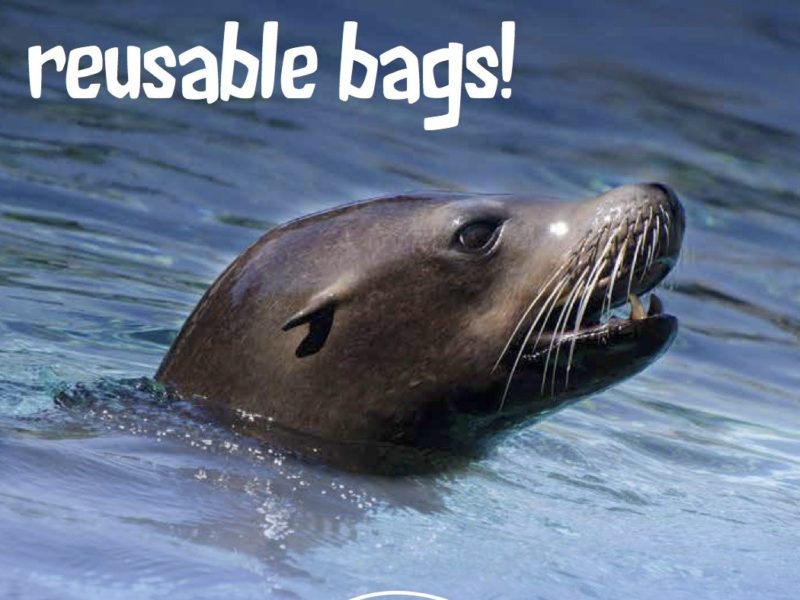
ISG+ Update: Zoo-Alive teen volunteers at the Saint Louis Zoo take the #byetobags pledge and spread the word!
This guest post is submitted by Kirinne Slaughter at the Saint Louis Zoo, and is the second in a 3-part series on their Innovative Solutions Grants+ project. Since our last post, our Zoo ALIVE (ZA) teen volunteers have been hard at work helping Zoo visitors say #byetobags! Successfully building on the lessons learned from the Better Bag Challenge, our teens have developed a campaign that asks visitors to be a part of the plastic pollution solution by switching to reusable bags to help sea lions. The teens designed a reusable bag giveaway, and a pledge that states: “I pledge to switch to reusable bags in order to keep our oceans clean for sea lions & all ocean animals!” Since our official launch on April 23rd, they have asked more than 1200 people to take this pledge. As the main question under our grant, we wanted to know how effective social media was at amplifying an on-grounds conservation ask and, at the same time, how effective it could be as a standalone medium of asking people to take conservation action. Specifically, our teens wanted to know: Could they get visitors who took our pledge on-grounds to become active on #byetobags social media, and share the #byetobags pledge with friends and family? How many people could they get to take the #byetobags pledge just through discovery on social media, without the on-grounds bag offer? If people do share the pledge with their friends and family, which method of sharing do they use most? How can we measure all this? These were a lot of questions, and it took a lot of hard work to figure out a way to track the data that we needed to answer these questions. But, with the help of the Zoo’s marketing department and advertising agency, we developed an innovative online pledge taking platform that not only adds a level of sophistication to our campaign, but is the first online campaign of its kind at the Saint Louis Zoo. To properly track data in order to answer these questions, two separate pledge pages were created: one for visitors to sign if they visit a #byetobags table on-grounds, and another for people who accessed the effort through our social media streams or through the Saint Louis Zoo website. The forms are identical in almost every way, save for the fact that the on-grounds form is a ghost page, accessible only to #byetobags staff when on-grounds. Both forms require visitors to give their name, email and zip code. It also gives them the option to give their age, and answer the question, “how often do you use reusable bags?” Have you taken the #byetobags pledge? Do so now, and then help spread the word! The online pledge form can be found here. After taking the pledge, everyone, no matter which pledge form they use, receives an email thanking them for taking the pledge, and asking them to spread the word to their friends and family. The teens came up with three share options to choose from: Facebook, Twitter, and email. No matter which method they choose, an automatic message is provided for them to spread the #byetobags message. For example, if you were to choose to share via Twitter, the following message will be automatically tweeted from your account: “Keep sea lions safe from plastic bags in the ocean! Join us and take the pledge!" The tweet contains a link back to the #byetobags online pledge page. Because these separate pledge pages generate two separate lists of people, we are able to track whether someone took the pledge on grounds, whether they found the pledge on our social media or on the Saint Louis Zoo website. Additionally, through analysis software provided through Google, Formstack and our email service provider, Sharpspring, we are able to track through which social media channel people access the pledge, and what share option people use most often when spreading the message to their friends and family. As we continue to collect data, there seems to be no limit to the number of questions we can answer with this sophisticated software. What have we found out so far? So far, since our launch on April 23rd, the Zoo ALIVE Teen volunteers have collected data that begins to shed light on their research questions: On grounds: A total of 732 on-grounds pledges have been taken! Meaning this many more reusable bags are being put to use! Additionally, across all events at which the teen volunteers were presenting #byetobags information, 90% of the people that the teens interacted with and asked to take the pledge, did so. While relatively few of these people have shared the pledge from the email that they received, our Facebook following and reach has been increasing steadily each week, with a total Facebook reach of 17,081 people! Online: We also have seen success on our online pledge, with an additional 168 pledges received with no on-grounds interactions at all, due only to presence on social media and the Saint Louis Zoo website. Since the first posting of the online pledge link on #byetobags social media on April 26th, we have averaged around three online pledges taken per day. These pledges come mostly from people responding to our posts on social media, however we do get pledge takers who stumble upon the pledge while simply navigating the Saint Louis Zoo’s website. Which share option has proved most successful so far? Facebook has been used three times as often as other share options for spreading the word about the #byetobags pledge. Anecdotally, however, our Twitter account has garnered lots of attention from other sustainability organizations, such as St. Louis County Recycling and Coast Plastics. I anticipate that our visibility and networking with these organizations will help us greatly as we continue to spread our message into the St. Louis community at large. As we continue to move forward with this campaign… Our teens are focusing on modifying our messaging to emphasize the importance of sharing the pledge with friends and family. Additionally, they will be increasing their engagement on social media in an effort to increase the number of pledges taken online, and the number of followers on our sites. Just this past week, we unveiled a #byetobags challenge that asks followers to post a photo/video with their reusable bag. With this challenge we hope to increase awareness and engagement with our campaign. As we continue to interact with visitors throughout the summer, we expect to see these numbers increase, with more and more people joining the pledge through social media, and spreading the word! The whole Zoo says #byetobags! In addition to the primary aspect of our grant, we have also been involved in many other important parts of Zoo culture. Our gift shops have been very involved with the project. They have incorporated signs into their shops encouraging people to choose reusable bags, and ask visitors, “Do you need a bag today?” upon checkout. Additionally, our #byetobags messaging has been integrated into our Sea Lion Show. Before each show, an audio clip recorded by the Zoo ALIVE teen volunteers plays that gives an overview of the #byetobags project. During the show, the trainers explain how important reusable bags are, and give away a #byetobags reusable bag. The sea lions themselves also take part and during the show they put their “lunch” into a prop #byetobags reusable bag. https://theoceanproject.org/wp-content/uploads/2016/07/OPR-Audio-Clip-2-Final-1.mp3 Finally, we are an integral activity at our weekly summer concert series, Jungle Boogie. We have formed strong connections with visitors who attend this event each week, and they have become advocates for our project as they encourage new visitors to stop by our table. An overwhelming majority of our guests have been nothing but positive when interacting with our #byetobags table. They seem grateful for the information, and excited about receiving our help in starting to work towards more sustainable behaviors. Our next steps include continuing to work with the various departments around the Zoo and the Saint Louis community to increase the spread of our message. We will be at an increasing number of events throughout the summer, and new ZA’s have been trained and will begin working with the #byetobags campaign. Additionally, as we continue to analyze different parts of our data, we will continue to answer our research questions as to how we can most successfully amplify an on-grounds ask using social media.
Continue reading -
ISG+ update: Connecting Ocean Conservation and Community Engagement at the National Aquarium
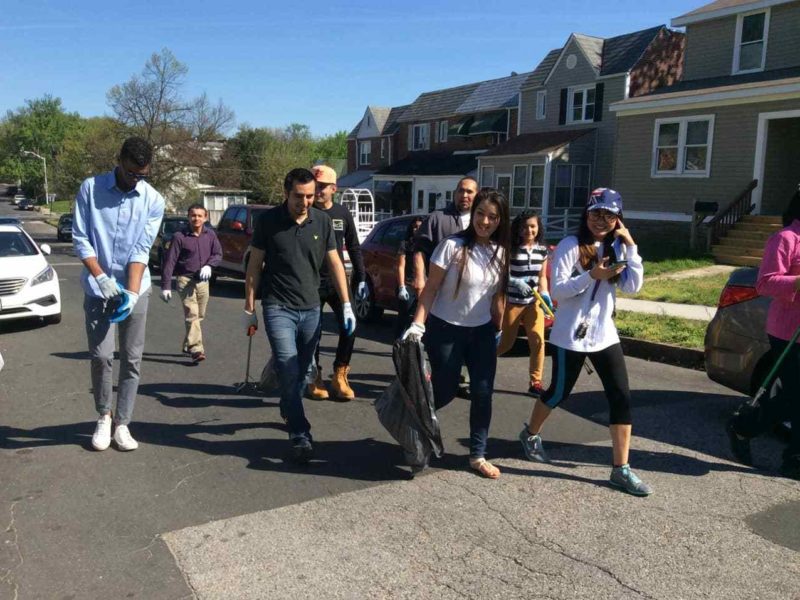
This guest post, by Gabrielle Roffe and Curtis Bennett of the National Aquarium’s Conservation Department is the second in a 3-part series on their Innovative Solutions Grants+ project. This project will be addressing the issue of marine debris by implementing a new approach to community engagement, with a specific focus on building our connection with the Hispanic communities near Masonville Cove in the Chesapeake Bay. Review of Project Goals Through this Community Engagement and Environmental Stewardship Project, the National Aquarium’s Conservation Department is focused on building connections with the local Hispanic communities within the larger Brooklyn and Curtis Bay communities and addressing the problem of litter and debris. The specific goals of the project, as described in our initial post, have been two-fold: Engage members of the local Hispanic populations in the removal of debris Cultivate community champions in order to ensure ongoing engagement Step-by-Step Process The first and most important step for us was to identify “pillar organizations” within the local Hispanic Community. In each and every community, there are existing organizations, congregations or schools who serve community members in a variety of ways. We felt it was important to reach out to and ultimately collaborate with these groups, rather than going at it alone, because they have the prior trusting relationships with the communities and, as a result, they can provide that connection and help to bridge the gap between our organization and the community itself.For our project, we have wanted to ensure that our programs are engaging people of different ages, backgrounds and interests. With that in mind, we specifically targeted three pillar organizations that also shared our interest in addressing the issue of litter and marine debris: The Templo de Alabanza Y Restauración (TAYR) Congregation Lakeland Elementary/Middle School Parent Group and ESL students at Ben Franklin High School at Masonville Cove. Over the course of our project so far we have been fostering relationships with each of these groups and in the following paragraphs we’ll outline our engagement with each group to date. TAYR TAYR is a Hispanic religious congregation that hosts weekly services at the Pathway Church of God, located within the Brooklyn community. We scheduled an initial meeting with the Pastor and his wife, during which we explained our organizational mission and they immediately connected to the importance of community work and protecting the natural environment. It was very relatable to them, because they told us that in the areas where they come from, in their countries, nature is abundant, and they recognize its value and thus appreciate the value of nature in their current communities and at Masonville Cove. TAYR congregation members painting storm drains outside their church Once we had the support of the congregation leaders, we then started to branch out to the congregation as a whole. We attended Sunday school and church services to talk about the various events at Masonville Cove and our community workshops, such as our Watershed 101 workshop, which we were offering in Spanish. The Pastor and his wife also suggested hosting a community cleanup after Church services. The planning of the event was a truly collaborative process, working with them to finalize the structure and flow of the event. Normally for debris clean-ups, our staff is responsible for leading groups of participants; however, for this community clean-up we adjusted the model to allow congregation members to be group leaders. We believed that empowering them to lead fellow congregants and community members would lead to a higher likelihood of sustainability of these efforts. So the Pastor and his wife recommended members of the congregation to be group leaders for this community clean up. A group of TAYR congregation members during a community cleanup Successes Met with the Pastor and his wife 4 times to discuss our collective programming goals. These meetings were a great way to share our collective ideas on what types of programs are of interest to the congregation and methods to best engage their congregants. Talked to 65 adults and 50 youth during two visits with the congregation to inform members about upcoming events. This method of event promotion is successful because you are being directly introduced by the Pastor, a respected leader, and you are then able to reach a larger audience. Engaged 80 adults and 34 youth during a community clean-up on April 24th. Participants also stenciled 5 storm drains during the event. The Pastor and his wife assigned their congregation leaders as our cleanup group leaders for this event. The congregation leaders then brought their cohorts to the cleanup which resulted in a wide attendance. Lessons Learned Hosted a Watershed 101 workshop at Masonville Cove with 3 attendees. The attendees were the Pastor and his two sons. We learned that we had the Pastor’s buy in for our work, but our message had not reached the congregation by simply talking to them about the event at church service. The Pastor felt disappointed that his congregants did not come to an event, however he did see that our work and associated projects are not only important but that they are fun and engaging. After this event, he took a bigger leadership role in order to ensure that his congregation was engaged. Students from the Youth Group were planning to come to our April 2nd Masonville Cove clean-up, however due to inclement weather, they were unable to attend. We learned that targeting a specific group within the congregation is a great way to get a focused attendance. The youth group and the congregation leadership group are tight cohorts who will come together when requested by the Pastor and his wife. Gaby Roffe (right, National Aquarium) and Nia Edwards (left, Hispanic Access Foundation), instruct TAYR congregation members for storm drain stenciling with stencils in English and Spanish. "Basura de nuestra calle contamina nuestra bahía" which means "Trash on our streets today pollutes the waters of our bay" Ben Franklin High School Over the years, we have built a very strong relationship with Ben Franklin High School (BFHS), as their students participate in many of our environmental education programs. Courtesy of this project, we have been able to engage them on a different level, focusing specifically on their community and collectively determining solutions to local environmental issues, specifically debris accumulation. BFHS has a growing Hispanic student population and English as a Second Language Program. Due to the language barrier, our past programs weren’t doing as good of a job as they could be to engage these students. Having staff on board now that are learning to and/or can speak Spanish fluently has been a huge step in the right direction. Now we can truly ensure that our programming is all-inclusive by translating programming into Spanish and making an effort to reach out to Hispanic students. We’ve coordinated various workshops with the Environmental Science teachers and worked with administrative staff to plan Benfest, a community event hosted by BFHS. Successes Engaged 39 students during 3 Watershed 101 workshops. Engaged 52 students during a classroom visit and schoolyard walk focused on stormwater runoff and designing possible solutions. Engaged approximately 800 people at Benfest, during which participants received and decorated 45 recycle bins, stenciled 3 storm drains and picked up trash around the schoolyard. Lessons Learned We targeted the Environmental Science classes which had already been engaged through our Watershed lessons. The teacher informed us that she had many ESL students in her classes and it would be helpful to lead groups in English and Spanish. All of the students were excited about this, both the Spanish speaking students, who were excited to have programming tailored to them, as well as the students who did not speak Spanish, who were excited to hear translations. Partnering with an existing community event is a successful way to engage a wider audience. We were able to pull new community members into our programming and engage larger numbers in hands on community stewardship activities. Lakeland Elementary/Middle School Parent Group Lakeland Elementary/Middle School has a Hispanic parent group that hosts monthly breakfasts. We have attended in order to hand out flyers, highlighting different events, both in the community and at Masonville Cove. Through this group we have connected the Hispanic community members to Masonville Cove and learned about their programming interests. Successes Attended one parent breakfast, during which we talked with 28 people about upcoming Masonville Cove and community events Lessons Learned The majority of the audience was unfamiliar with Masonville Cove and their programming. They did exhibit initial interest in programming, although it has been challenging to follow up with this group because we do not have their contact information and they only meet once a month. We may have to explore and implement different strategies in order to engage this group. Moving Forward In the past we did not use a direct approach to connect with Hispanic communities, so we cast a wider net throughout the community to advertise programs and events. This community pillar strategy is proving successful in allowing for a more direct and focused approach to identifying, selecting and engaging specific audiences and building trusting relationships with them for continued involvement. TAYR congregation members clean the streets of Brooklyn, Baltimore We have learned that in order to build trusting relationships with cohorts, it is important to communicate on a regular basis with the group leaders, who are trusted by community members. When the leaders vouch for your events, community members are more likely to attend. It is also important to attend community events that might not necessarily be related to your work, but helps build a relationship that is a two-way street. Based on the results to date, we will focus the majority of our efforts over the summer towards the TAYR congregation, continuing to involve them in community clean-up events, workshops and field trips to Masonville Cove with their Youth Group. As we progress we will be able to identify community champions from this congregation as well as identify opportunities to partner and engage with other community pillars.
Continue reading -
ISG+ New Project: Zoo ALIVE Teen Volunteers at the Saint Louis Zoo say #ByetoBags … and ask that you do too!
This guest post is submitted by Kirinne Slaughter at the Saint Louis Zoo, and is the first in a 3-part series on their Innovative Solutions Grants+ project. Building on the Better Bag Challenge Zoo ALIVE teen volunteer For more than a decade, the Zoo ALIVE (Active Leaders In Volunteer Education) Teen Volunteers at the Saint Louis Zoo have been educating zoo visitors, zoo campers and the St. Louis community about animals, their habitats and conservation. Now, for the first time, thanks to the support from The Ocean Project’s Innovative Solutions Grant+, these teen volunteers will aim not only to inform, but also to inspire others-onsite and online-to take action on one of the biggest issues facing the environment today: plastic pollution, particularly from single-use plastic bags. To begin, the teens looked to the results of the “Better Bag Challenge.” This challenge was inspiration for what our teens wanted to create, and what was learned provided a strong base for our campaign. The main lessons from the Better Bag Challenge that our teens will apply going forward are: Use a Simple Message: Choose reusable bags to avoid single-use plastic bags. Be Solution-Oriented: Position visitors as part of the solution. In order to instill in our guests the confidence that they can make a difference, the campaign will be framed so that guests feel they can make a difference and be part of the plastic pollution solution. Make a Direct Connection to Sea Life: The most effective messaging connected the action directly to the benefits for an animal. While others referenced sea turtles, our inland zoo is home to California Sea Lions and Harbor Seals, which we think will serve as the perfect ambassadors. Walk the Talk: Another approach to effective messaging connected the action to what the zoo itself is doing, so our campaign will aim to reduce the use of plastic bags in our gift shops. Teen volunteers will be open about this effort, and share its progress with zoo guests. Ask for a Pledge: Our on-grounds visitors also will be given a reusable bag upon completion of a pledge, but instead of asking visitors also to take a follow up survey, which can have relatively low response rates, we thought we’d try a twist! Going Online with #ByetoBags #ByetoBags Our twist? The teens plan to test if they can use social media to amplify the effects of the “Better Bag Challenge.” The teens will measure the extent to which people share their commitment through social media, as well as how many others join in making the pledge back on our own web site. The teens will do so in two main ways: On-Grounds Amplification: How successfully can we amplify the reach and impact of our on-grounds pledge participants using social media? After taking our pledge to use reusable bags, and receiving a reusable bag, zoo visitors will receive an email asking them to use #byetobags on selected social media channels as a way to share the message with their friends and family, encouraging them to join in and take the pledge too. This idea is in keeping with what has been found in research by The Ocean Project: not only do most people want to be green, but they also want to be seen as “green.” We then will measure success by monitoring how the use of #byetobags spreads and how many people sign up at our online pledge page. As an additional measure to our on-grounds tactic, we will be monitoring plastic bag use at our Saint Louis Zoo gift shops, expecting it to go down! Direct Social Media Push: The teens also were wondering if they could skip the on-grounds offer of a bag and still have success by going directly to social media. By having a pledge page that is online and promoted through social media sites, and that once again asks people to use reusable bags and to share their commitment with friends and family by posting with #byetobags, we plan to assess how many people they reach and how many of those signed the pledge. Our teens are eager to launch their campaign and take it to social media. The key next step for the teens will be deciding on the specific social media tools and tactics that they want to test (e.g. share #byetobags post on Facebook vs. share #byetobags video on Instagram) and then talking with the zoo marketing team about how those efforts can best be tracked. Our teens are already planning to share the methods and success of this campaign in presentations at their area high schools. And, we’re just getting started! Keep a look out for our update!
Continue reading -

New 2015 research reveals an ocean of opportunities
This is a guest post by Jim Hekkers of…
Continue reading -
ISG+ New Project: Philadelphia Zoo asks, “Can an exhibit change visitor behavior at home?”
This guest post by Wei Ying Wong of
Continue reading -
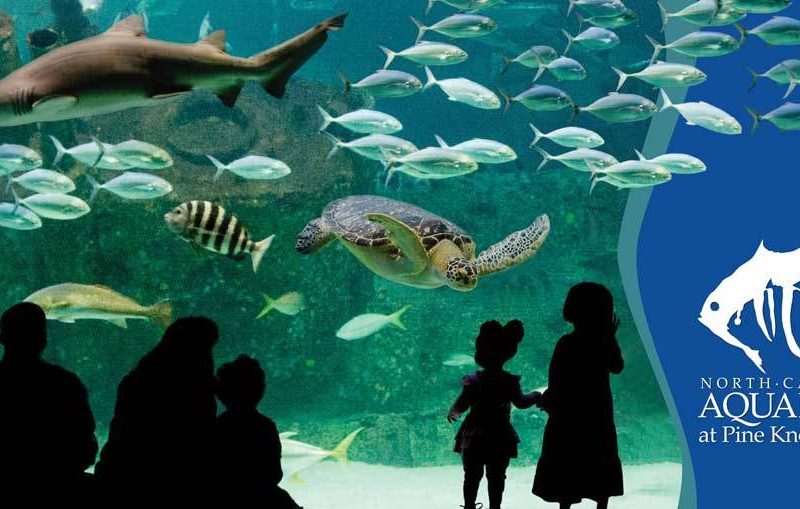
ISG+ Final Report: What we learned at the NC Aquariums
This guest post by Windy Arey-Kent of NC Aquarium at Pine Knoll Shores is the final in a 3-part series on NC Aquariums’ Innovative Solutions Grants+ project, aimed at testing different approaches to engaging guests for conservation action at aquariums. This blog post is a look at what NC Aquariums learned as a result of this project. Thank you to Windy and everyone who helped at NC Aquariums for your hard work! The North Carolina Aquariums were awarded a $16,000 Innovative Solutions Grant to see if our visitors would be interested in joining us in the purchase of Renewable Energy Certificate’s (REC’s) to help address the problems of climate change and ocean acidification. We were awarded the grant in December, 2013 and the project was funded through December, 2014. With this support, we were able to implement programs at each of our four sites and take four very different approaches to engaging visitors in this conservation ask during our high visitation months of May-September. My experience working with The Ocean Project was extremely positive from the beginning. Working with the staff, in advance, to research and identify the best ways to approach a project of this scope, with 4 facilities, was extremely useful. I even had issues submitting the grant online, due to my inexperience with some technology formats, and staff at The Ocean Project worked with me directly to answer my questions so that I could successfully complete the application. This process was so beneficial, not only for me, but for my staff and our facility. The lessons learned through this project were significant and pertinent to our departmental goals, plus we had a lot of fun! Why we tried What we learned Our advice to others Why we tried For our aquariums, our interest in doing this stemmed from our mission, which is to inspire appreciation and conservation of NC’s aquatic ecosystems, and also because it fit very nicely with a new strategic initiative at the NC Aquarium at Pine Knoll Shores, where our education department was focusing very intently on visitor’s conservation actions. And on the specific issue of climate change, we were really interested in an opportunity to move our visitors beyond “changing a light bulb" to a more meaningful action around energy choice, and this led us to RECs. According to the EPA, “One of the simplest and most effective ways to reduce your carbon footprint is to purchase REC’s, (which) are critical, effective and valuable instruments for expanding renewable energy in the U.S.” For our visitors, our working assumption, based on research by The Ocean Project and others, was that they'd welcome information about how to be part of the solution, and "go green." So with this effort, here was an opportunity for us to do just that by supporting green power by buying a REC for the amount of energy typically used by a home in one month, while also helping our Aquariums achieve our own green energy goals though a "watt-for-watt" match from our partner, Greenlight Energy. (A secondary goal of the project was for each site to acquire enough REC’s to allow us to each become EPA Green Power Partners by obtaining at least 25% of our energy from renewables.) We wanted to see what would work best, not only in terms of inspiring our visitors to take action, but also in terms of ensuring a positive staff and visitor experience. To do this, we tried different approaches at each site, yet kept a lot of the variables the same, most notably the ‘ask’ of purchasing a REC. What we learned The lessons learned were meaningful and pertinent: we were able to ascertain that our visitors expect and appreciate it when we suggest ways for them to help, and seem most inspired to act on behalf of conservation when we model those behaviors as a staff and facility, and relate the importance of those behaviors back to our animals and our mission. The most straightforward measure was the amount of RECs purchased, and the table below shows our total kWh of green energy purchased, therefore avoiding the equivalent of that energy from traditional sources. While we did not reach our goal of becoming a Green Power Partner with the EPA, we learned a lot about how to go about obtaining that goal for our facilities in the future. NC Aquarium facilities kWh Purchased kWh Matched by Greenlight Energy Total kWh Fort Fisher 76,798 76,798 153,596 Pine Knoll Shores 21,870 21,870 43,740 Roanoke Island 14,731 14,731 29,461 Jennette's Pier 80,601 80,601 161,202 194,000 194,000 387,999* But the more interesting insights came to us when looking at the above together with the results of the visitor surveys we conducted during the three-month trial period. We found that at all sites, visitors were indeed welcoming of suggestions of how to help solve ocean problems, and very interested in the topic of energy choice. The sites surveyed more than 1,100 visitors, with three key findings: 92% agreed (slightly agree to strongly agree) that “learning ways people like me can help conserve the ocean and its animals makes this aquarium a better place to visit” 92% agreed (slightly agree to strongly agree) that “this aquarium is a good source of information for people like me to learn ways to help conserve the ocean and its animals” 83% were interested (somewhat to very interested) in learning about "options for conserving energy or energy choices available to me at my home” As for the staff’s response to the project, feedback from staff suggested that visitors were unfamiliar and easily confused by the REC concept, leading the Aquariums to conclude that alternate clean energy /energy saving asks should be explored. By comparing and contrasting their experiences, the Aquariums also learned some valuable lessons: When making an active appeal – staff or volunteers asking visitors to consider action through the purchase of RECs – the efforts were much more effective when interpreters used auditorium programs and dive shows to connect the ask with the animals and appeal to widely shared values, such as a belief in American ingenuity and a concern for the future. In contrast, interpreters were far less effective when they tried to intercept visitors outside of these programs and provide more detailed information about clean energy and RECs. "Our visitors expect and appreciate it when we suggest ways for them to help, and seem most inspired to act when we model those behaviors as a staff and facility, and relate the importance of those behaviors back to our animals and our mission." When making a passive appeal – relying on exhibits or displays that did not include staff interpretation – the key appeared to be demonstrating the Aquarium's own commitment to taking action on the issue, as the presence of working wind turbines was cited as the reason why support was so strong at Jennette's Pier. In comparison, similar messaging about the aquarium's interest in the issue had much less impact when combined with a nonfunctioning windmill display. This finding was more of a surprise, as although visitors spent very little time at the exhibits and did not have the benefit of an interpreter's explanation, those who saw the actual wind turbines at Jennette's Pier seemed to know immediately and support the Aquarium's commitment to clean energy. Visitors were inclined to take action then and there, with little evidence that they would follow up and take action later via, for example, a web link. Notably, visitors wanted the action to be simple, with a strong inclination to donate, and a resistance to completing a sign-up form, though the latter may reflect in part some public concern about privacy as well as some visitor confusion around RECs. The project, unfortunately, came to a premature end due to circumstances well beyond our team's control. Even though the overwhelming majority of visitors and staff were strongly supportive, as exemplified in the aforementioned survey data, one influential person from within the small minority of objectors was able to shut the project down. This individual, a writer affiliated with a private foundation that is vocal in its opposition to the scientific consensus on climate change--complained about the project in a blog post that was circulated within conservative circles, and reached state officials who, in turn, asked that the Aquariums end the project after Labor Day. Our advice to others For facilities that are interested in engaging your visitors in conservation “asks” related to energy and energy choice, I have several recommendations for you. Be sure that you have an overall organizational commitment to this objective. While we feel that energy choice is something that everyone should be interested in and knowledgeable about, the conversations around energy choice, like those around climate change, can become politicized. So having organizational ‘buy-in’ to your project is key. Fully investigate and be prepared to showcase your facilities sustainability efforts. Visitors really committed to participating when they saw that the facility was also committed to the cause. Relating your conservation messages and actions back to your facility and your collections is an important and effective method to use to engage visitors in your efforts. Don’t be afraid to take on seemingly “impossible” tasks, jump in and engage your visitors in conversations around ‘difficult’ topics. It is important for us all to gauge our comfort levels and push our staff to figure out the best time and place to have these important and meaningful conversations.
Continue reading -

Positive Attitudes but Limited Knowledge Lead Discovery Place to Offer an Ocean Literacy Teacher Workshop
This is a guest post by Gail…
Continue reading -
Happy belated birthday the father of the nature documentary
This is a guest post by Stephen…
Continue reading -
Inspiring the Next Generation of Ocean Advocates
“I want to tell you about how the Aquarium…
Continue reading


- 1
- 2